
More people in Bangalore are choosing vegetarian and vegan health tests, ethical, cultural, or lifestyle reasons. In fact, from traditional South Indian vegetarian meals to the growing vegan trend among young professionals, plant-based eating has become increasingly common across the city.
However, while a well-planned vegetarian or vegan diet can provide plenty of fibre, fruits, vegetables, legumes, and whole grains, some nutrients require extra attention. Therefore, regular health testing can help identify nutritional gaps before they develop into more noticeable problems.
Moreover, your nutritional requirements can change depending on your age, activity level, menstrual status, pregnancy plans, food choices, and overall health. Consequently, vegetarian and vegan health tests should not be viewed as a one-size-fits-all checklist. Instead, they should be selected based on your diet and individual risk factors.
For people looking for Vegetarian and Vegan Health Tests in Bangalore, a practical starting point is checking nutrients that are commonly harder to obtain in sufficient amounts from plant-based foods.
This Blog Includes:
- Article Title: Vegetarian and Vegan Health Tests in Bangalore – What to Monitor
- Content Type: Package / Audience Health Awareness Blog
- Primary Target Keyword: Vegetarian and Vegan Health Tests
- Key Nutritional Topics Covered: Vitamin B12, iron, ferritin, Vitamin D, calcium, protein, omega-3 considerations, CBC, blood sugar, thyroid, kidney and liver health
- Vitamin B12 Guidance: Importance of B12 monitoring in long-term plant-based diets
- Iron Guidance: Iron and ferritin monitoring and the importance of evaluating iron stores
- Vitamin D Guidance: Vitamin D monitoring in relation to lifestyle and bone health
- Calcium Guidance: Calcium intake and bone-health considerations
- Protein Guidance: Plant-based protein sources and individual nutritional requirements
- Omega-3 Guidance: ALA sources and consideration of EPA/DHA depending on individual needs
- Buying Guidance: Choose tests according to diet, symptoms, medical history, previous reports, and healthcare-provider advice
- FAQ included.
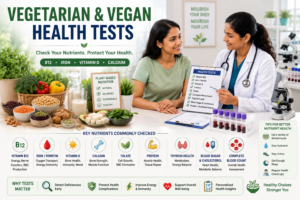
Key Nutrients Vegetarians and Vegans Should Test
The key nutrients commonly worth monitoring in vegetarians and vegans include Vitamin B12, iron and ferritin, Vitamin D, calcium, protein-related markers, and selected nutritional or metabolic markers based on individual needs. Among these, Vitamin B12 deserves particular attention because naturally occurring, reliably absorbable B12 is mainly found in animal-derived foods, while plant-based diets often require fortified foods or supplements.
Why Should Vegetarians and Vegans Monitor Nutrient Levels?
A vegetarian diet does not automatically mean a nutrient-deficient diet. Likewise, vegan eating can be nutritionally adequate when meals are properly planned.
Nevertheless, certain nutrients deserve closer monitoring because their sources, absorption, or bioavailability may be more limited in plant-based diets.
For example, legumes, leafy greens, seeds, nuts, whole grains, and fortified foods can contribute valuable nutrients. However, dietary intake alone does not always tell you whether your body’s stores are adequate.
Therefore, laboratory testing becomes useful when you have symptoms, specific risk factors, a restricted diet, or a long-term vegetarian or vegan lifestyle.
Diet Quality Matters More Than the Label
A vegetarian eating a varied diet containing pulses, dairy, vegetables, fruits, nuts, seeds, and fortified foods may have a very different nutritional profile from someone who mainly eats refined carbohydrates.
Similarly, a vegan diet based on legumes, soy, vegetables, whole grains, nuts, seeds, and fortified products can be substantially different from a diet dominated by packaged vegan foods.
Consequently, the goal is not simply to ask, “Am I vegetarian or vegan?” Instead, ask, “Which nutrients am I consistently getting, and which ones may need monitoring?”
Nutritional Gaps in Vegetarian and Vegan Diets
Plant-based diets can be rich in several nutrients. However, some nutrients commonly require particular attention.
Vitamin B12: The Big One
Among all Vegetarian and Vegan Health Tests, Vitamin B12 testing is often one of the most important.
Vitamin B12 is essential for red blood cell formation, DNA synthesis, and normal neurological function. Because naturally occurring dietary B12 is concentrated in animal-derived foods, vegans in particular need a reliable source through fortified foods or supplements.
Additionally, B12 deficiency may develop gradually. Therefore, a person may not notice obvious symptoms until the deficiency becomes more significant.
B12 Symptoms Can Be Easy to Miss
Low B12 may be associated with:
- Fatigue and weakness
- Tingling or numbness
- Reduced concentration
- Pale skin
- Mouth or tongue changes
- Certain types of anemia
- Neurological symptoms in more advanced deficiency
However, these symptoms can have many causes. Therefore, testing is more useful than assuming B12 deficiency based only on how you feel.
B12 Testing in Bangalore
A Vitamin B12 blood test can help assess your current status. Depending on the clinical situation, healthcare professionals may also consider related tests such as a complete blood count or other markers.
Iron and Ferritin
Iron is another important nutrient for vegetarians and vegans to monitor, particularly for people with increased iron requirements.
Plant foods such as lentils, beans, chickpeas, tofu, spinach, sesame, and other seeds provide iron. However, much of the iron in plant foods is non-heme iron, which is absorbed differently from heme iron found in animal foods.
Therefore, adequate dietary intake does not always guarantee adequate body iron stores.
Why Ferritin Matters
Ferritin reflects stored iron and can help identify depleted iron stores, although interpretation should consider inflammation and the clinical context.
Moreover, hemoglobin may remain within the usual range during early iron depletion. Consequently, checking ferritin can provide useful information before obvious anemia develops.
Who Should Pay Extra Attention?
Iron and ferritin monitoring can be especially relevant for:
- Women with heavy menstrual bleeding
- People with a highly restricted diet
- Pregnant individuals, under medical guidance
- People with persistent fatigue
- Individuals with previous iron deficiency
- Endurance athletes with increased nutritional demands
Vitamin D and Calcium
Vitamin D deserves attention regardless of whether someone eats meat. Nevertheless, people who spend little time outdoors may be particularly susceptible to low Vitamin D levels.
This is especially relevant in Bangalore, where long office hours, indoor work, commuting, and sedentary routines can reduce regular sun exposure.
Why Vitamin D Is Important
Vitamin D contributes to calcium absorption and normal bone and muscle function.
Meanwhile, calcium is important for maintaining bones, teeth, muscle function, and several physiological processes.
Therefore, Vitamin D and calcium are often considered together when evaluating bone health.
South Indian Diet and Calcium
Traditional South Indian vegetarian diets can provide calcium through foods such as dairy, ragi, sesame, and certain leafy vegetables.
However, calcium intake can vary considerably from one person to another. Vegans also need to pay attention to reliable calcium sources such as calcium-fortified plant milks, calcium-set tofu, sesame, and selected leafy greens.
Protein and Omega Markers
Protein is another area frequently discussed when vegetarian and vegan diets are planned.
Fortunately, plant-based diets can provide substantial protein through lentils, beans, chickpeas, soy, tofu, tempeh, peas, nuts, and seeds.
However, people with very restricted diets, high exercise demands, older adults, or those experiencing unintended weight loss may need closer nutritional assessment.
Protein Intake Is About the Whole Diet
Instead of focusing on one food, consider the overall pattern of protein intake throughout the day.
For example, combining pulses, legumes, soy foods, dairy or fortified alternatives, nuts, and seeds can help create a more varied protein intake.
What About Omega-3?
Omega-3 fatty acids also deserve attention, particularly in vegan diets.
Flaxseeds, chia seeds, walnuts, and certain fortified foods provide plant-based alpha-linolenic acid (ALA). However, EPA and DHA are different omega-3 fatty acids, and individual dietary needs vary.
Therefore, omega-3 testing is not automatically required for every vegetarian or vegan. Instead, discuss testing with a healthcare professional when there is a specific clinical or nutritional reason.
Other Health Markers Worth Considering
Nutritional monitoring does not always stop with B12, iron, Vitamin D, and calcium.
Depending on your age, diet, symptoms, and health history, a clinician may also recommend routine health markers such as:
Complete Blood Count
A CBC can provide information about hemoglobin and blood cell counts. It can therefore help identify anemia patterns that may require further evaluation.
Thyroid Testing
Vegetarian and vegan status does not automatically mean you have a thyroid problem. Nevertheless, thyroid testing may be appropriate when symptoms or clinical risk factors are present.
Blood Sugar Testing
Fasting glucose and HbA1c can be useful for routine metabolic screening, particularly when there are risk factors such as family history, overweight, sedentary lifestyle, or previous abnormal results.
Kidney and Liver Health
KFT and LFT may be recommended based on your overall health, medications, supplements, medical history, or specific symptoms.
Consequently, the best panel is one that combines nutritional monitoring with appropriate general preventive testing.
Vegetarian and Vegan Health Tests: A Practical Checklist
Here is a simple starting checklist for many plant-based adults:
| Health Marker | Why It May Be Monitored |
| Vitamin B12 | Long-term plant-based diet and B12 intake |
| Ferritin | Iron stores and possible iron depletion |
| Iron studies | Further evaluation when iron deficiency is suspected |
| Vitamin D | Bone, muscle, and overall nutritional assessment |
| Calcium | Bone health and calcium status |
| CBC | Anemia and blood cell assessment |
| HbA1c/Fasting Glucose | General metabolic health when indicated |
| Thyroid Profile | When symptoms or risk factors are present |
| Kidney/Liver Tests | Based on medical history or clinical need |
Importantly, this is a general guide, not a universal prescription. Testing should be tailored to the individual.
Prima Plant-Based Panel
At Prima Diagnostics, a plant-based health assessment can be planned around the nutrients and general health markers most relevant to your diet and lifestyle.
A practical Prima Plant-Based Panel may focus on:
Core Nutritional Markers
- Vitamin B12
- Ferritin
- Iron-related testing when indicated
- Vitamin D
- Calcium
- CBC
Additional Preventive Markers
Depending on age and health profile, your healthcare provider may also consider:
- HbA1c
- Fasting Blood Sugar
- Thyroid Profile
- Kidney Function Tests
- Liver Function Tests
Therefore, rather than ordering every available test, the better approach is to select the markers that answer a genuine health question.
Home Sample Collection in Bangalore
For busy professionals, families, and individuals following demanding work schedules, home sample collection can make preventive testing more convenient.
Prima Diagnostics offers diagnostic services across multiple Bangalore locations, with home collection availability depending on the test, service area, and appointment schedule.
Consequently, people in areas such as Jayanagar, BTM Layout, Whitefield, Yelahanka, Sarjapur Road, and RR Nagar, along with nearby localities, can explore suitable diagnostic options based on their location.
How Often Should Vegetarians and Vegans Test?
There is no single testing schedule that applies to everyone.
For example, someone who regularly uses a reliable B12 supplement may have different monitoring needs from someone who consumes no fortified foods or supplements.
Similarly, a person with previous iron deficiency may need more frequent follow-up than someone with consistently normal results.
Therefore, testing frequency should depend on your nutritional intake, previous reports, symptoms, age, medications, medical conditions, and your healthcare provider’s advice.
Moreover, whenever you repeat a test, comparing results over time can be more informative than looking at one number in isolation.
When Should You Consider Vegetarian and Vegan Health Tests?
Testing may be particularly useful when you notice:
Persistent Fatigue
Although tiredness has many possible causes, nutritional deficiencies are among the factors that may need evaluation.
Hair Fall or Weak Nails
Iron deficiency and other nutritional issues can sometimes contribute to these concerns. However, hair loss is multifactorial and should not automatically be attributed to diet.
Tingling or Numbness
These symptoms deserve medical evaluation, particularly when persistent, because neurological causes can have different origins.
Restrictive Eating
The more restricted the diet, the more important it becomes to assess whether essential nutrients are being adequately covered.
Pregnancy or Family Planning
Nutritional requirements change significantly during pregnancy. Therefore, people planning pregnancy should discuss appropriate nutritional assessment with their healthcare provider rather than relying on a generic test list.
Vegetarian and Vegan Diets in Bangalore
Bangalore has a large vegetarian population, while vegan eating is also becoming increasingly visible among younger consumers, fitness enthusiasts, environmental advocates, and health-conscious professionals.
Furthermore, the traditional South Indian diet already includes many plant foods such as rice, millets, sambar, rasam, dals, vegetables, coconut, nuts, and seeds.
However, a diet can still be nutritionally unbalanced when meals become heavily dependent on polished rice, refined snacks, sugary beverages, or processed foods.
Consequently, the focus should be on dietary variety, adequate protein, appropriate fortified foods or supplements, and periodic health monitoring where necessary.
FAQs About Vegetarian and Vegan Health Tests
- What is the most important test for vegans?
Vitamin B12 is one of the most important nutrients to monitor in long-term vegan diets because reliable dietary sources generally require fortified foods or supplementation.
- Should vegetarians test Vitamin B12?
They may benefit from B12 testing, especially when dairy and eggs are consumed infrequently, the diet is highly restricted, or symptoms or previous deficiency are present.
- Is ferritin more useful than iron for vegetarians?
Ferritin helps assess iron stores and can be particularly useful when iron depletion is suspected. However, interpretation should consider the overall clinical picture and other iron-related tests.
- Do vegans need a Vitamin D test in Bangalore?
Not necessarily because they are vegan. However, limited sun exposure, indoor work, previous deficiency, bone concerns, or other risk factors may make Vitamin D testing appropriate.
- Does a vegetarian diet cause protein deficiency?
Not automatically. A well-planned vegetarian diet can provide adequate protein. However, very restrictive diets or increased nutritional requirements may justify a closer dietary and clinical assessment.
- Can I do vegetarian and vegan health tests through home collection?
Depending on the test and service area, home sample collection may be available in Bangalore. Confirm availability and preparation requirements while booking with Prima Diagnostics.
- How can I choose the right plant-based health panel?
Start with your diet, symptoms, previous reports, age, lifestyle, and medical history. Then select tests that address specific nutritional or health risks rather than ordering unnecessary tests.
Conclusion
A vegetarian or vegan lifestyle can be healthy, varied, and sustainable. Nevertheless, certain nutrients deserve special attention, particularly when the diet excludes major food groups.
Therefore, Vitamin B12, ferritin and iron status, Vitamin D, calcium, CBC, and selected metabolic tests can form the foundation of a sensible monitoring strategy when clinically appropriate.
Moreover, Bangalore’s busy work culture, indoor lifestyle, changing food habits, and growing interest in plant-based eating make nutritional awareness increasingly important.
Ultimately, the goal of Vegetarian and Vegan Health Tests is not to find problems unnecessarily. Instead, it is to identify nutritional gaps early, understand your health more clearly, and make better-informed dietary decisions.