If you are searching for a
Ferritin and Iron Normal Range chart, especially as a woman, you may be trying to understand whether your iron stores are healthy or whether a low result could explain symptoms such as tiredness, weakness or hair fall.
However, ferritin, serum iron and haemoglobin are
not the same measurement. Instead, each provides different information about iron status and blood health. Therefore, looking at all the relevant results together is often more useful than focusing on one number.
Moreover,
Indian women, women with regular menstrual blood loss, and people following vegetarian diets can have factors that increase the risk of inadequate iron intake or iron deficiency.
This Blog Includes:
- Article Title: Ferritin and Iron Normal Range Chart for Women
- Publisher: Prima Diagnostics
- Type: Chart / Normal Range Healthcare Blog
- Topics Covered: Ferritin, Serum Iron, Haemoglobin, Iron Deficiency, Iron-Deficiency Anaemia, Low Ferritin, Iron Stores, Ferritin Normal Range, Iron Normal Range, TIBC, Transferrin, Transferrin Saturation, CBC, Heavy Periods, Menstrual Blood Loss, Vegetarian Diet, Hair Fall, Fatigue, Iron-Rich Foods, Iron Supplements, Retesting and Patient Education.
- Services Covered: Ferritin Testing, Serum Iron Testing, Iron Profile Testing, CBC Testing, Haemoglobin Testing, Nutritional Assessment, Preventive Health Testing, Home Sample Collection and Laboratory Diagnostics.
- Ferritin Measurement Guidance: Explains that ferritin reflects stored iron and is commonly reported in ng/mL, while emphasizing that laboratory-specific reference intervals should be used.
- Serum Iron Guidance: Explains that serum iron measures circulating iron and can fluctuate, making interpretation alongside ferritin and other iron studies important.
- Haemoglobin Guidance: Explains that haemoglobin reflects the oxygen-carrying protein in red blood cells and that iron deficiency can occur before significant haemoglobin reduction.
- Normal Range Guidance: Provides general educational female ferritin, serum iron and haemoglobin ranges while emphasizing that reference intervals vary between laboratories.
- Low Ferritin Guidance: Explains that low ferritin can indicate depleted iron stores and may occur before iron-deficiency anaemia develops.
- Symptom Guidance: Covers tiredness, weakness, reduced exercise tolerance, headaches, difficulty concentrating, hair shedding and selected symptoms associated with low iron stores.
- Hair Fall Guidance: Explains that low iron stores may be associated with diffuse hair shedding while emphasizing that hair loss can have many other causes.
- Menstrual Blood Loss Guidance: Explains why heavy or prolonged menstrual bleeding can contribute to iron depletion in women.
- Vegetarian Diet Guidance: Explains that vegetarian diets can provide iron but that plant-based non-haem iron is absorbed differently and may require attention to overall dietary planning.
- Iron Studies Guidance: Covers ferritin, serum iron, TIBC, transferrin, transferrin saturation, CBC and haemoglobin as related components of iron-status assessment.
- Inflammation Guidance: Explains that ferritin can increase during inflammation or infection and therefore may not always reflect iron stores accurately in isolation.
- Dietary Guidance: Covers iron-rich foods such as lentils, dals, chickpeas, beans, leafy greens, sesame seeds, pumpkin seeds, nuts, fortified foods, eggs and animal-derived foods where included in the diet.
- Iron Absorption Guidance: Explains that vitamin C can improve the absorption of non-haem iron from plant-based foods.
- Service Focus: Ferritin Testing, Iron Profile Testing, CBC, Haemoglobin Testing, Nutritional Assessment, Preventive Health Screening and Home Sample Collection.
- FAQ Section: Included.
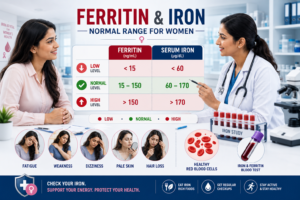 Ferritin and Iron normal range chart for women
It is a marker of the body's stored iron, while serum iron measures iron circulating in the blood and haemoglobin measures the oxygen-carrying protein in red blood cells. Ferritin reference ranges vary by laboratory, but adult female ranges are often approximately
15–150 ng/mL, while serum iron may commonly fall around
60–170 µg/dL. However, laboratory ranges differ, and low ferritin can occur even when haemoglobin is still normal.
Ferritin vs Iron vs Haemoglobin
What Is Ferritin?
Ferritin is a protein that stores iron in the body.
Consequently, ferritin is often used as an indicator of
iron stores.
When iron stores become depleted, ferritin can fall before haemoglobin becomes abnormal.
Therefore, ferritin can sometimes identify iron deficiency at an earlier stage than a routine haemoglobin test.
What Is Serum Iron?
Serum iron measures the amount of iron circulating in the blood at the time of testing.
However, serum iron can fluctuate depending on factors such as recent food intake, time of day and other physiological factors.
Therefore, serum iron is generally interpreted along with other iron studies rather than being used alone to diagnose iron deficiency.
What Is Haemoglobin?
Haemoglobin is the protein in red blood cells responsible for carrying oxygen.
Consequently, a low haemoglobin level can indicate
anaemia.
However, iron deficiency can exist before significant anaemia develops.
Therefore, a normal haemoglobin result does not necessarily mean that your iron stores are adequate.
Ferritin Normal Range Chart for Women and Men
General Adult Reference Guide
Reference ranges differ between laboratories. The following values are therefore intended only as a
general educational guide.
| Test |
Women |
Men |
Common Unit |
| Ferritin |
Approximately 15–150 |
Approximately 30–400 |
ng/mL |
| Serum Iron |
Approximately 60–170 |
Approximately 60–170 |
µg/dL |
| Haemoglobin |
Approximately 12–16 |
Approximately 13–17 |
g/dL |
However, these are not universal clinical cut-offs.
For example, a laboratory may use a narrower or different ferritin reference interval. Therefore, always compare your result with the
reference range printed on your own laboratory report.
What Is a Good Ferritin Level for Women?
Is 15 ng/mL Normal?
A ferritin value around 15 ng/mL may fall within the lower end of some laboratory reference ranges.
Nevertheless, it may suggest
low iron stores, particularly when symptoms or other iron-study abnormalities are present.
Therefore, being technically “within range” does not always mean that iron stores are optimal.
Is 30 ng/mL Ferritin Good?
A ferritin around 30 ng/mL can fall within the reference range in many laboratories.
However, interpretation depends on symptoms, haemoglobin, transferrin saturation, inflammation and the reason testing was performed.
Consequently, your healthcare provider may consider the entire iron profile rather than relying on ferritin alone.
Low Ferritin Symptoms
What Does Low Ferritin Feel Like?
Low ferritin can be associated with symptoms such as:
- Tiredness
- Weakness
- Reduced exercise tolerance
- Headaches
- Difficulty concentrating
- Restless-leg symptoms in some people
- Hair shedding
However, these symptoms are not specific to iron deficiency.
Therefore, a blood test is more reliable than trying to diagnose low ferritin based only on how you feel.
Hair Fall and Low Ferritin
Can Low Iron Stores Cause Hair Loss?
Iron deficiency can be associated with
diffuse hair shedding in some people.
Consequently, women experiencing persistent hair fall may discuss ferritin and iron testing with their healthcare provider, particularly when there are additional risk factors.
However, hair loss can have many other causes, including thyroid disorders, nutritional deficiencies, hormonal changes and scalp conditions.
Therefore, ferritin should not automatically be assumed to be the cause.
Why Ferritin Drops Before Anemia
Iron Deficiency Develops in Stages
Iron deficiency does not always begin with low haemoglobin.
Instead, iron stores may gradually become depleted.
A simplified progression can look like:
Adequate iron stores → Reduced ferritin → More significant iron depletion → Reduced haemoglobin → Iron-deficiency anaemia
Therefore, ferritin can sometimes identify an earlier stage of iron deficiency while the CBC and haemoglobin still appear normal.
Can You Have Low Ferritin but Normal Haemoglobin?
Yes.
This is an important reason why looking only at haemoglobin can miss early iron deficiency.
Consequently, a woman may experience tiredness or hair shedding while her haemoglobin is still within the laboratory reference range.
However, symptoms and laboratory findings must still be assessed together.
Why Indian Women May Be at Risk of Iron Deficiency
Period Blood Loss
Regular menstrual blood loss is an important source of iron loss.
Therefore, women with heavy or prolonged periods may have a greater risk of depleted iron stores over time.
This is particularly relevant when menstrual bleeding is consistently heavy or associated with symptoms such as fatigue or dizziness.
Vegetarian Diet
A well-planned vegetarian diet can be nutritionally adequate. Nevertheless, plant-based iron is generally
non-haem iron, which is absorbed differently from haem iron found in animal foods.
Consequently, vegetarian women may need to pay particular attention to adequate iron intake and discuss testing when symptoms or risk factors are present.
Iron Studies Explained
What Is a Complete Iron Profile?
Iron status is often assessed using several related measurements.
A doctor may request:
- Ferritin
- Serum iron
- TIBC
- Transferrin
- Transferrin saturation
- CBC
- Haemoglobin
Therefore, the phrase
“iron test” can refer to several different investigations.
What Is TIBC?
Total iron-binding capacity (TIBC) reflects the blood's capacity to bind iron through transferrin.
Consequently, TIBC can provide additional information when evaluating possible iron deficiency or iron overload.
What Is Transferrin Saturation?
Transferrin saturation estimates how much of the available transferrin is carrying iron.
Therefore, it can be useful alongside ferritin and serum iron when assessing iron status.
Ferritin and Inflammation
Can Ferritin Be High Even When Iron Is Low?
Yes.
Ferritin is also an
acute-phase reactant, meaning it can rise in response to inflammation or infection.
Consequently, inflammation can sometimes make ferritin appear higher than expected.
Therefore, a normal or elevated ferritin does not always completely exclude iron deficiency when significant inflammation is present.
This is one reason healthcare professionals may consider the broader clinical picture and additional iron studies.
Foods Rich in Iron
Which Foods Can Support Iron Intake?
A balanced diet can provide iron through both animal and plant sources.
Examples include:
- Lentils and dals
- Chickpeas
- Beans
- Leafy green vegetables
- Sesame seeds
- Pumpkin seeds
- Nuts
- Fortified cereals
- Eggs
- Meat and seafood, where included in the diet
Consequently, a varied diet can help support adequate iron intake.
How Can Vegetarian Women Improve Iron Absorption?
Because plant-based iron is absorbed less efficiently, meal composition can matter.
For example, foods containing
vitamin C can improve non-haem iron absorption.
Therefore, combining iron-rich plant foods with sources of vitamin C, such as citrus fruits, tomatoes or peppers, can be a useful dietary approach.
Iron Supplements: When Are They Needed?
Should You Take Iron Just Because Ferritin Is Low?
Not automatically.
Although supplementation is commonly used for confirmed iron deficiency, the appropriate dose and duration depend on the severity of deficiency, symptoms, cause, and individual health circumstances.
Therefore, avoid starting high-dose iron without professional advice.
Why Finding the Cause Matters
If ferritin repeatedly falls, simply replacing iron may not solve the underlying problem.
Possible contributors can include:
- Heavy menstrual bleeding
- Inadequate dietary intake
- Reduced absorption
- Gastrointestinal blood loss
- Certain medical conditions
Consequently, your healthcare provider may investigate
why your iron stores are low rather than focusing only on supplementation.
When Should You Get a Ferritin Test?
Persistent Fatigue
If fatigue continues despite adequate sleep and a reasonable diet, iron studies may be considered when clinically appropriate.
Heavy Periods
Women with heavy or prolonged menstrual bleeding may discuss ferritin and CBC testing with their healthcare provider.
Therefore, monitoring iron stores can sometimes be useful when blood loss is significant.
Hair Loss
Persistent diffuse hair shedding may also prompt iron and ferritin assessment, particularly when other risk factors are present.
However, a broader hair-loss evaluation may be necessary because iron deficiency is only one possible cause.
When to Retest Ferritin and Iron
After Starting Iron Treatment
The timing of repeat testing depends on:
- Severity of deficiency
- Treatment method
- Response to therapy
- Underlying cause
- Symptoms
- Healthcare-provider recommendations
Therefore, there is no universal retesting date for everyone.
Why Retesting Matters
Follow-up testing can help determine whether iron stores and haemoglobin are improving.
However, ferritin can change for reasons other than iron replacement, including inflammation.
Consequently, your healthcare provider may decide which markers should be repeated and when.
Should Women Get Iron Testing Every Year?
Routine Testing Isn't Identical for Everyone
Not every woman needs an annual ferritin test.
Instead, testing frequency depends on:
- Menstrual blood loss
- Previous iron deficiency
- Pregnancy or postpartum status
- Diet
- Symptoms
- Medical conditions
- Previous test results
Therefore, discuss the appropriate schedule with your healthcare provider.
How to Read Your Ferritin and Iron Report
Step 1: Find Ferritin
Start by locating the ferritin result and its unit.
Step 2: Check the Laboratory Range
Next, compare it with the reference interval printed on the report.
Step 3: Look at Haemoglobin
Then check the haemoglobin level and the wider CBC.
Step 4: Review Iron Studies
If available, also look at serum iron, TIBC and transferrin saturation.
Step 5: Consider Symptoms
Finally, consider menstrual history, diet, fatigue, hair fall and other relevant symptoms.
Consequently, the complete pattern becomes more meaningful than one isolated number.
Ferritin and Iron Testing in Bengaluru
Convenient Testing for Indian Women
For women in Bengaluru experiencing persistent tiredness, heavy periods, hair fall or other symptoms that may warrant evaluation, ferritin and iron testing can be discussed with a healthcare professional.
Moreover, home sample collection can be convenient for busy professionals who have limited time for laboratory visits.
However, availability depends on the test, location and appointment schedule.
Ferritin and Iron Test Cost in Bengaluru
How Much Does Testing Cost?
The cost of ferritin and iron testing in Bengaluru depends on whether you book:
- Ferritin alone
- Serum iron alone
- A complete iron profile
- CBC with iron studies
- A larger health package
Therefore, confirm the
exact test name, current price and package inclusions before booking.
Frequently Asked Questions
What is the normal ferritin range for women?
Many laboratories use a female adult ferritin reference range of approximately
15–150 ng/mL, but the exact interval varies. Always interpret your result using the laboratory's own range.
What is a normal iron level for women?
Serum iron commonly falls around
60–170 µg/dL in some adult reference ranges. However, serum iron fluctuates and should generally be interpreted along with ferritin and other iron studies.
Can ferritin be low with normal haemoglobin?
Yes. Iron stores can become depleted before haemoglobin falls enough to meet criteria for anaemia.
What ferritin level is considered low?
A ferritin below the laboratory's lower reference limit is generally considered low. In many settings, values around or below
15 ng/mL suggest depleted iron stores, but interpretation depends on the clinical context.
Can low ferritin cause hair fall?
Low iron stores may be associated with diffuse hair shedding in some people. However, hair fall has many possible causes, so ferritin should be interpreted as part of a broader evaluation.
Why does ferritin drop before haemoglobin?
The body can use stored iron first. Consequently, ferritin may decrease as iron reserves are depleted before haemoglobin becomes significantly low.
Can vegetarians have low ferritin?
Yes. Vegetarian diets can provide iron, but much of it is non-haem iron, which is absorbed differently. Therefore, adequate intake and appropriate dietary planning are important.
Should I take iron supplements if my ferritin is low?
Discuss the result with a healthcare professional. The appropriate treatment depends on the severity and cause of deficiency, your symptoms and other medical factors.
When should ferritin be retested after iron treatment?
The timing varies according to the severity of deficiency and treatment plan. Your healthcare provider can decide when repeat ferritin, CBC or other iron studies are appropriate.
Can I book a ferritin test in Bengaluru?
Yes. Ferritin and related iron studies can be available through diagnostic laboratories, with home collection potentially available for eligible locations.
Conclusion
Understanding a
Ferritin and Iron Normal Range chart can make women's blood reports easier to interpret. Nevertheless, ferritin, serum iron, and haemoglobin measure different aspects of iron and blood health.
In general, adult female ferritin reference ranges may be around
15–150 ng/mL, while serum iron may commonly fall around
60–170 µg/dL. However, laboratory-specific reference ranges should always take priority.
Moreover,
period blood loss, vegetarian diets and inadequate iron intake can contribute to reduced iron stores. Consequently, women may develop low ferritin before obvious iron-deficiency anaemia appears.
Therefore, if you have
persistent tiredness, hair fall, reduced exercise tolerance, heavy periods or other relevant symptoms, discuss ferritin and iron testing with your healthcare provider rather than relying only on haemoglobin.
Most importantly, do not start high-dose iron supplements based solely on an online chart.