
Onam Sadhya and Cholesterol Test - Post-Feast Health Check in Bengaluru
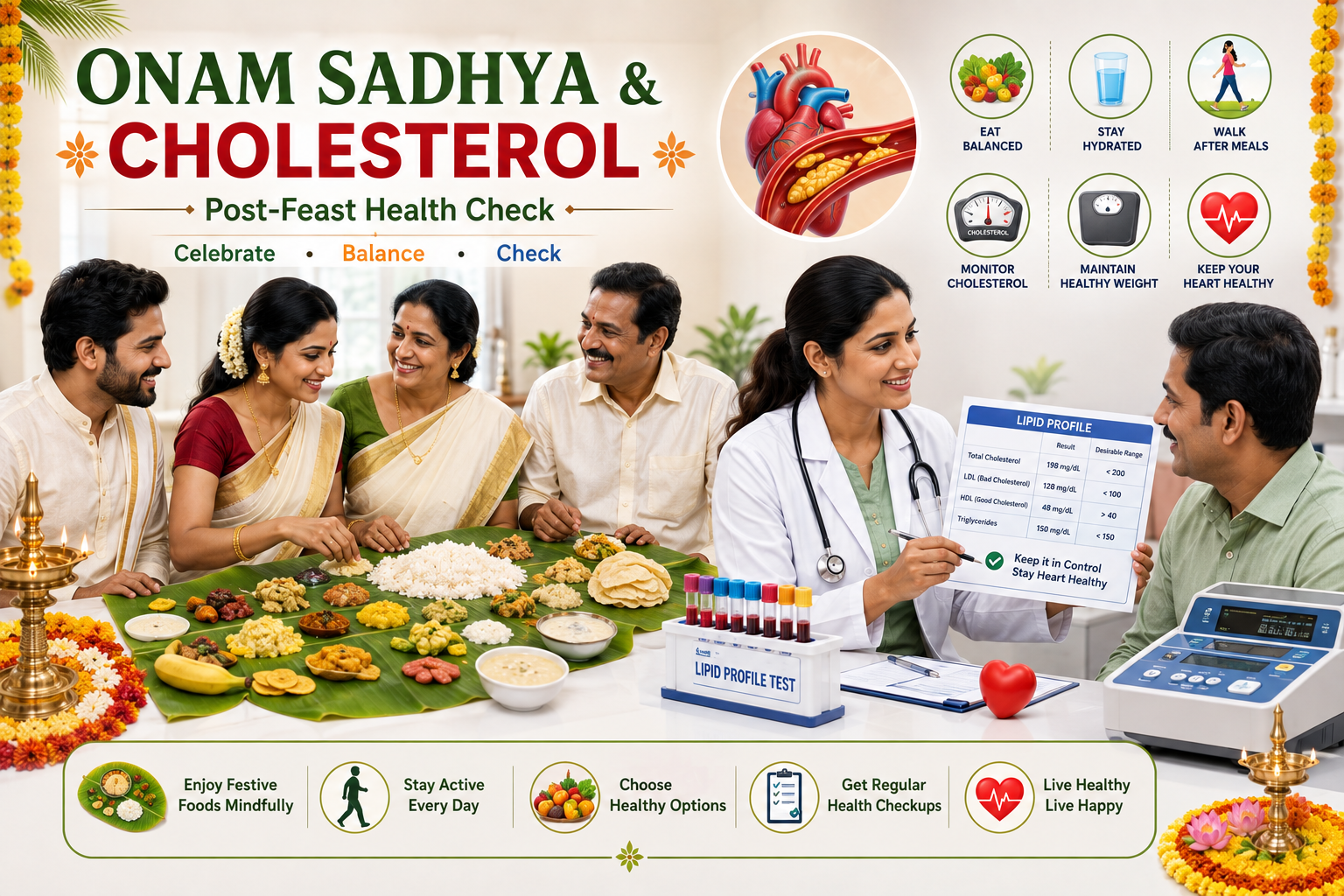
If you are searching for a post Onam Sadhya and cholesterol test in Bengaluru, the reason is probably simple: Onam Sadhya brings together an impressive variety of traditional dishes, sweets, payasam, rice-based meals and festive treats. Consequently, one large feast can mean a much bigger intake of carbohydrates, calories, saturated fat and salt than your usual meal.
However, enjoying an Onam Sadhya does not automatically mean that your cholesterol or blood sugar has become unhealthy. Instead, the bigger concern is what your overall eating pattern, lifestyle, medical history and existing risk factors look like.
Moreover, for the Bengaluru Malayali community, Onam often means several celebrations, office gatherings and family feasts rather than just one meal. Therefore, if you have diabetes, high cholesterol, heart disease, obesity, or a family history of metabolic problems, a post-feast health check may be worth discussing with your healthcare provider.
This Blog Includes:
 Onam Sadhya and cholesterol test -What to test after a heavy festival feast
After a heavy festival feast, commonly considered tests include a lipid profile and blood glucose testing, particularly for people with existing diabetes, high cholesterol or other cardiovascular risk factors. However, one festive meal does not diagnose a disease, and HbA1c reflects longer-term blood glucose rather than the effect of a single meal.
Why a Onam Sadhya and cholesterol test Hits Your Body
A Traditional Feast Can Be Nutritionally Dense
An Onam Sadhya can contain numerous dishes served together.
For example, a festive meal may include rice, curries, preparations made with coconut, fried accompaniments, pickles, desserts and payasam.
Consequently, the total meal can be considerably larger than a typical everyday lunch.
Nevertheless, traditional food can absolutely be part of a balanced diet. The main issue is usually portion size, frequency and the overall dietary pattern rather than one celebratory meal.
Why Portion Size Matters
When many dishes are served at once, it is easy to taste everything and then go back for another serving.
Furthermore, sweets and desserts may follow an already large meal.
Therefore, the total calorie and carbohydrate intake can become substantial, particularly when celebrations continue over several days.
Cholesterol and Sugar After Big Meals
Can One Feast Increase Cholesterol?
A single meal can influence certain blood measurements temporarily. However, cholesterol levels are generally more reflective of your broader metabolic health and longer-term dietary pattern.
Therefore, a cholesterol test immediately after one exceptionally rich meal may not represent your usual baseline perfectly.
Nevertheless, if you already have high cholesterol or are taking treatment, following your clinician's testing schedule remains important.
Can Blood Sugar Rise After an Onam Feast?
Yes. Carbohydrate-rich foods can cause blood glucose to rise after eating.
Consequently, people with diabetes or impaired glucose regulation may see noticeable short-term changes after a large festive meal.
However, a temporary rise after eating does not automatically indicate diabetes.
Therefore, the type and timing of the glucose test matter.
When to Test After an Onam Feast
Should You Test the Next Day?
Not necessarily.
If you are simply curious about the effect of one large meal, testing immediately afterward may not provide the most useful picture of your usual health.
Instead, follow your healthcare provider's recommended testing schedule.
For people already monitoring diabetes or cholesterol, however, routine testing should generally continue according to their established plan.
When Can a Post-Onam Test Be Useful?
A health check may be particularly relevant when you have:
Onam Sadhya and cholesterol test -What to test after a heavy festival feast
After a heavy festival feast, commonly considered tests include a lipid profile and blood glucose testing, particularly for people with existing diabetes, high cholesterol or other cardiovascular risk factors. However, one festive meal does not diagnose a disease, and HbA1c reflects longer-term blood glucose rather than the effect of a single meal.
Why a Onam Sadhya and cholesterol test Hits Your Body
A Traditional Feast Can Be Nutritionally Dense
An Onam Sadhya can contain numerous dishes served together.
For example, a festive meal may include rice, curries, preparations made with coconut, fried accompaniments, pickles, desserts and payasam.
Consequently, the total meal can be considerably larger than a typical everyday lunch.
Nevertheless, traditional food can absolutely be part of a balanced diet. The main issue is usually portion size, frequency and the overall dietary pattern rather than one celebratory meal.
Why Portion Size Matters
When many dishes are served at once, it is easy to taste everything and then go back for another serving.
Furthermore, sweets and desserts may follow an already large meal.
Therefore, the total calorie and carbohydrate intake can become substantial, particularly when celebrations continue over several days.
Cholesterol and Sugar After Big Meals
Can One Feast Increase Cholesterol?
A single meal can influence certain blood measurements temporarily. However, cholesterol levels are generally more reflective of your broader metabolic health and longer-term dietary pattern.
Therefore, a cholesterol test immediately after one exceptionally rich meal may not represent your usual baseline perfectly.
Nevertheless, if you already have high cholesterol or are taking treatment, following your clinician's testing schedule remains important.
Can Blood Sugar Rise After an Onam Feast?
Yes. Carbohydrate-rich foods can cause blood glucose to rise after eating.
Consequently, people with diabetes or impaired glucose regulation may see noticeable short-term changes after a large festive meal.
However, a temporary rise after eating does not automatically indicate diabetes.
Therefore, the type and timing of the glucose test matter.
When to Test After an Onam Feast
Should You Test the Next Day?
Not necessarily.
If you are simply curious about the effect of one large meal, testing immediately afterward may not provide the most useful picture of your usual health.
Instead, follow your healthcare provider's recommended testing schedule.
For people already monitoring diabetes or cholesterol, however, routine testing should generally continue according to their established plan.
When Can a Post-Onam Test Be Useful?
A health check may be particularly relevant when you have:
- Article Title: Onam Sadhya and Cholesterol Test - Post-Feast Health Check in Bengaluru
- Publisher: Prima Diagnostics
- Type: Seasonal / Symptom Healthcare Blog
- Topics Covered: Onam Sadhya, Onam Feast, Post-Onam Cholesterol Test, Cholesterol, Lipid Profile, LDL Cholesterol, HDL Cholesterol, Triglycerides, Blood Sugar, Fasting Blood Sugar, HbA1c, Diabetes, Prediabetes, Rich Festival Food, Payasam, Festival Sweets, Bengaluru Malayali Community, Family Gatherings, Preventive Health Testing and Home Sample Collection.
- Services Covered: Lipid Profile Testing, Blood Sugar Testing, HbA1c Testing, Preventive Health Screening, Health Packages, Blood Testing and Home Sample Collection.
- Festival Food Guidance: Explains how a large Sadhya meal can increase overall calorie and carbohydrate intake while emphasizing that one festive meal does not automatically cause high cholesterol or diabetes.
- Cholesterol Guidance: Explains that cholesterol status reflects broader dietary, metabolic and cardiovascular factors and that immediate post-feast testing may not represent a person's usual baseline.
- Lipid Profile Guidance: Explains the role of total cholesterol, LDL cholesterol, HDL cholesterol and triglycerides in assessing lipid status.
- Blood Sugar Guidance: Explains that carbohydrate-rich festive meals can temporarily increase blood glucose and distinguishes short-term glucose changes from longer-term diabetes assessment.
- HbA1c Guidance: Explains that HbA1c reflects average blood glucose over approximately two to three months and is therefore not a measure of the effect of a single Onam meal.
- Testing Timing Guidance: Explains that there is no universal waiting period for post-festival cholesterol testing and that people with existing conditions should follow their healthcare provider's established monitoring schedule.
- Preparation Guidance: Patients should follow any specific fasting and preparation instructions given by their healthcare provider or laboratory.
- Service Focus: Lipid Profile Testing, Cholesterol Testing, Blood Sugar Testing, HbA1c Testing, Preventive Health Screening, Health Packages, and Home Sample Collection.
- FAQ Section: Included.
Onam Sadhya and cholesterol test -What to test after a heavy festival feast
After a heavy festival feast, commonly considered tests include a lipid profile and blood glucose testing, particularly for people with existing diabetes, high cholesterol or other cardiovascular risk factors. However, one festive meal does not diagnose a disease, and HbA1c reflects longer-term blood glucose rather than the effect of a single meal.
Why a Onam Sadhya and cholesterol test Hits Your Body
A Traditional Feast Can Be Nutritionally Dense
An Onam Sadhya can contain numerous dishes served together.
For example, a festive meal may include rice, curries, preparations made with coconut, fried accompaniments, pickles, desserts and payasam.
Consequently, the total meal can be considerably larger than a typical everyday lunch.
Nevertheless, traditional food can absolutely be part of a balanced diet. The main issue is usually portion size, frequency and the overall dietary pattern rather than one celebratory meal.
Why Portion Size Matters
When many dishes are served at once, it is easy to taste everything and then go back for another serving.
Furthermore, sweets and desserts may follow an already large meal.
Therefore, the total calorie and carbohydrate intake can become substantial, particularly when celebrations continue over several days.
Cholesterol and Sugar After Big Meals
Can One Feast Increase Cholesterol?
A single meal can influence certain blood measurements temporarily. However, cholesterol levels are generally more reflective of your broader metabolic health and longer-term dietary pattern.
Therefore, a cholesterol test immediately after one exceptionally rich meal may not represent your usual baseline perfectly.
Nevertheless, if you already have high cholesterol or are taking treatment, following your clinician's testing schedule remains important.
Can Blood Sugar Rise After an Onam Feast?
Yes. Carbohydrate-rich foods can cause blood glucose to rise after eating.
Consequently, people with diabetes or impaired glucose regulation may see noticeable short-term changes after a large festive meal.
However, a temporary rise after eating does not automatically indicate diabetes.
Therefore, the type and timing of the glucose test matter.
When to Test After an Onam Feast
Should You Test the Next Day?
Not necessarily.
If you are simply curious about the effect of one large meal, testing immediately afterward may not provide the most useful picture of your usual health.
Instead, follow your healthcare provider's recommended testing schedule.
For people already monitoring diabetes or cholesterol, however, routine testing should generally continue according to their established plan.
When Can a Post-Onam Test Be Useful?
A health check may be particularly relevant when you have:
- Already have diabetes
- prediabetes
- High cholesterol
- high blood pressure
- Take cholesterol-lowering medication
- obesity
- a family history of cardiovascular disease
- Have persistent symptoms or other medical concerns
- Total cholesterol
- LDL cholesterol
- HDL cholesterol
- Triglycerides
- Fasting Blood Sugar
- HbA1c
- Other glucose-related tests when clinically appropriate
- Smaller portions
- Avoiding repeated servings
- Eating vegetables and protein alongside rice
- Limiting excessive fried foods
- Keeping desserts to moderate portions
- Returning to regular meals after celebrations
- Maintaining normal physical activity
- Lipid Profile
- Fasting Blood Sugar
- HbA1c
- CBC
- Other preventive health investigations
- Older adults
- Working professionals
- People monitoring diabetes
- Busy families
- Patients who prefer morning collection