
Rainy Season Skin and Fungal Infections in Bengaluru - Tests to Consider
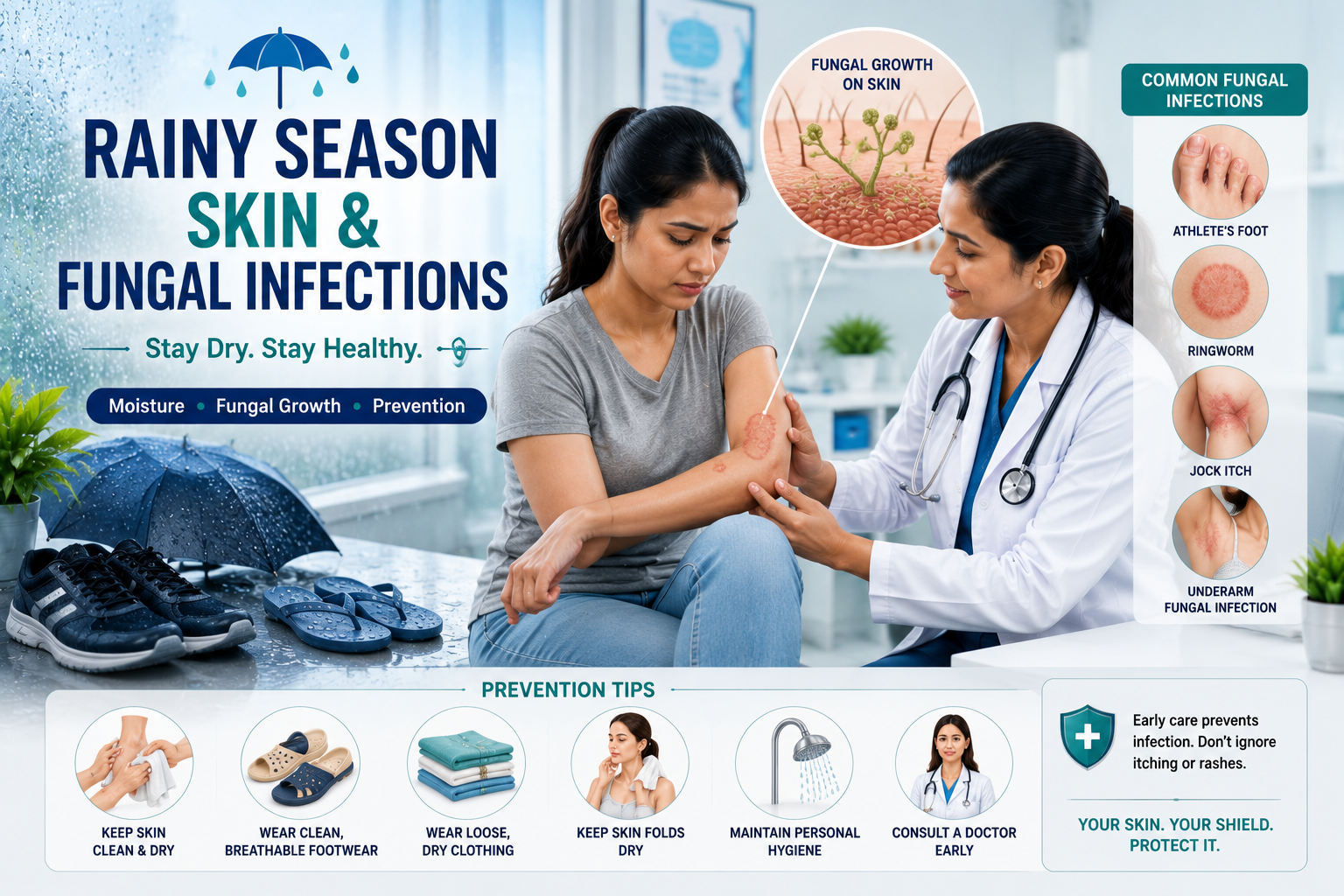
During Bengaluru's monsoon, Skin and Fungal Infections can become more common because humidity, sweating and damp clothing create an environment where certain fungi thrive. Moreover, sweaty commutes, wet shoes, tight clothing and prolonged moisture on the skin can make irritation and fungal growth more likely.
However, not every rash or itching problem is a fungal infection. Instead, similar symptoms can occur with eczema, bacterial infections, allergies, contact dermatitis and other skin conditions. Therefore, the appearance of a rash alone may not be enough to identify its cause.
For people dealing with Bengaluru's humid monsoon, particularly diabetics and people with other health conditions, persistent or recurrent skin infections may sometimes prompt additional testing.
This Blog Includes:
 When a monsoon skin infection needs a blood test
A monsoon-related skin infection does not automatically require a blood test. However, blood tests such as blood glucose or HbA1c and, in selected situations, a CBC may be considered when infections are recurrent, unusually persistent, widespread, severe, or associated with symptoms or risk factors suggesting diabetes, immune problems or another underlying condition. A KOH examination can help confirm whether certain skin lesions contain fungal elements.
Why Skin and Fungal Infections Rise During Monsoon
Humidity Creates a Favourable Environment
Fungi tend to grow well in warm, moist environments.
Consequently, Bengaluru's humid rainy-season conditions can contribute to fungal growth, particularly in areas where sweat and moisture remain trapped.
For example, the:
When a monsoon skin infection needs a blood test
A monsoon-related skin infection does not automatically require a blood test. However, blood tests such as blood glucose or HbA1c and, in selected situations, a CBC may be considered when infections are recurrent, unusually persistent, widespread, severe, or associated with symptoms or risk factors suggesting diabetes, immune problems or another underlying condition. A KOH examination can help confirm whether certain skin lesions contain fungal elements.
Why Skin and Fungal Infections Rise During Monsoon
Humidity Creates a Favourable Environment
Fungi tend to grow well in warm, moist environments.
Consequently, Bengaluru's humid rainy-season conditions can contribute to fungal growth, particularly in areas where sweat and moisture remain trapped.
For example, the:
- Article Title: Rainy Season Skin and Fungal Infections in Bengaluru - Tests to Consider
- Publisher: Prima Diagnostics
- Type: Seasonal / Symptom Healthcare Blog
- Topics Covered: Skin and Fungal Infections, Monsoon Skin Problems, Fungal Infections, Ringworm, Athlete's Foot, Skin-Fold Infections, Humidity, Sweating, Damp Clothing, Diabetes, Blood Sugar, HbA1c, CBC, KOH Examination, Recurrent Infections, Low Immunity, Monsoon Health, Skin Care and Home Sample Collection.
- Services Covered: KOH Examination when available, Blood Glucose Testing, HbA1c Testing, CBC Testing, Laboratory Diagnostics, Preventive Health Testing and Home Sample Collection.
- Monsoon Skin Guidance: Explains why warm and humid rainy-season conditions can favour fungal growth when sweat and moisture remain on the skin.
- Common Infection Guidance: Covers ringworm, athlete's foot and fungal infections affecting moist skin folds while clarifying that similar symptoms can have non-fungal causes.
- KOH Guidance: Explains that a potassium hydroxide examination can evaluate skin, hair or nail specimens for fungal elements and may help confirm a suspected fungal infection.
- Blood Test Guidance: Explains the possible role of blood glucose, HbA1c and CBC in selected cases where recurrent, persistent or severe skin infections raise concerns about diabetes, immune issues or other underlying conditions.
- Diabetes Guidance: Explains why people with diabetes may be more susceptible to certain infections and why recurrent fungal infections may prompt review of glucose control.
- HbA1c Guidance: Explains that HbA1c reflects average blood glucose over approximately the previous two to three months and can provide longer-term glucose information.
- CBC Guidance: Explains that CBC may be considered in selected persistent or severe infections but cannot independently diagnose fungal infection.
- Safety Guidance: Advises prompt medical assessment for rapidly spreading, painful, severely inflamed lesions, significant pus, fever or other concerning symptoms.
- Service Focus: KOH Examination, Blood Sugar Testing, HbA1c Testing, CBC Testing, Laboratory Diagnostics, Preventive Health Screening and Home Sample Collection.
- FAQ Section: Included.
When a monsoon skin infection needs a blood test
A monsoon-related skin infection does not automatically require a blood test. However, blood tests such as blood glucose or HbA1c and, in selected situations, a CBC may be considered when infections are recurrent, unusually persistent, widespread, severe, or associated with symptoms or risk factors suggesting diabetes, immune problems or another underlying condition. A KOH examination can help confirm whether certain skin lesions contain fungal elements.
Why Skin and Fungal Infections Rise During Monsoon
Humidity Creates a Favourable Environment
Fungi tend to grow well in warm, moist environments.
Consequently, Bengaluru's humid rainy-season conditions can contribute to fungal growth, particularly in areas where sweat and moisture remain trapped.
For example, the:
- Groin
- Feet
- Armpits
- Skin folds
- Areas beneath tight clothing
- Itchy patches
- Scaling
- Redness
- Ring-shaped or expanding lesions
- Diabetes
- Certain medications
- Immune-system problems
- Persistent moisture exposure
- Obesity or skin-fold problems
- Other medical conditions
- CBC
- KOH Examination
- Skin findings
- Duration of infection
- Recurrence
- Severity
- Diabetes risk
- Other symptoms
- Medical history
- Increased thirst
- Frequent urination
- Unexplained weight loss
- Fatigue
- Blurred vision