
Missed Period but Not Pregnant? 5 Tests to Find the Cause
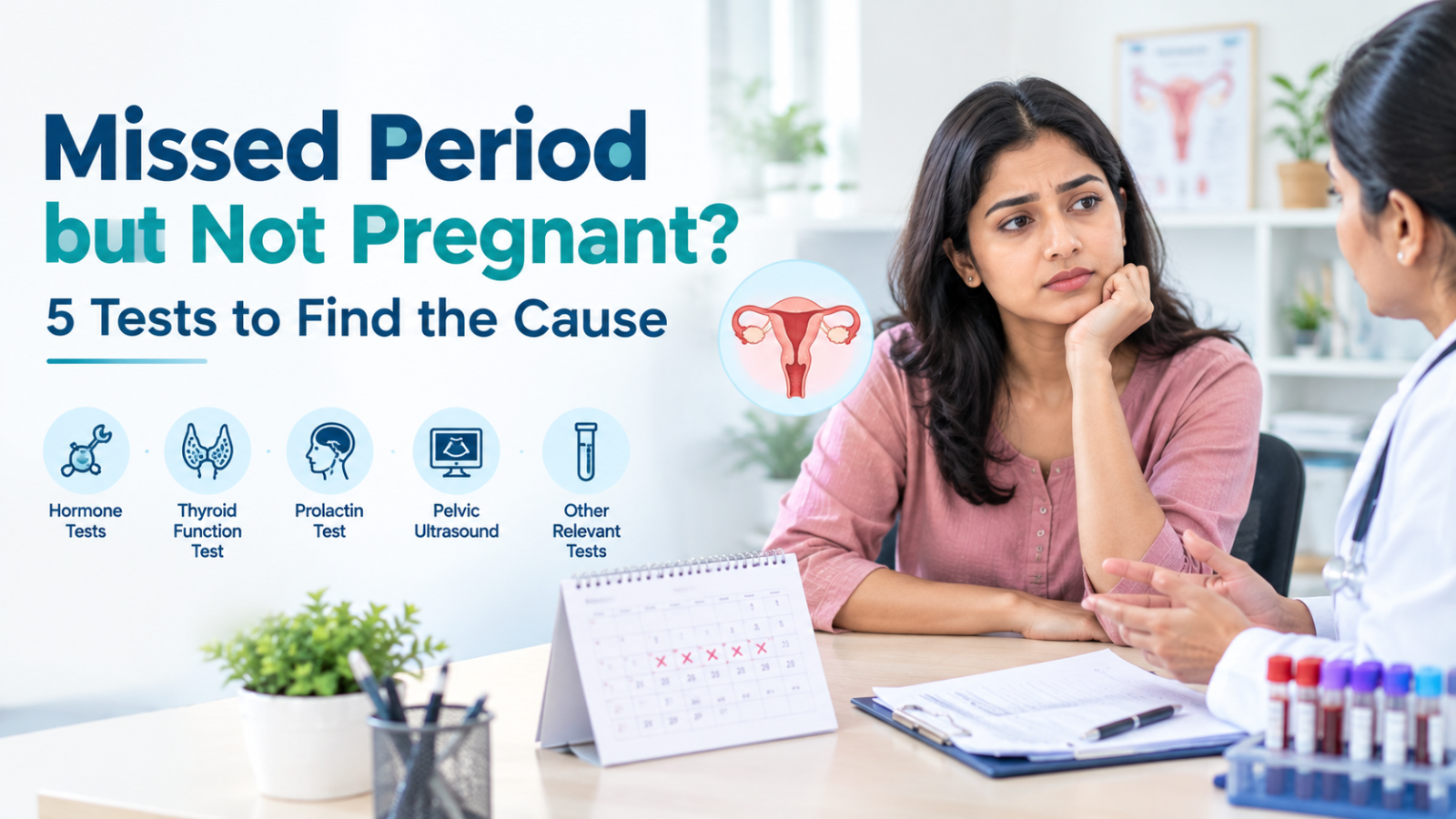
A late or missed period can be worrying, especially when a home pregnancy test is negative. However, a missed period but Not Pregnant does not always mean something serious. Menstrual cycles can change because of stress, weight changes, hormonal conditions, intense exercise, illness, or other factors.
Therefore, the first step is to confirm that pregnancy has genuinely been ruled out. After that, targeted tests can help identify possible hormonal or reproductive causes.
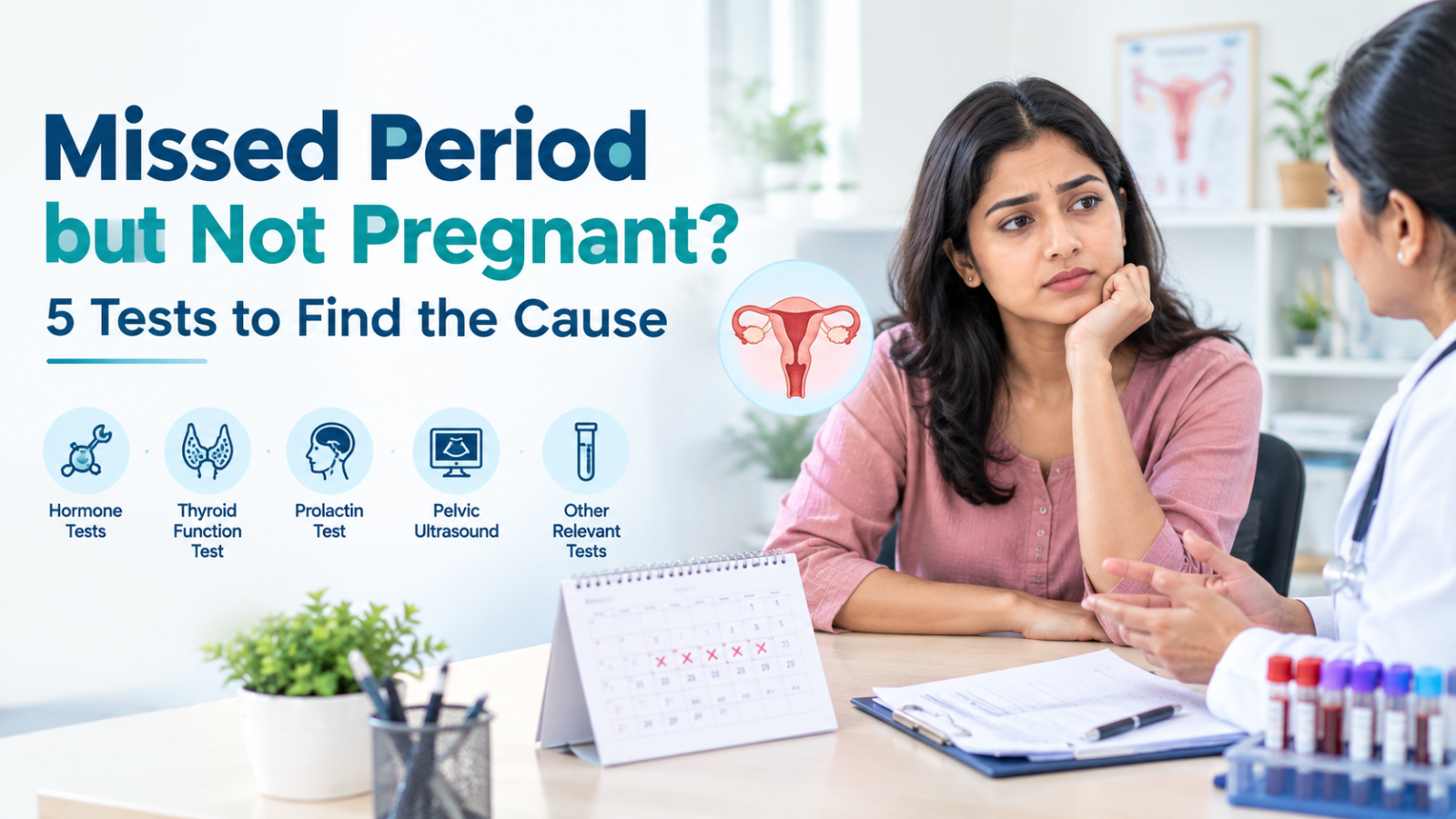
Why am I having a missed period but Not Pregnant?
Why is my period late if I am not pregnant? There are several possible explanations.
For example, stress, sudden weight loss or gain, PCOS, thyroid problems, high prolactin, excessive exercise, and changes in routine can affect ovulation. Consequently, the period may arrive later than expected or may be missed altogether.
Sometimes, however, a pregnancy test may have been taken too early. Therefore, confirming pregnancy status is the first part of the evaluation.
First - Confirm Pregnancy With Beta hCG
Before investigating hormones, pregnancy should be properly excluded.
Why Beta hCG?
Beta hCG is a blood test that detects human chorionic gonadotropin, a hormone produced during pregnancy.
If a home urine pregnancy test is negative but your period remains delayed, a healthcare professional may recommend a blood test depending on your timing and symptoms.
What If Beta hCG Is Negative?
If pregnancy is excluded, the next step is to look at possible hormonal, metabolic, lifestyle, or reproductive causes.
Importantly, the exact tests needed depend on your age, cycle pattern, symptoms, medications, and medical history.
5 Tests for a Missed Period
1. TSH - Check Thyroid Function
First, thyroid function is worth considering because thyroid disorders can affect menstrual cycles.
Both an underactive and overactive thyroid can be associated with menstrual irregularities. Therefore, a TSH test may be recommended when periods become unusually late or irregular.
When Is TSH Particularly Relevant?
TSH may be especially useful when missed periods occur along with:
- Unusual tiredness
- Weight changes
- Feeling unusually cold or hot
- Changes in hair or skin
- Constipation or bowel changes
- Changes in heart rate
However, these symptoms can have many causes, so testing is needed rather than relying on symptoms alone.
2. Prolactin - Check for Hormonal Causes
Next, prolactin may be tested when menstrual periods are irregular or absent.
Prolactin is a hormone associated with breast development and milk production. When levels are elevated outside pregnancy or breastfeeding, menstrual cycles can sometimes be disrupted.
When Might Prolactin Be Considered?
It may be particularly relevant when missed periods occur with:
- Unexpected breast milk discharge
- Irregular periods
- Reduced menstrual flow
- Fertility difficulties
Your healthcare provider may also review medications because some medicines can influence prolactin levels.
3. FSH and LH - Understand Ovulation Signals
FSH and LH are reproductive hormones involved in ovarian function and ovulation.
Testing these hormones can provide additional information when menstrual cycles are persistently irregular or absent.
Moreover, the timing of hormone testing can matter. Therefore, do not assume that FSH or LH can be interpreted correctly without considering where you are in your menstrual cycle.
4. AMH - Assess Ovarian Reserve
AMH, or Anti-Müllerian Hormone, is commonly used as a marker of ovarian reserve.
It may be useful in certain fertility evaluations, particularly when ovarian reserve is a concern.
However, AMH is not a general test for every missed period and does not by itself explain why a particular period is late.
AMH and PCOS
Women with PCOS can sometimes have higher AMH levels because of the presence of many small ovarian follicles.
Therefore, AMH may provide supporting information in a broader fertility or PCOS assessment, but it should not be used alone to diagnose PCOS.
5. Testosterone - Look for Androgen Excess
Finally, testosterone may be considered when missed periods occur with signs of increased androgen activity.
For example:
- Increased facial or body hair
- Persistent acne
- Scalp hair thinning
- Irregular or absent periods
These features can occur with PCOS, although PCOS is not the only possible explanation.
Consequently, testosterone testing is best interpreted alongside menstrual history and other clinical findings.
Stress, Weight Changes and PCOS
Hormone tests are only one part of the picture.
Stress Can Delay Ovulation
Significant emotional stress can affect the brain-hormone pathways involved in ovulation. As a result, ovulation may happen later than usual, causing a delayed period.
Therefore, think about recent changes in sleep, work pressure, travel, emotional stress, or daily routine.
Weight Changes Can Affect Cycles
Sudden weight loss, significant weight gain, or inadequate calorie intake can also affect reproductive hormones.
Similarly, very intense exercise can sometimes contribute to menstrual irregularity.
PCOS Is Another Common Consideration
Polycystic ovary syndrome (PCOS) can cause irregular or absent periods.
However, PCOS is a clinical diagnosis based on the overall picture rather than a single blood-test result. Your healthcare provider may consider symptoms, hormone tests, and ultrasound findings.
When Is a Pelvic Ultrasound Needed?
Blood tests do not show the structure of the ovaries and uterus.
Therefore, a pelvic ultrasound may be recommended when menstrual irregularity persists or when your healthcare provider wants to evaluate the reproductive organs.
Depending on the situation, ultrasound may assess:
- Ovarian appearance
- Uterine structure
- Endometrial lining
- Ovarian cysts
- Other pelvic findings
Does Ultrasound Diagnose PCOS?
Ultrasound can provide useful ovarian information, but it does not independently diagnose PCOS.
Consequently, the ultrasound result should be considered alongside symptoms, menstrual history, and laboratory findings.
When Should You See a Doctor?
A single late period can happen occasionally. Nevertheless, seek medical advice if missed or irregular periods continue, recur frequently, or occur with other concerning symptoms.
Additionally, seek prompt medical attention for severe pelvic pain, very heavy bleeding, fainting, or other acute symptoms.
Confidential Testing and Home Collection
Some women may feel uncomfortable discussing menstrual or reproductive concerns at a diagnostic centre.
Therefore, confidential testing and convenient home collection can be useful options where available.
At Prima Diagnostics, women can ask about home sample collection for appropriate blood tests. A female phlebotomist can be requested, subject to availability.
For women in Bangalore who prefer privacy, home collection can make the testing process more comfortable and convenient.
However, pelvic ultrasound requires an imaging facility, so it generally needs to be performed at an appropriate diagnostic centre rather than during routine blood-sample collection at home.
How to Plan Your Testing
Rather than ordering every hormone test immediately, discuss the sequence with your healthcare provider.
A typical evaluation may begin with:
1. Confirm pregnancy → 2. Review symptoms and cycle history → 3. Targeted hormone tests → 4. Pelvic ultrasound if indicated → 5. Further evaluation based on findings
This approach is useful because the right test depends on the suspected cause.
FAQs About a Missed Period but Not Pregnant
Why have I missed periods but not pregnant?
Stress, weight changes, PCOS, thyroid disorders, high prolactin, intense exercise, illness, and other hormonal or reproductive factors can delay or stop ovulation.
What test should I take if my period is late but the pregnancy test is negative?
Depending on your situation, your healthcare provider may consider beta-hCG, TSH, prolactin, FSH/LH, AMH, testosterone, and sometimes a pelvic ultrasound.
Can stress cause a missed period?
Yes. Significant stress can interfere with the hormonal pathways that regulate ovulation and may result in a delayed or missed period.
Can PCOS cause missed periods?
Yes. Irregular or absent periods are common features of PCOS. However, PCOS requires an overall clinical assessment rather than a single test.
Should I test for thyroid problems if my period is irregular?
A TSH test may be considered because thyroid disorders can affect menstrual cycles. Your healthcare provider can determine whether thyroid testing is appropriate.
Can I get hormone blood tests through home collection in Bangalore?
Many blood tests can be collected at home, depending on the diagnostic centre and test requirements. Prima Diagnostics offers home collection options, and you can ask whether a female phlebotomist is available for your visit.
Final Takeaway
Having a Missed Period but Not Pregnant does not automatically mean that there is a serious health problem. Nevertheless, repeated or persistent menstrual irregularity deserves attention.
First, confirm pregnancy appropriately with Beta hCG when needed. Then, depending on your symptoms and history, tests such as TSH, prolactin, FSH/LH, AMH, and testosterone may help investigate hormonal causes.
Furthermore, lifestyle factors such as stress, weight changes, intense exercise, and PCOS can influence menstrual cycles. When necessary, a pelvic ultrasound can provide additional information about the uterus and ovaries.
For women in Bangalore who value privacy, confidential testing and home blood collection can also make the process more convenient.