
Hair Turning Grey Early? Tests for B12, Thyroid and Vitamin D
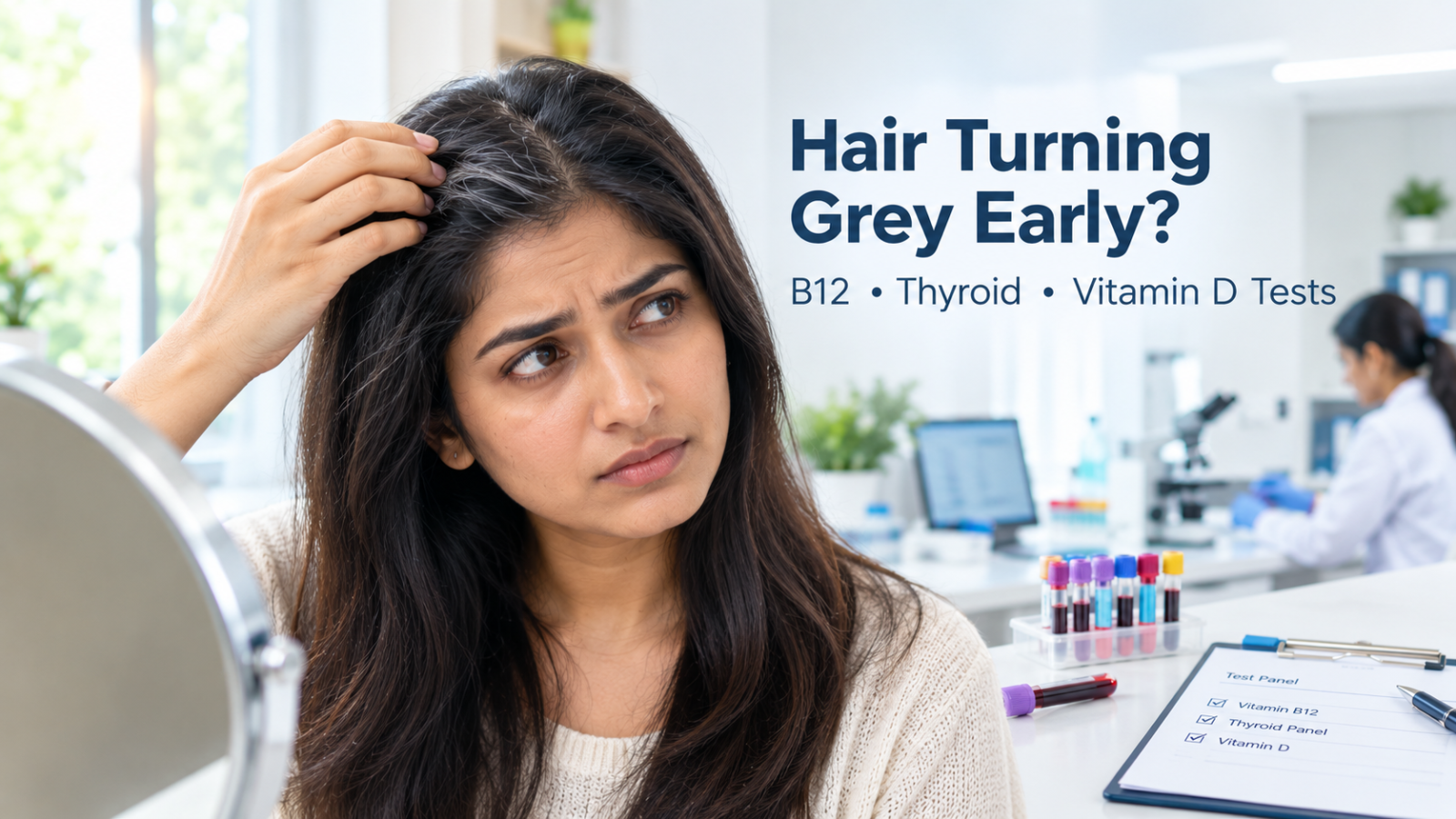
Seeing grey strands in your 20s or early 30s can be surprising. In fact, when Hair Turning Grey Early happens, many young adults immediately wonder whether they have a vitamin deficiency, a thyroid problem, or simply too much stress.
However, early greying can have several possible causes. Genetics is an important factor, while nutritional deficiencies, smoking, certain health conditions, and oxidative stress may also contribute. Therefore, if greying is noticeably increasing at a young age, selected blood tests can help identify nutritional or hormonal factors that may be worth discussing with a healthcare professional.
Why Does Hair Turning Grey Early?
Hair gets its natural colour from melanin produced by pigment-producing cells in the hair follicle. As these cells produce less pigment, new hair grows with less colour and eventually appears grey or white.
Moreover, the timing varies considerably from person to person. Some people naturally develop grey hair earlier because of family history, whereas others may notice it later.
Genetics Can Play a Major Role
First of all, look at your family pattern. If your parents or close relatives developed grey hair at a young age, genetics may be an important contributor.
Therefore, early greying does not automatically mean that something is wrong with your health.
Nutrition May Also Matter
At the same time, inadequate levels of certain nutrients may affect normal hair and pigment biology.
For example, vitamin B12 deficiency is one nutritional factor that may be investigated when premature greying occurs alongside other symptoms or dietary risk factors.
Thyroid Health Can Be Relevant
Similarly, thyroid disorders can affect hair texture, growth, and overall hair health. Consequently, a thyroid test may be considered when early greying occurs along with symptoms such as tiredness, weight changes, dry skin, or changes in hair growth.
Which Deficiency Causes Hair Turning Grey Early?
There is no single deficiency that causes every case of Hair Turning Grey Early.
However, vitamin B12 deficiency is one of the deficiencies commonly considered when premature greying is being evaluated. Depending on the person's diet, symptoms, and medical history, a healthcare professional may also consider vitamin D, iron stores, copper, and thyroid function.
Importantly, testing is more useful than guessing. A low result should then be interpreted together with symptoms and other findings.
Tests to Consider for Early Grey Hair
Rather than ordering every possible test, a targeted evaluation can be more practical.
1. Vitamin B12 Test
Vitamin B12 supports normal blood-cell formation and neurological function. Low B12 levels can occur more frequently in people with limited intake of animal-derived foods, although diet is not the only possible cause.
For Bangalore youngsters following vegetarian or mostly plant-based diets, B12 may therefore be worth discussing, particularly when early greying occurs alongside fatigue, numbness, tingling, or other symptoms.
2. Vitamin D Test
Vitamin D is important for several body functions, including bone and muscle health. Its direct relationship with premature greying is less established than some other potential factors.
Nevertheless, vitamin D testing may be considered when there are broader nutritional concerns or other symptoms.
3. TSH Test for Thyroid Function
TSH is commonly used to assess thyroid function.
If early greying is accompanied by changes in weight, energy, skin, hair texture, or sensitivity to cold or heat, thyroid evaluation may be appropriate based on healthcare provider advice.
4. Ferritin and Iron Stores
Ferritin reflects stored iron and can help assess iron status.
Furthermore, iron deficiency can be associated with hair-related concerns, particularly hair shedding. Therefore, ferritin may be included when early greying occurs together with hair fall or other signs suggesting low iron stores.
5. Copper Test
Copper is involved in several biological processes, including those related to connective tissue and pigment formation.
However, copper deficiency is not the explanation for most cases of early grey hair. Testing is generally more useful when there are specific dietary, absorption, or medical reasons to suspect low copper.
Should You Test All Five?
Not necessarily.
Instead, the appropriate tests depend on your symptoms, diet, family history, medications, and overall health.
For example, a 25-year-old with early greying and a predominantly vegetarian diet may have different testing considerations from someone with a strong family history but no other symptoms.
Therefore, targeted testing can be more meaningful than a broad test list.
Stress, Smoking and Hair turning Grey Early
Can Stress Make Hair Grey?
Stress is often discussed whenever young adults notice grey hair. Research suggests that significant psychological stress can influence hair pigmentation pathways, although the relationship is complex.
In everyday life, therefore, it is difficult to say that a particular stressful week directly caused new grey strands.
Nevertheless, chronic stress can affect sleep, diet, lifestyle habits, and overall health. Managing these factors is beneficial for general wellbeing and hair health.
What About Smoking?
Smoking is another lifestyle factor associated with earlier hair greying in observational research.
Consequently, reducing or stopping smoking can be an important part of protecting overall health, even though it cannot guarantee that existing grey hair will regain its original colour.
Can Early Grey Hair Be Reversed?
In most cases, existing genetically determined grey hair does not simply return to its original colour.
However, if a reversible nutritional or medical factor is identified and appropriately treated, further changes may sometimes be reduced, or the underlying condition improved.
For that reason, it is better to identify an actual deficiency before taking high-dose supplements.
Don't Take Supplements Just Because Hair Is Grey
Grey hair alone does not prove that you have low B12, vitamin D, iron, or copper.
Therefore, testing and professional interpretation are preferable to taking multiple supplements without knowing whether they are needed.
Prima Hair Health Panel in Bangalore
For young adults concerned about Hair Turning Grey Early, a hair-health evaluation can be planned around relevant nutritional and thyroid markers.
At Prima Diagnostics, you can discuss suitable testing based on your symptoms and healthcare-provider recommendations. Depending on the evaluation, tests such as Vitamin B12, Vitamin D, TSH, ferritin/iron studies, and copper may be considered.
For Bangalore youngsters dealing with demanding work schedules, stress, irregular meals, or vegetarian diets, a focused evaluation can provide useful information instead of relying on assumptions.
When Should You See a Doctor?
Early greying by itself may simply reflect genetics. However, consider discussing it with a healthcare professional if it is:
- Increasing rapidly over a short period
- Appearing alongside significant hair fall
- Associated with unusual fatigue or weakness
- Accompanied by numbness or tingling
- Occurring with major weight or energy changes
- Appearing alongside other unexplained symptoms
Additionally, a consultation is particularly useful if you are considering multiple supplements or have an existing medical condition.
Simple Hair-Health Habits for Young Adults
While blood tests can identify some underlying factors, everyday habits matter too.
Eat a Balanced Diet
Include adequate protein, vegetables, fruits, whole grains, nuts, seeds, and appropriate sources of vitamins and minerals.
Prioritise Sleep
Furthermore, maintaining a regular sleep schedule can support overall health and help manage the effects of a demanding lifestyle.
Manage Stress
Try regular physical activity, relaxation techniques, outdoor activity, or other sustainable ways of managing stress.
Avoid Smoking
If you smoke, reducing exposure or quitting can support overall health and may remove one lifestyle factor associated with premature greying.

FAQs About Hair Turning Grey Early
What is the most common reason for early grey hair?
Genetics is a major factor. However, nutritional deficiencies, certain medical conditions, and lifestyle factors may also contribute in some people.
Should I test B12 if my hair turning grey early in my 20s?
B12 testing may be considered, particularly when early greying occurs with a vegetarian or restricted diet, fatigue, neurological symptoms, or other nutritional concerns.
Does vitamin D deficiency cause grey hair?
The relationship between vitamin D and premature greying is not definitive. Vitamin D testing may nevertheless be useful when there are broader reasons to assess nutritional status.
Can thyroid problems cause grey hair?
Thyroid disorders can affect overall hair health. If early greying occurs with other thyroid-related symptoms, a TSH test may be considered.
Can grey hair become black again?
Usually, existing grey hair does not naturally regain its colour. If a reversible underlying problem contributes to pigment loss, addressing that problem may sometimes help prevent or reduce further changes.
Final Takeaway
Hair Turning Grey Early in your 20s or 30s does not automatically mean you have a vitamin deficiency. Genetics can be a major reason; however, B12, vitamin D, thyroid function, iron stores, and occasionally copper may be considered when the overall history suggests a nutritional or medical factor.
Therefore, instead of guessing or taking several supplements, consider a targeted evaluation based on your symptoms, diet, lifestyle, and healthcare-provider advice.
For Bangalore youngsters, especially those managing work stress or following vegetarian diets, appropriate testing can help identify nutritional or thyroid factors that may need attention.