
Dark Patches on the Neck or Underarms? Tests for Sugar, Thyroid, and Insulin
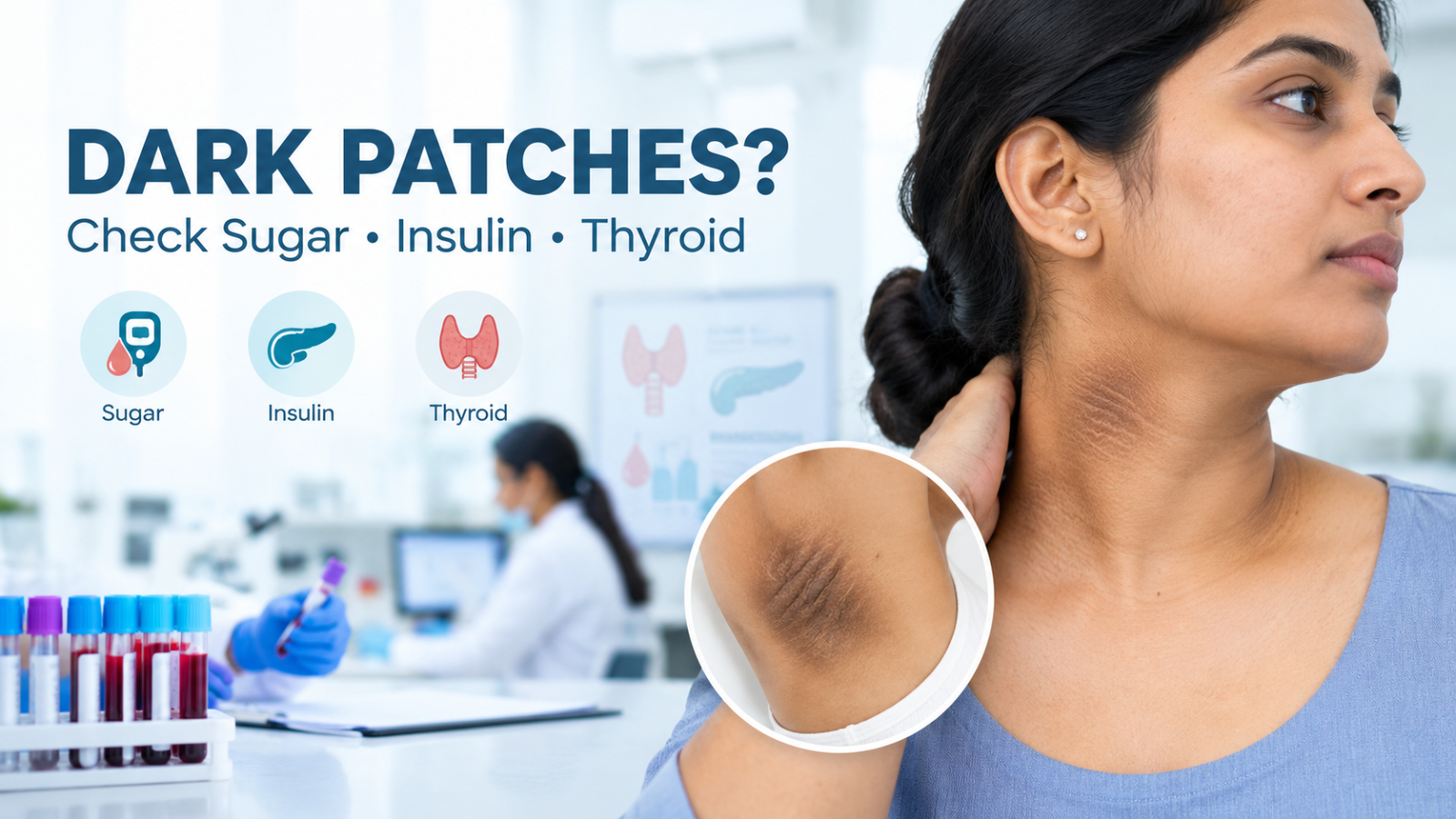
Dark patches on the neck or underarms can be concerning, especially when they appear in teenagers and young adults. Although many people assume that these patches develop because of poor hygiene, sun exposure, or friction, that is not always the case. In fact, dark patches on the neck may sometimes indicate insulin resistance, a condition in which the body does not respond effectively to insulin.
Moreover, similar patches can appear around the underarms, groin, and other skin folds. Therefore, if your skin feels thicker or velvety in these areas, it may be worth discussing the changes with a healthcare professional.
In Bangalore, where busy routines, irregular meals, and limited physical activity can affect metabolic health, recognising these signs early is particularly useful. However, dark skin patches alone cannot confirm diabetes, thyroid disease, or a hormonal condition. Appropriate tests can help identify the underlying cause.
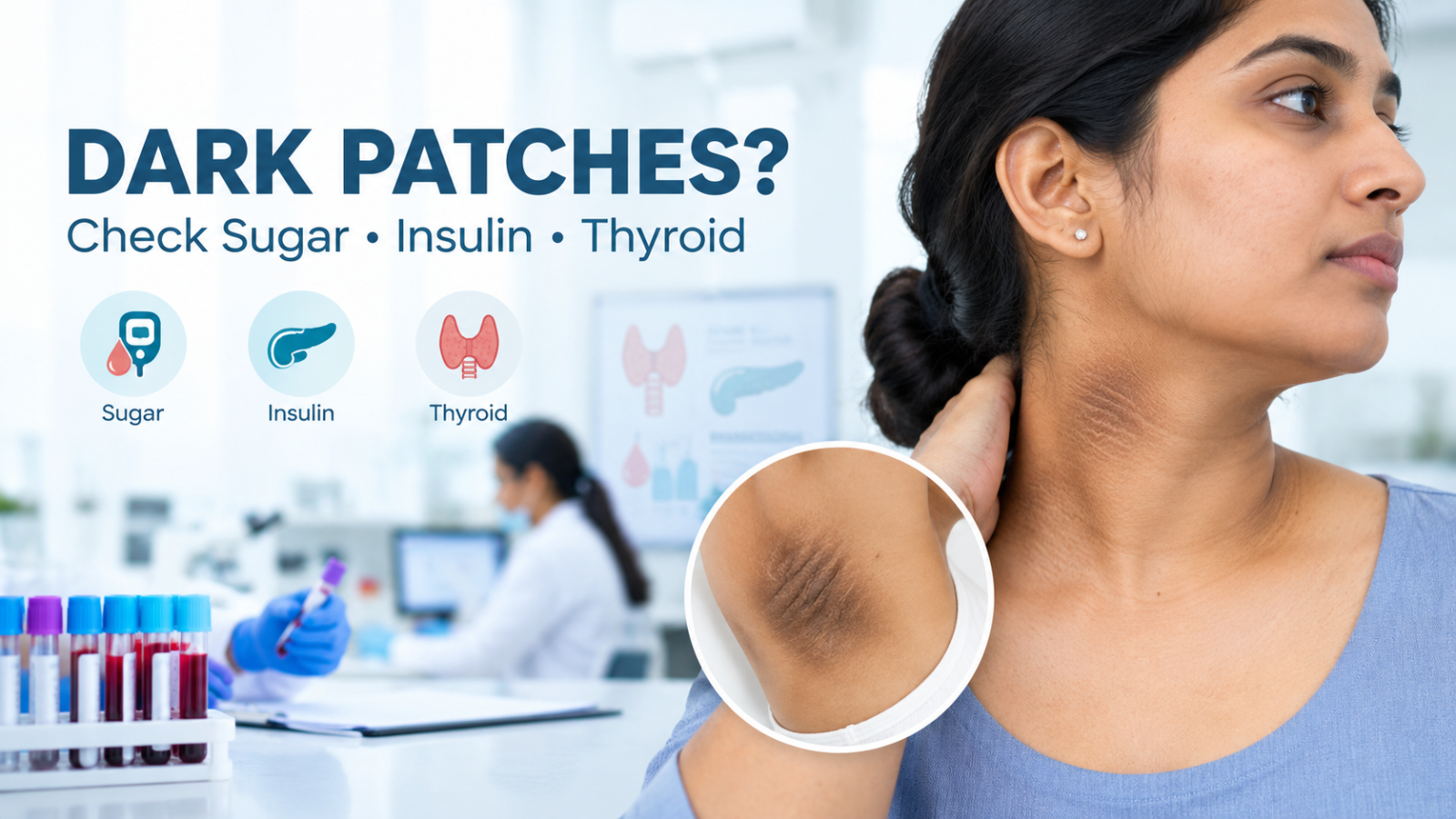
Why Is My Neck Getting Dark?
One possible explanation is acanthosis nigricans, a skin condition that causes darker, thicker, velvety areas, particularly around the neck and underarms.
Unlike ordinary dirt or surface pigmentation, these patches may not disappear with regular bathing or scrubbing. Furthermore, excessive scrubbing can irritate the skin without addressing the underlying problem.
Common reasons for dark patches include:
- Insulin resistance and associated metabolic changes
- Excess body weight, particularly around the waist
- Hormonal conditions, including polycystic ovary syndrome (PCOS)
- Certain medicines or other medical conditions
- Friction or other skin-related causes
Nevertheless, not every dark patch is acanthosis nigricans. A clinician can examine the skin and decide whether blood tests or a dermatology assessment are appropriate.
Dark Neck (Acanthosis) Is a Body Signal
Acanthosis nigricans is not a disease of high blood sugar itself. Instead, it can be a visible clue associated with insulin resistance.
Normally, insulin helps glucose move from the bloodstream into the body's cells. However, when cells respond less effectively to insulin, the body may produce more insulin to compensate. Higher insulin levels are thought to contribute to skin changes in some people.
Consequently, dark, velvety patches may appear even before blood glucose reaches the diabetic range.
Why are teenagers and young adults affected?
These changes can occur at different ages, including adolescence. Family history, excess weight, hormonal changes, and underlying metabolic factors may contribute.
In Bangalore, parents may notice darkening around a teenager's neck or underarms during routine activities such as getting ready for school or college. Instead of assuming that the child needs stronger soaps or scrubs, it is better to arrange a medical assessment when the patches persist.
When should you get checked?
Consider speaking with a healthcare professional if the patches are persistent, spreading, thickening, or accompanied by other concerns such as irregular periods, increased thirst, frequent urination, or unexplained weight changes.
Importantly, rapidly developing or widespread skin changes should be assessed promptly, particularly in adults.
Which Blood Tests Can Help Identify the Cause?
The right tests depend on your symptoms, medical history, and examination. Nevertheless, the following tests may help assess common metabolic or hormonal factors.
1. HbA1c: Checks average blood sugar
The HbA1c test estimates your average blood glucose over approximately the previous two to three months.
It can help identify prediabetes or diabetes, even when you do not have obvious symptoms. In addition, it usually does not require fasting.
However, a normal HbA1c result does not rule out insulin resistance. Your healthcare professional may recommend additional testing if the clinical picture suggests a metabolic problem.
2. Fasting insulin: Assesses insulin levels
A fasting insulin test measures the amount of insulin circulating in your blood after a prescribed fasting period.
It may be useful in selected cases when a clinician is investigating suspected insulin resistance. Often, it is interpreted alongside fasting glucose and other clinical findings.
However, fasting insulin is not a standalone diagnostic test for insulin resistance, and there is no single universally accepted cutoff that applies to everyone.
3. TSH: Checks thyroid function
Thyroid disorders can affect weight, energy levels, menstrual cycles, and overall metabolism. Therefore, a thyroid-stimulating hormone (TSH) test may be recommended when symptoms or medical history suggest a thyroid problem.
Nevertheless, dark patches alone do not establish that you have a thyroid disorder. Depending on the TSH result, your clinician may recommend additional thyroid tests.
4. Lipid profile: Evaluates cholesterol and triglycerides
Insulin resistance can occur alongside changes in cholesterol and triglyceride levels. Consequently, a lipid profile may help assess overall cardiometabolic risk.
The test generally measures total cholesterol, LDL cholesterol, HDL cholesterol, and triglycerides. Together with glucose testing, it can provide a broader picture of metabolic health.
Is There a Link Between Dark Neck and PCOS?
Yes, there can be a connection. PCOS, or polycystic ovary syndrome, is a hormonal condition that may be associated with insulin resistance. Some people with PCOS develop acanthosis nigricans as a result.
Additional signs that may warrant a PCOS assessment include:
- Irregular or missed periods
- Persistent acne
- Excess facial or body hair
- Hair thinning on the scalp
- Difficulty managing weight
However, not everyone with PCOS has dark patches, and dark patches do not automatically mean PCOS.
If you have irregular periods alongside skin changes, your clinician may recommend an assessment that includes relevant hormone tests and metabolic screening.
Can Dark Patches on the Neck Fade?
In many cases, the appearance can improve once the underlying cause is addressed. However, the timeline varies, and the skin may not return to its previous colour immediately.
Here are practical steps to consider:
Address the underlying cause
If testing identifies diabetes, prediabetes, or another condition, follow the treatment plan recommended by your healthcare professional. Improving metabolic health may gradually help the skin changes.
Avoid harsh scrubbing
Dark, thickened skin is not necessarily caused by dirt. Therefore, avoid aggressive exfoliation, bleaching products, or unverified home remedies that may cause irritation.
Focus on sustainable habits
Regular physical activity, balanced meals, adequate sleep, and weight management when appropriate can support metabolic health. Nevertheless, these habits should complement—not replace—medical assessment when symptoms persist.
If the patches remain, a dermatologist can advise whether specific skin treatments are suitable.
Prima Diagnostics: Tests for Metabolic Health
If you have persistent dark patches on your neck or underarms, a healthcare professional may recommend blood tests based on your individual risk factors.
At Prima Diagnostics in Bangalore, you can enquire about relevant tests such as HbA1c, fasting insulin, TSH, and a lipid profile. Rather than choosing every test independently, discuss your symptoms and medical history with your clinician to determine which investigations are appropriate.
A metabolic assessment may be particularly worth discussing if you also have a family history of diabetes, irregular periods, or other signs associated with insulin resistance.
Depending on your location and service availability, ask Prima Diagnostics about centre visits, home sample collection, preparation instructions, and current test prices before booking.
FAQs About Dark Patches on the Neck
1. Does a dark neck mean I have diabetes?
No. Dark patches can be associated with insulin resistance, but they do not confirm diabetes. An HbA1c or blood glucose test, interpreted by a healthcare professional, can help assess your blood sugar status.
2. Which test is best for dark patches on the neck?
There is no single test for every person. Depending on your symptoms, a clinician may recommend HbA1c, fasting glucose, fasting insulin, TSH, or a lipid profile.
3. Can insulin resistance happen in young people?
Yes. Insulin resistance can occur in teenagers and young adults. Persistent velvety darkening around the neck or underarms may be one clue, although it is not diagnostic on its own.
4. Should I get tested if my neck is dark but I feel healthy?
Consider a medical assessment if the patches are persistent or have a velvety texture, especially if you have additional risk factors. Metabolic conditions can develop without noticeable symptoms.
5. Can I book these tests in Bangalore?
You can enquire with Prima Diagnostics about the relevant tests, preparation requirements, current prices, and home collection availability in your area.
Conclusion
Dark patches on the neck or underarms are not always a cosmetic concern. In some people, they may be associated with insulin resistance and an increased risk of metabolic problems. Therefore, persistent velvety skin changes deserve attention, particularly when accompanied by irregular periods, weight changes, or a family history of diabetes.
With appropriate clinical assessment and targeted tests, you can better understand what may be causing the changes and decide on the next steps. Ultimately, identifying the underlying cause is more useful than trying to remove the pigmentation through repeated scrubbing.
If you are concerned about dark patches, speak with a healthcare professional and enquire about suitable testing options at Prima Diagnostics in Bangalore.