
Insulin and HOMA-IR Test - Insulin Resistance Explained
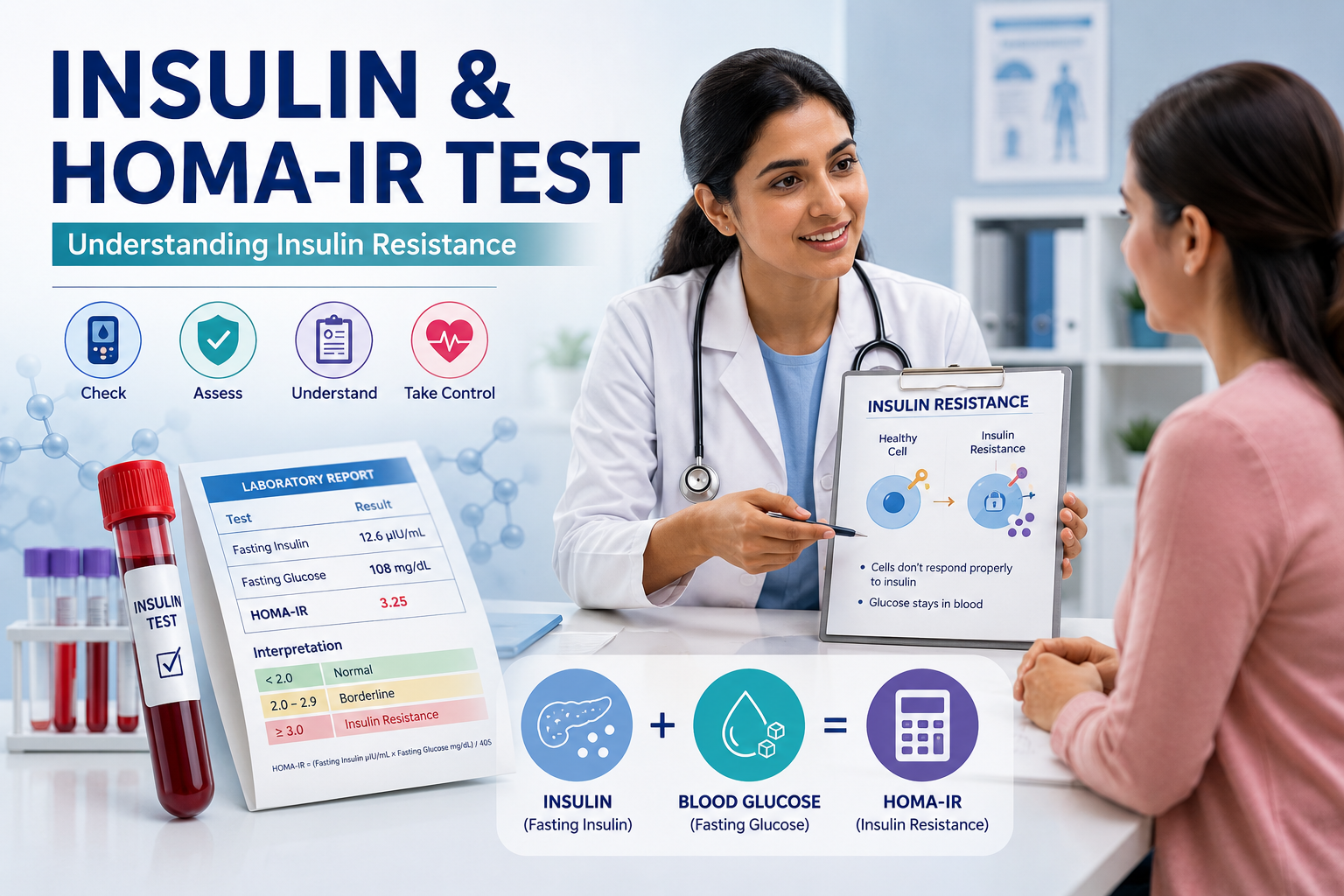
Insulin and HOMA-IR Test
Insulin resistance is becoming increasingly common, especially among people dealing with weight gain, sedentary lifestyles, PCOS, prediabetes, and metabolic health concerns. Moreover, it can develop gradually, often without obvious symptoms.
For example, someone may notice increasing belly fat, frequent cravings, tiredness after meals, or difficulty losing weight. However, these signs alone cannot confirm insulin resistance. Therefore, blood tests can help healthcare professionals understand how the body is responding to insulin.
The Insulin and HOMA-IR Test is particularly useful in this context. It combines fasting insulin and fasting glucose measurements to estimate insulin resistance. Consequently, it can provide additional metabolic information beyond a routine blood sugar test.
This Blog includes:
 What Is Insulin?
Insulin is a hormone produced by the pancreas. Its primary role is to help glucose move from the bloodstream into cells, where it can be used for energy.
After you eat, carbohydrates are broken down into glucose. As a result, blood glucose rises, and the pancreas releases insulin.
Normally, insulin helps maintain healthy blood glucose levels. However, when cells become less responsive to insulin, the pancreas may need to produce more insulin to achieve the same effect.
This reduced sensitivity is known as insulin resistance.
What Is Insulin Resistance?
Insulin resistance occurs when the body's cells do not respond effectively to insulin.
Initially, the pancreas may compensate by producing more insulin. Therefore, blood glucose can remain within the normal range for some time even though insulin levels are elevated.
Eventually, however, the pancreas may struggle to keep up. Consequently, blood glucose can begin to rise, potentially progressing from insulin resistance to prediabetes and, later, type 2 diabetes.
Importantly, insulin resistance does not automatically mean that a person has diabetes.
Why Insulin Resistance Comes Before Diabetes
One of the most important things to understand is that metabolic changes can occur before diabetes is diagnosed.
In the early stages, the body may produce extra insulin to keep glucose under control. Thus, a routine fasting glucose test may sometimes appear normal despite underlying insulin resistance.
Over time, however, continued insulin resistance can contribute to increasing blood glucose levels.
The progression may look like this:
Insulin resistance → compensatory high insulin → impaired glucose regulation → prediabetes → type 2 diabetes
Nevertheless, this progression is not inevitable. Lifestyle changes and appropriate medical guidance can help reduce metabolic risk.
What Does the Insulin Test Measure?
A fasting insulin test measures the amount of insulin present in the blood after a period of fasting.
Generally, fasting insulin is interpreted alongside fasting glucose rather than in isolation. This is because insulin levels can vary between individuals and may be affected by several factors.
Therefore, your healthcare provider may consider fasting insulin together with:
What Is Insulin?
Insulin is a hormone produced by the pancreas. Its primary role is to help glucose move from the bloodstream into cells, where it can be used for energy.
After you eat, carbohydrates are broken down into glucose. As a result, blood glucose rises, and the pancreas releases insulin.
Normally, insulin helps maintain healthy blood glucose levels. However, when cells become less responsive to insulin, the pancreas may need to produce more insulin to achieve the same effect.
This reduced sensitivity is known as insulin resistance.
What Is Insulin Resistance?
Insulin resistance occurs when the body's cells do not respond effectively to insulin.
Initially, the pancreas may compensate by producing more insulin. Therefore, blood glucose can remain within the normal range for some time even though insulin levels are elevated.
Eventually, however, the pancreas may struggle to keep up. Consequently, blood glucose can begin to rise, potentially progressing from insulin resistance to prediabetes and, later, type 2 diabetes.
Importantly, insulin resistance does not automatically mean that a person has diabetes.
Why Insulin Resistance Comes Before Diabetes
One of the most important things to understand is that metabolic changes can occur before diabetes is diagnosed.
In the early stages, the body may produce extra insulin to keep glucose under control. Thus, a routine fasting glucose test may sometimes appear normal despite underlying insulin resistance.
Over time, however, continued insulin resistance can contribute to increasing blood glucose levels.
The progression may look like this:
Insulin resistance → compensatory high insulin → impaired glucose regulation → prediabetes → type 2 diabetes
Nevertheless, this progression is not inevitable. Lifestyle changes and appropriate medical guidance can help reduce metabolic risk.
What Does the Insulin Test Measure?
A fasting insulin test measures the amount of insulin present in the blood after a period of fasting.
Generally, fasting insulin is interpreted alongside fasting glucose rather than in isolation. This is because insulin levels can vary between individuals and may be affected by several factors.
Therefore, your healthcare provider may consider fasting insulin together with:
- Article Title: Insulin and HOMA-IR Test - Insulin Resistance Explained
- Publisher: Prima Diagnostics
- Type: Medical Test Explainer / Health Article
- Topics Covered: Insulin resistance, fasting insulin, HOMA-IR, prediabetes, diabetes risk, PCOS, belly fat, weight gain, metabolic health
- Services Covered: Insulin testing, fasting glucose testing, HOMA-IR assessment, diabetes and metabolic health investigations
- Tests Included: Fasting Insulin, Fasting Blood Glucose, HOMA-IR, HbA1c as a related test
- Preparation Guidance: Fasting may be required; patients should follow laboratory and healthcare provider instructions
- Service Focus: Educational guidance and diagnostic testing
- Healthcare Service: Pathology and blood testing
- FAQ Section: Included.
What Is Insulin?
Insulin is a hormone produced by the pancreas. Its primary role is to help glucose move from the bloodstream into cells, where it can be used for energy.
After you eat, carbohydrates are broken down into glucose. As a result, blood glucose rises, and the pancreas releases insulin.
Normally, insulin helps maintain healthy blood glucose levels. However, when cells become less responsive to insulin, the pancreas may need to produce more insulin to achieve the same effect.
This reduced sensitivity is known as insulin resistance.
What Is Insulin Resistance?
Insulin resistance occurs when the body's cells do not respond effectively to insulin.
Initially, the pancreas may compensate by producing more insulin. Therefore, blood glucose can remain within the normal range for some time even though insulin levels are elevated.
Eventually, however, the pancreas may struggle to keep up. Consequently, blood glucose can begin to rise, potentially progressing from insulin resistance to prediabetes and, later, type 2 diabetes.
Importantly, insulin resistance does not automatically mean that a person has diabetes.
Why Insulin Resistance Comes Before Diabetes
One of the most important things to understand is that metabolic changes can occur before diabetes is diagnosed.
In the early stages, the body may produce extra insulin to keep glucose under control. Thus, a routine fasting glucose test may sometimes appear normal despite underlying insulin resistance.
Over time, however, continued insulin resistance can contribute to increasing blood glucose levels.
The progression may look like this:
Insulin resistance → compensatory high insulin → impaired glucose regulation → prediabetes → type 2 diabetes
Nevertheless, this progression is not inevitable. Lifestyle changes and appropriate medical guidance can help reduce metabolic risk.
What Does the Insulin Test Measure?
A fasting insulin test measures the amount of insulin present in the blood after a period of fasting.
Generally, fasting insulin is interpreted alongside fasting glucose rather than in isolation. This is because insulin levels can vary between individuals and may be affected by several factors.
Therefore, your healthcare provider may consider fasting insulin together with:
- Fasting blood glucose
- HbA1c
- Lipid profile
- Body weight and waist circumference
- Blood pressure
- Medical and family history
- Increasing Belly Fat
- Frequent Food Cravings
- Difficulty Losing Weight
- PCOS and Insulin Resistance
- Prediabetes or borderline blood glucose
- Increased abdominal fat
- Overweight or obesity
- PCOS
- Family history of type 2 diabetes
- Difficulty managing blood glucose
- Metabolic syndrome risk factors
- Significant weight gain
- A sedentary lifestyle
- Previous gestational diabetes
- Persistent unexplained weight gain
- Increasing abdominal fat
- Prediabetes
- PCOS
- Strong family history of diabetes
- Abnormal HbA1c or fasting glucose
- Previous gestational diabetes
- Multiple metabolic risk factors
- What is the Insulin and HOMA-IR Test?
- Is HOMA-IR a diabetes test?
- What is a normal HOMA-IR value?
- Can PCOS be linked with insulin resistance?
- Can insulin resistance occur with normal blood sugar?
- Can lifestyle changes improve insulin resistance?
- Where can I get an Insulin and HOMA-IR Test in Bengaluru?