
How to Prepare for a Blood Test – Night-Before Checklist (Food, Water, Medicines)
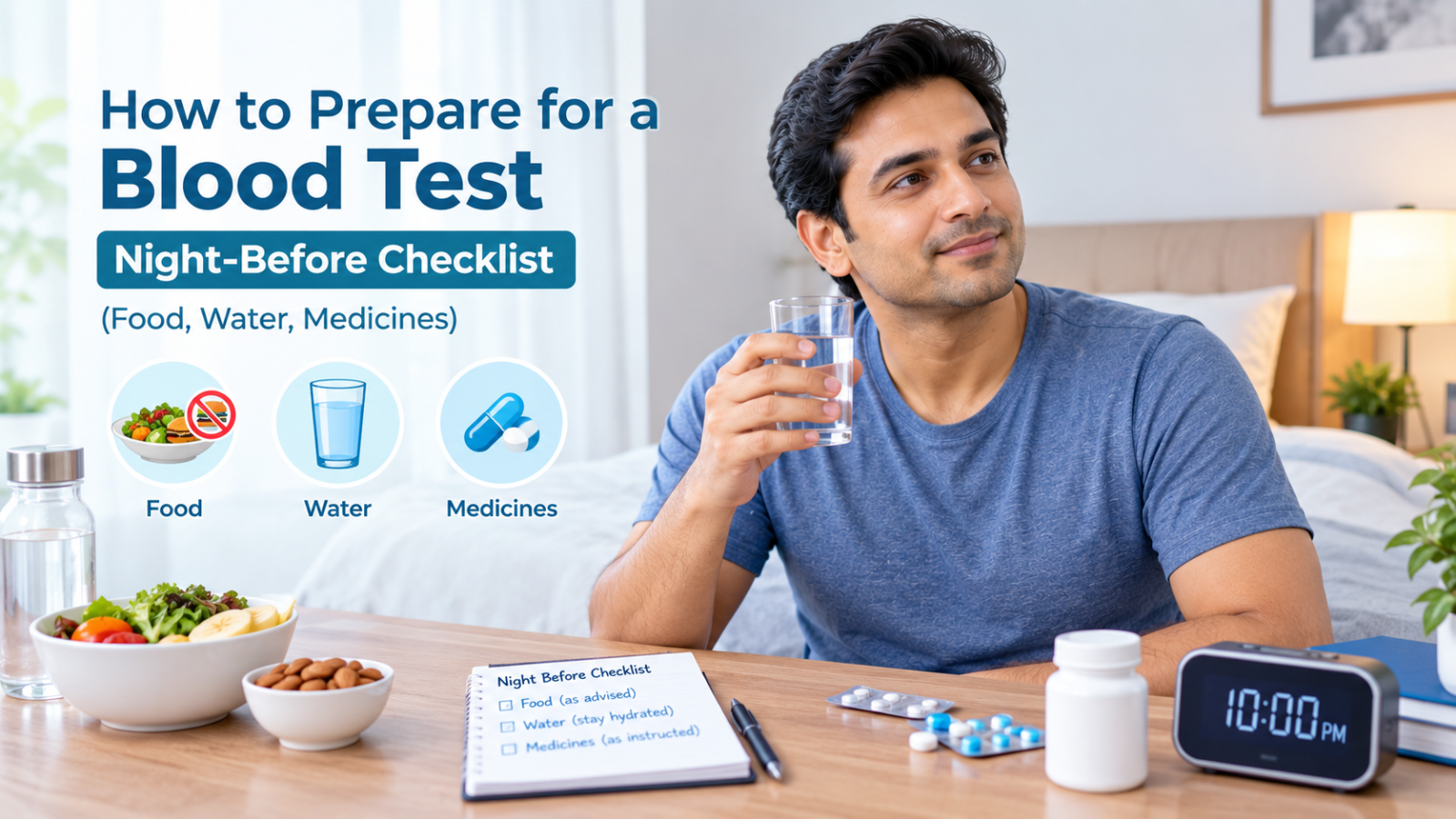
Have a blood test tomorrow morning? Knowing how to prepare for a blood test can help you avoid common mistakes and ensure your sample is collected under the right conditions. For example, some tests require fasting, while others do not. Similarly, drinking plain water is generally fine, but alcohol, strenuous exercise, and changes to your medicines may affect certain results.
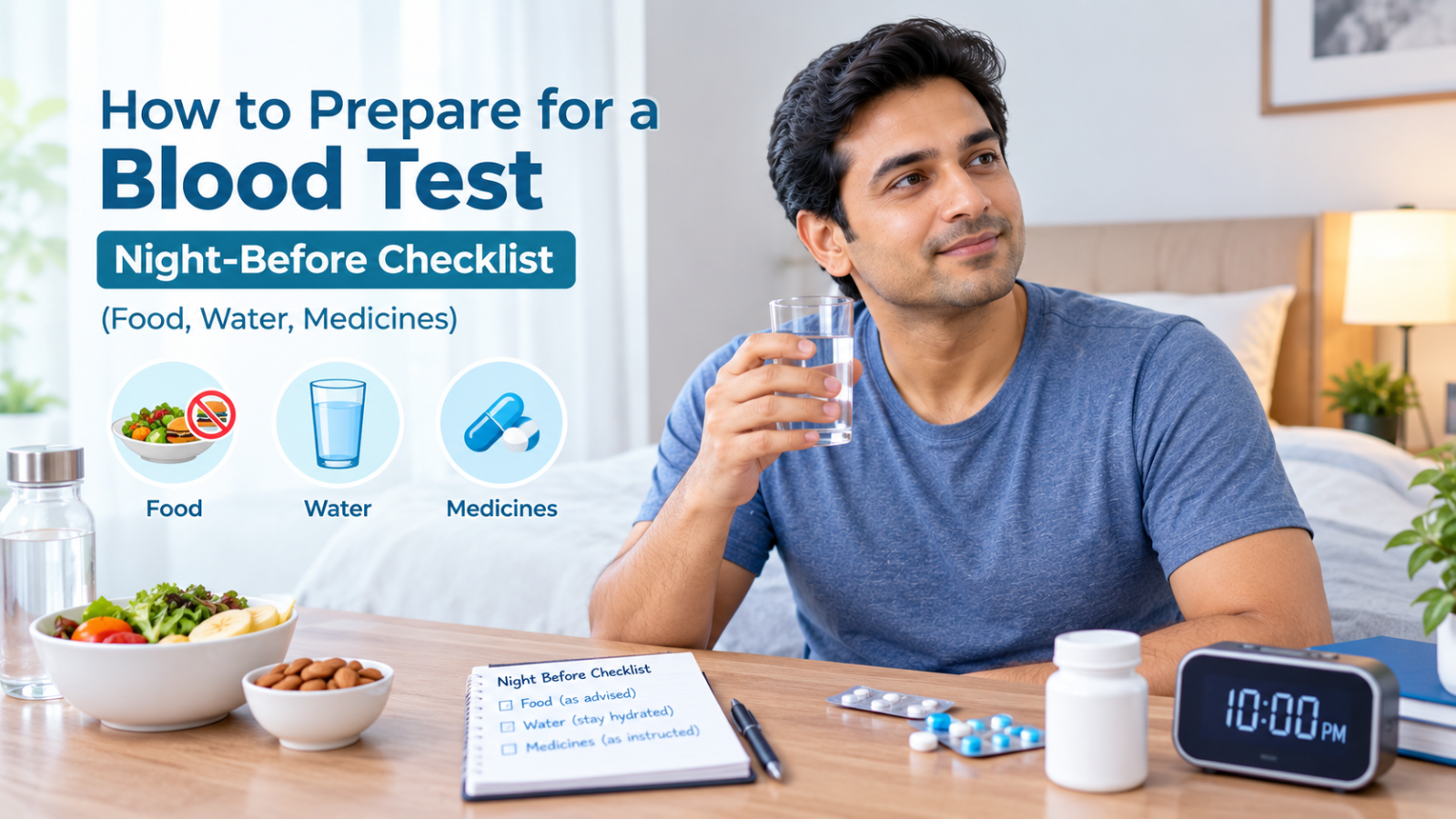
Therefore, instead of worrying about every small detail, follow this practical night-before checklist. Most importantly, always follow the instructions provided by your doctor or diagnostic centre, as preparation varies depending on the tests ordered.
What Should I Not Do Before a Blood Test?
Before a blood test, do not eat during a required fasting period, drink alcohol, perform unusually strenuous exercise, or stop prescribed medicines without medical advice. Additionally, avoid smoking before the test if possible, and follow any specific instructions given by your healthcare provider.
However, not every blood test requires fasting. While tests such as fasting blood glucose may require a specified period without food, many other tests can be performed without fasting. Consequently, confirm your requirements before changing your usual routine.
Fasting Rules: What Counts as Fasting?
Fasting means avoiding food and drinks other than those permitted by your test instructions for a specified period. Depending on the test, your doctor may ask you to fast for around 8–12 hours.
Which Tests May Require Fasting?
Fasting may be requested for certain tests, including:
- Fasting blood glucose
- Some lipid profile tests, when fasting is specifically requested
- Other tests for which your clinician or laboratory has provided fasting instructions
On the other hand, a complete blood count (CBC), thyroid test, or many other routine blood tests generally do not require fasting on their own. Nevertheless, if several tests are ordered together, the preparation requirements may differ.
What Can You Consume During a Fast?
If your test requires fasting, plain water is generally allowed. However, avoid food, tea, coffee, juice, milk, sugary drinks, and chewing gum unless your healthcare provider has given different instructions.
Furthermore, do not extend your fast unnecessarily. If you are unsure when to begin or whether your test requires fasting, contact the diagnostic centre before bedtime.
Water Is Fine: Can You Drink Water Before a Blood Test?
In most cases, plain water is allowed before a blood test, including during a fasting period. In fact, staying normally hydrated can make it easier for the healthcare professional to collect your blood sample.
How Much Water Should You Drink?
Drink water normally the night before and in the morning. However, there is no need to force yourself to drink excessive amounts.
Avoid adding sugar, lemon, flavouring, or other ingredients if you have been instructed to fast. Also, remember that coffee and tea are not substitutes for plain water during a fasting period.
Does Water Affect Blood Test Results?
Plain water generally does not interfere with routine blood tests in the way that food or sugary beverages may. Nevertheless, certain specialised tests or procedures may have different instructions. Therefore, follow the guidance provided for your specific test.
Medicines: Should You Take or Skip Them?
One of the most important parts of preparing for a blood test is understanding how to manage your regular medicines. However, never stop or change prescribed medication on your own just because you are having a blood test.
What About Morning Medicines?
Some medicines can affect blood glucose, hormone levels, or other test results. In addition, whether you should take a medicine before your test depends on the medication and the purpose of the test.
Therefore:
- Ask your doctor whether you should take your usual morning medicines.
- Tell the healthcare team about any medicines and supplements you use.
- Follow specific instructions for tests that measure medication levels.
- Do not skip essential medicines unless your doctor instructs you to do so.
If you have diabetes and use insulin or glucose-lowering medication, ask for specific fasting instructions. Fasting can affect your blood sugar, so you may need an individual plan.
Alcohol, Gym, and Smoking Before a Blood Test
Your activities the evening before can influence some blood test results. Consequently, it is sensible to keep your routine steady and avoid unusual habits before testing.
Should You Drink Alcohol the Night Before?
It is best to avoid alcohol before a blood test, particularly if your doctor has requested testing related to liver function, triglycerides, or blood glucose. Alcohol may influence certain results, so follow any specific restrictions provided by your clinician.
Can You Go to the Gym?
Light everyday activity is usually fine. However, avoid unusually strenuous workouts before your test because intense exercise can temporarily affect markers such as creatine kinase and, in some circumstances, other blood measurements.
Instead, choose gentle activity and allow yourself to rest.
Can You Smoke Before a Blood Test?
If possible, avoid smoking before your appointment, especially if you have been given specific preparation instructions. Smoking and nicotine may affect certain physiological measurements. Also, avoid nicotine products during a required fasting period unless your healthcare provider advises otherwise.
Sleep and Stress: Why the Night Before Matters
A good night's sleep can help you feel more comfortable during your appointment. In contrast, poor sleep and acute stress may affect certain measurements, including some hormone and glucose-related results.
How to Prepare the Evening Before
To keep your preparation simple:
- Eat your usual balanced dinner, unless your test instructions say otherwise.
- Begin fasting only at the time specified by your healthcare provider.
- Avoid alcohol and strenuous exercise.
- Prepare your prescription or test details.
- Set an alarm so you have enough time to reach the centre.
- Get a reasonable amount of sleep.
Additionally, try not to worry about the blood draw. If you feel anxious or have fainted during previous blood tests, inform the healthcare professional beforehand.
Morning-of Checklist: What to Do Before Leaving Home
Once you wake up, follow these simple steps to avoid last-minute confusion.
Your Quick Blood Test Checklist
- Confirm fasting: Check whether your prescribed tests require fasting and whether you have completed the required period.
- Drink plain water: Stay normally hydrated unless you have been told to restrict fluids.
- Check medicines: Follow your doctor's instructions rather than skipping doses independently.
- Avoid breakfast if fasting: Wait until after sample collection if your test requires fasting.
- Carry test details: Bring your prescription or the list of tests requested.
- Inform the staff: Mention any missed fasting instructions, recent illness, medicines, or relevant concerns.
After the sample is collected, you can usually eat and drink normally unless you have been given other instructions. If you fasted, consider carrying a snack for afterward, particularly if you are prone to feeling light-headed.
Mistakes People Make Before Blood test
Prima Diagnostics Home Collection: Timing Tips
If you have booked a home blood collection with Prima Diagnostics, planning the timing in advance can make your morning easier. First, confirm your appointment time and whether your tests require fasting. Then, ask the centre when you should stop eating and whether any special preparation applies.
How to Prepare for a Home Blood Test
Before the phlebotomist arrives:
- Complete the required fasting period, if applicable.
- Keep plain drinking water available.
- Have your test prescription ready.
- Follow your doctor's instructions about medicines.
- Confirm the expected arrival window with the centre.
Because collection schedules and service availability can vary, confirm your appointment and timing directly with Prima Diagnostics. Also, do not delay essential medication or compromise your health just to meet an appointment slot; contact your healthcare provider if fasting creates a medical concern.
FAQs About How to Prepare for a Blood Test
1. How many hours should I fast before a blood test?
It depends on the test. Some tests require around 8–12 hours of fasting, while many others do not require fasting. Follow the specific instructions given by your doctor or diagnostic centre.
2. Can I drink water before a fasting blood test?
Usually, yes. Plain water is generally allowed and helps maintain normal hydration. However, follow any special fluid restrictions provided for your test.
3. Can I take my regular medicines before a blood test?
Do not stop or change prescribed medicines without medical advice. Ask your doctor whether you should take your usual medicines before the specific test.
4. Can I drink tea or coffee before a fasting test?
Usually, no. During a required fast, stick to plain water unless your healthcare provider gives different instructions.
5. Is it okay to exercise the night before a blood test?
Normal daily activity is generally fine, but avoid unusually strenuous exercise because it can temporarily affect certain results.
6. What should I do if I accidentally eat before a fasting blood test?
Tell the laboratory staff before the sample is collected. Depending on the test and how recently you ate, they may advise proceeding or rescheduling. Do not hide the mistake or assume the results will be unaffected.
Conclusion
Preparing properly can make your blood test easier and help ensure the results are interpreted under the right conditions. In particular, confirm fasting requirements, drink plain water when permitted, avoid alcohol and strenuous exercise, and follow your doctor's medication instructions.
Finally, if you have a blood test scheduled at Prima Diagnostics, confirm your preparation requirements and home collection timing in advance. Since every test is different, the most reliable approach is to follow the instructions specific to your prescription rather than assuming every blood test requires the same preparation.