
Fasting vs Non-Fasting Blood Tests – Actually, Which Blood Tests Need Fasting?
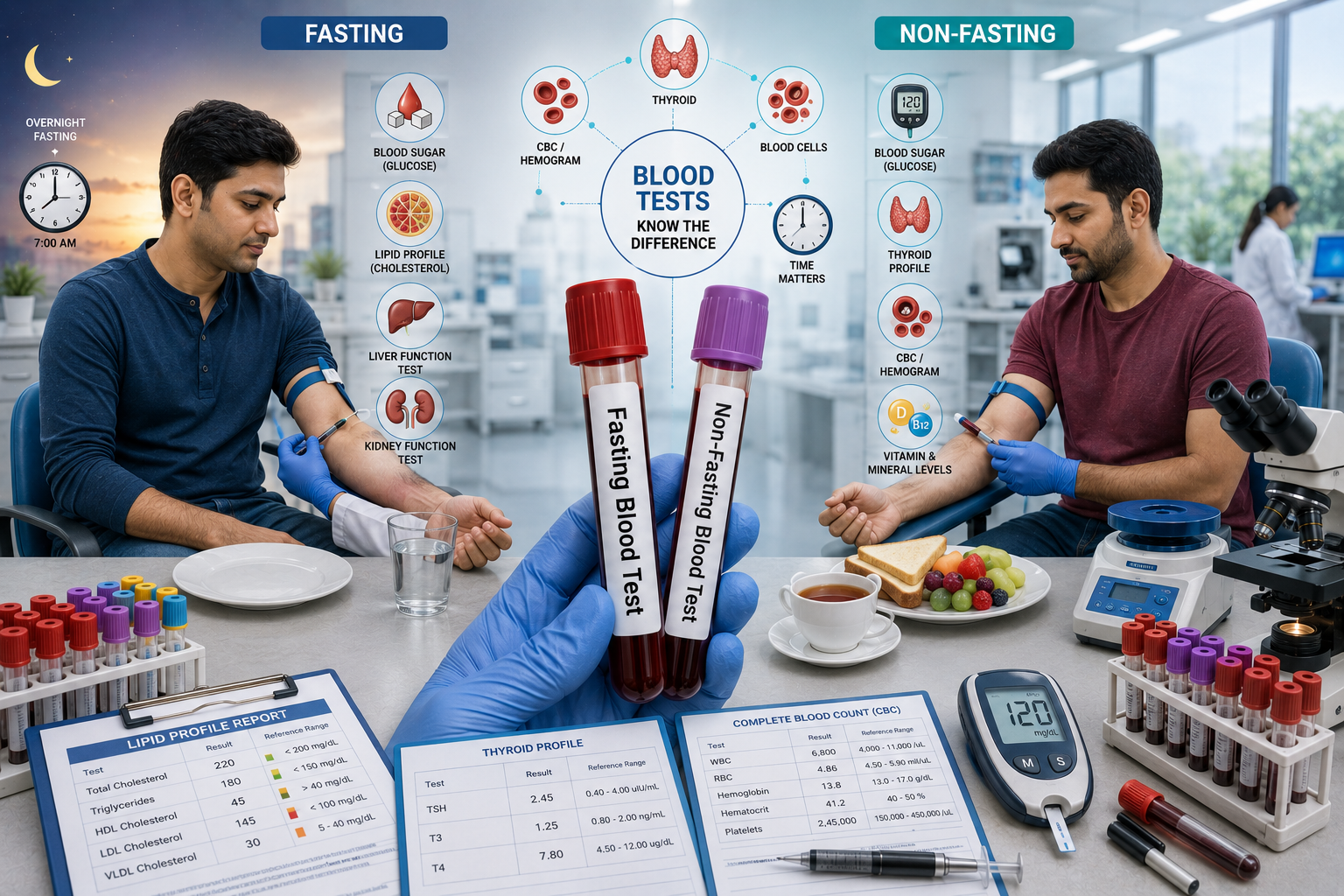
One of the most common questions patients ask before visiting a diagnostic laboratory is, "Do I need to fast before my blood test?" The answer is not always straightforward. While some blood tests require fasting to improve the accuracy of certain measurements, many others can be performed at any time of the day without avoiding food or drinks. Unfortunately, confusion about fasting often causes patients to postpone important tests or arrive unprepared, leading to unnecessary repeat visits. If you are searching for which blood tests need fasting, this guide explains the difference between fasting and non-fasting blood tests in simple language.
Furthermore, it covers why fasting is necessary for some investigations, which tests require it, which tests do not, how many hours you should fast, whether drinking water is allowed, and whether morning testing is always necessary.
In Bengaluru, thousands of first-time laboratory patients, busy professionals, senior citizens, and individuals using home sample collection services have similar questions before their appointments. Consequently, understanding the correct preparation helps ensure smoother sample collection and more reliable test results whenever fasting is recommended.
At Prima Diagnostics, we provide clear patient instructions before every investigation, helping patients understand whether fasting is required for their specific test. Our experienced laboratory professionals, convenient home sample collection for eligible tests, and fast digital reports make laboratory testing simple and stress-free.
This guide will help you confidently prepare for your next blood test.
This Blog Includes:
 Which Blood Tests Need Fasting and Which Don't?
Some blood tests require fasting because recent food intake can temporarily affect certain measurements. Common examples include fasting blood sugar (FBS) and lipid profile, where fasting may be recommended based on the test and your healthcare provider's advice. On the other hand, many tests—including CBC, thyroid function tests (TSH, T3, T4), HbA1c, vitamin B12, vitamin D, and most routine laboratory investigations—generally do not require fasting. Always follow the preparation instructions provided by your healthcare provider or diagnostic laboratory.
What Does "Fasting" Actually Mean?
Fasting simply means not eating or drinking anything except plain water for the period recommended before your blood test.
During the fasting period, patients should generally avoid:
Which Blood Tests Need Fasting and Which Don't?
Some blood tests require fasting because recent food intake can temporarily affect certain measurements. Common examples include fasting blood sugar (FBS) and lipid profile, where fasting may be recommended based on the test and your healthcare provider's advice. On the other hand, many tests—including CBC, thyroid function tests (TSH, T3, T4), HbA1c, vitamin B12, vitamin D, and most routine laboratory investigations—generally do not require fasting. Always follow the preparation instructions provided by your healthcare provider or diagnostic laboratory.
What Does "Fasting" Actually Mean?
Fasting simply means not eating or drinking anything except plain water for the period recommended before your blood test.
During the fasting period, patients should generally avoid:
- Article Title: Fasting vs Non-Fasting Blood Tests – Actually, Which Blood Tests Need Fasting?
- Publisher: Prima Diagnostics
- Type: Myth / Decision Guide Healthcare Blog
- Primary Keyword: Which blood tests need fasting
- Topics Covered: Fasting Blood Tests, Non-Fasting Blood Tests, Blood Test Preparation, Fasting Blood Sugar (FBS), Lipid Profile, Complete Blood Count (CBC), Thyroid Function Tests, HbA1c, Liver Function Test (LFT), Kidney Function Test (KFT), Vitamin D Test, Vitamin B12 Test, Water Intake Before Blood Tests, Home Sample Collection, and Patient Preparation
- Services Covered: Fasting Blood Sugar Test, Lipid Profile, Complete Blood Count (CBC), Thyroid Profile, HbA1c Test, Liver Function Test (LFT), Kidney Function Test (KFT), Vitamin D Test, Vitamin B12 Test, ESR Test, CRP Test, Preventive Health Check-ups, Home Sample Collection, and Digital Reports
- Tests Included: Fasting Blood Sugar (FBS), Lipid Profile, Complete Blood Count (CBC), Thyroid Stimulating Hormone (TSH), Free T3, Free T4, HbA1c, Liver Function Test (LFT), Kidney Function Test (KFT), Vitamin D Test, Vitamin B12 Test, Erythrocyte Sedimentation Rate (ESR), C-Reactive Protein (CRP), and Additional Routine Blood Tests
- Preparation Guidance: Fasting Duration, Water Intake During Fasting, Morning vs Evening Testing, Medication Guidance (as advised by healthcare providers), Home Sample Collection Preparation, and Common Blood Test Mistakes
- Service Focus: Patient Education, Blood Test Preparation, Preventive Health Screening, Home Sample Collection, Laboratory Diagnostics, and Accurate Sample Collection
- Healthcare Service: Blood Testing, Preventive Health Screening, Home Sample Collection, Laboratory Diagnostics, Patient Education, Routine Blood Investigations, and Wellness Testing
- FAQ Section: Included
Which Blood Tests Need Fasting and Which Don't?
Some blood tests require fasting because recent food intake can temporarily affect certain measurements. Common examples include fasting blood sugar (FBS) and lipid profile, where fasting may be recommended based on the test and your healthcare provider's advice. On the other hand, many tests—including CBC, thyroid function tests (TSH, T3, T4), HbA1c, vitamin B12, vitamin D, and most routine laboratory investigations—generally do not require fasting. Always follow the preparation instructions provided by your healthcare provider or diagnostic laboratory.
What Does "Fasting" Actually Mean?
Fasting simply means not eating or drinking anything except plain water for the period recommended before your blood test.
During the fasting period, patients should generally avoid:
- Food
- Tea
- Coffee
- Fruit juice
- Milk
- Soft drinks
- Chewing gum containing sugar
- Total Cholesterol
- LDL Cholesterol
- HDL Cholesterol
- Triglycerides
- VLDL (where applicable)
- Haemoglobin
- White blood cells
- Platelets
- Red blood cells
- TSH
- Free T3
- Free T4
- Tea
- Coffee
- Milk
- Juice
- Energy drinks
- Sweetened beverages
- Confirm whether fasting is required.
- Keep previous reports available if requested.
- Stay well hydrated.
- Follow any specific instructions provided by your healthcare provider.
- Reduce repeat testing
- Improve patient convenience
- Support accurate interpretation
- Save time
- Improve overall laboratory experience