
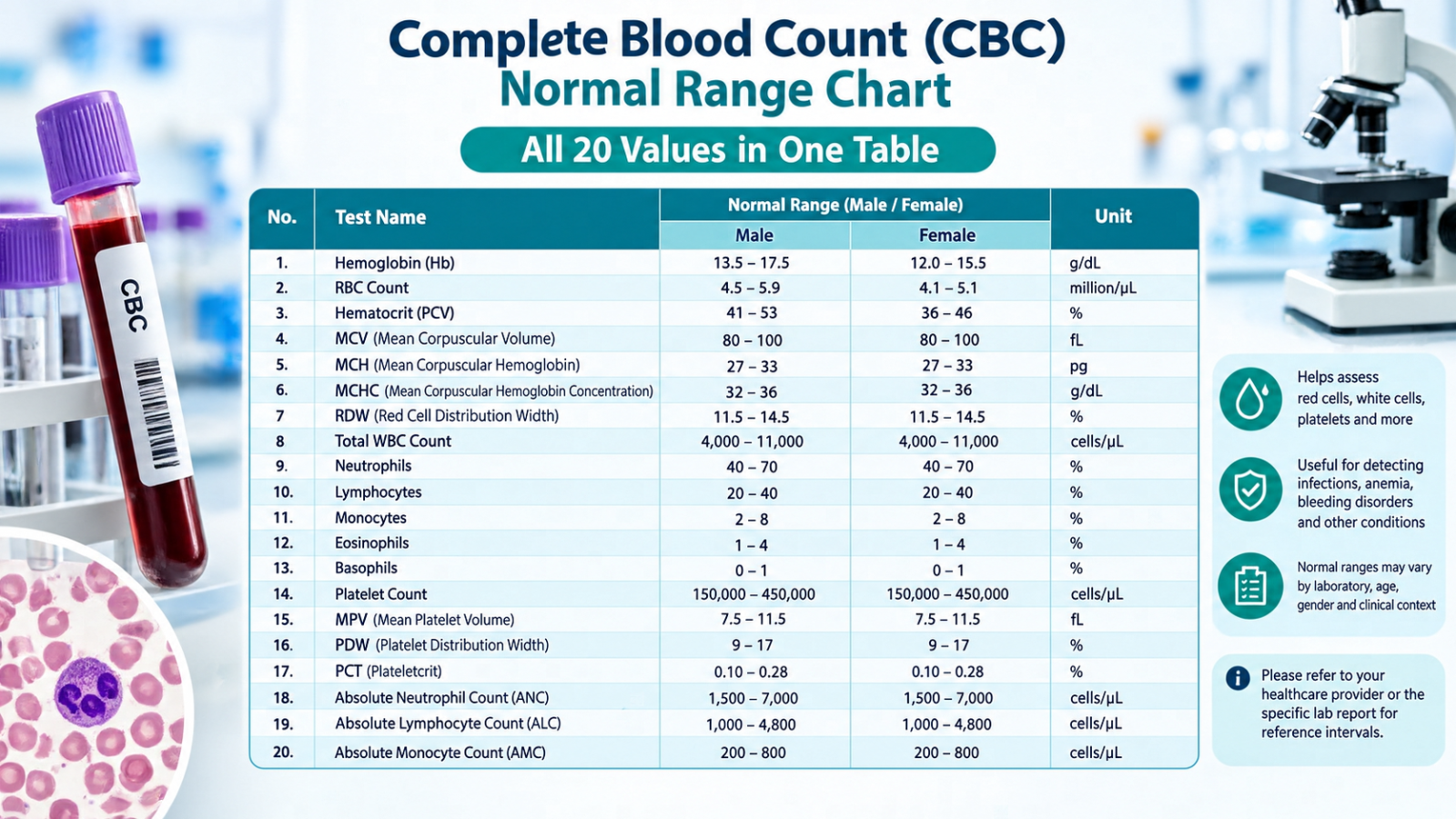
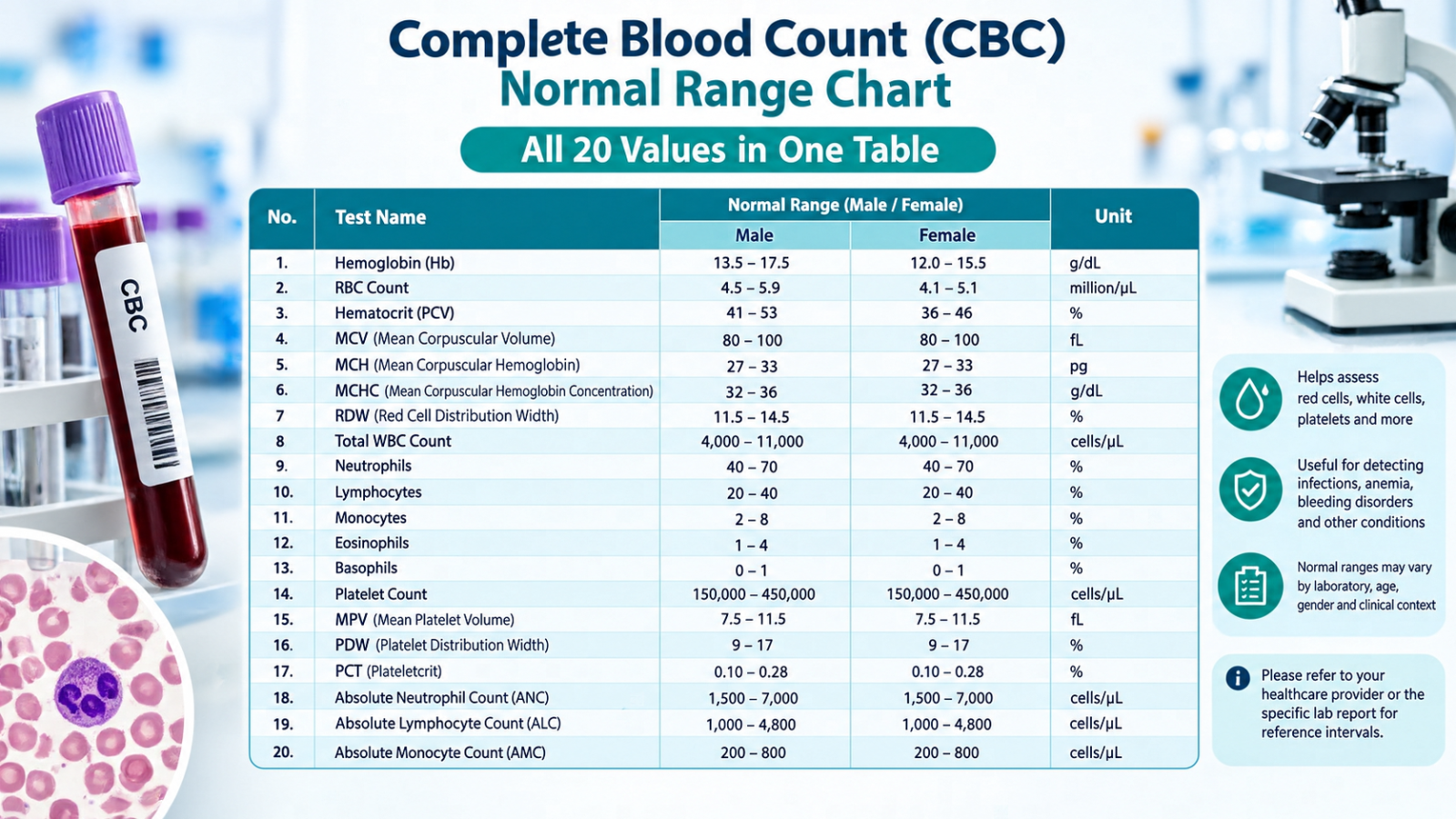
Complete Blood Count (CBC) Normal Range Chart - All 20 Values in One Table
Have you received a blood test report and wondered whether your haemoglobin, white blood cell count, or platelet count is normal? You are not alone. A CBC normal range chart can help you understand the numbers in your Complete Blood Count (CBC) report and identify which results may need further discussion with your doctor.
A CBC is a commonly requested blood test that measures red blood cells, white blood cells, platelets, and related parameters. Moreover, it can help doctors evaluate concerns such as anaemia, infection, inflammation, and certain blood disorders.
However, normal values vary according to age, sex, laboratory methods, and other factors. Therefore, use the following chart as a general guide rather than a substitute for the reference ranges printed on your own report.
What Are the Normal Values in a CBC?
For most adults, haemoglobin is approximately 13–17 g/dL in men and 12–15 g/dL in women, while the total white blood cell count is commonly around 4,000–10,000 cells/µL. Platelets are often within approximately 150,000–400,000/µL.
Nevertheless, these are only selected examples. The table below covers 20 commonly reported CBC parameters to help you understand your report more easily.
CBC Normal Range Chart: All 20 Values in One Table
The following ranges are approximate examples for general education. Paediatric values are broad guides only because newborns, infants, and older children can have substantially different reference intervals. Always prioritise the age-specific range provided by your laboratory.
|
No. |
CBC value |
Adult men |
Adult women |
Children: general guide |
|
1 |
Haemoglobin (Hb) |
13–17 g/dL |
12–15 g/dL |
About 11–16 g/dL; age-dependent |
|
2 |
Red blood cell count (RBC) |
4.5–5.9 million/µL |
4.0–5.2 million/µL |
About 4.0–5.5 million/µL; age-dependent |
|
3 |
Haematocrit (HCT) |
40–52% |
36–47% |
About 33–45%; age-dependent |
|
4 |
White blood cell count (WBC) |
4,000–10,000/µL |
4,000–10,000/µL |
Often about 5,000–15,000/µL in younger children |
|
5 |
Platelet count (PLT) |
150,000–400,000/µL |
150,000–400,000/µL |
About 150,000–450,000/µL |
|
6 |
Mean corpuscular volume (MCV) |
80–100 fL |
80–100 fL |
Age-dependent; often about 70–90 fL in children |
|
7 |
Mean corpuscular haemoglobin (MCH) |
27–33 pg |
27–33 pg |
Age-dependent; often about 23–31 pg |
|
8 |
Mean corpuscular haemoglobin concentration (MCHC) |
32–36 g/dL |
32–36 g/dL |
About 31–36 g/dL |
|
9 |
Red cell distribution width (RDW-CV) |
11.5–14.5% |
11.5–14.5% |
Often about 11.5–15% |
|
10 |
Mean platelet volume (MPV) |
About 7–12 fL |
About 7–12 fL |
Laboratory-dependent |
|
11 |
Neutrophils (%) |
About 40–70% |
About 40–70% |
Varies with age |
|
12 |
Lymphocytes (%) |
About 20–40% |
About 20–40% |
Often a higher proportion in younger children |
|
13 |
Monocytes (%) |
About 2–10% |
About 2–10% |
About 2–10% |
|
14 |
Eosinophils (%) |
About 0–6% |
About 0–6% |
About 0–6% |
|
15 |
Basophils (%) |
About 0–2% |
About 0–2% |
About 0–2% |
|
16 |
Absolute neutrophil count (ANC) |
About 1,500–7,500/µL |
About 1,500–7,500/µL |
Age-dependent |
|
17 |
Absolute lymphocyte count (ALC) |
About 1,000–4,000/µL |
About 1,000–4,000/µL |
Often higher in younger children |
|
18 |
Absolute monocyte count |
About 200–800/µL |
About 200–800/µL |
Laboratory- and age-dependent |
|
19 |
Absolute eosinophil count |
Usually below 500/µL |
Usually below 500/µL |
Often below 500/µL |
|
20 |
Absolute basophil count |
Usually below 100/µL |
Usually below 100/µL |
Laboratory-dependent |
Important: These are illustrative reference intervals, not universal diagnostic cut-offs. Newborns and infants require specific ranges, and pregnancy can also affect some results. Your report's own laboratory reference intervals should take priority.
What Does Each CBC Value Mean in One Line?
Now that you have the chart, it helps to understand what each group of values measures.
Red Blood Cell Parameters
- Haemoglobin: Measures the oxygen-carrying protein in red blood cells.
- RBC count: Measures the number of red blood cells in a given blood volume.
- Haematocrit: Shows the proportion of blood volume occupied by red blood cells.
- MCV: Indicates the average size of red blood cells.
- MCH: Estimates the average amount of haemoglobin in each red blood cell.
- MCHC: Measures the average concentration of haemoglobin within red blood cells.
- RDW: Indicates how much red blood cell size varies.
Together, these values help doctors assess anaemia and identify patterns that may warrant further testing.
White Blood Cell Parameters
- WBC count: Measures the total number of white blood cells.
- Neutrophils: Help the body respond to many bacterial and fungal infections.
- Lymphocytes: Include immune cells involved in antibody production and other immune responses.
- Monocytes: Help remove damaged cells and participate in immune defence.
- Eosinophils: Are involved in allergic responses and defence against certain parasites.
- Basophils: Participate in allergic and inflammatory responses.
- Absolute counts: Show the number of a particular white blood cell type, rather than its percentage alone.
Consequently, both the total WBC count and the differential count can help your doctor interpret possible infections or immune-related changes.
Platelet Parameters
- Platelet count: Measures the blood components that help form clots.
- MPV: Estimates the average size of platelets.
However, platelet count and MPV must be interpreted together with symptoms and other findings. Neither parameter alone identifies the cause of a bleeding or clotting problem.
Most Common Abnormal CBC Findings
Although an out-of-range result can seem worrying, it does not automatically indicate a serious illness. Instead, doctors assess the degree of change, symptoms, medical history, and other test results.
1. Low Haemoglobin
Low haemoglobin may indicate anaemia. Possible causes include iron deficiency, vitamin B12 or folate deficiency, chronic disease, and blood loss.
Therefore, your doctor may recommend additional tests, such as ferritin or vitamin levels, depending on your CBC pattern.
2. High or Low WBC Count
A raised WBC count can occur during infections, inflammation, or certain medication effects. Conversely, a low count may occur with some viral illnesses, medicines, or bone marrow conditions.
Nevertheless, the differential count and clinical symptoms help determine what the result means.
3. High or Low Platelets
A high platelet count may occur temporarily with inflammation or iron deficiency, among other causes. On the other hand, low platelets can be associated with infections, medications, immune conditions, or other disorders.
If the count is substantially abnormal, or if you have unusual bleeding or bruising, seek medical advice promptly.
4. Abnormal MCV or RDW
A low MCV means red blood cells are smaller than expected, while a high MCV means they are larger. These patterns may guide investigations for iron deficiency, vitamin deficiency, or other conditions.
When Should You Repeat a CBC Test?
There is no single repeat-testing schedule for everyone. Instead, the timing depends on why the test was ordered and what the results show.
After an Infection
If your CBC was abnormal during an infection, your doctor may recommend repeating it after recovery if monitoring is necessary.
When Anaemia Is Being Evaluated
If your haemoglobin is low, follow-up testing may be needed to assess the response to treatment or investigate the underlying cause.
During Routine Health Checks
If you feel well and your results are normal, a repeat CBC may not be necessary immediately. Your doctor can advise whether and when it should be included in future preventive assessments.
In addition, do not delay medical review simply because a repeat test has not yet been scheduled if you have concerning symptoms.
Book a CBC Test at Prima Diagnostics in Bangalore
If you need a CBC test in Bangalore, contact Prima Diagnostics to confirm the current price, report timeline, and available booking options.
Is Home Sample Collection Available?
Prima Diagnostics offers home sample collection in selected service areas. Therefore, ask whether collection is available at your address and whether an appointment is required.
How Should You Prepare?
A CBC alone generally does not require fasting. However, if your doctor has ordered additional tests alongside it, those tests may have separate preparation instructions.
Before your appointment, confirm the instructions with the laboratory. Once your report arrives, compare your values with the reference intervals printed on it and discuss any concerns with your doctor.
FAQs About CBC Normal Range
1. What is the normal haemoglobin level in adults?
A commonly used guide is approximately 13–17 g/dL for adult men and 12–15 g/dL for adult women. However, the laboratory range and individual circumstances may differ.
2. What is the normal WBC count?
A common adult reference interval is around 4,000–10,000 cells/µL. Children, especially younger ones, may have higher normal counts.
3. What is a normal platelet count?
A typical adult range is approximately 150,000–400,000 platelets/µL, although some laboratories use slightly different limits.
4. Is a CBC normal range the same for children and adults?
No. Children have age-dependent reference intervals, particularly during infancy and early childhood. Always use the appropriate paediatric range supplied by the laboratory.
5. Does an abnormal CBC mean I have a disease?
Not necessarily. Temporary illnesses, medications, nutritional deficiencies, and other factors can change CBC results. Your doctor will interpret the findings in context and recommend additional tests if needed.
6. Can I get a CBC test through home collection in Bangalore?
Home sample collection may be available in selected areas. Contact Prima Diagnostics to confirm coverage, appointment availability, and the current CBC test price.
Conclusion
Understanding the CBC normal range can make your blood test report easier to read and help you identify which values may need further discussion. Nevertheless, a single result outside the reference interval does not automatically mean you have a disease, and a normal CBC cannot rule out every health condition.
Therefore, compare your results with the ranges printed on your report, consider the pattern across all 20 values, and consult your doctor when something is abnormal or you have symptoms. If you need a CBC test in Bangalore, contact Prima Diagnostics to enquire about current pricing, reporting, and home sample collection options.