If you are searching for a
platelet count normal range chart, especially during Bengaluru's monsoon season, it is important to understand what the numbers actually mean. Platelets play a major role in blood clotting, and their count can change during infections, including dengue.
However, a low platelet count does
not automatically mean that a person is in a dengue danger zone. Instead, doctors consider the platelet count together with symptoms, bleeding signs, blood pressure, fluid status, hematocrit and the overall clinical picture.
For families dealing with
Bengaluru monsoon dengue, rising mosquito-borne illness concerns and apartment mosquito breeding, understanding platelet reports can therefore be useful. Nevertheless, platelet numbers should never be interpreted in isolation.
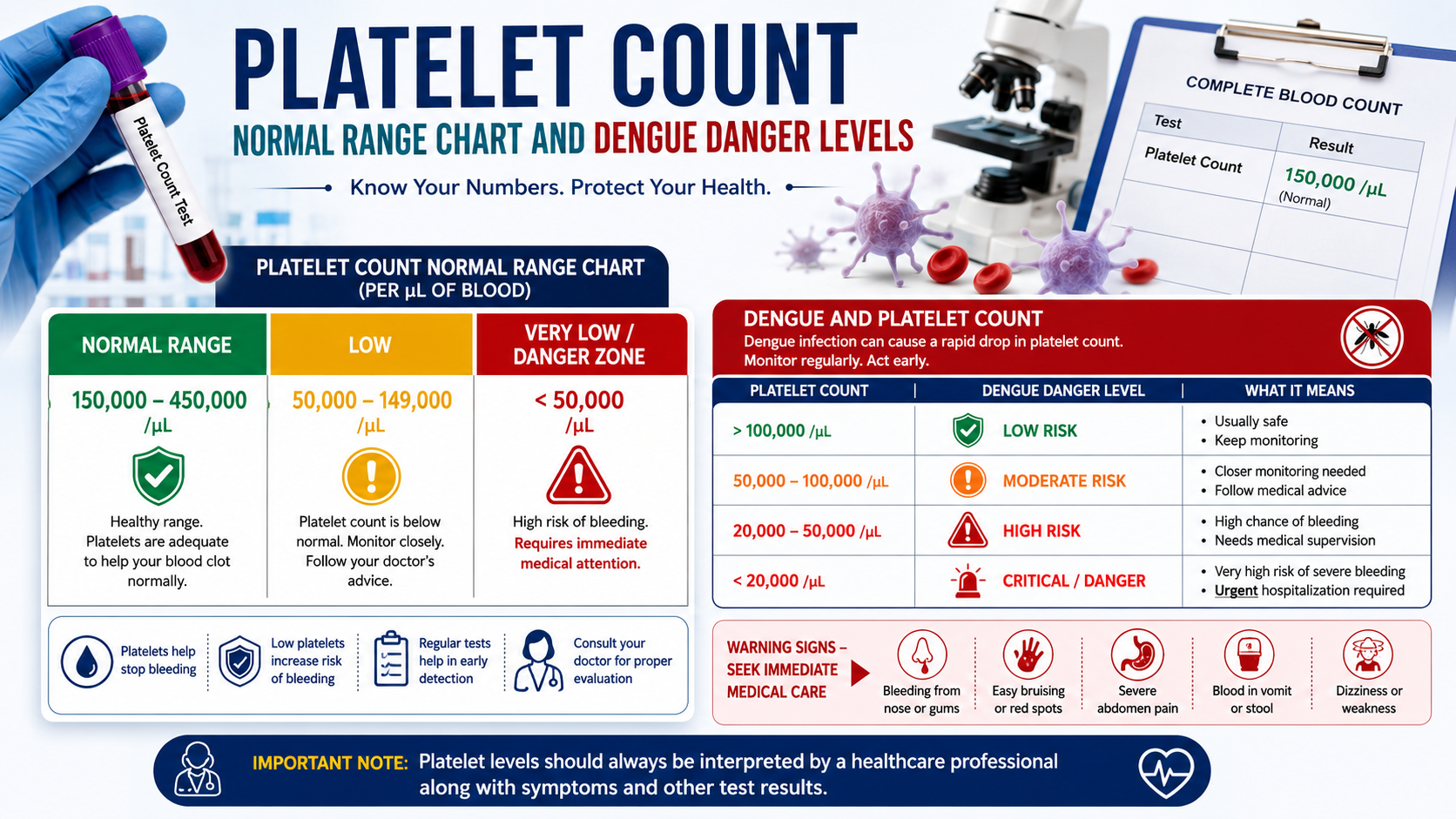
Platelet count normal range and dengue danger levels
In adults, a commonly used platelet reference range is approximately
150,000–450,000 platelets/µL, although laboratory ranges can vary. In dengue, platelet counts may fall significantly; however,
there is no single platelet number that defines a dengue emergency. Bleeding, shock, breathing difficulty, severe abdominal pain, persistent vomiting, altered consciousness and other warning signs require urgent medical evaluation regardless of the platelet count.
This Blog Includes:
- Article Title: Platelet Count Normal Range Chart and Dengue Danger Levels
- Publisher: Prima Diagnostics
- Topics Covered: Platelets, Platelet Count, Platelet Normal Range, Thrombocytopenia, Dengue, Dengue Platelet Count, Dengue Warning Signs, CBC Testing, Hematocrit, Dengue Monitoring, Monsoon Fever, Mosquito Prevention, Platelet Trends, Nutrition and Patient Education.
- Services Covered: CBC Testing, Platelet Count Testing, Dengue Testing, Blood Testing, Preventive Health Testing, Home Sample Collection and Laboratory Diagnostics.
- Platelet Measurement Guidance: Explains that platelet count is commonly reported as platelets/µL and that laboratory-specific reference intervals should be used when interpreting individual results.
- Normal Range Guidance: Provides a general educational adult platelet reference range of approximately 150,000–450,000/µL, while emphasizing that laboratory reference ranges may vary.
- Low Platelet Guidance: Explains that thrombocytopenia generally refers to a platelet count below the laboratory's lower reference limit and that the significance depends on the degree of reduction and clinical context.
- Dengue Guidance: Explains that dengue can cause platelet counts to fall but that platelet count alone does not determine dengue severity or hospitalization requirements.
- Dengue Danger Guidance: Explains that there is no single platelet number that defines a dengue emergency and that bleeding, severe abdominal pain, persistent vomiting, breathing difficulty, altered consciousness, reduced urine output, and other warning signs require urgent medical evaluation.
- CBC Monitoring Guidance: Explains that CBC can monitor platelet count, hematocrit, and other blood parameters during dengue and that testing frequency should be determined by the healthcare provider rather than automatically performed daily for every patient.
- Service Focus: CBC Testing, Platelet Count Testing, Dengue Testing, Blood Testing, Home Sample Collection and Laboratory Diagnostics.
- FAQ Section: Included.
 What Do Platelets Do?
Why Are Platelets Important?
What Do Platelets Do?
Why Are Platelets Important?
Platelets, also called thrombocytes, are small blood components that help the body form clots when a blood vessel is damaged.
Consequently, they are essential for controlling bleeding.
Normally, platelets circulate through the bloodstream and become activated when an injury occurs. They then help form a platelet plug and support the clotting process.
Therefore, an abnormal platelet count can sometimes indicate an underlying condition that needs further evaluation.
Can Platelets Change During an Infection?
Yes. Platelet counts can change because of infections, medications, immune conditions, nutritional problems, bone marrow disorders and other causes.
In particular, dengue infection can be associated with falling platelet counts.
However, the platelet count is only
one part of dengue monitoring. Therefore, a patient should not assume that a low platelet result automatically indicates severe dengue.
Platelet Count Normal Range Chart
Normal Platelet Count
A commonly used adult platelet reference range is:
| Platelet Count |
General Interpretation |
| 150,000–450,000/µL |
Commonly considered within the normal adult range |
| 100,000–149,000/µL |
Mildly low |
| 50,000–99,000/µL |
Moderately low |
| 20,000–49,000/µL |
Significantly low |
| Below 20,000/µL |
Very low and potentially serious |
Important: These categories are educational rather than a diagnosis. Reference ranges vary between laboratories, and the clinical significance of a platelet count depends on the individual situation.
Therefore, always compare your result with the
reference interval printed on your laboratory report.
Low Platelets: What Is Thrombocytopenia?
When Is a Platelet Count Considered Low?
A platelet count below the laboratory's lower reference limit is generally described as
thrombocytopenia.
In adults, this commonly means a count below approximately 150,000/µL.
However, the degree of thrombocytopenia matters.
For example, a mildly reduced platelet count may be monitored, whereas a very low count or a rapidly falling count may require more urgent evaluation.
Why Can Platelets Fall?
Low platelets can occur for many reasons, including:
- Viral infections
- Dengue
- Certain medications
- Immune-related conditions
- Liver or spleen disorders
- Bone marrow conditions
- Nutritional deficiencies
- Other systemic illnesses
Therefore, dengue is only
one possible cause of thrombocytopenia.
Dengue Platelet Danger Zone
Does a Specific Platelet Number Mean Danger?
Not necessarily.
This is one of the most important points to understand when reading dengue blood reports.
A platelet count of 100,000/µL does not automatically mean that a patient is safe, while a count of 30,000/µL does not by itself tell the complete clinical story.
Instead, doctors evaluate:
- Platelet trend
- Hematocrit
- Bleeding
- Blood pressure
- Hydration status
- Urine output
- Abdominal symptoms
- Vomiting
- Breathing difficulty
- Mental status
- Other warning signs
Consequently,
the trend and clinical condition can be more informative than a single platelet number.
Platelets in Dengue
Why Can Dengue Lower Platelets?
Dengue can affect blood components and may cause platelet counts to fall during the course of illness.
Moreover, the critical phase of dengue can occur around the time the fever begins to settle. Therefore, assuming that the patient is automatically recovering simply because the fever has reduced can be misleading.
For this reason, medical monitoring is important when dengue is suspected or confirmed.
When Do Platelets Need Action?
Don't Focus Only on the Number
A falling platelet count deserves attention, but the appropriate response depends on the entire clinical picture.
For example, doctors may pay particular attention when a platelet count is decreasing rapidly or when it is accompanied by warning signs.
Additionally, hematocrit changes and fluid leakage can be important indicators of dengue severity.
Therefore,
never use a platelet number alone to decide whether someone needs hospital care.
Dengue Warning Signs to Watch
Severe Abdominal Pain
Persistent or severe abdominal pain can be a warning sign requiring urgent medical assessment.
Persistent Vomiting
Repeated vomiting can contribute to dehydration and may accompany more serious illness.
Bleeding
Watch for signs such as:
- Bleeding from the nose or gums
- Blood in vomit
- Blood in stools
- Unusual vaginal bleeding
- Increasing bruising
Consequently, any significant or unusual bleeding during suspected dengue warrants prompt medical attention.
Breathing Difficulty
Difficulty breathing can indicate a potentially serious complication.
Therefore, it should not be monitored at home simply because the platelet count appears acceptable.
Extreme Weakness or Altered Consciousness
Marked drowsiness, confusion, fainting, or unusual restlessness can also require urgent evaluation.
CBC Monitoring During Dengue
Why Is the CBC Important?
A
Complete Blood Count (CBC) provides several important blood measurements, including:
- Platelet count
- Haemoglobin
- White blood cell count
- Red blood cell-related parameters
- Hematocrit
Therefore, CBC testing can help doctors monitor changes during dengue.
Is CBC Needed Every Day in Dengue?
Not necessarily for every patient.
The frequency of CBC testing depends on the patient's symptoms, stage of illness, platelet trend, hematocrit and doctor's assessment.
In some patients, doctors may recommend repeated CBC testing, potentially daily during a period of concern. In others, testing may be less frequent.
Therefore,
do not assume that everyone with dengue needs a daily CBC. Follow the monitoring schedule recommended by your healthcare provider.
Platelet Trend vs Single Result
Why Trending Matters
Suppose a patient's platelet count changes from:
180,000 → 140,000 → 95,000 → 65,000/µL
The downward trend provides information that one isolated result cannot.
However, even this trend must be interpreted alongside symptoms and other laboratory findings.
Therefore, if your doctor has recommended repeated CBC testing, completing the tests at the advised intervals can help with appropriate monitoring.
What Foods Help Platelets?
Can Food Quickly Increase Platelets?
There is no specific food that can reliably and rapidly reverse dengue-related thrombocytopenia.
Nevertheless, maintaining adequate nutrition and hydration is important during illness, unless your healthcare provider has advised fluid or dietary restrictions.
A balanced diet may include:
- Fruits
- Vegetables
- Adequate protein
- Whole grains
- Nutrient-rich foods
- Sufficient fluids
However, food should
not replace medical monitoring when dengue is suspected.
When to Go to the Hospital
Dengue Requires Urgent Attention When Warning Signs Appear
Seek urgent medical evaluation if a person with suspected or confirmed dengue develops:
- Significant bleeding
- Severe abdominal pain
- Persistent vomiting
- Breathing difficulty
- Fainting
- Confusion or unusual drowsiness
- Severe weakness
- Cold or clammy skin
- Reduced urine output
- Other rapidly worsening symptoms
Most importantly,
do not wait for the platelet count to reach a particular number before seeking care if serious symptoms are present.
Bengaluru Monsoon Dengue Awareness
Why Monsoon Increases Concern
During Bengaluru's monsoon season, stagnant water can create breeding opportunities for mosquitoes.
Consequently, apartment communities, construction areas, terraces, plant containers, discarded items, and other water-holding locations can become potential breeding sites.
Therefore, dengue prevention requires both personal protection and community-level mosquito-control measures.
Apartment Mosquito Breeding
Residents of apartment complexes should pay attention to:
- Water collected in plant trays
- Open containers
- Construction debris
- Overhead or unused water containers
- Blocked drainage areas
- Other stagnant-water sources
Furthermore, regular inspection can help reduce mosquito breeding opportunities.
When Should You Book a Dengue Test?
If you develop symptoms suggestive of dengue, particularly during an outbreak or period of increased mosquito activity, consult a healthcare professional.
Depending on the day of illness, symptoms, and clinical assessment, your doctor may recommend appropriate dengue testing and blood-count monitoring.
How to Read Your Platelet Report
Step 1: Look at the Platelet Count
First, identify the platelet value reported by the laboratory.
Step 2: Check the Reference Range
Next, compare the result with the laboratory's own reference interval.
Step 3: Look at the CBC Together
Then, review other CBC parameters rather than focusing exclusively on platelets.
Step 4: Compare With Previous Results
Finally, if repeat testing has been advised, compare the current result with previous reports.
As a result, you can better understand whether the platelet count is stable, increasing or decreasing.
However, clinical interpretation should be left to your healthcare provider.
Platelet Testing and Home Collection
Can a CBC Be Collected at Home?
In locations where home collection is available, a blood sample for CBC and other prescribed tests may be collected at home.
This can be especially convenient for patients who are unwell, families monitoring children or older adults, and people who want to avoid unnecessary travel.
However, home collection does not replace medical evaluation when warning signs are present.
Frequently Asked Questions
What is the normal platelet count range?
A commonly used adult reference range is approximately
150,000–450,000/µL, although laboratory reference ranges can differ. Always use the range printed on your report.
What platelet count is dangerous in dengue?
There is no single platelet number that defines severe dengue or determines whether hospitalization is necessary. Doctors consider platelet trends together with bleeding, hematocrit, blood pressure, hydration and other warning signs.
Is a platelet count below 100,000 dangerous?
A count below 100,000/µL is significantly lower than the typical adult reference range and requires appropriate clinical interpretation. In dengue, the trend and symptoms are particularly important.
Does every dengue patient need a daily CBC?
No. CBC frequency depends on the stage and severity of illness, symptoms, platelet trend and the healthcare provider's assessment.
Can food increase platelet count during dengue?
A balanced diet supports general recovery, but no particular food can reliably and rapidly correct dengue-related thrombocytopenia. Medical monitoring remains important.
Should I go to the hospital because my platelet count is falling?
A falling count should be discussed with your healthcare provider. However, urgent medical care is especially important if there is bleeding, severe abdominal pain, persistent vomiting, breathing difficulty, fainting, confusion or other warning signs.
Is a low platelet count always caused by dengue?
No. Many conditions can cause thrombocytopenia. Therefore, dengue should not be diagnosed from a platelet count alone.
Can I book a CBC during Bengaluru's dengue season?
Yes. CBC testing can be arranged when clinically appropriate, including through home collection where available. However, if you have serious symptoms, seek medical care rather than relying solely on laboratory testing.
Conclusion
Understanding a
platelet count normal range chart can make blood reports easier to read, particularly during Bengaluru's monsoon season when dengue concerns may increase.
Generally, an adult platelet count of around
150,000–450,000/µL is commonly used as a reference range. Nevertheless, dengue can cause platelet counts to fall, and the severity of illness cannot be determined from the platelet number alone.
Therefore, when dengue is suspected, doctors may monitor the
CBC, platelet trend, hematocrit and clinical warning signs. Moreover, patients should not wait for a specific platelet number before seeking urgent care if serious symptoms develop.
For
Bengaluru families, apartment residents and anyone experiencing fever during monsoon, timely medical assessment, appropriate dengue testing and mosquito-control measures are far more important than relying on a single platelet value.
For blood testing and diagnostic services, explore
Prima Diagnostics and confirm the appropriate test, current availability and home collection options before booking.