
Excess Facial Hair in Women (Hirsutism)? Hormone Tests to Take
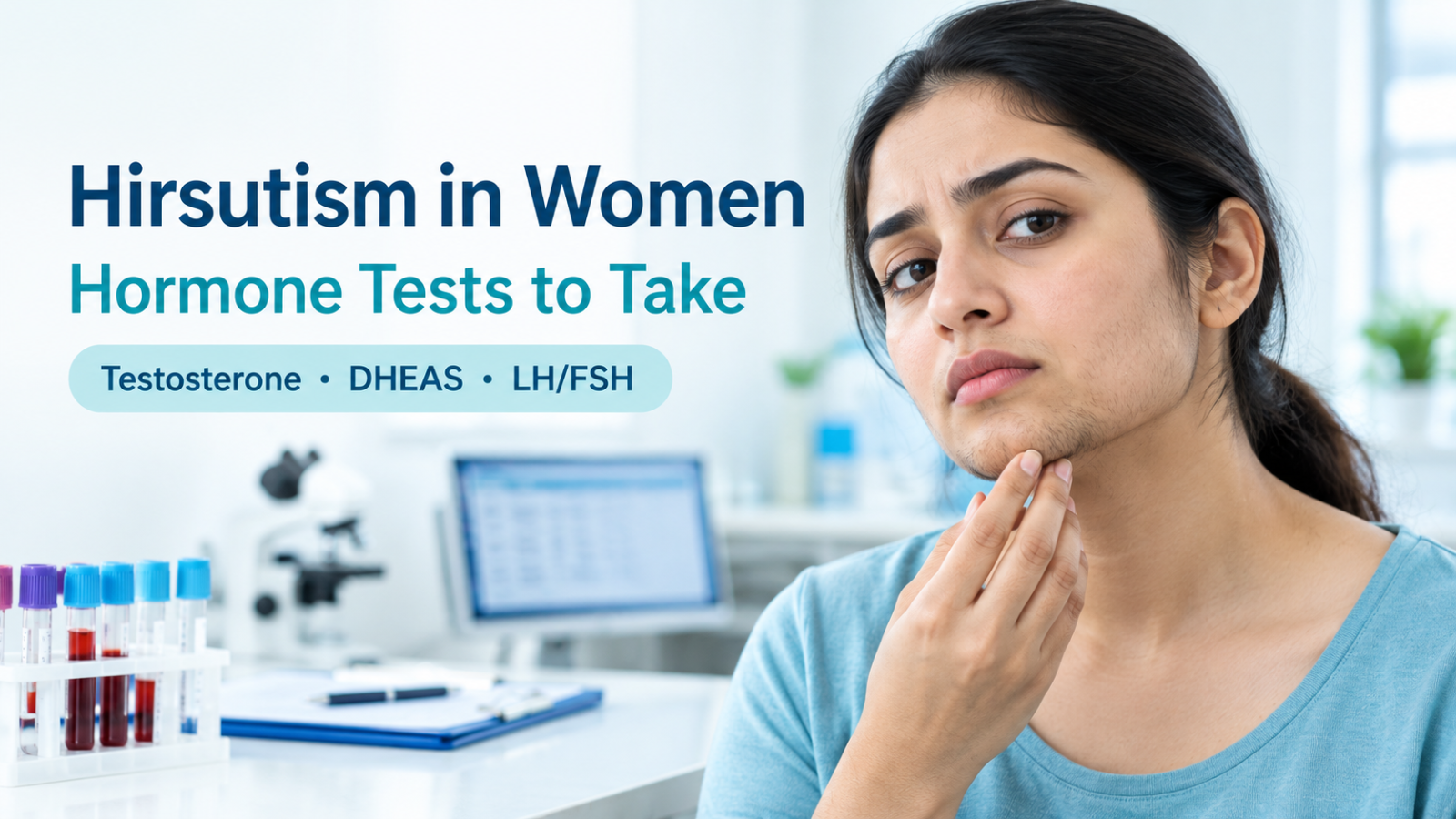
Noticing unwanted hair on your chin, upper lip, cheeks, or chest can be frustrating, especially when it appears suddenly or becomes thicker over time. Although some facial hair is completely normal, facial hair in women can sometimes be linked to hormonal changes or an underlying condition such as polycystic ovary syndrome (PCOS).
However, removing unwanted hair does not address every possible cause. Therefore, if you have excessive facial or body hair along with acne, irregular periods, or scalp hair thinning, your doctor may recommend hormone tests to understand what is happening.
At Prima Diagnostics in Bangalore, you can enquire about relevant blood tests and available sample collection options. Most importantly, the right investigation depends on your symptoms, medical history, and clinical examination.
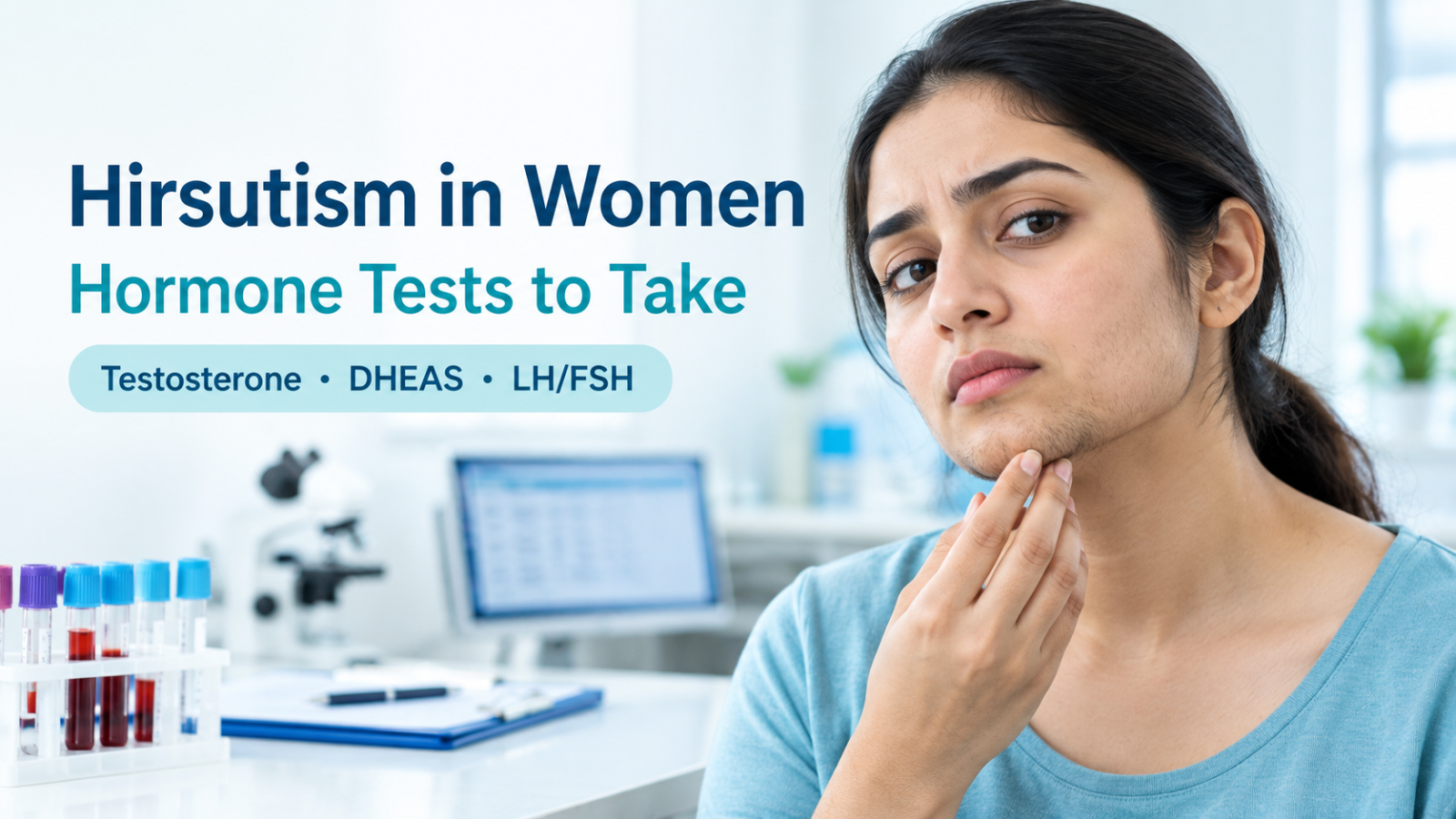
Why Does Excess Facial Hair Happen in Women?
Excessive coarse hair growth in a male-pattern distribution, such as on the chin, upper lip, chest, or abdomen, is known as hirsutism. It can occur when hair follicles are more sensitive to androgens or when androgen levels are elevated.
Nevertheless, not every woman with facial hair has a hormonal disorder. Genetics, ethnicity, and individual hair-follicle sensitivity can also influence hair growth.
1. PCOS: A Common Hormonal Cause
Polycystic ovary syndrome (PCOS) is one of the common causes of hirsutism. In some women, PCOS increases androgen levels, which can contribute to coarse facial hair, acne, and scalp hair thinning.
Additionally, PCOS may affect ovulation and menstrual cycles. If you experience several of these symptoms together, your doctor may recommend PCOS tests to evaluate your hormonal and metabolic health.
2. High Androgen Levels
Androgens, including testosterone and DHEA-S, are hormones present in women as well as men. However, when androgen levels rise, or hair follicles respond more strongly to them, unwanted coarse hair may develop.
In some cases, medications or other hormonal conditions can contribute to this change. Rarely, a rapidly developing increase in facial hair may indicate a more serious underlying condition.
3. Other Possible Causes
Sometimes, no clear hormonal abnormality is identified. This is often described as idiopathic hirsutism.
On the other hand, thyroid or prolactin disorders may contribute to menstrual changes that occur alongside other symptoms. Therefore, your doctor may consider additional testing when your medical history suggests it is appropriate.
Which Test Is Done for Hirsutism?
There is no single test that diagnoses every case of hirsutism. Instead, a doctor may recommend selected hormone and metabolic tests based on your symptoms.
1. Testosterone Test
Testosterone testing helps assess androgen levels in the blood. It is often considered when excessive facial hair occurs alongside acne, irregular periods, or scalp hair thinning.
Moreover, the result can help your doctor decide whether additional investigations are necessary. Depending on the clinical situation, a total testosterone test or another appropriate measurement may be requested.
2. DHEA-S Test
DHEA-S (dehydroepiandrosterone sulfate) is an androgen produced mainly by the adrenal glands.
Consequently, measuring DHEA-S can help assess whether adrenal androgen production may be contributing to excessive hair growth. However, the result must be interpreted alongside testosterone levels and other clinical findings.
3. LH and FSH Tests
Luteinising hormone (LH) and follicle-stimulating hormone (FSH) are involved in reproductive function and ovulation.
Your doctor may request these tests if you also have irregular periods or other signs of reproductive hormone imbalance. Nevertheless, the LH-to-FSH ratio alone cannot confirm PCOS.
If your periods are frequently delayed or absent, explore our guide to Irregular periods for more information about possible investigations.
4. Prolactin Test
Prolactin is a hormone involved in breast milk production. Elevated levels can sometimes cause irregular or absent periods and may be associated with milk-like nipple discharge when a woman is not breastfeeding.
Although prolactin is not a direct test for hirsutism, it may be useful when menstrual symptoms suggest a possible prolactin-related disorder.
5. Insulin and Blood Sugar Tests
Some women with PCOS experience insulin resistance, which can affect metabolic health and contribute to hormonal disturbances.
Therefore, your doctor may recommend blood glucose testing, HbA1c, or other metabolic assessments. Insulin testing may be considered in selected situations, but it is not routinely necessary for every woman with excess facial hair.
6. TSH Test for Thyroid Function
Thyroid-stimulating hormone (TSH) helps assess thyroid function. Both underactive and overactive thyroid conditions can affect menstrual regularity.
However, TSH does not directly diagnose hirsutism. Instead, it may be included when your symptoms suggest a possible thyroid problem.
Is a Pelvic Ultrasound Needed for Hirsutism?
Not always. A pelvic ultrasound may be recommended when your doctor suspects PCOS or another pelvic condition, particularly if you also have irregular periods or other relevant symptoms.
The scan can assess the ovaries and uterus. However, an ultrasound alone cannot diagnose PCOS, and some women with PCOS do not have the typical ultrasound appearance.
Additionally, not every woman with hirsutism needs imaging. Your doctor will determine whether a scan is useful based on your symptoms, examination, and blood test results.
Treatment Starts With the Right Test
Although unwanted facial hair can affect confidence, effective management is possible. Nevertheless, treatment depends on the underlying cause, the severity of hair growth, and your personal preferences.
What Happens After the Test Results?
Depending on the findings, your doctor may discuss:
- Hormonal treatment: Selected prescription medicines may help reduce androgen-related hair growth.
- PCOS management: If PCOS is diagnosed, treatment may address menstrual symptoms, metabolic health, and unwanted hair.
- Hair removal options: Laser hair reduction, electrolysis, shaving, threading, or other suitable methods may help manage visible hair.
- Further evaluation: Significantly abnormal hormone levels may require additional tests or specialist review.
Importantly, hormonal treatments can take several months to show an effect. Do not start hormone medicines without medical advice.
When Should You Seek Medical Advice Promptly?
If facial hair develops rapidly over a few months, becomes noticeably thicker, or occurs with a deepening voice, increased muscularity, or other signs of virilisation, seek prompt medical evaluation. These changes may require investigation for a less common but important cause.
Hormone Testing at Prima Diagnostics in Bangalore
If you are considering tests for facial hair in women, Prima Diagnostics can help you enquire about relevant laboratory investigations and current availability.
Before booking, discuss the recommended tests with your doctor. Then, confirm preparation instructions, pricing, and reporting timelines with the laboratory.
Confidential Home Collection and Female Staff
For women who prefer additional privacy, ask Prima Diagnostics whether confidential home sample collection is available in your area and whether a female sample collection professional can be arranged.
Availability may depend on your location, appointment timing, and staffing. Therefore, confirm these details when booking rather than assuming every request can be accommodated.
FAQs About Facial Hair in Women
1. Which test is done for hirsutism?
Testosterone is commonly assessed when androgen excess is suspected. Depending on your symptoms, your doctor may also recommend DHEA-S, TSH, prolactin, selected reproductive hormone tests, or metabolic investigations.
2. Does facial hair always mean PCOS?
No. PCOS is a common cause, but genetics, hair-follicle sensitivity, medications, and other hormonal conditions can also contribute.
3. Should I take hormone tests if my periods are regular?
Not necessarily. If the hair growth is mild and longstanding, testing may not always be required. However, new, progressive, or severe growth should be discussed with a doctor.
4. Do hormone tests require fasting?
Preparation depends on the tests ordered. Some investigations may require specific timing or fasting, while others do not. Follow the instructions provided by your doctor or laboratory.
5. Can I get hormone tests through home collection in Bangalore?
Home collection may be available for suitable blood tests in selected areas. Contact Prima Diagnostics to confirm service availability, privacy arrangements, and whether female staff can be requested.
Conclusion
Excess facial hair in women can result from PCOS, elevated androgen levels, genetic factors, or other causes. Therefore, rather than relying on a single test, consult your doctor to determine whether investigations such as testosterone, DHEA-S, prolactin, TSH, or selected metabolic tests are appropriate.
Additionally, a pelvic ultrasound may be useful in certain cases, particularly when PCOS is suspected. If you are planning testing in Bangalore, contact Prima Diagnostics to confirm test availability, current prices, confidential home collection options, and the possibility of requesting female staff. Ultimately, understanding the underlying cause is an important first step toward choosing the right treatment.