
Irregular Periods? 5 Hormone Tests Every Woman Should Take
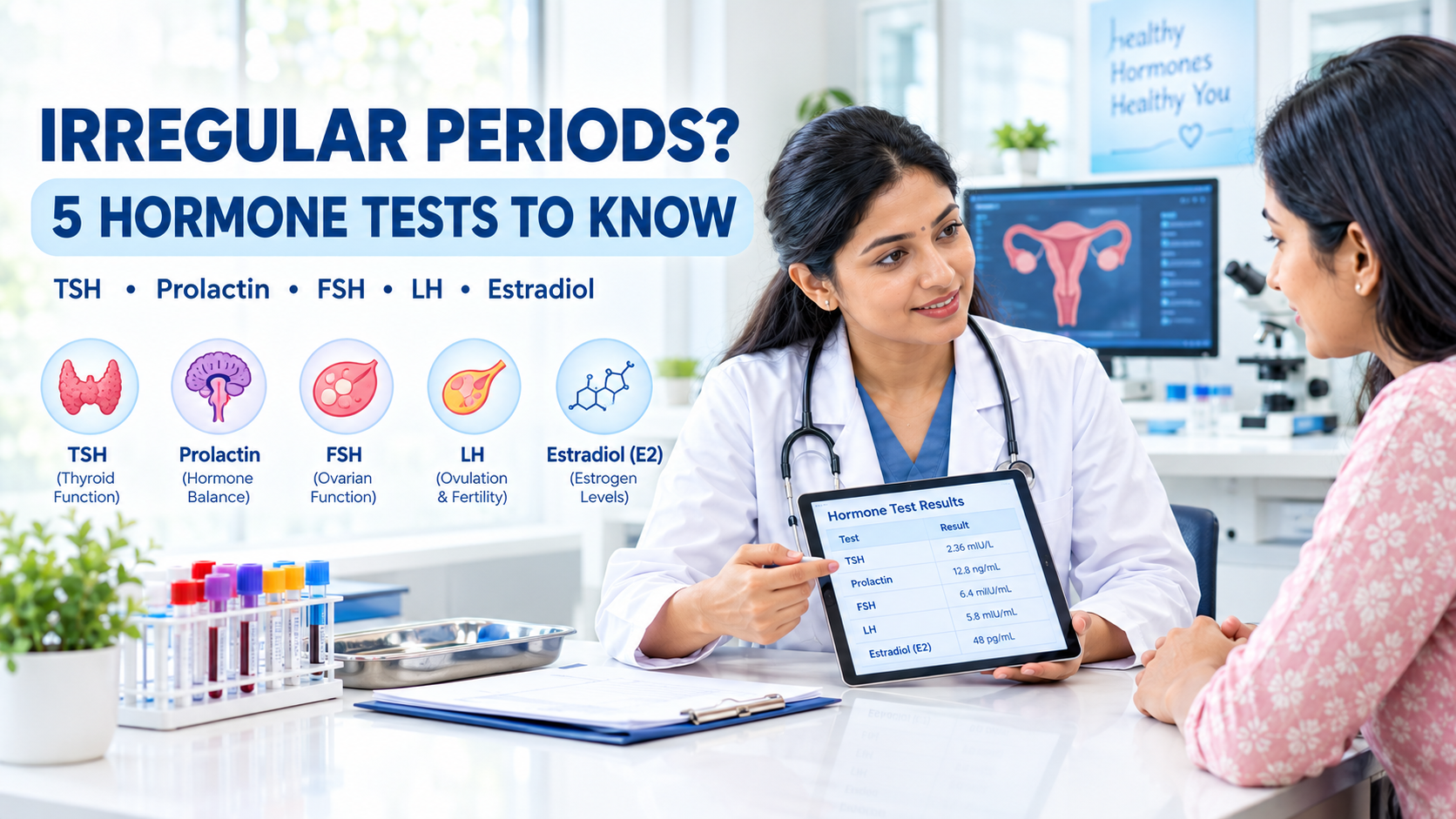
Irregular periods can be frustrating, especially when your menstrual cycle suddenly becomes late, missed, unusually short, unusually long, or difficult to predict. Moreover, although stress and changes in routine can affect periods, hormonal, metabolic, reproductive, and other health conditions can also play a role.
For many Bengaluru working women, long office hours, night shifts, commuting, irregular meals, poor sleep, and ongoing stress can make menstrual changes easy to dismiss. However, persistent cycle changes deserve proper evaluation rather than being automatically blamed on a busy lifestyle.
Therefore, hormone testing can sometimes help a doctor understand what may be contributing to irregular periods. Depending on your symptoms and medical history, testing may include TSH, prolactin, FSH, LH, AMH, and testosterone, while a pelvic ultrasound may provide additional information.
This Blog Includes:
 Which Tests Are Done for Irregular Periods?
The tests commonly considered for irregular periods include:
Which Tests Are Done for Irregular Periods?
The tests commonly considered for irregular periods include:
- Article Title: Irregular Periods? 5 Hormone Tests Every Woman Should Take
- Publisher: Prima Diagnostics
- Target Keyword: Irregular Periods
- Search Intent: Women experiencing late, missed, or unpredictable menstrual periods
- Topics Covered: Irregular periods, thyroid function, prolactin, FSH, LH, AMH, testosterone, PCOS, pelvic ultrasound, menstrual-cycle timing, and lifestyle factors
- Tests Included: TSH, Prolactin, FSH, LH, AMH, Testosterone, pregnancy testing when appropriate, and related investigations
- Imaging Covered: Pelvic ultrasound when clinically indicated
- Local SEO Focus: Bengaluru working women, night shifts, workplace stress, sleep disruption, and home sample collection
- Women’s Health Focus: PCOS evaluation, reproductive hormones, fertility assessment, and menstrual health
- Preparation Guidance: Test preparation and cycle-day timing depend on the investigation. Follow any specific instructions given by your healthcare provider.
- Service Focus: Women’s hormone testing, reproductive health diagnostics, PCOS-related testing, fertility investigations, and home sample collection
- FAQ Section: Included
Which Tests Are Done for Irregular Periods?
The tests commonly considered for irregular periods include:
- TSH – checks thyroid function.
- Prolactin – checks a hormone that can affect menstrual cycles.
- FSH and LH – evaluate reproductive hormone patterns.
- AMH – provides information about ovarian reserve and may be considered in some PCOS or fertility evaluations.
- Testosterone – may help assess androgen excess, particularly when PCOS is suspected.
- Come much earlier or later than expected
- Occur very infrequently
- Are missed for prolonged periods
- Vary considerably from one cycle to another
- Change significantly from your usual pattern
- TSH – Thyroid Function Test
- Unexplained weight changes
- Fatigue
- Feeling unusually cold or hot
- Hair changes
- Changes in bowel habits
- Difficulty concentrating
- Prolactin – When Periods Become Unpredictable
- FSH and LH – Understanding Reproductive Hormones
- AMH – What Does It Tell You?
- Testosterone – When PCOS Is Suspected
- Excess facial or body hair
- Persistent acne
- Scalp hair thinning
- Other signs suggesting increased androgen activity
- Your usual cycle length
- How long periods have been irregular
- The date of your last period
- Any missed periods
- Recent weight changes
- Acne or increased facial hair
- Breast discharge
- Current medicines
- Pregnancy possibility
- Fertility or pregnancy plans
- Any previous hormone or ultrasound reports
- Very heavy bleeding
- Severe pelvic pain
- Repeatedly missed periods
- Unexpected breast discharge
- Significant weight changes
- Symptoms of androgen excess
- Difficulty becoming pregnant
- Bleeding between periods