If you are searching for an
HbA1c Chart, you may want to know whether your result is normal, in the prediabetes range, or in the diabetes range. However, HbA1c is more than just another blood sugar number. Instead, it provides an estimate of your average blood glucose over roughly the previous two to three months.
Moreover, HbA1c can be especially useful for people with a
family history of diabetes, an IT-focused sedentary lifestyle, excess weight, or previously abnormal glucose results. Therefore, understanding the numbers can help you discuss your report more confidently with your healthcare provider.
This Blog Includes:
- Article Title: HbA1c Chart - Normal, Prediabetes and Diabetes Ranges
- Publisher: Prima Diagnostics
- Type: Chart / Normal Range Healthcare Blog
- Topics Covered: HbA1c, Glycated Haemoglobin, HbA1c Normal Range, Prediabetes, Diabetes, HbA1c to Average Sugar Conversion, Estimated Average Glucose, Diabetes Targets, Fasting Blood Sugar, Postprandial Blood Sugar, Family History, IT Lifestyle, Diabetes Symptoms, HbA1c Testing Frequency and Patient Education.
- Services Covered: HbA1c Testing, Blood Sugar Testing, Diabetes Screening, Diabetes Monitoring, Lipid Profile Testing, Kidney Function Testing, Preventive Health Testing, Home Sample Collection and Laboratory Diagnostics.
- HbA1c Measurement Guidance: Explains that HbA1c measures the percentage of glycated haemoglobin and reflects average blood glucose exposure over roughly two to three months.
- Normal Range Guidance: Explains that HbA1c below 5.7% is generally considered normal for adults.
- Prediabetes Guidance: Explains that HbA1c from 5.7% to 6.4% is generally classified as prediabetes and represents increased future diabetes risk.
- Diabetes Range Guidance: Explains that HbA1c of 6.5% or higher is in the diabetes range and that diagnosis may require confirmation depending on the clinical circumstances.
- Home Collection Guidance: Explains that HbA1c sample collection may be available at home for eligible Bengaluru locations and appointments.
- Treatment Guidance: Advises readers not to start, stop or change diabetes treatment based solely on an online HbA1c chart and to discuss abnormal results with a healthcare professional.
- Service Focus: HbA1c Testing, Blood Glucose Testing, Diabetes Screening, Diabetes Monitoring, Preventive Health Screening and Home Sample Collection.
- FAQ Section: Included.
 HbA1c chart - normal, prediabetes and diabetes ranges
An
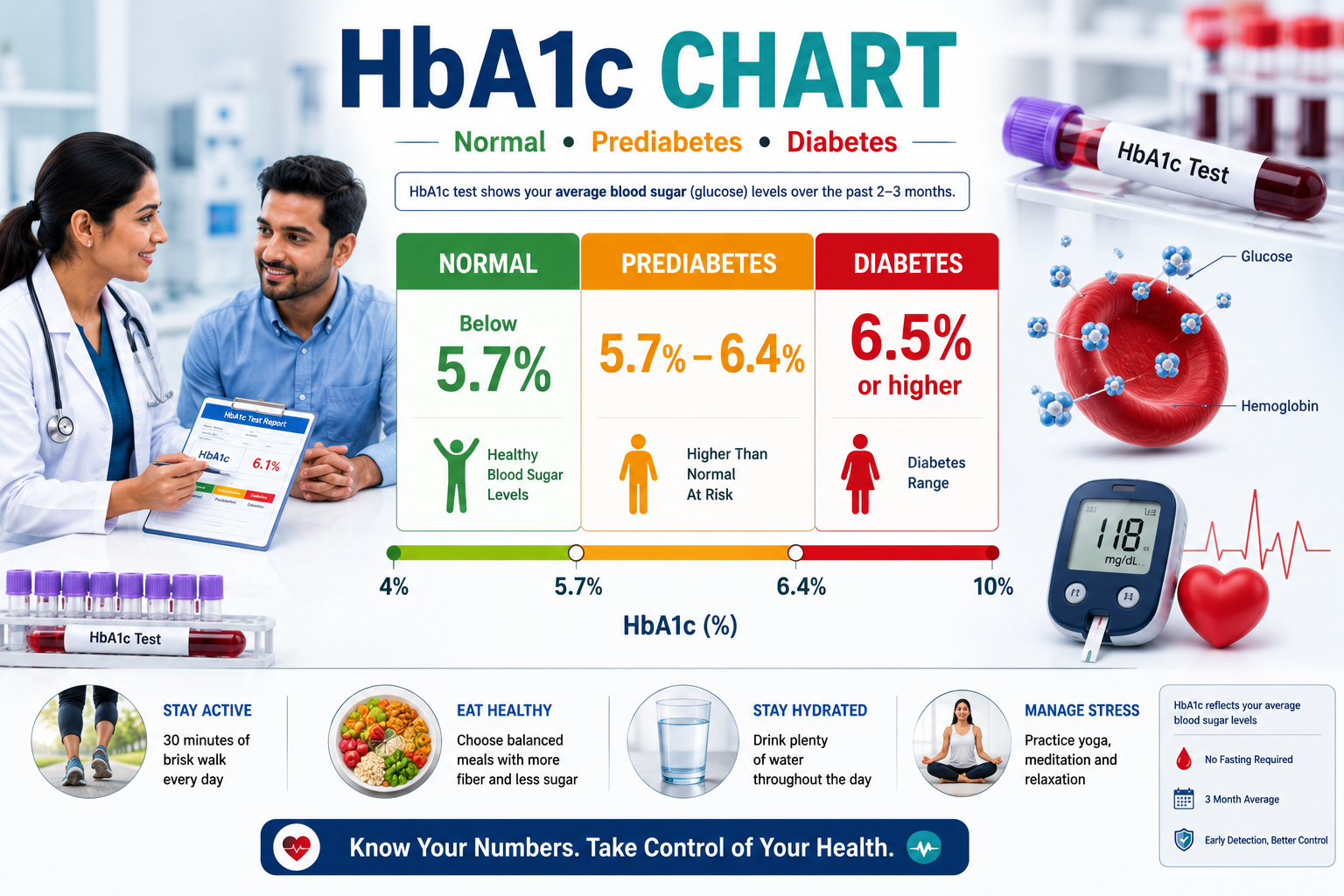
HbA1c below 5.7% is generally considered normal,
5.7% to 6.4% is generally classified as prediabetes, and
6.5% or higher is generally in the diabetes range. However, diagnosis usually requires appropriate confirmation unless the clinical situation is clear. HbA1c results should also be interpreted in the context of symptoms, medical history and conditions that can affect the test.
What HbA1c Measures
What Is HbA1c?
HbA1c, also called glycated haemoglobin, measures the percentage of haemoglobin in red blood cells that has glucose attached to it.
Because red blood cells circulate for several months, HbA1c provides an estimate of average glucose exposure over approximately two to three months.
Consequently, it gives a very different picture from a single fasting or random blood sugar measurement.
Why Is HbA1c Useful?
Blood glucose can change throughout the day.
For example, it can rise after meals, fall between meals, and vary with exercise, stress and illness.
Therefore, a single glucose reading may not reflect your usual glucose pattern.
By contrast, HbA1c provides a longer-term overview.
HbA1c Chart: Normal, Prediabetes and Diabetes
Adult HbA1c Chart Interpretation
| HbA1c Result |
General Interpretation |
| Below 5.7% |
Normal |
| 5.7% – 6.4% |
Prediabetes |
| 6.5% or higher |
Diabetes range |
These are widely used diagnostic thresholds for adults. However, an HbA1c result should be interpreted according to the relevant clinical context, and diabetes diagnosis may require confirmation.
What Does an HbA1c Below 5.7% Mean?
An HbA1c below 5.7% is generally considered within the normal range.
Nevertheless, this does not mean that you can completely ignore future diabetes risk.
For example, strong family history, obesity, sedentary behaviour and other risk factors can still increase your future risk.
Therefore, healthy lifestyle habits remain important even with a normal HbA1c.
HbA1c 5.7% to 6.4%: Prediabetes Range
What Does Prediabetes Mean?
An HbA1c between
5.7% and 6.4% is generally considered the prediabetes range.
However, prediabetes does not mean that diabetes is inevitable.
Instead, it indicates a higher-than-normal level of glucose exposure and an increased risk of progressing to diabetes.
Consequently, this stage can be an important opportunity to improve diet, physical activity, weight management and other modifiable risk factors.
Why Prediabetes Deserves Attention
Prediabetes may not cause obvious symptoms.
Therefore, a person can feel perfectly well while blood glucose is gradually becoming less well controlled.
Moreover, people in Bengaluru who spend long hours at desks may not realize how much reduced daily movement contributes to metabolic risk.
HbA1c 6.5% or Higher: Diabetes Range
Does 6.5% Automatically Mean Diabetes?
An HbA1c of
6.5% or higher is in the diabetes range.
However, in many situations, diagnosis is confirmed with repeat testing or another appropriate glucose test unless there are clear symptoms or other diagnostic evidence.
Therefore, do not diagnose yourself from one laboratory number.
Instead, discuss the result with your healthcare provider.
HbA1c to Average Sugar Conversion
How Does HbA1c Relate to Average Glucose?
People often want to convert HbA1c into an average blood sugar value.
A commonly used approximate relationship is:
| HbA1c |
Approximate Average Glucose |
| 5.0% |
~97 mg/dL |
| 5.5% |
~111 mg/dL |
| 6.0% |
~126 mg/dL |
| 6.5% |
~140 mg/dL |
| 7.0% |
~154 mg/dL |
| 7.5% |
~169 mg/dL |
| 8.0% |
~183 mg/dL |
| 9.0% |
~212 mg/dL |
| 10.0% |
~240 mg/dL |
These are
approximate estimated average glucose values, not exact conversions for every person.
Therefore, your actual finger-stick or laboratory glucose readings can vary considerably around these averages.
Why HbA1c Beats One-Time Sugar
Fasting Sugar Shows One Moment
A fasting blood sugar result tells you what your glucose level was at that particular point in time after the required fasting period.
Consequently, it can be influenced by recent illness, stress, food intake, sleep and other short-term factors.
HbA1c Shows a Longer Pattern
Because HbA1c reflects a longer period, it is less affected by what you ate just yesterday.
Therefore, a person can have:
Normal fasting sugar + elevated HbA1c
or:
Elevated fasting sugar + a less elevated HbA1c
depending on the individual's glucose pattern and circumstances.
This is why your healthcare provider may use both tests in some situations.
HbA1c and Bengaluru's Diabetes Risk
Why Family History Matters
If diabetes runs in your family, your risk may be higher even when you have no symptoms.
Therefore, family history is an important part of preventive health discussions.
Moreover, younger adults with strong family risk may benefit from discussing screening earlier with a healthcare professional.
Bengaluru's IT Lifestyle
Bengaluru has a large IT workforce with long periods of sitting, irregular meals, late dinners and limited daily movement.
Consequently, a sedentary
IT lifestyle can contribute to metabolic risk, particularly when combined with weight gain, poor sleep and family history.
However, working in IT does not automatically cause diabetes.
Instead, individual risk factors matter.
Target HbA1c for Diabetics
Is 7% Always the Goal?
Not necessarily.
For many non-pregnant adults with diabetes, an HbA1c target around
7% is commonly used. However, the appropriate target should be individualized.
It may be higher or lower depending on:
- Age
- Duration of diabetes
- Hypoglycaemia risk
- Other health conditions
- Pregnancy status
- Treatment type
- Patient preferences
- Life expectancy
Therefore, do not compare your target directly with someone else's.
Why Your Target Can Change
Someone who has recently been diagnosed may have a different goal from an older person with multiple medical conditions.
Similarly, a person with frequent low blood sugar episodes may need a different target.
Consequently, HbA1c goals should be discussed with your treating clinician rather than copied from an online chart.
What Can Falsely Change HbA1c chart?
When HbA1c May Not Tell the Full Story
HbA1c assumes that red blood cells are behaving normally.
However, some conditions can affect the result independently of actual glucose levels.
These can include:
- Certain types of anaemia
- Haemoglobin variants
- Recent blood loss
- Blood transfusion
- Certain kidney or liver conditions
- Conditions affecting red-cell lifespan
Therefore, if your HbA1c does not match your glucose readings or symptoms, your healthcare provider may investigate further.
Tests to Pair With HbA1c
Fasting Blood Sugar
Fasting glucose can complement HbA1c by providing a current blood glucose measurement.
Therefore, the two tests can sometimes provide a more complete picture.
Postprandial Blood Sugar
A
post-meal blood sugar test can assess glucose after eating.
Consequently, it can provide additional information in selected circumstances.
Lipid Profile
Diabetes and abnormal cholesterol often occur together.
Therefore, a
lipid profile may be relevant for broader cardiovascular risk assessment.
Kidney Function Tests
Because diabetes can affect kidney health over time, kidney-related testing may be recommended for people with established diabetes.
Depending on the situation, this may include creatinine, eGFR and urine albumin testing.
HbA1c and Symptoms
Can High HbA1c Cause Symptoms?
Some people with elevated blood glucose develop:
- Increased thirst
- Frequent urination
- Fatigue
- Blurred vision
- Increased hunger
- Unexplained weight loss
However, many people with prediabetes or early diabetes have
no symptoms at all.
Therefore, screening can be important even when you feel completely well.
How Often Should You Test HbA1c?
For People Without Diabetes
Testing frequency depends on age, risk factors and previous results.
For example, people with normal results may not need very frequent testing, while those with prediabetes may need more regular monitoring.
Consequently, your healthcare provider can recommend an appropriate interval.
For People With Diabetes
HbA1c is often checked around
every three months when therapy is being changed or glucose targets are not being met. Once treatment is stable, testing may be performed less frequently, depending on the clinical situation.
Therefore, follow your diabetes-care plan rather than using a fixed schedule for everyone.
When Is the Best Time to Take an HbA1c Test?
Does HbA1c Require Fasting?
Usually,
HbA1c does not require fasting.
This makes it convenient because the sample can generally be collected at different times of the day.
However, if HbA1c is being performed together with fasting glucose, a lipid profile or other fasting tests, those tests may require fasting.
Therefore, follow the preparation instructions for the complete test order.
How Diet Can Affect HbA1c
Daily Habits Matter More Than One Meal
HbA1c reflects longer-term glucose exposure.
Therefore, one large meal, one festival, or one weekend of sweets will not by itself determine your HbA1c.
Instead, the overall pattern of carbohydrate intake, physical activity, body weight, sleep and metabolic health matters more.
Consequently, sustainable habits are usually more useful than short-term crash diets.
Can Exercise Lower HbA1c?
Physical Activity and Glucose Control
Regular physical activity can improve insulin sensitivity and support healthier glucose regulation.
Therefore, people with elevated HbA1c may benefit from discussing an appropriate activity plan with their healthcare provider.
For Bengaluru desk workers, even adding regular walking and movement breaks can help create a more active routine.
How to Read Your HbA1c chart Report
Step 1: Find the Percentage
Locate your HbA1c value, such as:
5.4%
or:
6.8%
Step 2: Compare With the Standard Categories
Use the normal, prediabetes and diabetes categories as a starting point.
Step 3: Check the Laboratory Report
Look for the laboratory's reference information.
Step 4: Consider Your Risk Factors
Family history, weight, age, symptoms and previous results matter.
Step 5: Discuss Abnormal Results
Finally, speak with your healthcare provider before making treatment decisions.
As a result, you avoid interpreting the number in isolation.
HbA1c Testing in Bengaluru
Who May Consider Testing?
HbA1c testing may be appropriate for Individuals with:
- diabetes
- prediabetes
- diabetes risk factors
- a strong family history
- previous abnormal glucose results
- symptoms suggestive of high blood sugar
However, screening recommendations vary according to individual risk.
HbA1c Test Cost in Bengaluru
What Determines the Price?
The cost of an HbA1c test varies by diagnostic laboratory and whether it is booked individually or included in a larger health package.
Therefore, before booking, confirm:
- Current HbA1c price
- Whether fasting is required for other bundled tests
- Home collection availability
- Report delivery
- Package inclusions
Home Collection for HbA1c
Is Home Testing Possible?
Yes, an HbA1c blood sample can often be collected through home sample collection where the service is available.
Consequently, Bengaluru residents with busy schedules can arrange collection without travelling to a diagnostic centre.
This can be particularly convenient for:
- Working professionals
- Older adults
- People monitoring diabetes
- Patients requiring repeat testing
Frequently Asked Questions
What is the normal HbA1c chart range?
An HbA1c
below 5.7% is generally considered normal for adults.
What HbA1c level means prediabetes?
An HbA1c of
5.7% to 6.4% is generally classified as prediabetes.
What HbA1c level means diabetes?
An HbA1c of
6.5% or higher is in the diabetes range. However, diagnosis may require confirmation unless the clinical situation clearly supports it.
Is HbA1c more accurate than fasting sugar?
They measure different things. HbA1c reflects average glucose over roughly two to three months, while fasting glucose shows your level at a specific time. Therefore, neither should automatically be considered “better” in every situation.
What does an HbA1c of 6.5% mean in average sugar?
An HbA1c of 6.5% corresponds approximately to an average glucose of
140 mg/dL, although this is only an estimate.
What is a good HbA1c target for someone with diabetes?
For many non-pregnant adults, a target around
7% is common. However, the appropriate goal should be individualized by the treating clinician.
Does HbA1c require fasting?
Usually, no. However, other tests ordered at the same time may require fasting.
Can HbA1c be high without symptoms?
Yes. Prediabetes and diabetes can exist without obvious symptoms. Therefore, screening can be valuable for people with risk factors.
How often should HbA1c be tested?
Testing frequency depends on whether you have diabetes, prediabetes, or risk factors, and on whether treatment is changing. Your healthcare provider should determine the interval.
Can I get an HbA1c test through home collection in Bengaluru?
Home sample collection may be available for eligible locations. Check current availability and appointment timing before booking.
Conclusion
Understanding an
HbA1c Chart can make your diabetes screening or monitoring report much easier to interpret.
In general,
below 5.7% is considered normal, 5.7% to 6.4% is the prediabetes range, and 6.5% or above is the diabetes range. Nevertheless, diagnosis and treatment decisions require more than one number.
Moreover, HbA1c provides a longer-term view of glucose exposure, while fasting and post-meal glucose tests provide measurements at specific points in time.
For
Bengaluru residents, especially those with a family history of diabetes or a sedentary IT lifestyle, understanding your risk factors can be just as important as understanding your latest number.
Therefore, if your HbA1c is abnormal, do not start or change diabetes treatment based solely on an online chart. Instead, discuss the result with your healthcare provider and consider appropriate follow-up testing.