
If you are searching for a post Onam Sadhya and cholesterol test in Bangalore, the reason is probably simple: Onam Sadhya brings together an impressive variety of traditional dishes, sweets, payasam, rice-based meals and festive treats. Consequently, one large feast can mean a much bigger intake of carbohydrates, calories, saturated fat and salt than your usual meal.
However, enjoying an Onam Sadhya does not automatically mean that your cholesterol or blood sugar has become unhealthy. Instead, the bigger concern is what your overall eating pattern, lifestyle, medical history and existing risk factors look like.
Moreover, for the Bangalore Malayali community, Onam often means several celebrations, office gatherings and family feasts rather than just one meal. Therefore, if you have diabetes, high cholesterol, heart disease, obesity, or a family history of metabolic problems, a post-feast health check may be worth discussing with your healthcare provider.
This Blog Includes:
- Article Title: Onam Sadhya and Cholesterol Test – Post-Feast Health Check in Bangalore
- Publisher: Prima Diagnostics
- Type: Seasonal / Symptom Healthcare Blog
- Topics Covered: Onam Sadhya, Onam Feast, Post-Onam Cholesterol Test, Cholesterol, Lipid Profile, LDL Cholesterol, HDL Cholesterol, Triglycerides, Blood Sugar, Fasting Blood Sugar, HbA1c, Diabetes, Prediabetes, Rich Festival Food, Payasam, Festival Sweets, Bangalore Malayali Community, Family Gatherings, Preventive Health Testing and Home Sample Collection.
- Services Covered: Lipid Profile Testing, Blood Sugar Testing, HbA1c Testing, Preventive Health Screening, Health Packages, Blood Testing and Home Sample Collection.
- Festival Food Guidance: Explains how a large Sadhya meal can increase overall calorie and carbohydrate intake while emphasizing that one festive meal does not automatically cause high cholesterol or diabetes.
- Cholesterol Guidance: Explains that cholesterol status reflects broader dietary, metabolic and cardiovascular factors and that immediate post-feast testing may not represent a person’s usual baseline.
- Lipid Profile Guidance: Explains the role of total cholesterol, LDL cholesterol, HDL cholesterol and triglycerides in assessing lipid status.
- Blood Sugar Guidance: Explains that carbohydrate-rich festive meals can temporarily increase blood glucose and distinguishes short-term glucose changes from longer-term diabetes assessment.
- HbA1c Guidance: Explains that HbA1c reflects average blood glucose over approximately two to three months and is therefore not a measure of the effect of a single Onam meal.
- Testing Timing Guidance: Explains that there is no universal waiting period for post-festival cholesterol testing and that people with existing conditions should follow their healthcare provider’s established monitoring schedule.
- Preparation Guidance: Patients should follow any specific fasting and preparation instructions given by their healthcare provider or laboratory.
- Service Focus: Lipid Profile Testing, Cholesterol Testing, Blood Sugar Testing, HbA1c Testing, Preventive Health Screening, Health Packages, and Home Sample Collection.
- FAQ Section: Included.
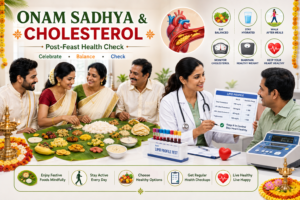
Onam Sadhya and cholesterol test -What to test after a heavy festival feast
After a heavy festival feast, commonly considered tests include a lipid profile and blood glucose testing, particularly for people with existing diabetes, high cholesterol or other cardiovascular risk factors. However, one festive meal does not diagnose a disease, and HbA1c reflects longer-term blood glucose rather than the effect of a single meal.
Why a Onam Sadhya and cholesterol test Hits Your Body
A Traditional Feast Can Be Nutritionally Dense
An Onam Sadhya can contain numerous dishes served together.
For example, a festive meal may include rice, curries, preparations made with coconut, fried accompaniments, pickles, desserts and payasam.
Consequently, the total meal can be considerably larger than a typical everyday lunch.
Nevertheless, traditional food can absolutely be part of a balanced diet. The main issue is usually portion size, frequency and the overall dietary pattern rather than one celebratory meal.
Why Portion Size Matters
When many dishes are served at once, it is easy to taste everything and then go back for another serving.
Furthermore, sweets and desserts may follow an already large meal.
Therefore, the total calorie and carbohydrate intake can become substantial, particularly when celebrations continue over several days.
Cholesterol and Sugar After Big Meals
Can One Feast Increase Cholesterol?
A single meal can influence certain blood measurements temporarily. However, cholesterol levels are generally more reflective of your broader metabolic health and longer-term dietary pattern.
Therefore, a cholesterol test immediately after one exceptionally rich meal may not represent your usual baseline perfectly.
Nevertheless, if you already have high cholesterol or are taking treatment, following your clinician’s testing schedule remains important.
Can Blood Sugar Rise After an Onam Feast?
Yes. Carbohydrate-rich foods can cause blood glucose to rise after eating.
Consequently, people with diabetes or impaired glucose regulation may see noticeable short-term changes after a large festive meal.
However, a temporary rise after eating does not automatically indicate diabetes.
Therefore, the type and timing of the glucose test matter.
When to Test After an Onam Feast
Should You Test the Next Day?
Not necessarily.
If you are simply curious about the effect of one large meal, testing immediately afterward may not provide the most useful picture of your usual health.
Instead, follow your healthcare provider’s recommended testing schedule.
For people already monitoring diabetes or cholesterol, however, routine testing should generally continue according to their established plan.
When Can a Post-Onam Test Be Useful?
A health check may be particularly relevant when you have:
- Already have diabetes
- prediabetes
- High cholesterol
- high blood pressure
- Take cholesterol-lowering medication
- obesity
- a family history of cardiovascular disease
- Have persistent symptoms or other medical concerns
Therefore, the decision to test should be based on your health profile rather than the feast itself.
Lipid and Sugar Combo
Why Combine Cholesterol and Glucose Testing?
A lipid profile and glucose testing assess different aspects of metabolic health.
A lipid profile commonly measures:
- Total cholesterol
- LDL cholesterol
- HDL cholesterol
- Triglycerides
Meanwhile, blood glucose testing can include:
- Fasting Blood Sugar
- HbA1c
- Other glucose-related tests when clinically appropriate
Consequently, combining appropriate cholesterol and glucose tests can provide a broader picture of cardiometabolic health.
What Is a Lipid Profile?
Why Is It Useful After Festive Eating?
A lipid profile helps assess important blood fats.
However, it is not simply a “fat detector” for the previous day’s feast.
Instead, cholesterol levels are influenced by multiple factors, including genetics, diet, physical activity, weight, health conditions and medications.
Therefore, interpret your lipid report in the context of your longer-term health.
Explore our Lipid Profile Blog for more information.
What Is HbA1c?
Why Is HbA1c Different From Fasting Sugar?
HbA1c reflects average blood glucose over roughly the previous two to three months.
Therefore, it is not designed to tell you exactly how one Onam meal changed your glucose level.
By contrast, fasting blood sugar gives you a measurement at a particular point in time after the required fasting period.
Consequently, the two tests answer different questions.
Who Should Be More Careful After an Onam Feast?
People With High Cholesterol
If you already have high cholesterol, repeated festive meals may make dietary control more challenging.
Therefore, continue your prescribed treatment and follow your clinician’s recommended monitoring schedule.
People With Diabetes or Prediabetes
For people with diabetes or prediabetes, repeated sweets, sugary desserts and large portions may require extra attention.
Moreover, staying hydrated and returning to a regular meal pattern after the celebration can be helpful.
However, medication doses should not be changed based solely on festive eating unless your healthcare provider has given you a specific plan.
People With Heart Disease
Those with established cardiovascular disease may need more individualized dietary advice.
Therefore, if you have known heart disease, discuss your nutritional choices and follow-up testing with your healthcare provider.
People With a Strong Family History
Family history can contribute to cardiovascular and metabolic risk.
Consequently, people with a strong family history may benefit from periodic preventive assessment even when they feel completely well.
Bangalore Malayali Community and Onam Feasts
Celebrations Can Continue for Days
For the Bangalore Malayali community, Onam may involve multiple Sadhyas, cultural programs, office gatherings, temple events and family celebrations.
As a result, the issue may not be one feast but repeated festive eating over several days.
Furthermore, restaurant meals and community celebrations can make portion control more difficult.
Therefore, balance becomes especially important.
Rich Festival Food: How to Enjoy It More Mindfully
You Don’t Have to Avoid Every Traditional Dish
A healthier approach is not necessarily to eliminate traditional foods.
Instead, consider:
- Smaller portions
- Avoiding repeated servings
- Eating vegetables and protein alongside rice
- Limiting excessive fried foods
- Keeping desserts to moderate portions
- Returning to regular meals after celebrations
- Maintaining normal physical activity
Consequently, you can enjoy the festival without turning one celebration into an extended period of overconsumption.
What About Payasam and Sweets?
Why Desserts Matter
Payasam and other traditional sweets can contain substantial amounts of sugar and calories, depending on the preparation.
Therefore, having moderate portions can be a sensible approach, particularly for people already monitoring blood glucose.
Nevertheless, occasional dessert consumption does not by itself cause diabetes.
What If You Feel Unwell After the Feast?
Don’t Automatically Blame the Food
Bloating, acidity, tiredness or digestive discomfort may occur after a large meal.
However, persistent or severe symptoms should not simply be attributed to overeating.
For example, severe chest pain, significant breathlessness, fainting or severe abdominal symptoms require prompt medical assessment.
Therefore, symptoms that are unusual, persistent or severe deserve appropriate attention.
Post-Onam Cholesterol Test in Bangalore
What Should You Book?
If a healthcare provider recommends testing, a lipid profile may be appropriate for cholesterol assessment.
Depending on your health history, glucose testing such as fasting blood sugar or HbA1c may also be relevant.
Therefore, rather than buying a large package simply because it is marketed as a “festival health check,” select tests based on your actual health needs.
Special Offer
Post-Festival Health Check
Festivals can be a useful time for diagnostic centres to promote preventive health screening.
If Prima Diagnostics is offering a genuine post Onam Sadhya and cholesterol test health package or cholesterol screening offer, check the current price, included tests, eligibility and offer validity before booking.
For example, a package might include:
- Lipid Profile
- Fasting Blood Sugar
- HbA1c
- CBC
- Other preventive health investigations
However, package contents can change.
Therefore, confirm the actual test list before making a booking decision.
Home Collection in Bangalore
Why Home Testing Can Be Convenient
After several days of celebrations, returning to a normal work schedule can be challenging.
Moreover, Bangalore traffic can make an additional laboratory trip inconvenient.
Consequently, home sample collection can be a practical option for eligible blood tests and locations.
It can be particularly useful for:
- Older adults
- Working professionals
- People monitoring diabetes
- Busy families
- Patients who prefer morning collection
However, home collection does not replace urgent medical care when symptoms are serious.
How to Book a Post Onam Sadhya and cholesterol test Health Check
Step 1: Review Your Health Needs
First, consider whether you need cholesterol testing, blood sugar testing, or another investigation recommended by your healthcare provider.
Step 2: Check the Exact Package
Next, review the test list carefully.
Step 3: Confirm Preparation
Then, ask whether fasting is required and follow the instructions provided.
Step 4: Choose Home Collection
If available for your location, select home collection for added convenience.
Step 5: Confirm the Current Price
Finally, check the total payable amount and any active offer terms before booking.
As a result, your post-festival health check can be more purposeful and easier to manage.
How to Get Back on Track After Onam
Return to Your Regular Routine
A festive meal is temporary.
Therefore, after Onam, return to your normal meal pattern rather than compensating with extreme dieting.
Resume Physical Activity
Similarly, return to your usual level of physical activity where appropriate.
Moreover, regular walking and exercise can support overall cardiovascular and metabolic health.
Frequently Asked Questions
What should I test after a heavy festival feast?
For people who need monitoring, a lipid profile and appropriate blood glucose testing may be considered. However, the right tests depend on existing conditions, risk factors and healthcare-provider advice.
When should I take a cholesterol test after Onam?
There is no universal waiting period. If you already follow a testing schedule, continue according to your healthcare provider’s instructions. If you’re testing for general health, discuss the timing with a healthcare professional.
Can one Onam Sadhya raise cholesterol?
A single meal can temporarily affect some blood measurements, but long-term cholesterol status is influenced by broader dietary and metabolic factors. Therefore, one feast does not by itself diagnose high cholesterol.
Can Onam sweets cause diabetes?
Eating sweets during a festival does not by itself cause diabetes. However, repeated excess calorie intake, weight gain, inactivity and other risk factors can contribute to diabetes risk over time.
Is HbA1c useful after a festival?
Yes, when clinically appropriate, but HbA1c reflects average blood glucose over approximately two to three months. Therefore, it is not a measure of the effect of one Sadhya.
Should diabetics avoid Onam sweets completely?
Not necessarily. People with diabetes should follow their individualized meal and treatment plan. Portion control and overall carbohydrate management can help, but medication should not be changed without medical advice.
Can I book a lipid profile through home collection in Bangalore?
Home collection may be available for eligible tests and locations. Confirm availability and preparation requirements before booking.
Is a cholesterol test enough to assess heart health?
No. A lipid profile provides important information, but overall cardiovascular risk also depends on factors such as blood pressure, diabetes, smoking, family history, and existing cardiovascular disease.
Conclusion
Onam Sadhya is an important part of the festive season, and there is no need to treat one celebratory meal as a health failure.
Nevertheless, repeated Onam feasts, rich festival food, sweets and reduced activity can make healthy routines more difficult to maintain. Therefore, returning to balanced meals and regular activity after the celebrations can be a sensible step.
For people in the Bangalore Malayali community, especially those with diabetes, high cholesterol, cardiovascular risk factors or a strong family history, a post-festival health check may also be worth discussing with a healthcare professional.
A lipid profile can assess cholesterol and triglyceride-related parameters, while fasting blood sugar and HbA1c provide different types of glucose information.
Therefore, rather than testing simply because you ate a large feast, choose the investigations that are relevant to your actual health needs.