
During the monsoon, monsoon water contamination can become an important public-health concern in Bangalore. Heavy rainfall can overwhelm drainage systems, flooding can affect water sources, and damaged or poorly maintained pipelines can increase the possibility of contamination.
Moreover, many Bangalore households, apartments and businesses depend on tanker water, borewells or mixed water sources. Consequently, when water storage, supply lines or surrounding drainage systems are compromised, the risk of exposure to waterborne infections may increase.
However, contaminated water does not always look, smell or taste different. Therefore, knowing the symptoms, understanding when testing may be useful and following practical prevention measures can help you respond early.
This Blog Includes:
- Article Title: Monsoon Water Contamination in Bangalore – Typhoid and Hepatitis A Risk
- Publisher: Prima Diagnostics
- Topics Covered: Monsoon Water Contamination, Bangalore Water Safety, Tanker Water, Borewell Water, Sewage Contamination, Typhoid, Hepatitis A, Waterborne Illnesses, Monsoon Fever, Fever Symptoms, Diarrhoea, Vomiting, Jaundice, Safe Drinking Water, Food Hygiene, Prevention, Diagnostic Testing and Home Sample Collection.
- Water Contamination Guidance: Explains how heavy rainfall, drainage overflow, sewage contamination, damaged pipelines, unsafe storage and poorly maintained water infrastructure can increase the risk of water contamination.
- Tanker Water Guidance: Explains that tanker water is not automatically unsafe but that contamination can occur depending on the water source, transportation, storage and handling.
- Borewell Water Guidance: Explains that borewell water quality can be affected by local groundwater conditions, sanitation, drainage and potential contamination from surrounding areas.
- Prevention Guidance: Covers safe drinking water, water treatment, overhead tank maintenance, handwashing, food hygiene, safe washing of fruits and vegetables, and caution with uncertain water or ice sources.
- FAQ Section: Included.
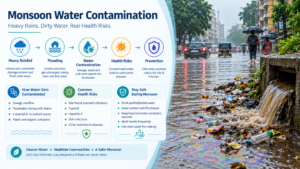
Waterborne illness signs in Bangalore monsoon
Common signs of waterborne illness during the Bangalore monsoon can include fever, weakness, headache, abdominal discomfort, vomiting, diarrhoea, loss of appetite and jaundice. Typhoid and Hepatitis A are among the infections that can spread through contaminated food or water. However, symptoms overlap with many other illnesses, so testing and medical evaluation may be necessary.
Why Monsoon Water Contamination in Bangalore is Risky
How Heavy Rain Can Affect Water Safety
During periods of intense rainfall, stormwater can enter areas that normally remain separated from sewage and drinking-water systems.
Consequently, if sewage lines overflow or drainage systems become overwhelmed, contaminated water may reach vulnerable water sources.
Furthermore, construction activity, damaged pipelines, overflowing drains and poor storage practices can add to the risk.
Therefore, monsoon water safety depends not only on the original water source but also on how water is transported, stored and handled.
Monsoon Sewage Mixing: Why It Matters
How Contamination Can Happen
When rainwater and sewage come into contact, disease-causing microorganisms can potentially spread through contaminated water.
For example, bacteria and viruses from human waste can enter water supplies and subsequently contaminate food or drinking water.
Moreover, contamination can occur indirectly when contaminated water is used to wash vegetables, prepare food or clean utensils.
As a result, waterborne infections can spread even when people are not directly drinking visibly contaminated water.
Tanker Water and Monsoon Water Contamination
Is Bangalore Tanker Water Always Unsafe?
No.
Tanker water is not automatically contaminated. However, its safety depends on the source, transportation, storage and handling.
For example, contamination can potentially occur when:
- The source water is not adequately treated
- Tankers are poorly maintained
- Storage tanks are not cleaned regularly
- Water is transferred through contaminated pipes
- Drinking water is stored improperly
Therefore, households that depend heavily on Bangalore tanker water should pay particular attention to water hygiene during the monsoon.
Borewell Dependence During Monsoon
Can Borewell Water Become Contaminated?
Borewell water quality depends on local geology, borewell depth, construction, drainage conditions, and nearby sources of contamination.
During heavy rainfall, contaminated surface water can potentially enter groundwater systems, particularly where sanitation and drainage infrastructure are inadequate.
Consequently, households relying on borewell water should follow appropriate water-quality monitoring and treatment practices.
Typhoid and Hepatitis A: What’s the Connection?
How Typhoid Can Spread
Typhoid fever is caused by Salmonella Typhi bacteria and can spread through food or water contaminated with infected human waste.
Therefore, poor sanitation and unsafe water can contribute to transmission.
Symptoms can include:
- Persistent fever
- Headache
- Weakness
- Abdominal discomfort
- Loss of appetite
- Constipation or diarrhoea
However, symptoms vary from person to person.
How Hepatitis A Spreads
Hepatitis A and Contaminated Food or Water
Hepatitis A is a viral infection that primarily affects the liver.
It commonly spreads through the fecal-oral route, including contaminated food or water.
Consequently, outbreaks can occur where sanitation and water safety are compromised.
Symptoms may include:
- Fever
- Tiredness
- Nausea
- Loss of appetite
- Abdominal discomfort
- Dark urine
- Pale stools
- Yellowing of the skin or eyes
Therefore, jaundice following a suspected exposure deserves medical evaluation.
Typhoid vs Hepatitis A
They Are Different Infections
Although both infections can be associated with contaminated food and water, they are not the same disease.
Typhoid is a bacterial infection, whereas Hepatitis A is a viral infection affecting the liver.
Therefore, the appropriate diagnostic test and treatment approach can differ.
Most importantly, do not assume that every monsoon fever is typhoid or Hepatitis A.
Waterborne Illness Symptoms to Watch
Fever After the Monsoon
Persistent fever is one of the symptoms that may require evaluation.
However, fever can have many causes, including viral infections, dengue, malaria, respiratory infections and other conditions.
Therefore, symptoms alone cannot identify the infection.
Stomach and Digestive Symptoms
Watch for symptoms such as:
- Diarrhoea
- Vomiting
- Abdominal pain
- Loss of appetite
- Nausea
If symptoms are persistent or severe, medical evaluation is important.
Jaundice and Dark Urine
Yellowing of the eyes or skin, particularly when accompanied by dark urine, can indicate liver involvement.
Consequently, these symptoms should not simply be attributed to a routine stomach infection.
Seek medical advice promptly if jaundice develops.
When Should You Consider Testing?
Fever That Does Not Improve
If fever persists, worsens or is accompanied by significant weakness or digestive symptoms, consult a healthcare professional.
Depending on the clinical assessment, your doctor may recommend blood tests or other investigations.
Tests to Take for Suspected Waterborne Illness
Typhoid Testing
Depending on the stage of illness and clinical situation, doctors may recommend appropriate testing for typhoid.
The exact test should be selected based on symptoms, duration of fever, previous treatment and clinical evaluation.
Therefore, avoid choosing a typhoid test solely based on a fever symptom.
Hepatitis A Testing
When Hepatitis A is suspected, a healthcare provider may recommend Hepatitis A IgM antibody testing, particularly when symptoms suggest an acute infection.
Additional liver-related investigations may also be recommended.
Liver Function Test
A Liver Function Test (LFT) can provide information about liver-related biochemical markers.
Therefore, when jaundice or suspected hepatitis is present, your doctor may combine hepatitis testing with liver-function evaluation.
However, an LFT alone does not identify the specific cause of hepatitis.
Don’t Self-Diagnose Every Monsoon Fever
Why Testing Matters
Bangalore experiences several infections during the rainy season.
Consequently, fever does not automatically mean typhoid.
Similarly, diarrhoea does not automatically mean contaminated water exposure.
Therefore, clinical evaluation and appropriate testing can help distinguish between possible causes.
Prevention Tips During Bangalore Monsoon
Drink Safe Water
Use water from a reliable and appropriately treated source.
Furthermore, if you depend on tanker or borewell water, follow appropriate filtration, treatment, and storage practices recommended for your water source.
Maintain Overhead Water Tanks
Water tanks should be cleaned and maintained regularly.
Moreover, keep tanks covered to reduce the possibility of contamination.
Be Careful With Ice and Outside Food
During the monsoon, be cautious about consuming water or ice when the source is uncertain.
Similarly, choose food from places that maintain good hygiene and safe water practices.
Wash Hands Regularly
Hand hygiene remains one of the simplest ways to reduce the spread of infections.
Therefore, wash your hands thoroughly:
- Before eating
- Before preparing food
- After using the toilet
- After handling potentially contaminated materials
Wash Fruits and Vegetables Properly
Food can become contaminated even when the water itself is not consumed directly.
Consequently, use appropriately safe water for washing food that will be eaten.
When Is Home Collection Useful?
Blood Tests Without Unnecessary Travel
During heavy rain, travelling through Bangalore traffic can become particularly inconvenient.
Therefore, home sample collection can be useful when your doctor has recommended blood testing and the required test is available for home collection.
This can be particularly convenient for:
- Families
- Older adults
- People with fever or weakness
- Working professionals
- People avoiding unnecessary travel during heavy rain
However, home collection does not replace medical assessment when symptoms are severe.
Monsoon Water Contamination in Bangalore: Who Should Be Extra Careful?
Children and Older Adults
Children and older adults can become dehydrated more easily during significant vomiting or diarrhoea.
Therefore, persistent symptoms deserve timely attention.
People With Existing Health Conditions
People with certain underlying conditions may require earlier medical advice when they develop fever, dehydration, or gastrointestinal symptoms.
Consequently, do not delay medical evaluation simply because symptoms initially appear mild.
Frequently Asked Questions
What are the common waterborne illness signs in Bangalore during monsoon?
Common symptoms can include fever, diarrhoea, vomiting, abdominal discomfort, weakness, loss of appetite and, in some infections, jaundice. However, these symptoms overlap with many other illnesses.
Can Bangalore tanker water cause infection?
Tanker water is not necessarily unsafe. However, contamination can occur if the water source, tanker, storage tank or transfer system is not adequately maintained.
Can borewell water become contaminated during monsoon?
It can happen under certain conditions, particularly where drainage, sanitation or groundwater protection is inadequate. Appropriate water-quality monitoring and treatment are therefore important.
Is every monsoon fever typhoid?
No. Many infections can cause fever during the monsoon. Typhoid testing should be considered based on symptoms, illness duration and medical evaluation.
How does Hepatitis A spread?
Hepatitis A commonly spreads through the fecal-oral route, including consumption of contaminated food or water.
Which test is used for Hepatitis A?
For suspected acute Hepatitis A, doctors commonly consider Hepatitis A IgM antibody testing, along with other investigations when clinically appropriate.
When should I get tested for a waterborne infection?
Consider medical evaluation when fever persists, gastrointestinal symptoms are significant, dehydration develops, or symptoms such as jaundice appear. The appropriate tests depend on the clinical presentation.
Can I get blood tests through home collection during monsoon?
Home sample collection may be available for eligible tests and locations. Check availability when booking and follow any test-specific preparation instructions.
Conclusion
Monsoon water contamination deserves attention in Bangalore, particularly when heavy rainfall affects drainage, sanitation and water infrastructure. Moreover, households depending on tanker water or borewell water should pay attention to safe sourcing, storage and treatment.
At the same time, not every fever or stomach problem is caused by contaminated water. Therefore, if you develop persistent fever, diarrhoea, vomiting, significant weakness or jaundice, seek appropriate medical advice rather than self-diagnosing.
Furthermore, when testing is recommended, the right investigation depends on the suspected infection. Typhoid testing, Hepatitis A testing and liver-function tests may be considered in appropriate situations.
Finally, simple measures such as safe drinking water, clean storage tanks, careful food handling and regular handwashing can reduce exposure risk.
For convenient diagnostic testing and home sample collection, explore Prima Diagnostics and check the availability of the tests recommended by your healthcare provider.