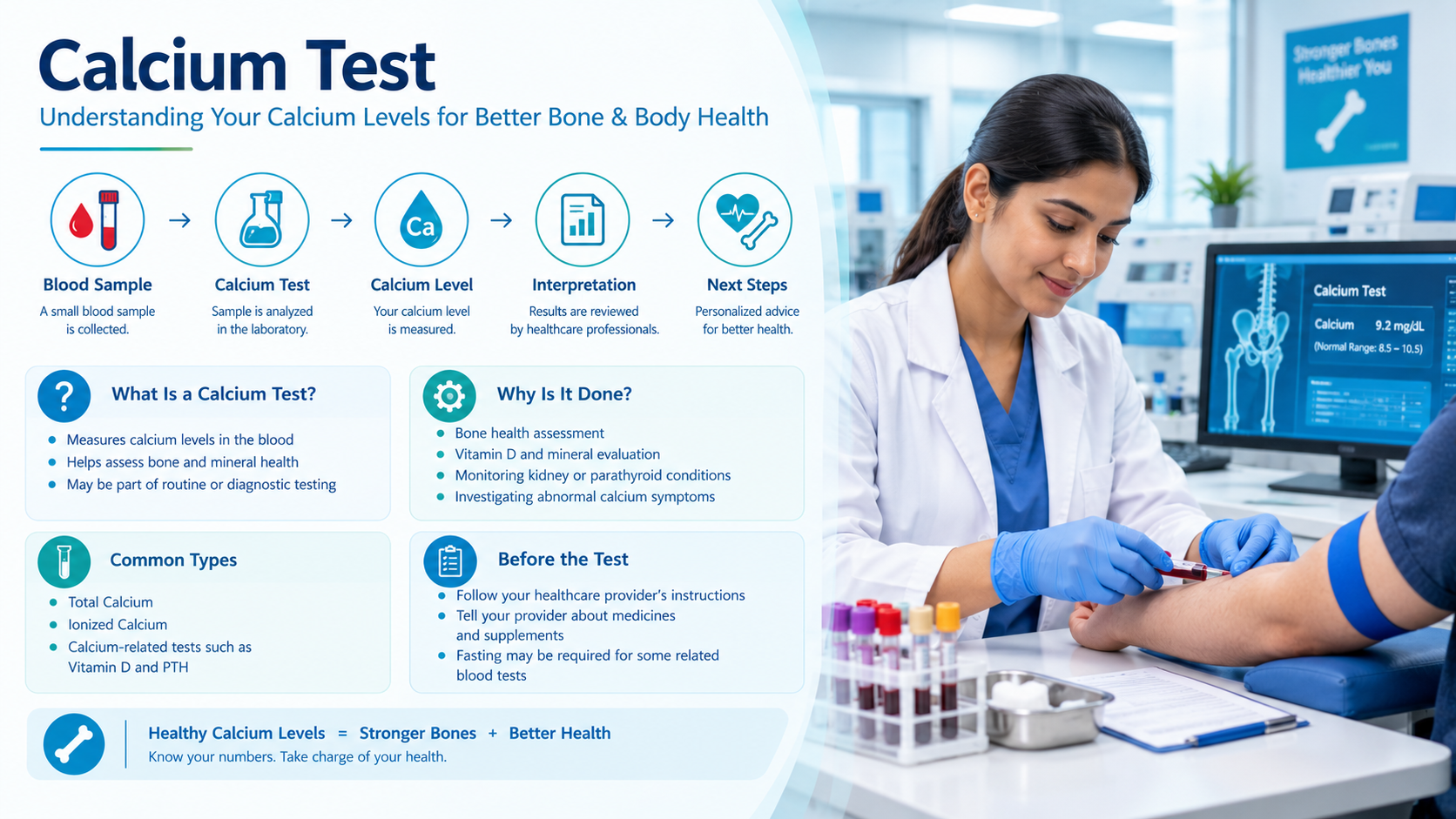
If you are looking for a
Calcium Test in Bengaluru, you may be wondering whether your calcium level is normal and what a low result actually means. Calcium is essential for strong bones and teeth; however, it also plays an important role in muscle contraction, nerve function and normal heart rhythm.
Moreover, calcium levels can be influenced by several factors, including vitamin D status, kidney function, parathyroid hormone activity, medications and certain medical conditions. Therefore, a calcium blood test can provide useful information when your doctor suspects a calcium imbalance.
For people in Bengaluru, factors such as
indoor IT work, low sun exposure and sedentary routines can also make conversations about vitamin D and bone health particularly relevant. Nevertheless, a calcium test alone does not diagnose every bone-related problem.
Calcium deficiency signs and normal range
Common symptoms associated with significantly low calcium can include muscle cramps, tingling or numbness, muscle spasms and, in more severe cases, abnormal heart rhythms or seizures. A commonly used adult total calcium reference range is approximately
8.5–10.5 mg/dL, although the laboratory's own reference range should always be used when interpreting a report.
This Blog Includes:
- Article Title: Calcium Test in Bengaluru - Bone Health and Deficiency Signs
- Publisher: Prima Diagnostics
- Topics Covered: Calcium Test, Blood Calcium, Total Calcium, Ionized Calcium, Calcium Deficiency, Calcium Deficiency Symptoms, Calcium Normal Range, Vitamin D, Bone Health, Women's Bone Health, Low Sun Exposure, Indoor Lifestyle, Calcium-Rich Foods, Calcium Supplements, DEXA Scan and Patient Education.
- Test Purpose: Explains how calcium blood testing evaluates calcium levels in the bloodstream and why it may be ordered when calcium imbalance or certain medical conditions are suspected.
- Total Calcium Guidance: Explains that total calcium measures calcium in the blood, including protein-bound and free calcium, and that albumin levels can influence interpretation.
- Ionized Calcium Guidance: Explains that ionized calcium measures the biologically active, free form of calcium and may be useful in selected clinical situations.
- Preparation Guidance: Explains that routine calcium testing may not always require special preparation, while emphasizing that patients should follow any specific instructions given by their healthcare provider or laboratory.
- Service Focus: Calcium Testing, Blood Testing, Vitamin D Testing, Preventive Health Screening, Nutritional Assessment, Bone Health Assessment, and Laboratory Diagnostics.
- FAQ Section: Included.
 What the Calcium Test Checks
What Is a Calcium Blood Test?
What the Calcium Test Checks
What Is a Calcium Blood Test?
A
calcium test measures the amount of calcium in your blood.
Although most calcium is stored in bones and teeth, a smaller amount circulates in the bloodstream. This circulating calcium is important for several essential body functions.
Consequently, doctors may order calcium testing when investigating:
- Possible calcium deficiency
- Bone-related concerns
- Abnormal parathyroid function
- Kidney problems
- Certain nutritional deficiencies
- Muscle symptoms
- Abnormal vitamin D status
- Other conditions that can affect calcium balance
Therefore, the test is useful not only for bone health but also for understanding broader calcium regulation.
Why Is Calcium Important for the Body?
Calcium Does More Than Build Bones
Calcium helps maintain:
- Bone and teeth strength
- Normal muscle contraction
- Nerve signalling
- Blood clotting
- Normal heart function
Moreover, the body carefully regulates blood calcium because both unusually low and unusually high levels can cause problems.
As a result, an abnormal calcium result deserves appropriate interpretation rather than being ignored.
Total vs Ionized Calcium
What Is Total Calcium?
Total calcium measures the calcium circulating in the blood, including calcium that is:
- Bound to proteins, particularly albumin
- Bound to other substances
- Present as free or ionized calcium
It is commonly used as the initial calcium blood test.
What Is Ionized Calcium?
Ionized calcium measures the biologically active, free form of calcium in the blood.
Therefore, ionized calcium can sometimes provide additional information when total calcium does not accurately reflect the body's active calcium status.
For example, doctors may consider ionized calcium in certain hospitalized patients or when protein levels are abnormal.
Why Can Total Calcium Be Misleading?
The Role of Albumin
Because a significant portion of blood calcium is bound to albumin, an abnormal albumin level can affect total calcium results.
Consequently, a doctor may consider albumin along with total calcium or use an appropriate correction approach.
However, correction formulas have limitations. Therefore, depending on the clinical situation,
ionized calcium may sometimes be more useful.
Calcium Deficiency Symptoms
What Are the Signs of Low Calcium?
Mild calcium abnormalities may cause no obvious symptoms.
However, more significant or prolonged low calcium can be associated with:
- Muscle cramps
- Tingling around the mouth
- Tingling in the hands or feet
- Muscle spasms
- Muscle weakness
- Fatigue
- Abnormal heart rhythm in severe cases
- Seizures in severe cases
Therefore, symptoms alone cannot confirm calcium deficiency.
If you experience persistent symptoms, medical evaluation is important because similar symptoms can occur with several other conditions.
Calcium Deficiency and Bone Health
Does Low Blood Calcium Mean Weak Bones?
Not necessarily.
This is an important distinction.
The body maintains blood calcium within a relatively narrow range. Therefore, calcium can sometimes be maintained in the bloodstream even when dietary intake is inadequate, with the skeleton contributing to calcium balance.
Consequently, a normal blood calcium result does not automatically prove that your bones are strong.
For assessing bone mineral density, your doctor may recommend a
DEXA scan when clinically appropriate.
Calcium and Vitamin D: What's the Connection?
Why Vitamin D Matters
Vitamin D helps the body absorb calcium from the intestine.
Therefore, inadequate vitamin D can interfere with calcium absorption and bone health.
This is particularly relevant for people who spend most of their day indoors.
For example,
Bengaluru IT professionals may spend long hours inside offices, homes and vehicles, resulting in relatively limited sun exposure.
However, vitamin D status cannot be determined from a calcium test alone.
Low Sun Exposure and Bone Health in Bengaluru
Why Indoor Lifestyles Matter
Bengaluru has plenty of sunshine, yet many residents may still spend much of the day indoors.
Consequently, people with limited outdoor exposure may need to discuss vitamin D assessment with their healthcare provider, particularly when other risk factors are present.
Furthermore, women who spend long hours indoors, have nutritional concerns or are approaching later stages of life may benefit from discussing overall bone health with their doctor.
Nevertheless, sun exposure, diet and supplementation should be individualized rather than based on a single routine.
Calcium and Women's Bone Health
Why Women Should Pay Attention to Bone Health
Bone health is particularly important for women because bone loss can accelerate around and after menopause.
Therefore, women with risk factors for osteoporosis may need a broader assessment that could include:
- Calcium
- Vitamin D
- Kidney function
- Parathyroid-related evaluation when indicated
- Bone mineral density testing
Additionally, adequate dietary calcium and appropriate physical activity can support long-term bone health.
Calcium Normal Range
What Is the Normal Calcium Level?
For many adults, a commonly used
total calcium reference range is approximately 8.5–10.5 mg/dL.
However, reference ranges can vary between laboratories, testing methods and patient populations.
Therefore, always compare your result with the
reference interval printed on your laboratory report.
Simple Calcium Range Guide
| Total calcium |
General interpretation |
| Below approximately 8.5 mg/dL |
May be considered low |
| Approximately 8.5–10.5 mg/dL |
Common adult reference range |
| Above approximately 10.5 mg/dL |
May be considered high |
These values are intended for general education and should not be used to diagnose yourself.
What Can Cause Low Calcium?
Possible Reasons for Low Calcium
Low calcium can have several causes.
For example, it may be associated with:
- Vitamin D deficiency
- Low albumin
- Kidney disease
- Parathyroid disorders
- Certain medications
- Poor nutritional intake
- Magnesium abnormalities
- Certain medical conditions
Therefore, if your calcium result is low, your doctor may recommend additional tests rather than simply prescribing calcium supplements.
What Can Cause High Calcium?
Why High Calcium Also Matters
High blood calcium can also require investigation.
Possible causes include certain parathyroid disorders, some medications and other medical conditions.
Consequently, a high calcium result should not automatically be attributed to excessive dietary calcium.
Your healthcare provider may recommend additional evaluation based on the degree of elevation and your symptoms.
Foods for Calcium
Which Foods Contain Calcium?
A balanced diet can provide calcium through several sources.
Examples include:
- Milk
- Curd and yogurt
- Cheese
- Ragi
- Sesame seeds
- Tofu made with calcium
- Certain leafy green vegetables
- Calcium-fortified foods
Therefore, you do not necessarily need to rely exclusively on supplements to obtain calcium.
South Indian Foods and Calcium
Can Traditional Foods Support Bone Health?
Yes. Several foods commonly included in South Indian diets can contribute to calcium intake.
For example,
ragi, sesame seeds, dairy products, and certain leafy vegetables can be useful dietary sources.
However, overall dietary balance matters.
Moreover, calcium absorption can vary between foods, so simply counting the calcium content of one meal does not tell the complete story.
Calcium Supplements: Are They Necessary?
Don't Start Supplements Automatically
A low dietary calcium intake does not necessarily mean you should immediately start a high-dose supplement.
Instead, discuss your diet, blood results, medications and health history with your healthcare provider.
Furthermore, excessive supplementation may not be appropriate for everyone.
Therefore, supplementation should be based on individual requirements rather than a calcium test result alone.
Calcium Test Cost in Bengaluru
How Much Does a Calcium Test Cost?
The
Calcium Test cost in Bengaluru can vary depending on the diagnostic laboratory and whether calcium is ordered as an individual investigation or as part of a broader health package.
Moreover, total calcium and ionized calcium are different tests and may have different pricing.
Therefore, before booking, confirm:
- Exact test name
- Total or ionized calcium
- Current test price
- Whether home collection is available
- Report delivery options
- Any preparation requirements
For convenient testing, you can explore
Prima Diagnostics and check the current availability and pricing.
How to Book a Calcium Test
Step 1: Check the Test Your Doctor Requested
First, confirm whether your prescription specifies
total calcium, ionized calcium, or another calcium-related investigation.
Step 2: Check Preparation Requirements
Most routine calcium blood tests do not necessarily require special preparation. However, preparation can depend on other tests ordered at the same time.
Therefore, follow any specific instructions given by your healthcare provider or laboratory.
Step 3: Choose Laboratory or Home Collection
If travelling to a diagnostic centre is inconvenient, ask whether home sample collection is available in your area.
Consequently, testing can become easier for working professionals, families and older adults.
When Should You Consider Bone Health Testing?
Calcium Test vs DEXA Scan
A calcium blood test and a
DEXA scan answer different questions.
The calcium test evaluates calcium in the bloodstream, whereas a DEXA scan measures bone mineral density.
Therefore, if your concern is osteoporosis or reduced bone density, your doctor may recommend DEXA rather than relying on calcium testing alone.
Frequently Asked Questions
What are the signs of calcium deficiency?
Significant low calcium can cause muscle cramps, tingling, numbness, muscle spasms and weakness. Severe cases can cause abnormal heart rhythms or seizures. However, symptoms alone cannot confirm calcium deficiency.
What is the normal calcium level?
A commonly used adult total calcium reference range is approximately
8.5–10.5 mg/dL. However, your laboratory's own reference range should be used for interpretation.
Is calcium testing the same as a Vitamin D test?
No. A calcium test measures blood calcium, whereas a vitamin D test evaluates vitamin D status. Because vitamin D helps calcium absorption, doctors may consider both tests when clinically appropriate.
Can low Vitamin D cause low calcium?
Vitamin D deficiency can contribute to impaired calcium absorption and, in some situations, low calcium. However, calcium levels are regulated by several mechanisms, so the relationship is not always straightforward.
Can women benefit from calcium testing?
Calcium testing may be appropriate in certain clinical situations. However, women concerned about osteoporosis may also require assessment of vitamin D status and bone mineral density depending on their risk factors.
Does a normal calcium test mean my bones are healthy?
Not necessarily. Blood calcium and bone mineral density are different measurements. A normal calcium level does not rule out osteoporosis or reduced bone density.
Does Bengaluru's indoor lifestyle affect bone health?
Spending most of the day indoors may reduce opportunities for sun exposure, which can affect vitamin D status. However, bone health depends on several factors, including diet, physical activity, age, hormones and medical conditions.
How much does a calcium test cost in Bengaluru?
Pricing varies between laboratories and according to the type of calcium test. Confirm the current price, test type and home collection availability before booking.
Conclusion
A
Calcium Test can provide valuable information about calcium balance, particularly when symptoms or medical conditions suggest an abnormality. However, calcium is only one part of the larger bone-health picture.
Therefore, if you are concerned about
calcium deficiency, low sun exposure, indoor Bengaluru lifestyles or women's bone health, discuss whether calcium, vitamin D or additional investigations are appropriate.
Moreover, remember that a normal blood calcium result does not automatically mean your bones are strong. When osteoporosis or reduced bone density is suspected, a
DEXA scan may provide more relevant information.
Finally, whether you are booking an individual calcium test or a broader health assessment, check the exact test, current price and collection options before scheduling. With convenient laboratory and home collection services,
Prima Diagnostics can help make routine health testing easier.