
Health Tests for Teenagers
Teenage years bring rapid changes in growth, hormones, nutrition, sleep and emotional health. Therefore, paying attention to a teenager’s health does not have to begin only when a problem becomes obvious. In fact, when symptoms, growth concerns or nutritional risk factors are present, appropriate health tests can help identify issues that may otherwise be overlooked.
For Bangalore teens, however, modern routines can sometimes make healthy habits difficult. Long school hours, coaching classes, exam stress, junk food and excessive screen time may affect sleep, physical activity and nutrition. Consequently, parents may wonder whether their teenager needs a health checkup and, if so, which tests are actually useful.
Importantly, teenagers do not automatically need every available blood test. Instead, testing should be based on symptoms, growth patterns, diet, family history, menstrual concerns and advice from a healthcare professional.
This Blog Includes:
- Article Title: Health Tests for Teenagers in Bangalore – Growth and Hormones
- Publisher: Prima Diagnostics
- Type: Package / Audience: Healthcare Blog
- Topics Covered: Teenager Health, Adolescent Growth, Haemoglobin, Anaemia, Vitamin D, Vitamin B12, Iron Deficiency, Thyroid Health, Hormonal Health, PCOS in Teen Girls, Teenage Nutrition, Exam Stress, Junk Food, Screen Time, Physical Activity, Sleep, Preventive Health Testing, Home Sample Collection, and Patient Education.
- Services Covered: Teen Health Testing, CBC, Haemoglobin Testing, Vitamin D Test, Vitamin B12 Test, Iron Studies, Ferritin Test, Thyroid Testing, Blood Sugar, HbA1c, Lipid Profile, Selected Hormone Tests, Preventive Health Screening, Home Sample Collection, Digital Reports, and Laboratory Diagnostics.
- Tests Included: Complete Blood Count (CBC), Haemoglobin, Ferritin, Iron Studies, Vitamin D, Vitamin B12, TSH, Free T4 when indicated, Blood Sugar, HbA1c, Lipid Profile and Additional Hormonal or Nutritional Investigations as Recommended by Healthcare Providers.
- Growth and Development Guidance: Explains the importance of monitoring adolescent growth patterns, nutrition, puberty-related changes and symptoms that may warrant professional evaluation.
- PCOS Guidance: Explains that menstrual irregularities and hormonal changes can occur normally during adolescence and that PCOS should be evaluated using an appropriate clinical assessment rather than a single blood test.
- Lifestyle Guidance: Covers exam stress, prolonged screen time, junk food, indoor routines, sleep, physical activity and balanced nutrition among Bangalore teenagers.
- Preparation Guidance: Preparation varies according to the tests selected. Fasting may be required for certain investigations. Follow any specific instructions given by your healthcare provider, keep the teenager appropriately hydrated unless instructed otherwise, and inform the laboratory about relevant medications or supplements.
- Home Collection Guidance: Gentle home sample collection may be available for eligible tests and covered locations. Families should confirm service availability, appointment slots, preparation requirements, and applicable charges before booking.
- FAQ Section: Included.
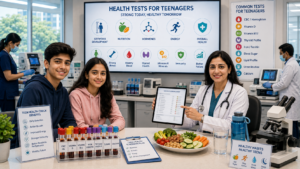
Why Health Tests for Teenagers are needed
Teenage Health Is More Than Height and Weight
Adolescence is a crucial period of development. During these years, the body undergoes significant hormonal and physical changes.
Therefore, healthcare evaluation may sometimes include:
- Growth assessment
- Weight and BMI assessment
- Blood pressure
- Nutritional evaluation
- Haemoglobin testing
- Vitamin D testing
- Thyroid testing when indicated
- Selected hormone testing
- Blood sugar or lipid testing when risk factors exist
However, routine blood testing is not necessary for every healthy teenager.
Instead, the goal is to investigate specific concerns rather than test unnecessarily.
When Should Parents Consider Testing?
Testing may be worth discussing with a healthcare provider when a teenager has:
- Persistent tiredness
- Poor weight gain or unexpected weight changes
- Delayed or unusually rapid growth
- Frequent dizziness
- Pale appearance
- Hair fall
- Muscle or bone discomfort
- Irregular periods
- Excessive facial or body hair
- Persistent acne with menstrual irregularity
- Symptoms suggesting thyroid problems
- A restricted or unbalanced diet
- A relevant family history
Furthermore, if symptoms continue despite adequate sleep, nutrition and lifestyle changes, medical evaluation can help identify possible underlying causes.
Growth, Haemoglobin and Vitamin D
Monitoring Healthy Growth
Growth during adolescence varies considerably from one teenager to another.
Therefore, a healthcare provider usually considers growth patterns over time, rather than relying on a single height or weight measurement.
A sudden change in growth trajectory may require further evaluation.
Haemoglobin and Anaemia
Why Haemoglobin Matters
Haemoglobin helps carry oxygen throughout the body.
When haemoglobin is low, a teenager may experience symptoms such as:
- Tiredness
- Weakness
- Dizziness
- Reduced exercise tolerance
- Difficulty concentrating
However, these symptoms can have several causes.
Consequently, a Complete Blood Count (CBC) and, when appropriate, iron-related tests can help evaluate possible anaemia.
Teenage Girls and Iron Deficiency
Iron requirements can become particularly important in adolescent girls after menstruation begins.
Moreover, girls with heavy menstrual bleeding may be at increased risk of iron deficiency.
Therefore, persistent tiredness or dizziness should not simply be blamed on school pressure or exam stress.
Parents can also refer to the Hemoglobin Chart to understand haemoglobin levels and general interpretation.
Vitamin D and Teenage Bone Health
Why Vitamin D Matters During Growth
Vitamin D plays an important role in calcium absorption and bone health.
Because adolescence is a period of significant skeletal development, adequate nutrition is important.
Nevertheless, vitamin D testing is not automatically required for every teenager.
A healthcare provider may consider testing when there are relevant risk factors, such as limited sunlight exposure, bone concerns, certain medical conditions or other clinical indications.
Bangalore’s Indoor Lifestyle
Although Bangalore receives plenty of sunlight, many teenagers spend substantial time indoors.
For example, a typical routine may involve school, tuition, homework, gaming, social media and television.
Consequently, actual outdoor exposure can be limited.
Therefore, lifestyle and diet should be considered when evaluating vitamin D status.
Thyroid and Hormone Tests
When Is Thyroid Testing Useful?
The thyroid gland influences metabolism, growth and several body functions.
Thyroid testing may be considered when a teenager develops symptoms such as:
- Unexplained weight changes
- Persistent fatigue
- Feeling unusually cold or hot
- Changes in heart rate
- Constipation
- Menstrual irregularities
- Poor growth
- Other symptoms suggesting thyroid dysfunction
Usually, testing begins with appropriate thyroid investigations such as TSH, with additional tests depending on the clinical situation.
Hormone Testing Should Be Targeted
Teenagers naturally experience substantial hormonal changes.
Therefore, ordering a large hormone panel without a specific reason may create confusion.
Instead, hormone testing should be selected according to the symptoms and clinical question.
For example, delayed puberty, unusually early puberty, menstrual irregularity or significant androgen-related symptoms may require different investigations.
Consequently, hormone testing should ideally be interpreted by a qualified healthcare professional.
PCOS in Teen Girls
When Should PCOS Be Considered?
Polycystic ovary syndrome (PCOS) can present during adolescence, although diagnosis in teenagers requires careful clinical assessment because some menstrual and hormonal changes are normal during puberty.
Possible concerns may include:
- Persistent menstrual irregularity
- Excess facial or body hair
- Significant acne
- Weight-related concerns
- Signs of increased androgen activity
However, these features alone do not automatically mean that a teenager has PCOS.
Therefore, parents should avoid self-diagnosis based solely on online symptom lists.
What Tests May Be Considered?
Depending on the clinical assessment, a healthcare provider may recommend selected investigations involving:
- Blood sugar
- HbA1c
- Lipid profile
- Thyroid function
- Selected reproductive hormones
- Other tests when clinically appropriate
Furthermore, the diagnosis of PCOS is not based on a single blood test.
Parents can explore the PCOS Blog for additional information about PCOS evaluation and follow-up.
Screen Time, Junk Food and Stress
How Modern Teen Life Can Affect Health
Teenagers today often spend substantial time with smartphones, computers and other digital devices.
At the same time, academic pressure can lead to long study hours and reduced physical activity.
Additionally, frequent consumption of highly processed foods may displace more nutritious options.
Therefore, health monitoring should include lifestyle habits as well as laboratory tests.
Exam Stress and Sleep
Why Sleep Matters
Examination periods can significantly change a teenager’s routine.
Late-night studying, excessive screen use and irregular sleep can contribute to:
- Daytime tiredness
- Poor concentration
- Mood changes
- Reduced physical activity
- Irregular eating patterns
Consequently, not every episode of fatigue requires blood testing.
First, consider sleep, nutrition, hydration and daily routine. If tiredness persists or other symptoms appear, discuss whether medical evaluation is appropriate.
Junk Food and Teenage Nutrition
Building Better Eating Habits
Teenagers may frequently choose fast food, packaged snacks and sugary beverages, particularly during school and coaching schedules.
However, growing bodies require adequate protein, vitamins, minerals, fibre and overall calories.
Therefore, parents can encourage:
- Fruits and vegetables
- Pulses and legumes
- Whole grains
- Nuts and seeds
- Adequate protein
- Calcium-rich foods
- Appropriate hydration
Rather than completely banning favourite foods, a balanced and sustainable approach is often more practical.
Screen Addiction and Physical Activity
Encouraging Movement
Long periods of sitting can reduce daily physical activity.
Consequently, teenagers should be encouraged to incorporate age-appropriate physical activity into their routine.
Simple changes can help, such as:
- Outdoor sports
- Walking
- Cycling
- School activities
- Stretching between study sessions
Moreover, reducing recreational screen time can make room for exercise, sleep and social interaction.
Which Health Tests for Teenagers May Be Considered?
A Practical Testing Approach
Depending on the teenager’s needs, a healthcare provider may consider:
Basic Evaluation
- CBC
- Haemoglobin
- Blood pressure
- Growth and BMI assessment
Nutritional Evaluation
- Vitamin D
- Iron studies or ferritin when indicated
- Vitamin B12 when dietary or clinical risk exists
Metabolic Testing
- Blood glucose
- HbA1c
- Lipid profile when indicated
Thyroid Evaluation
- TSH
- Free T4 when appropriate
Hormonal Evaluation
Selected reproductive or other hormone tests when clinically indicated.
Importantly, this is not a checklist that every teenager needs. The appropriate tests depend on the individual.
Gentle Home Collection for Teenagers
Making Blood Testing Less Stressful
For teenagers who feel nervous about needles or unfamiliar medical environments, a comfortable approach can make the experience easier.
Where available, home sample collection can be a convenient option.
Instead of travelling to a laboratory, an eligible sample can be collected at home at an available appointment time.
This may be particularly helpful for:
- School-going teenagers
- Students preparing for exams
- Teenagers uncomfortable in clinical settings
- Families with multiple children
- Parents managing busy schedules
Preparing a Teenager for Blood Collection
Parents can make the experience easier by explaining the process calmly.
For example:
- Explain that the sample collection is brief.
- Avoid frightening stories about needles.
- Follow any preparation instructions.
- Keep the teenager comfortable and hydrated unless fasting is specifically required.
- Follow any specific instructions given by the healthcare provider.
- Tell the collection professional if the teenager has previously felt faint during blood collection.
Most importantly, avoid creating unnecessary anxiety around testing.
When Is a Teen Health Package Useful?
Choosing Tests Based on Need
A health package can be convenient when several clinically appropriate investigations are required.
However, the cheapest or largest package is not necessarily the best option.
Instead, parents should check:
- Tests included
- Whether the tests are appropriate for the teenager
- Preparation requirements
- Reporting process
- Home collection availability
- Current pricing
Therefore, discuss the appropriate tests with a healthcare professional before selecting a package.
Health Tests for Teenagers in Bangalore
For families searching for Health Tests for Teenagers in Bangalore, the most useful approach is to combine appropriate medical guidance with practical testing options.
At Prima Diagnostics, parents can enquire about relevant laboratory investigations, health packages and available home sample collection services.
Depending on the teenager’s requirements, testing may include CBC, haemoglobin, vitamin D, vitamin B12, iron-related tests, thyroid tests, blood sugar and other investigations recommended by a healthcare professional.
Frequently Asked Questions
What health tests teenagers should have?
Healthy teenagers do not necessarily need routine blood testing. When testing is indicated, it may include CBC or haemoglobin, vitamin D, iron-related tests, thyroid testing or metabolic and hormonal investigations based on symptoms and risk factors.
Should every teenager get a vitamin D test?
No. Vitamin D testing should generally be based on clinical indications, risk factors or healthcare-provider recommendations.
Can exam stress cause tiredness in teenagers?
Yes. Poor sleep, academic pressure, irregular meals and prolonged screen use can contribute to tiredness. However, persistent or unexplained fatigue should be discussed with a healthcare professional rather than automatically attributed to exam stress.
Should teenage girls be tested for PCOS?
Testing should not be performed simply because a teenager has acne or irregular periods. Puberty itself can cause menstrual irregularity. A healthcare professional should assess the overall pattern and decide whether PCOS evaluation is appropriate.
Can junk food cause vitamin deficiencies?
A diet heavily dominated by nutrient-poor foods can make it harder to obtain adequate essential nutrients. However, an individual deficiency requires appropriate assessment rather than assumption.
Is thyroid testing necessary for all teenagers?
No. Thyroid testing is generally considered when symptoms, growth concerns, family history or other clinical factors suggest a possible thyroid problem.
Can teenagers have blood tests at home?
Home sample collection may be available for eligible tests and locations. Parents should confirm the available service, appointment slot and preparation requirements before booking.
How can parents reduce a teenager’s fear of blood tests?
Explain the process calmly, avoid frightening language and let the teenager ask questions. A comfortable home collection setting, where available, may also make the experience easier.
What tests are useful for a teenager with persistent fatigue?
Depending on the clinical assessment, a healthcare provider may consider CBC, haemoglobin, iron-related tests, vitamin B12, vitamin D, thyroid testing or other investigations. The exact selection depends on the symptoms and medical history.
Conclusion
The teenage years are a foundation for long-term health. Therefore, paying attention to growth, nutrition, hormones, sleep, activity and mental well-being is important.
For Bangalore teens, however, exam stress, junk food, prolonged screen time and indoor routines can make healthy habits challenging. Consequently, parents may sometimes wonder whether persistent tiredness, poor growth, menstrual irregularities or other concerns require investigation.
The answer is not to order every possible test. Instead, the better approach is to identify the specific concern and choose appropriate investigations with professional guidance.
Tests such as CBC/haemoglobin, vitamin D, iron studies, thyroid tests, blood sugar and selected hormone tests may be useful in the right circumstances. Furthermore, teenage girls with persistent menstrual concerns may need an appropriate evaluation for PCOS, while teenagers with growth concerns may require a more targeted assessment.
Finally, testing does not need to become another source of stress. Where available, gentle home sample collection can make blood testing more convenient for students and families.
For families looking for Health Tests for Teenagers in Bangalore, Prima Diagnostics can be considered for relevant laboratory testing and available home collection services. Always confirm the tests, preparation requirements and current package details before booking