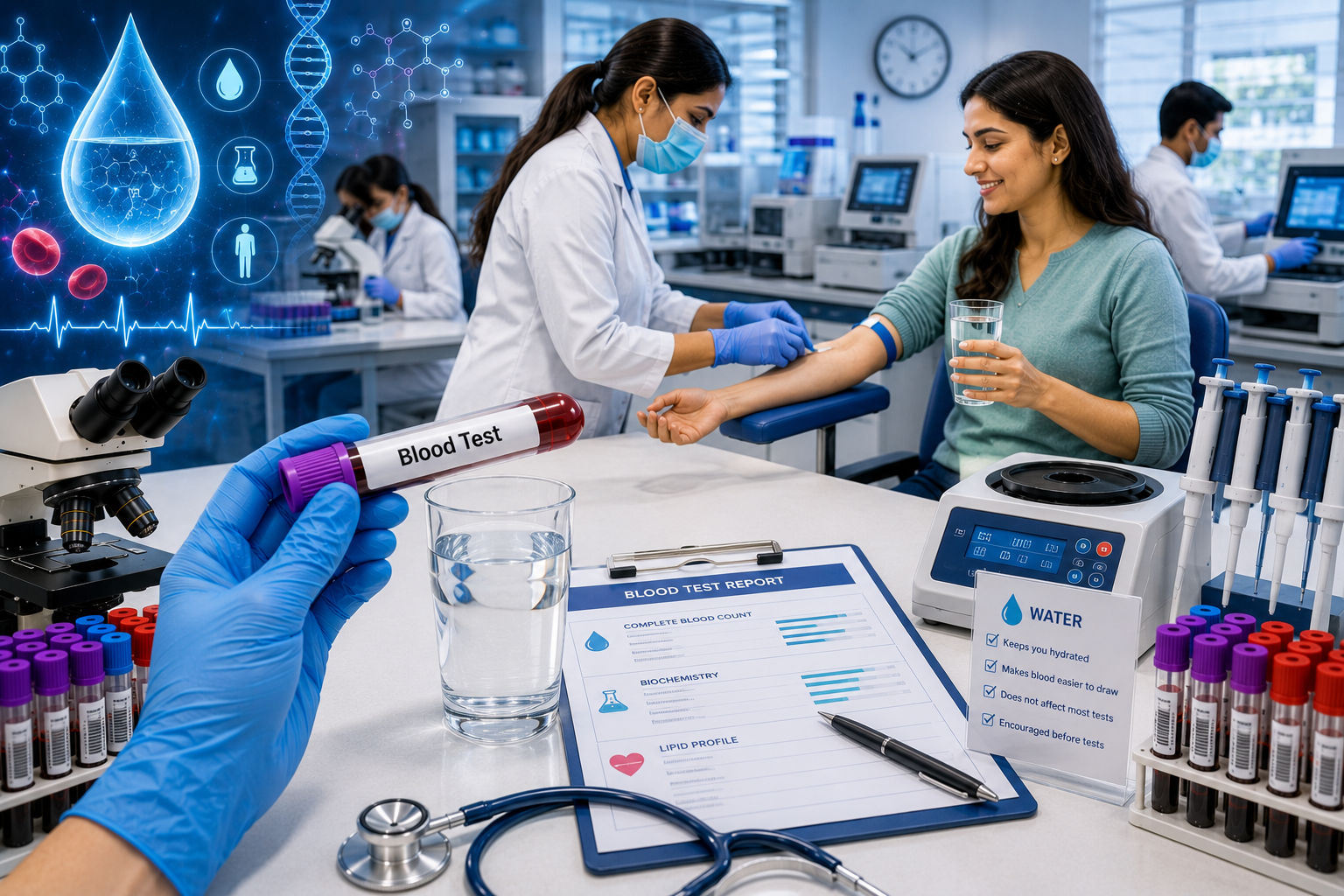
Preparing for a blood test often brings up many questions, but one of the most common is:
"Can you drink water before a blood test?" While most people know that some blood tests require fasting, there is often confusion about whether drinking water is allowed. As a result, many patients avoid water completely, believing it will affect their test results.
Fortunately, this is one of the biggest myths about fasting blood tests. In fact, for most fasting blood tests,
drinking plain water is not only allowed but often encouraged. Staying hydrated can make it easier to collect a blood sample and improve your overall comfort during the procedure.
If you are searching for
can you drink water before a blood test, this guide explains what fasting really means, when water is permitted, what actually breaks a fast, how long you should fast, common preparation mistakes, and practical tips for a smooth testing experience.
Whether you are visiting a diagnostic centre or booking a home sample collection in Bengaluru, understanding the correct preparation helps ensure accurate results.
This Blog Includes:
- Article Title: Can You Drink Water Before a Blood Test? Fasting Myths Cleared
- Publisher: Prima Diagnostics
- Type: Myth / Decision Guide Healthcare Blog
- Topics Covered: Water Before Blood Test, Fasting Blood Tests, Blood Test Preparation, Fasting Guidelines, Water During Fasting, Tea and Coffee Before Blood Tests, Chewing Gum During Fasting, Medication Guidance, Home Sample Collection, Common Fasting Mistakes, and Patient Preparation.
- Services Covered: Fasting Blood Tests, Blood Sugar Testing, Lipid Profile, Complete Blood Count (CBC), Thyroid Profile, HbA1c Test, ESR Test, Home Sample Collection, Preventive Health Check-ups, Digital Reports, and Laboratory Diagnostics.
- Tests Included: Fasting Blood Sugar (FBS), Lipid Profile, Complete Blood Count (CBC), Thyroid Profile, HbA1c, Erythrocyte Sedimentation Rate (ESR), Liver Function Test (LFT), Kidney Function Test (KFT), Vitamin D Test, Vitamin B12 Test, and Additional Routine Blood Tests.
- Preparation Guidance: Plain Water During Fasting, Recommended Fasting Duration, Foods and Drinks to Avoid, Medication Guidance (as advised by healthcare providers), Chewing Gum Recommendations, Home Sample Collection Preparation, and Common Fasting Mistakes.
- Service Focus: Blood Test Preparation, Patient Education, Preventive Health Screening, Home Sample Collection, Laboratory Diagnostics, Routine Blood Investigations, and Accurate Sample Collection.
- FAQ Section: Included.
 Can You Drink Water Before a Blood Test?
Yes.
Can You Drink Water Before a Blood Test?
Yes. For most fasting blood tests, you can drink
plain water unless your doctor specifically advises otherwise. Water does
not usually break a fast and may actually help by keeping you hydrated, making vein access easier during blood collection. However, beverages such as tea, coffee, juice, milk, soft drinks, or flavored water generally
do break a fasting requirement and should be avoided if fasting has been advised.
What Does Fasting Mean Before a Blood Test?
Fasting means
not consuming food or calorie-containing beverages for a specified period before certain blood tests.
During fasting:
- Food is avoided.
- Sugary drinks are avoided.
- Milk-based beverages are avoided.
- Plain water is usually permitted.
The fasting duration depends on the specific laboratory test ordered by your healthcare provider.
The Water Question Answered
One of the most common concerns patients have is whether even a small amount of water can affect their blood test.
The simple answer is
no; plain water generally does not interfere with fasting blood tests.
In fact, drinking a reasonable amount of water before your appointment can be beneficial because it helps maintain hydration and may make blood collection easier.
However, always follow any specific instructions provided by your doctor or diagnostic laboratory, as certain specialized tests may have different preparation requirements.
Why Water Is Actually Encouraged
Many people avoid water because they believe an "empty stomach" means consuming nothing at all. However, dehydration can sometimes make blood collection more difficult.
Drinking plain water before your test may offer several benefits.
Better Hydration
Hydrated veins are often easier for healthcare professionals to locate.
Easier Blood Collection
Proper hydration may reduce the chances of multiple needle attempts.
Improved Comfort
Many patients feel more comfortable and less dizzy when they remain adequately hydrated.
Supports Morning Fasting
Since many fasting tests are scheduled early in the morning, drinking water can make the fasting period more manageable.
What Actually Breaks a Fast?
While water is generally acceptable, several other foods and beverages can interfere with fasting blood tests.
Tea
Even plain tea may influence certain laboratory results.
Coffee
Black coffee and coffee with milk are generally
not recommended during fasting unless your healthcare provider specifically advises otherwise.
Milk
Milk contains calories and nutrients that can affect test results.
Fruit Juice
Juices contain natural sugars that may alter blood sugar and related measurements.
Soft Drinks
Sugary and carbonated beverages should be avoided during fasting.
Food
Even small snacks or bites of food may affect fasting test results.
Flavored Water
Water containing sugar, sweeteners, or flavoring is not the same as plain drinking water and should generally be avoided.
Can You Chew Gum Before a Blood Test?
This is another common question.
Although sugar-free gum contains little or no sugar, chewing gum may stimulate digestion and, in some cases, influence fasting requirements.
Therefore, it is usually best to avoid chewing gum until after your blood sample has been collected.
What About Medicines?
Medication instructions vary depending on your health condition.
Some medicines should be taken exactly as prescribed, even during fasting.
Others may require temporary adjustment before certain laboratory tests.
Therefore:
- Never stop prescribed medication on your own.
- Always follow your doctor's instructions.
- Inform the laboratory staff about any medicines you have taken.
How Long Should You Fast?
The fasting period depends on the blood test requested.
Common examples include:
| Test |
Typical Fasting Requirement* |
| Fasting Blood Sugar (FBS) |
Around 8–10 hours |
| Lipid Profile |
Around 9–12 hours (if fasting is advised) |
| Routine CBC |
Usually no fasting required |
| Thyroid Profile |
Usually no fasting required |
| HbA1c |
Usually no fasting required |
| ESR |
Usually no fasting required |
*Always follow your healthcare provider's instructions, as recommendations may vary.
Common Fasting Mistakes
Even well-intentioned patients sometimes make preparation errors that may affect test accuracy.
Drinking Tea Instead of Water
Many people believe plain tea is acceptable. However, tea may interfere with fasting requirements.
Having Coffee Before the Test
Coffee is one of the most common fasting mistakes.
Eating a Small Snack
Even a biscuit, fruit, or candy can affect certain blood tests.
Skipping Water Completely
Avoiding water unnecessarily may lead to dehydration.
Forgetting the Fasting Time
Fasting for too long or too short may influence test results.
Not Informing the Laboratory About Medications
Always mention prescription medicines, supplements, or recent illnesses.
Tips for a Smooth Blood Test Experience
Preparing correctly can make your blood test easier and more comfortable.
Here are a few simple tips:
- Confirm whether fasting is required.
- Drink plain water unless advised otherwise.
- Schedule morning appointments when possible.
- Wear comfortable clothing with sleeves that roll up easily.
- Bring previous reports if needed.
- Follow your healthcare provider's instructions carefully.
Home Sample Collection During Fasting
Many patients in Bengaluru prefer fasting blood tests through home sample collection because it offers added convenience.
With Prima Diagnostics, eligible laboratory tests can be collected from the comfort of your home.
Benefits include:
- No travel while fasting
- Convenient morning appointments
- Professional sample collection
- Reduced waiting time
- Secure digital reports
This is especially useful for senior citizens, busy professionals, first-time patients, and individuals with limited mobility.
Why Choose Prima Diagnostics?
Prima Diagnostics offers reliable laboratory services with:
- Fasting Blood Tests
- Non-Fasting Blood Tests
- Lipid Profile
- Blood Sugar Testing
- CBC
- Thyroid Profile
- ESR
- HbA1c
- Home Sample Collection
- Digital Reports
- Experienced Laboratory Professionals
- Advanced Diagnostic Equipment
Whether you are visiting a laboratory or choosing home collection, Prima Diagnostics helps ensure a smooth and convenient testing experience.
Frequently Asked Questions
Can you drink water before a blood test?
Yes. Plain water is generally allowed and is often encouraged unless your healthcare provider advises otherwise.
Does water affect blood sugar results?
Plain drinking water generally does not affect fasting blood sugar results.
Can I drink black coffee before my blood test?
Coffee is generally not recommended during fasting unless specifically permitted by your healthcare provider.
Can I chew sugar-free gum?
It is usually best to avoid chewing gum before a fasting blood test.
How many hours should I fast?
The fasting duration depends on the specific test. Always follow your doctor's or laboratory's instructions.
Can I book home sample collection for fasting blood tests?
Yes. Prima Diagnostics offers home sample collection for eligible laboratory tests across Bengaluru.
Conclusion
Understanding
can you drink water before a blood test helps eliminate one of the most common misconceptions about fasting. In most cases, drinking plain water is not only permitted but also encouraged, as it helps maintain hydration and can make blood sample collection easier. On the other hand, beverages such as tea, coffee, juice, milk, and flavored drinks may interfere with fasting requirements and should generally be avoided unless your healthcare provider advises otherwise.
Proper preparation plays an important role in ensuring accurate laboratory results. By following the recommended fasting duration, staying hydrated with plain water, avoiding common mistakes, and consulting your healthcare provider whenever you have questions, you can approach your blood test with confidence. Prima Diagnostics supports patients across Bengaluru with reliable laboratory services, home sample collection, experienced professionals, and timely digital reports for a convenient testing experience.