
Getting Shortness of Breath on Stairs can feel surprisingly uncomfortable, especially when you are doing an activity that previously felt easy. For example, you may climb two floors, walk quickly, or carry groceries and suddenly feel that you need to stop and catch your breath.
Sometimes, this happens because of low fitness, higher body weight, or simply pushing yourself harder than usual. However, breathlessness can also be linked to anemia, heart conditions, lung problems, thyroid abnormalities, or recovery after an infection.
Therefore, if breathlessness is new, persistent, worsening, or happening during normal daily activities, it is worth discussing it with a doctor.
This Blog Includes:
- Article Title: Shortness of Breath on Stairs? Tests for Heart, Lungs and Anemia
- Target Keyword: Shortness of Breath on Stairs
- Search Intent: Someone who gets breathless doing normal activities
- Topics Covered: Anemia, heart-related causes, lung conditions, weight, thyroid, pollution, post-viral cough
- Tests Covered: CBC, ECG, 2D Echo, Chest X-ray, PFT, TSH
- Emergency Guidance: Warning signs requiring urgent medical attention
- Local SEO Focus: Bangalore, Bangalore pollution, post-viral cough, diagnostic testing
- FAQ Section: Common questions about breathlessness and diagnostic tests
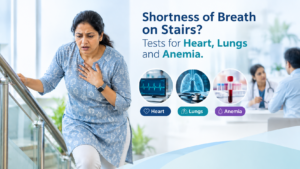
What Does Shortness of Breath on Stairs Mean?
Shortness of breath, also called dyspnea, is the uncomfortable feeling that you are not getting enough air or that breathing requires extra effort.
Importantly, the cause is not always obvious from the symptom alone. The heart, lungs, blood, thyroid, and overall physical condition can all influence how easily you breathe.
Moreover, a doctor generally considers your symptoms, medical history, examination, oxygen level, and risk factors before deciding which tests are appropriate. Common initial evaluations for persistent breathlessness can include blood tests, ECG, chest X-ray, and lung-function testing.
Why Do You Get Breathless While Climbing Stairs?
- Anemia and Low Hemoglobin
First, anemia is an important possibility, particularly when breathlessness is accompanied by tiredness, weakness, dizziness, headaches, or a fast heartbeat.
Hemoglobin carries oxygen around the body. Consequently, when hemoglobin is low, the body may need to work harder during physical activity.
A CBC (Complete Blood Count) is commonly used to check hemoglobin and other blood-cell measurements. If anemia is identified, additional tests such as iron and ferritin may be recommended to investigate the underlying cause.
- Heart-Related Causes
Next, the heart should be considered when breathlessness occurs with relatively ordinary activity.
For example, breathlessness may occur alongside chest discomfort, unusual tiredness, palpitations, dizziness, or swelling of the legs. Heart-related conditions can affect how efficiently blood is pumped around the body.
An ECG can assess heart rhythm and electrical activity. Meanwhile, a 2D Echo uses ultrasound to examine heart structure and function.
However, these tests answer different questions. Therefore, a doctor may recommend one or both depending on your symptoms and examination.
- Lung and Airway Problems
Similarly, asthma, chronic airway disease, infections, pneumonia, and other lung conditions can cause breathlessness.
A lingering cough or wheezing can provide an important clue. In addition, people recovering from respiratory infections may continue experiencing breathing symptoms for some time.
A Chest X-ray can help evaluate several lung and chest conditions, while PFT (Pulmonary Function Testing) can assess how well the lungs move and exchange air.
- Higher Body Weight and Low Fitness
Sometimes, the explanation is more straightforward.
If you have gained weight recently or have been physically inactive, climbing stairs may require significantly more effort. As a result, your breathing and heart rate can rise quickly.
Nevertheless, it is better not to automatically assume that weight or poor fitness is the reason, particularly when breathlessness is new or getting worse.
- Thyroid Problems
The thyroid can also influence energy levels, heart rate, metabolism, and exercise tolerance.
Therefore, when symptoms such as unexplained fatigue, weight changes, palpitations, temperature sensitivity, or other thyroid-related signs are present, a doctor may recommend a TSH test.
Thyroid testing can be part of the laboratory evaluation when persistent breathlessness does not have an obvious explanation.
Which Test Is Done for Shortness of Breath on Stairs?
There is no single test for shortness of breath because breathlessness has many possible causes.
Instead, the appropriate test depends on your symptoms and clinical findings.
Common tests may include:
- CBC: Checks hemoglobin and other blood-cell measurements; useful when anemia is suspected.
- ECG: Evaluates heart rhythm and electrical activity.
- 2D Echo: Examines heart structure and pumping function when a cardiac cause is suspected.
- Chest X-ray: Helps evaluate the lungs and chest.
- PFT: Measures lung function and can help identify airflow problems.
- TSH: Evaluates thyroid function when thyroid disease is suspected.
In addition, pulse oximetry may be used to measure blood oxygen saturation. Depending on the findings, doctors may recommend further tests such as CT imaging, cardiac testing, or specialist evaluation.
CBC: Checking Whether Anemia Could Be the Reason
A CBC is often useful when breathlessness occurs together with fatigue or weakness.
More specifically, the hemoglobin level can indicate whether anemia may be contributing to reduced exercise tolerance. The red blood cell indices can also provide clues about the type of anemia.
However, a CBC does not identify every possible cause of breathlessness. Therefore, additional testing may be required if the result is normal, but symptoms continue.
ECG: Looking at the Heart Rhythm
An ECG is a quick test that records the heart’s electrical activity.
Consequently, it can help identify certain rhythm abnormalities and other electrical patterns that may contribute to symptoms.
If breathlessness is associated with chest discomfort, palpitations, fainting, or other concerning symptoms, cardiac evaluation becomes particularly important.
2D Echo: Looking at Heart Structure and Function
A 2D Echo provides ultrasound images of the heart.
It can help doctors assess heart chambers, valves, pumping function, and other structural features. Therefore, it may be recommended when the clinical examination suggests a possible cardiac cause.
Chest X-ray: Checking the Lungs and Chest
A chest X-ray can provide useful information about several causes of breathlessness, including some infections, fluid around the lungs, and other chest or lung abnormalities.
Furthermore, it is commonly used when a pulmonary cause is suspected.
PFT: When Lung Function Needs More Assessment
Pulmonary Function Testing measures different aspects of breathing.
For example, spirometry can help identify airflow obstruction associated with conditions such as asthma or COPD. If initial tests do not fully explain the symptoms, more comprehensive pulmonary function testing may sometimes be required.
TSH: Could Your Thyroid Be Contributing?
A thyroid problem is not the most common explanation for breathlessness. Nevertheless, thyroid testing may be appropriate when breathlessness occurs with other symptoms suggesting abnormal thyroid function.
Therefore, your doctor may include TSH along with other blood tests when the overall clinical picture supports it.
Bangalore Pollution and Breathlessness
Bangalore’s air quality can also matter, particularly for people who are sensitive to pollution or already have respiratory conditions.
Air pollution can affect both respiratory and cardiovascular health.
As a result, you may notice more coughing, throat irritation, wheezing, or breathing discomfort during periods of poor air quality.
However, pollution should not automatically be blamed for persistent or severe breathlessness. If symptoms continue even when you are indoors or away from polluted areas, medical evaluation is appropriate.
Post-Viral Cough Can Make Stairs Feel Harder
Another common situation is breathlessness after a viral respiratory infection.
Even after fever and other acute symptoms have improved, some people may continue to experience cough, fatigue, or reduced exercise tolerance.
Consequently, climbing stairs may feel more difficult than usual for a period of time. Persistent symptoms should nevertheless be assessed, especially if they are worsening or accompanied by low oxygen levels, chest pain, or significant fatigue. Post-viral evaluations may include CBC, chest imaging, ECG, pulmonary function testing, or other investigations depending on the symptoms.
When Is Shortness of Breath an Emergency?
Not every episode of breathlessness requires emergency care. However, sudden or severe breathlessness can be a medical emergency.
Seek urgent medical attention if breathlessness is severe or sudden, particularly when it occurs with:
- Chest pain or pressure
- Fainting or near-fainting
- Blue or grey lips
- Severe confusion
- Very rapid or irregular heartbeat
- Severe wheezing or inability to speak comfortably
- Coughing up blood
- A sudden major drop in oxygen saturation
- Rapid worsening of symptoms
In these situations, do not wait for a routine laboratory appointment.
When Should You Book a Test?
Consider discussing testing with a healthcare professional when:
- Breathlessness repeatedly occurs while climbing stairs.
- You become breathless during ordinary daily activities.
- Your exercise tolerance has noticeably decreased.
- Breathlessness continues after a respiratory infection.
- having a persistent cough or wheezing.
- You also have unusual fatigue or weakness.
- Having palpitations or chest discomfort.
Most importantly, testing should be selected according to the suspected cause rather than ordering every test automatically.
Book Your Tests at Prima Diagnostics
If your doctor has recommended blood tests, ECG, 2D Echo, chest X-ray, PFT, or thyroid testing, you can check the available diagnostic services at Prima Diagnostics.
For people in Bangalore, choosing a conveniently located centre or available home-collection service can make the testing process easier, especially when breathlessness or fatigue makes travel uncomfortable.
Before booking, confirm the required test, preparation instructions, availability, and current pricing.
FAQs about shortness of breath on stairs
Is shortness of breath on stairs normal?
Mild breathlessness can occur after intense exertion or when fitness is low. However, new, persistent, worsening, or disproportionate breathlessness should be evaluated rather than automatically considered normal.
Which blood test is done for breathlessness?
A CBC is commonly useful when anemia is suspected. Depending on symptoms, a doctor may also recommend TSH and other blood tests.
Can low hemoglobin cause breathlessness?
Yes. Anemia can reduce the blood’s oxygen-carrying capacity and may contribute to breathlessness during physical activity.
Which test checks the lungs for breathlessness?
Depending on the suspected cause, a doctor may recommend a chest X-ray, spirometry, or broader pulmonary function testing.
Can heart problems cause breathlessness while climbing stairs?
Yes. Cardiac conditions can cause exertional breathlessness. ECG and, when clinically indicated, echocardiography are among the tests that may be used during evaluation.
Can pollution cause breathing difficulty in Bangalore?
Air pollution can affect respiratory and cardiovascular health and may worsen symptoms in susceptible people. However, persistent breathlessness should be medically evaluated rather than attributed to pollution alone.
Conclusion
Ultimately, Shortness of Breath on Stairs can have many explanations, ranging from anemia and reduced fitness to heart, lung, or thyroid-related conditions.
Therefore, the right approach is not to guess the cause based on one symptom. Instead, a doctor can assess the pattern of breathlessness and select appropriate tests such as CBC, ECG, 2D Echo, Chest X-ray, PFT, and TSH.
Moreover, if breathlessness is sudden, severe, or associated with chest pain, fainting, blue lips, or other serious symptoms, seek urgent medical care.
For ongoing or unexplained symptoms, timely evaluation can help identify the underlying cause and guide the next step.