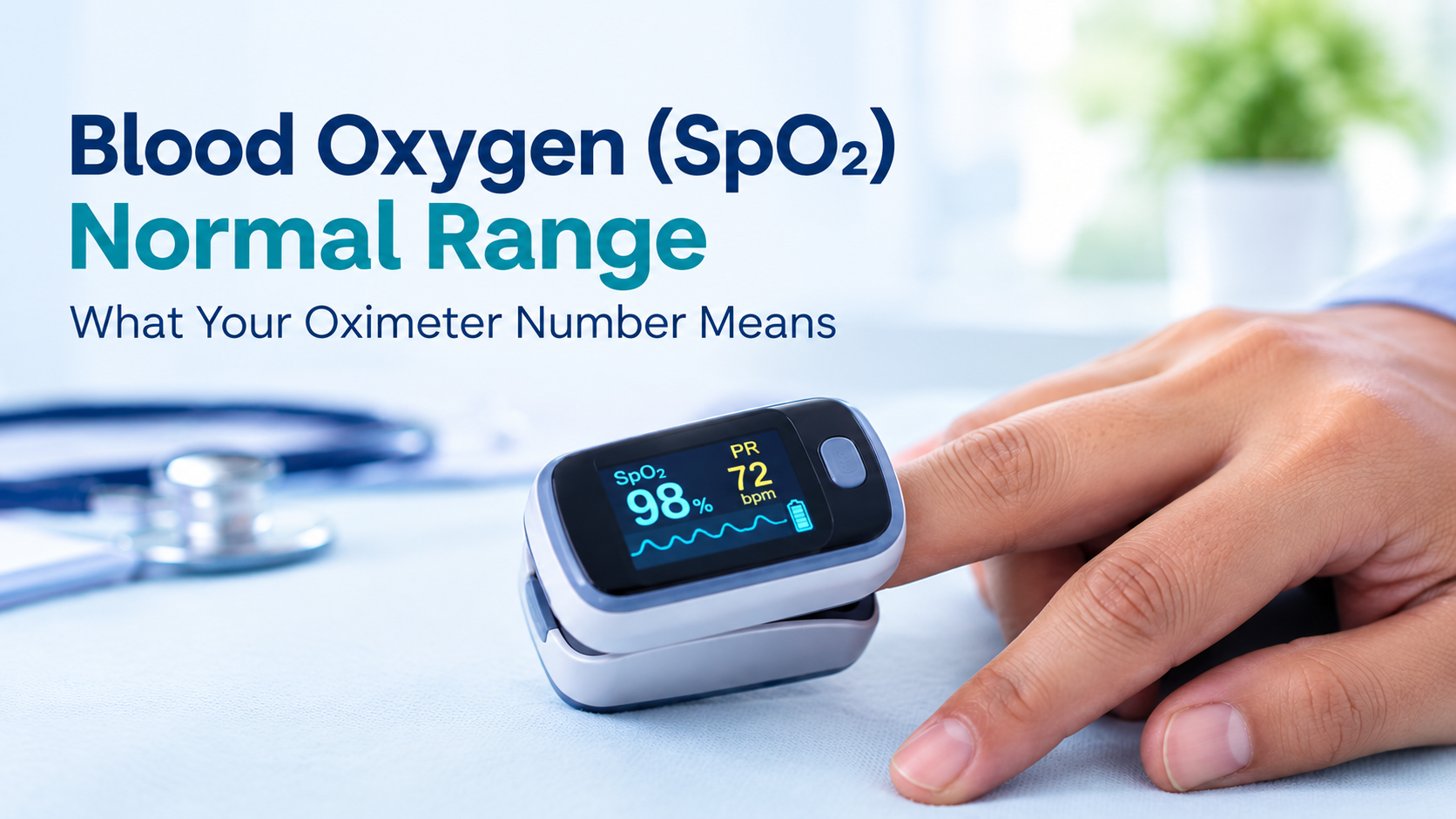
When you have a fever, cough, or breathlessness, a pulse oximeter can provide a quick reading of your blood oxygen level. However, seeing a number on the screen does not always mean that you can interpret it on your own. Therefore, understanding the
SpO2 normal range can help you know when a reading is generally reassuring, when you should repeat the measurement, and when medical evaluation may be necessary.
This is especially relevant during Bengaluru's
September–October viral season, when many homes keep a pulse oximeter ready for checking family members with fever or respiratory symptoms.
This Blog Includes:
- Article Title: Blood Oxygen SpO2 Normal Range - What Your Oximeter Number Means
- Publisher: Prima Diagnostics
- Target Keyword: SpO2 normal range
- Search Intent: People checking home oximeter readings during fever, cough, or breathlessness
- Normal Range: 95%–100% for most healthy people at or near sea level
- Topics Covered: SpO2 interpretation, low oxygen levels, oximeter accuracy, fever, breathlessness, anemia, respiratory symptoms, and emergency warning signs
- Tests Covered: CBC and Chest X-ray
- Common Reading Errors: Cold fingers, nail polish, movement, poor finger placement, and poor circulation
- Local SEO Focus: Bengaluru viral season in September–October, home oximeter monitoring, diagnostic testing
- FAQ Section: Included
 What Is SpO2 Normal Range?
SpO2
What Is SpO2 Normal Range?
SpO2 refers to the estimated percentage of oxygen-saturated haemoglobin in the blood. A pulse oximeter measures it non-invasively by using light through a fingertip.
In addition to SpO2, most fingertip oximeters display
pulse rate.
However, an oximeter is a monitoring device rather than a complete diagnostic test. Consequently, the number should always be considered alongside symptoms and the person's overall condition.
What Is a SpO2 Normal Range?
For most healthy people at or near sea level, an
SpO2 reading of 95% to 100% is generally considered normal.
So, as a simple guide:
| SpO2 reading |
General interpretation |
| 95–100% |
Generally normal for most healthy people |
| 93–94% |
Lower than expected; repeat the reading correctly and consider medical advice if it persists |
| 90–92% |
Low; seek prompt medical assessment |
| Below 90% |
Potentially serious low oxygen level; seek urgent medical attention |
Nevertheless, these numbers are
general guidance rather than a diagnosis. Some people with chronic lung or heart conditions may have individualized oxygen targets prescribed by their doctor.
Similarly, altitude can affect oxygen saturation. Therefore, readings should be interpreted according to the person's circumstances.
Is 98% SpO2 Good?
Generally, yes.
An SpO2 reading of
98% falls comfortably within the commonly cited normal range for a healthy person at sea level.
Likewise, readings such as 96%, 97%, 98%, 99%, and 100% can all fall within the expected range.
However, a normal SpO2 number does not necessarily rule out every respiratory or cardiac problem.
Is 94% SpO2 Dangerous?
Not necessarily, but it should not simply be ignored.
First, sit quietly and repeat the measurement correctly. If the reading remains around 94% or falls further, particularly when accompanied by breathlessness or other concerning symptoms, contact a healthcare professional.
In contrast, a reading below 90% can represent significant hypoxemia and requires urgent medical assessment.
Why Can Your Oximeter Reading Be Wrong?
Before becoming alarmed by a low number, check whether the measurement was taken correctly.
Cold Fingers
Cold hands can interfere with the pulse signal detected by the device.
Therefore, warm your hands naturally, sit quietly for a few minutes, and then repeat the reading.
Nail Polish
Dark nail polish or artificial nails may interfere with some pulse oximeter measurements.
Consequently, if you are getting an unexpected reading, try another finger or remove nail polish if practical.
Moving Your Finger
Movement can make the reading unstable.
So, keep your hand still and relaxed while the device measures your oxygen level.
Poor Finger Placement
Make sure the oximeter is positioned correctly on the fingertip.
Moreover, wait for the displayed number to stabilize instead of immediately recording the first value that appears.
Cold, Poorly Perfused Hands
Poor circulation can make it difficult for some devices to obtain a reliable signal.
Therefore, if the reading does not match how you feel, repeat it after warming your hands and sitting calmly.
How to Check SpO2 Correctly at Home
For a more reliable home reading:
- Sit down and rest for a few minutes.
- Keep your hand warm.
- Place the oximeter correctly on your finger.
- Keep your hand still.
- Wait for the number to stabilize.
- Record the SpO2 and pulse rate if needed.
- Repeat the measurement if the result seems unexpectedly low.
Most importantly, do not rely on a single unusual reading without checking it again.
When Should You Seek Medical Help?
The number matters, but
symptoms matter too.
Seek urgent medical attention if you have significant breathlessness, difficulty speaking because of breathlessness, blue or grey lips/face, severe chest pain, confusion, fainting, or rapidly worsening symptoms.
Additionally, if your SpO2 repeatedly remains below the level advised by your healthcare professional, seek medical advice.
In particular, a persistently low reading around or below
90% should not be managed at home simply by repeatedly checking the oximeter.
What If SpO2 Is Normal but You Feel Breathless?
This is an important point.
A normal SpO2 does not automatically explain why someone is short of breath.
For example, breathlessness can have several possible causes, including anemia, asthma, respiratory infections, heart conditions, anxiety, and other medical problems.
Therefore, if breathlessness persists despite a normal oxygen reading, discuss it with a healthcare professional rather than assuming that everything is normal.
Bengaluru Viral Season: Why Oximeter Readings Get Attention
During
September and October, Bengaluru households may see more interest in home monitoring when family members develop fever, cough, or respiratory symptoms.
Because many homes already have oximeters, checking SpO2 can feel like an easy first step.
However, you can't diagnose
viral fever simply by checking oxygen saturation.
Instead, depending on symptoms, a doctor may recommend an examination and selected investigations.
Tests for Low Oxygen
If oxygen saturation is repeatedly low, the next step is not necessarily another oximeter.
A healthcare professional may investigate the underlying cause with appropriate tests.
CBC Test
A
Complete Blood Count (CBC) can help identify anemia and other blood-related abnormalities.
This matters because significant anemia can contribute to tiredness, weakness, and breathlessness, even though the SpO2 reading itself may remain normal.
Therefore, a CBC may be useful when breathlessness has several possible explanations.
Chest X-ray
A
Chest X-ray can provide information about the lungs and chest structures.
Depending on the clinical situation, it may help doctors evaluate possible respiratory infection, lung abnormalities, or other causes of breathing difficulty.
Other Tests May Be Needed
Depending on symptoms and examination findings, a doctor may consider additional investigations such as ECG, pulmonary-function testing, blood-gas analysis, or other imaging.
Consequently, there is no universal "low SpO2 test package" that applies to everyone.
Should You Check SpO2 During Fever?
If you already have an oximeter at home, it can be useful for monitoring someone who has respiratory symptoms, particularly when advised by a healthcare professional.
Nevertheless, do not use the oximeter as a substitute for medical evaluation.
If fever is accompanied by increasing breathlessness, chest pain, confusion, severe weakness, or persistently low oxygen readings, seek medical care promptly.
SpO2 and Children
Children can have different normal ranges depending on age, health condition, and clinical circumstances.
Therefore, do not automatically apply an adult SpO2 interpretation to an infant or child.
If a child has breathing difficulty or appears seriously unwell, seek pediatric medical attention rather than relying solely on an oximeter.
Frequently Asked Questions
What is a SpO2 normal range?
For most healthy people at or near sea level, an
SpO2 of 95%–100% is generally considered normal. Individual targets can differ for people with certain medical conditions.
Is 95% SpO2 normal?
Yes, 95% can fall within the commonly accepted normal range. However, if the reading is repeatedly lower than your usual level or you have significant symptoms, seek medical advice.
Is 92% oxygen level dangerous?
A persistent reading of 92% is below the usual normal range and should prompt medical assessment, especially if accompanied by breathlessness or other symptoms.
What should I do if my oximeter shows 88%?
Repeat the measurement correctly after resting and warming your hand. If it remains around 88%, seek
urgent medical attention, particularly if you have breathing difficulty or other concerning symptoms.
Can cold fingers affect SpO2?
Yes. Cold fingers and poor circulation can interfere with the pulse signal and produce unreliable readings. Warm your hands and repeat the measurement.
Can nail polish affect an oximeter reading?
It can interfere with measurements from some devices. If you receive an unexpected result, try another finger and repeat the reading under better conditions.
Can CBC explain breathlessness even when SpO2 is normal?
A CBC can help identify anemia and other blood abnormalities that may contribute to fatigue or breathlessness. However, your doctor may need additional evaluation to determine the actual cause.
Conclusion
Ultimately, knowing the
SpO2 normal range can make a home pulse oximeter more useful, particularly when someone has fever, cough, or breathing symptoms.
For most healthy people at sea level,
95%–100% is generally considered normal. However, an unexpectedly low reading should first be checked correctly, because cold fingers, movement, nail polish, and poor circulation can affect measurements.
At the same time, do not focus only on the number. If oxygen remains low or you develop significant breathlessness, chest pain, confusion, blue lips, or rapidly worsening symptoms, seek medical attention promptly.
And if the underlying cause needs investigation, tests such as a
CBC and Chest X-ray, along with other examinations chosen by your healthcare professional, may help identify what is causing the symptoms.