
Being told you have high blood pressure when you are in your 20s or 30s can be unexpected. After all, many people associate BP problems with older age. However, High Blood Pressure at a Young Age can happen for several reasons, including family history, weight gain, high-salt foods, poor sleep, stress, kidney problems, thyroid disorders, and other health conditions.
Moreover, a single high reading does not always confirm hypertension. Blood pressure can temporarily rise because of stress, pain, caffeine, exercise, or the clinical setting. Therefore, your doctor may recommend repeat measurements at home or ambulatory monitoring before confirming the diagnosis.
Once high BP is confirmed, however, the next question is important: why is it happening so early?
This Blog Includes:
- Article Title: High Blood Pressure at a Young Age? 6 Tests to Find the Reason
- Target Keyword: High Blood Pressure at a Young Age
- Search Intent: People under 40 recently told they have high BP
- Topics Covered: Young-onset hypertension, secondary causes, kidney health, thyroid, cholesterol, blood sugar, urine findings, sleep apnea, and stress
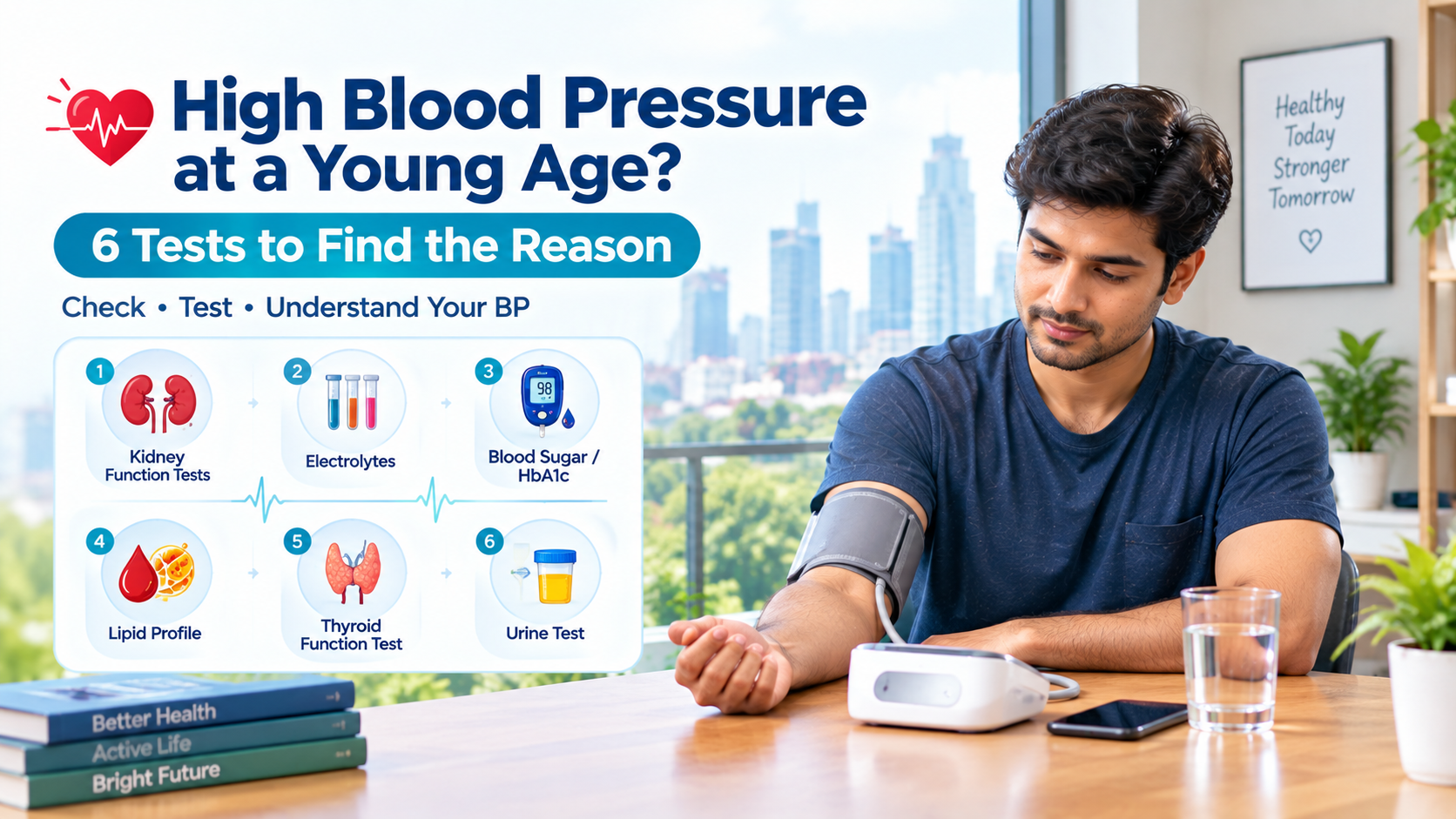
- Tests Covered: KFT, Electrolytes, TSH, Lipid Profile, HbA1c, Urine Test
- Additional Evaluation: Sleep study, hormonal testing and kidney/vascular imaging when clinically indicated
- Local SEO Focus: Bangalore, Bangalore IT professionals, work stress, salt-heavy food, less sleep
- FAQ Section: Included.

Why Is High Blood Pressure at a Young Age Different?
High blood pressure at a younger age can still be primary hypertension, particularly when there is a family history or lifestyle-related risk factors.
However, early-onset, severe, rapidly developing, or difficult-to-control hypertension can sometimes prompt evaluation for secondary causes. These can include kidney disease, thyroid disorders, sleep apnea, certain medications, hormonal conditions, or problems affecting the blood vessels supplying the kidneys.
Therefore, instead of assuming that stress alone is responsible, it is useful to look at the broader picture.
First, Confirm That Your BP Is Actually High
Before searching for a cause, the first step is confirming the blood pressure pattern.
For example, your doctor may ask you to take readings at home at different times of day. This is particularly useful because some people have higher readings in a clinic but normal readings outside it.
Consequently, keep a record of:
- Morning BP
- Evening BP
- Pulse rate
- Date and time
- Any symptoms
- Medicines or supplements being taken
This information can make your doctor’s assessment much more useful.
6 Tests for High Blood Pressure at Young Age
- KFT: Check Kidney Function
First, a Kidney Function Test (KFT) can help assess whether the kidneys are functioning normally.
The kidneys play an important role in regulating fluid balance and blood pressure. Therefore, kidney abnormalities can sometimes contribute to hypertension.
A KFT may include measurements such as creatinine and other kidney-related markers. Depending on the results, your doctor may recommend additional kidney investigations.
- Electrolytes: Look at Sodium and Potassium
Next, blood electrolytes can provide useful clues.
In particular, sodium and potassium are important when evaluating blood pressure and possible underlying causes. Abnormal potassium levels, for example, may prompt further investigation for certain hormonal causes of hypertension.
However, an abnormal electrolyte result does not automatically identify the cause. Instead, it provides a clue that may need additional evaluation.
- TSH: Check the Thyroid
The thyroid can influence metabolism, heart rate, and vascular function.
Therefore, a TSH test may be considered when symptoms suggest thyroid dysfunction or when a doctor is evaluating possible secondary hypertension.
For example, symptoms such as unexplained weight changes, heat or cold intolerance, changes in heart rate, or other thyroid-related symptoms may make thyroid testing more relevant.
- Lipid Profile: Check Cholesterol
High blood pressure and abnormal cholesterol can occur together.
Consequently, a lipid profile is useful for assessing cardiovascular risk. It generally measures cholesterol-related markers such as total cholesterol, LDL, HDL, and triglycerides.
Importantly, this test does not explain every case of young-onset BP. Rather, it helps identify another cardiovascular risk factor that may need attention.
- HbA1c: Check Long-Term Blood Sugar
Next, HbA1c provides an estimate of average blood glucose over approximately the previous few months.
Why is this relevant?
Because high blood pressure, abnormal blood sugar, excess weight, and abnormal cholesterol can occur together as part of a broader cardiometabolic risk pattern.
Therefore, checking HbA1c may help your doctor understand your overall health profile rather than looking at BP in isolation.
- Urine Test: Look for Kidney-Related Clues
Finally, a urine test can provide valuable information about kidney health.
For example, protein or other abnormalities in urine may indicate that further kidney evaluation is needed. Urinalysis is part of the basic evaluation commonly recommended for people with hypertension.
In other words, a simple urine test can sometimes provide an important clue when high BP appears earlier than expected.
Why Kidney Tests Matter in Young BP
The kidney connection deserves extra attention.
Your kidneys help regulate fluid and electrolyte balance. Consequently, kidney disease can contribute to elevated blood pressure, while uncontrolled hypertension can also damage the kidneys over time.
Therefore, when hypertension begins at a young age, especially when it is severe or difficult to control, kidney function and urine findings become particularly useful pieces of information.
When Are More Tests Needed?
Not everyone with high BP needs advanced scans or hormone testing.
However, additional evaluation may be considered when there are clues such as:
- BP beginning at a very young age
- Very high BP
- Rapidly worsening BP
- Difficult-to-control hypertension
- Abnormal potassium levels
- Abnormal kidney function
- Protein in the urine
- Symptoms suggesting thyroid or hormonal disease
- Symptoms suggesting sleep apnea
For example, suspected hormonal causes may require specific tests such as renin and aldosterone measurements, while suspected renal artery disease may require imaging. These are generally selected based on clinical clues rather than ordered routinely for everyone.
Sleep Apnea and High BP: The Connection
Sleep is another important piece of the puzzle.
Obstructive sleep apnea can contribute to high blood pressure. Therefore, someone who snores heavily, wakes up gasping, has witnessed pauses in breathing, or feels unusually sleepy during the day may need an evaluation for sleep apnea.
A sleep study, rather than a routine blood test, is generally used when sleep apnea is suspected.
What About Stress?
Stress can temporarily raise blood pressure. Furthermore, long-term stress may indirectly contribute to habits such as poor diet, physical inactivity, smoking, or increased alcohol intake, all of which can affect cardiovascular health.
However, saying “it is only stress” without checking other possibilities can be misleading.
Bangalore IT Stress, Less Sleep and Salt-Heavy Food
For many young professionals in Bangalore, long work hours can mean irregular meals, prolonged sitting, late-night screen time, and reduced sleep.
At the same time, frequent restaurant meals, packaged foods, snacks, and other salt-heavy foods can increase sodium intake.
Additionally, sleeping only a few hours because of deadlines or late-night work may make healthy BP management more difficult.
Therefore, lifestyle history is an important part of a young person’s BP evaluation—not merely an optional extra.
What Should You Check Every Year?
If you have been diagnosed with hypertension, your doctor may recommend periodic monitoring based on your individual risk.
Common areas to discuss include:
- Blood pressure monitoring
- Kidney function
- Electrolytes
- Urine testing
- Lipid profile
- Blood glucose or HbA1c
- Medication review
- Weight and lifestyle factors
Additionally, other tests may be appropriate if symptoms or previous results suggest a particular problem.
BP Patient Tests: A Simple Checklist
If you have recently been diagnosed with high BP, discuss this checklist with your doctor:
Blood tests
- KFT
- Electrolytes
- Lipid Profile
- HbA1c
- TSH when indicated
Urine
- Routine urine examination
- Additional urine protein testing when indicated
Beyond routine tests
- Sleep study if sleep apnea is suspected
- Hormonal testing when specific symptoms or laboratory findings suggest it
- Kidney or vascular imaging when clinically indicated
This approach is more useful than simply ordering every available test.
When Should a Young Person Take BP Seriously?
High BP deserves attention when it repeatedly appears above the recommended range, particularly when readings are increasing over time.
Moreover, symptoms such as severe headache, chest pain, breathlessness, neurological changes, vision problems, or other concerning symptoms should not be ignored.
If BP is extremely high and you have symptoms suggesting possible organ injury, seek urgent medical care rather than waiting for a routine diagnostic appointment.
Prima BP Panel for Young Adults
If your doctor has asked you to investigate high BP, Prima Diagnostics can be considered for relevant laboratory testing.
Depending on the clinical requirement, a BP-focused evaluation may involve tests such as KFT, electrolytes, lipid profile, HbA1c, TSH, and urine testing.
However, the exact tests should be selected according to your medical history and doctor’s recommendation.
Before booking, check the current Prima Diagnostics test list, package inclusions, preparation requirements, and prices.
Why a BP Chart Is Useful
Keeping a BP record can make your follow-up more productive.
For instance, instead of saying “my BP is sometimes high,” you can show your doctor readings taken at consistent times over several days.
FAQs about high blood pressure at a young age
What tests are done for high blood pressure at a young age?
Common initial evaluations can include kidney function, electrolytes, urine testing, lipid profile, blood glucose or HbA1c, and an ECG. TSH may be considered when thyroid disease is suspected. In younger people with early, severe, resistant, or otherwise unusual hypertension, additional testing for secondary causes may be appropriate.
Can kidney problems cause high Blood Pressure at a young age?
Yes. Kidney disease can contribute to secondary hypertension. That is why kidney function and urine testing can be important when evaluating young-onset hypertension.
Can lack of sleep increase BP?
Poor sleep and obstructive sleep apnea are associated with high blood pressure. If you snore heavily, experience pauses in breathing during sleep, or have significant daytime sleepiness, discuss sleep apnea evaluation with your doctor.
Can stress cause high blood pressure at a young age?
Stress can temporarily increase blood pressure. In addition, chronic stress may contribute indirectly through poor sleep, inactivity, unhealthy eating, tobacco use, or increased alcohol consumption.
Is a KFT necessary for every young person with high BP?
Kidney assessment is commonly part of hypertension evaluation, but the exact tests depend on the person’s BP pattern, medical history, symptoms, and previous results. Your doctor can determine whether KFT and additional kidney testing are appropriate.
Does high BP under 40 always mean there is another disease?
No. Young adults can develop primary hypertension as well. However, early-onset, severe, rapidly developing, or difficult-to-control hypertension can prompt evaluation for secondary causes.
Conclusion
Ultimately, discovering High Blood Pressure at a Young Age does not automatically mean that something serious is wrong. Nevertheless, it is worth understanding why the BP is elevated and whether other health risks are present.
Therefore, tests such as KFT, electrolytes, TSH, lipid profile, HbA1c, and urine testing can provide useful information during evaluation.
At the same time, lifestyle factors matter. In Bangalore, long IT workdays, less sleep, sedentary routines, and frequent salt-heavy meals can all become relevant parts of the conversation.
Most importantly, do not assume that stress or lifestyle alone explains persistent high BP. Confirm the readings, discuss the pattern with your doctor, complete the tests that are clinically appropriate, and continue regular monitoring.