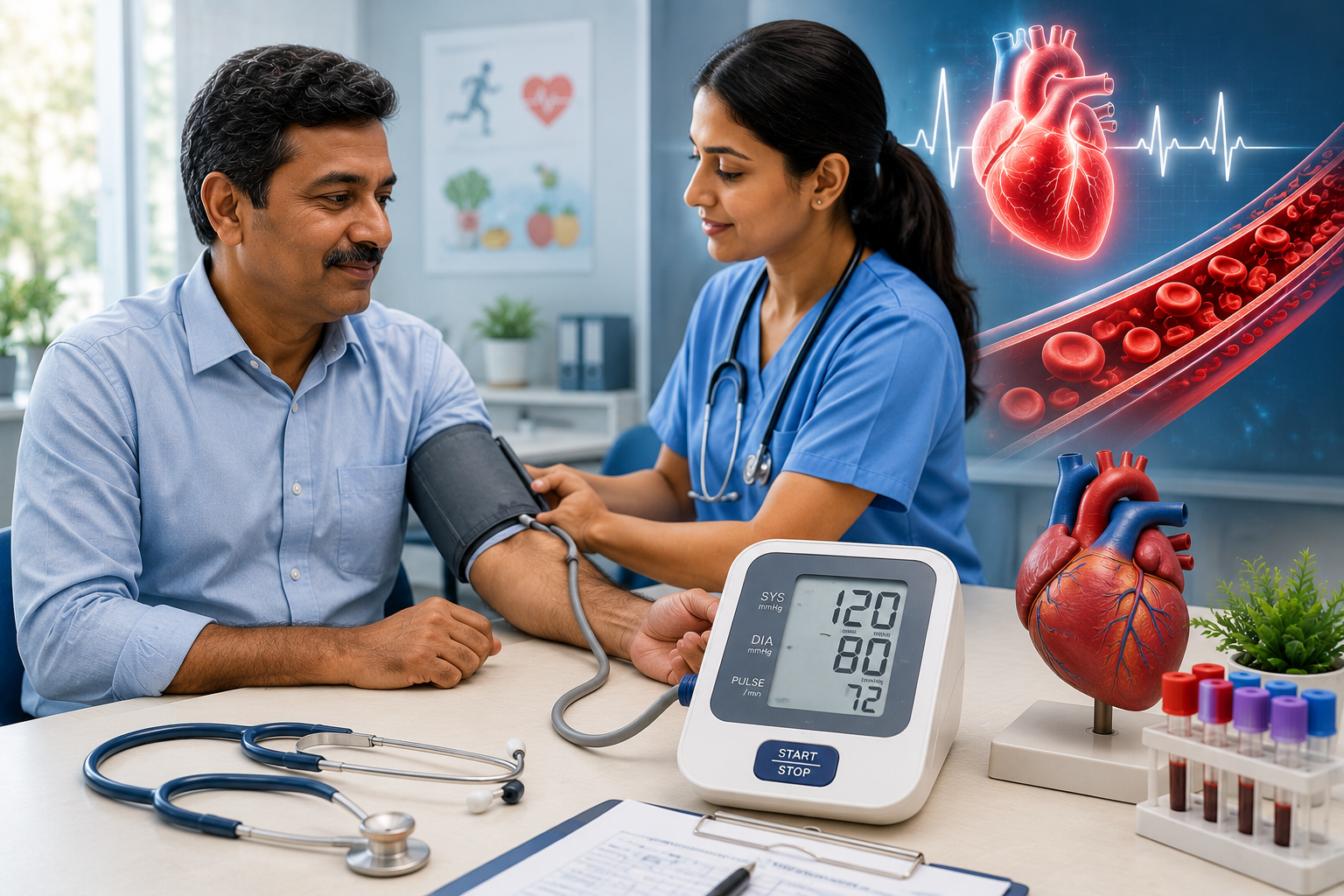
Blood pressure is one of the most important indicators of overall cardiovascular health. Yet, despite its significance, many people are unaware of what their blood pressure numbers actually mean. Some assume that high blood pressure always causes symptoms, while others believe it only affects older adults. In reality,
hypertension can develop silently, and many young adults are diagnosed only during routine health check-ups. If you are searching for
normal blood pressure, understanding your blood pressure readings is the first step toward preventing serious complications such as heart disease, stroke, kidney disease, and vision problems.
Moreover, knowing the normal blood pressure range by age helps you recognize when medical evaluation may be necessary.
Across India, and especially in fast-paced cities like Bengaluru, lifestyle factors such as prolonged sitting, stressful commutes, irregular sleep, processed foods, high salt intake, and lack of exercise have contributed to a growing number of hypertension cases. Consequently, preventive blood pressure monitoring has become increasingly important for adults of all ages.
At
Prima Diagnostics, we support preventive healthcare through comprehensive health check-ups, laboratory investigations, and cardiovascular risk assessment. Although blood pressure is measured using a sphygmomanometer rather than a laboratory test, it is often evaluated alongside blood tests such as kidney function tests, lipid profiles, and blood sugar testing to assess overall health.
This guide explains normal blood pressure ranges, age-wise blood pressure charts, the difference between normal and high blood pressure, symptoms to watch for, related laboratory tests, home monitoring tips, and when to seek medical advice.
This Blog Includes:
- Article Title: Normal Blood Pressure by Age Chart for Indian Adults (With High BP Signs)
- Publisher: Prima Diagnostics
- Type: Chart / Normal Range Healthcare Blog
- Topics Covered: Blood Pressure, Systolic Blood Pressure, Diastolic Blood Pressure, Blood Pressure Categories, Normal Blood Pressure by Age, Elevated Blood Pressure, Hypertension, Hypotension, Home Blood Pressure Monitoring, Cardiovascular Risk, Kidney Health, Lifestyle Changes, and Preventive Healthcare
- Services Covered: Blood Pressure Assessment, Preventive Health Check-ups, Cardiovascular Risk Screening, Kidney Function Testing, Lipid Profile Testing, Blood Sugar Testing, HbA1c Testing, ECG, Home Health Screening, Wellness Packages, and Digital Reports
- Tests Included: Kidney Function Test (KFT), Lipid Profile, Electrocardiogram (ECG), Fasting Blood Sugar (FBS), Postprandial Blood Sugar (PPBS), HbA1c, Complete Blood Count (CBC), Urine Routine Examination, Serum Creatinine, Blood Urea, Electrolytes, and Routine Preventive Health Tests
- Conditions Covered: Hypertension, Elevated Blood Pressure, Hypotension, Heart Disease, Stroke Risk, Chronic Kidney Disease, Diabetes, Dyslipidemia, Obesity, Cardiovascular Disease, and Metabolic Syndrome
- Service Focus: Blood Pressure Awareness, Preventive Cardiac Screening, Cardiovascular Risk Assessment, Lifestyle Disease Prevention, Early Detection of Hypertension, Comprehensive Health Check-ups, and Laboratory Diagnostics
- Healthcare Service: Preventive Health Check-ups, Laboratory Diagnostics, Cardiovascular Risk Screening, Kidney Function Testing, Lipid Testing, Blood Sugar Testing, ECG Services, Wellness Packages, and Home Sample Collection
- FAQ Section: Included.
 Normal Blood Pressure by Age Chart (Indian Adults)
For most adults, a
normal blood pressure by age is generally considered to be
below 120/80 mmHg. Blood pressure is measured using two numbers:
systolic pressure (the upper number) and
diastolic pressure (the lower number). As blood pressure rises above normal ranges, the risk of heart disease, stroke, kidney disease, and other complications increases. Blood pressure should be interpreted by a healthcare professional alongside age, medical history, and overall cardiovascular risk.
What BP Numbers Mean (Systolic and Diastolic)
Blood pressure measures the force of blood pushing against the walls of your arteries.
Every blood pressure reading includes two values.
Systolic Blood Pressure
The top number represents the pressure inside your arteries when the heart contracts and pumps blood.
Example:
120/80
Here,
120 is the systolic pressure.
Diastolic Blood Pressure
The lower number measures arterial pressure while the heart relaxes between beats.
In the example above:
80 represents the diastolic pressure.
Both numbers are equally important when evaluating cardiovascular health.
Why Blood Pressure Changes Throughout Life
Although age influences blood pressure, healthy adults should still aim to maintain blood pressure within recommended ranges.
Several factors affect blood pressure, including:
- Physical activity
- Stress
- Body weight
- Diet
- Sleep quality
- Smoking
- Alcohol intake
- Kidney health
- Family history
- Certain medications
Normal Blood Pressure by Age Chart (Indian Adults)
The following chart provides a general reference. Individual targets may vary based on medical history and healthcare provider recommendations.
| Age Group |
Typical Healthy Blood Pressure* |
| 18–29 years |
Around 110–120 / 70–80 mmHg |
| 30–39 years |
Around 110–120 / 70–80 mmHg |
| 40–49 years |
Around 110–120 / 70–80 mmHg |
| 50–59 years |
Around 110–130 / 70–80 mmHg |
| 60 years and above |
Individualized based on overall health and medical advice |
*These values are general reference ranges and should not replace medical evaluation.
Blood Pressure Categories
Healthcare professionals commonly classify blood pressure into categories.
| Category |
Blood Pressure |
| Normal |
Less than 120/80 mmHg |
| Elevated |
Systolic 120–129 mmHg and Diastolic below 80 mmHg |
| Hypertension Stage 1 |
Systolic 130–139 mmHg or Diastolic 80–89 mmHg |
| Hypertension Stage 2 |
Systolic ≥140 mmHg or Diastolic ≥90 mmHg |
| Hypertensive Crisis |
Usually ≥180/120 mmHg – requires immediate medical attention |
These categories are based on commonly used clinical guidelines. Individual treatment decisions depend on the overall clinical picture.
Prehypertension vs Hypertension
Although the term
prehypertension was commonly used in older classifications, many current guidelines now use the term
elevated blood pressure.
Elevated Blood Pressure
Blood pressure is higher than normal but not yet within the hypertension range.
Lifestyle modifications may help reduce future cardiovascular risk.
Hypertension
Persistent high blood pressure requires medical evaluation.
If left untreated, hypertension may increase the risk of:
- Heart attack
- Stroke
- Kidney disease
- Vision loss
- Heart failure
Low Blood Pressure Ranges
Low blood pressure is known as hypotension.
Although many healthy people naturally have lower blood pressure, symptoms may require medical evaluation.
Common Symptoms
- Dizziness
- Fainting
- Weakness
- Blurred vision
- Fatigue
Healthcare providers evaluate hypotension together with symptoms rather than relying solely on blood pressure numbers.
Silent High BP in Young Bangaloreans
One of the biggest misconceptions about hypertension is that it only affects older adults.
However, many young adults in Bengaluru are diagnosed during routine health check-ups.
Several lifestyle factors contribute to this trend.
IT Desk Life
Long hours of sitting reduce physical activity.
Bengaluru Traffic Stress
Daily commuting and traffic congestion contribute to chronic stress.
Salt-Heavy Eating Out
Restaurant meals and processed foods often contain higher amounts of sodium.
Poor Sleep
Late-night work schedules and irregular sleep patterns affect cardiovascular health.
Lack of Exercise
Sedentary lifestyles contribute to weight gain and elevated blood pressure.
Signs That May Suggest High Blood Pressure
High blood pressure often causes
no symptoms at all, which is why it is known as the "silent killer."
However, some individuals may experience:
- Headache
- Dizziness
- Blurred vision
- Chest discomfort
- Shortness of breath
- Nosebleeds (occasionally)
Because these symptoms can have many causes, blood pressure should always be measured rather than assumed.
Tests That Go with BP
Healthcare providers frequently recommend additional investigations to evaluate the effects of hypertension or identify associated risk factors.
Kidney Function Test (KFT)
Hypertension may affect kidney function over time.
KFT helps assess kidney health.
Lipid Profile
High cholesterol often accompanies hypertension.
Evaluating both conditions supports cardiovascular risk assessment.
Blood Sugar and HbA1c
Diabetes and hypertension frequently occur together.
ECG
An Electrocardiogram (ECG) helps evaluate heart rhythm and may be recommended based on symptoms or clinical assessment.
Urine Tests
Urine examinations may help assess kidney involvement in selected patients.
Lifestyle Tips to Maintain Healthy Blood Pressure
Healthy lifestyle habits play a major role in blood pressure management.
Consider:
- Limiting salt intake
- Maintaining a healthy weight
- Exercising regularly
- Managing stress
- Getting adequate sleep
- Avoiding tobacco
- Limiting alcohol consumption
- Eating a balanced diet rich in fruits and vegetables
How to Measure BP Correctly at Home
Home blood pressure monitoring can provide useful information when performed correctly.
Rest Before Measuring
Sit quietly for at least five minutes.
Sit Properly
Keep your back supported and feet flat on the floor.
Use the Correct Cuff Size
A properly fitting cuff improves accuracy.
Position the Arm Correctly
Keep the cuff at heart level during measurement.
Avoid Certain Activities Before Testing
Avoid smoking, caffeine, and vigorous exercise for at least 30 minutes before measuring blood pressure, unless otherwise advised.
Take Multiple Readings
Healthcare providers often recommend recording several readings over different days rather than relying on a single measurement.
When to See a Doctor
Medical evaluation is recommended if:
- Blood pressure remains consistently elevated
- You experience chest pain
- A severe headache develops
- Vision changes occur
- Shortness of breath is present
- Dizziness becomes persistent
- Blood pressure readings are unusually high or unusually low
Do not change or stop blood pressure medication without consulting your healthcare provider.
Blood Pressure Awareness in Bengaluru
With increasing workplace stress, long commuting hours, sedentary IT jobs, and frequent consumption of restaurant food, hypertension has become an important public health concern in
Bengaluru. Consequently, regular blood pressure monitoring, preventive health check-ups, and cardiovascular risk assessments are becoming increasingly valuable for adults across all age groups. Early detection allows timely lifestyle changes and appropriate medical management before complications develop.
Why Choose Prima Diagnostics?
Comprehensive Preventive Health Check-ups
Health packages include laboratory investigations that support cardiovascular risk assessment.
Advanced Laboratory Technology
Modern diagnostic systems provide reliable laboratory results.
Experienced Healthcare Professionals
Laboratory services follow established quality standards.
Fast Digital Reports
Reports are delivered promptly for timely medical consultation.
Affordable Health Packages
Flexible preventive screening options are available for different age groups.
Frequently Asked Questions (FAQs)
What is considered normal blood pressure?
For most adults, blood pressure below
120/80 mmHg is generally considered normal.
Does blood pressure increase with age?
Blood pressure tends to rise with age in many individuals, although healthy lifestyle habits can help maintain normal levels.
Can young adults develop hypertension?
Yes. Hypertension can occur at any age and is becoming increasingly common among younger adults.
Which tests are recommended along with blood pressure evaluation?
Healthcare providers may recommend Kidney Function Tests (KFT), Lipid Profile, Blood Sugar, HbA1c, ECG, and other investigations based on individual health needs.
Can I monitor blood pressure at home?
Yes. Home monitoring can be helpful when performed correctly and interpreted alongside professional medical advice.
Why choose Prima Diagnostics?
Prima Diagnostics offers preventive health check-ups, comprehensive laboratory testing, experienced professionals, and fast digital reports to support cardiovascular health assessment.
Conclusion
Understanding the
normal blood pressure range and monitoring it regularly are essential steps toward protecting your heart, kidneys, brain, and overall health. Although blood pressure often changes with age and lifestyle, consistently elevated readings should never be ignored, as hypertension frequently develops without noticeable symptoms. Furthermore, combining regular blood pressure checks with appropriate laboratory investigations—such as kidney function tests, lipid profiles, blood sugar tests, and ECG when advised—provides a more complete picture of cardiovascular health.
At
Prima Diagnostics, we are committed to supporting preventive healthcare through comprehensive health check-up packages, advanced laboratory testing, experienced professionals, and fast digital reports. Whether you are monitoring your blood pressure as part of a routine wellness program or evaluating cardiovascular risk factors, our diagnostic services help you take informed steps toward better long-term health.