
If you regularly work out at a gym, follow a high-protein diet, use creatine, or train for bodybuilding, you may wonder whether routine health tests are necessary. After all, exercise is generally beneficial. However, tests for gym-goers can sometimes provide useful information about kidney function, liver health, muscle injury, blood sugar, vitamins, electrolytes and hormones.
Moreover, Bangalore’s growing fitness culture means that more people are combining intense workouts with high-protein diets, supplements and demanding training schedules. In particular, the Indiranagar and Koramangala fitness scene includes beginners, recreational lifters, endurance athletes and competitive bodybuilders with very different nutritional and training routines.
Therefore, the right blood tests should be selected according to your workout intensity, diet, symptoms, medications, supplements and medical history rather than simply because you go to the gym.
This Blog Includes:
- Article Title: Tests for Gym-Goers and Bodybuilders in Bangalore
- Publisher: Prima Diagnostics
- Topics Covered: Gym-Goer Blood Tests, Bodybuilding Health Tests, Creatinine, KFT, Kidney Function, LFT, Liver Health, CPK/CK, Muscle Health, Testosterone, Hormone Testing, Electrolytes, Blood Sugar, Lipid Profile, Protein Intake, Creatine, Supplements, Steroid Caution, Fitness Health Packages and Home Sample Collection.
- Kidney Testing Guidance: Explains the role of creatinine, KFT and eGFR in assessing kidney function and why muscle mass, hydration, protein intake and creatine supplementation can affect interpretation.
- High-Protein Diet Guidance: Explains that high protein intake does not automatically indicate kidney damage while emphasizing individualized assessment for people with kidney disease or relevant risk factors.
- Creatine Guidance: Explains that creatine supplementation can influence creatinine measurements and that supplement use should be disclosed when interpreting kidney-function results.
- Liver Testing Guidance: Explains the role of LFTs in selected clinical situations and emphasizes discussing supplements and other substances with a healthcare professional.
- CPK/CK Guidance: Explains that strenuous exercise can temporarily elevate CPK/CK and that testing may be considered when significant muscle pain, weakness, or suspected muscle injury is present.
- Hormone Testing Guidance: Explains that testosterone testing is not required for every gym-goer and may be considered when symptoms or clinical concerns suggest hormonal abnormalities.
- Vitamin Guidance: Covers testing and explains why nutritional status may be relevant for selected gym-goers.
- Electrolyte Guidance: Explains the role of sodium, potassium and other electrolytes in fluid balance, nerve function and muscle activity.
- Supplement Guidance: Advises gym-goers to disclose protein powders, creatine, vitamins and other supplements to healthcare professionals and to avoid unnecessary or excessive supplementation.
- Steroid Safety Guidance: Explains that anabolic steroids and performance-enhancing drugs can carry significant health risks and that blood testing does not make steroid use safe.
- Fitness Testing Guidance: Provides an educational overview of commonly considered tests while emphasizing that there is no universal blood-test panel required for every gym-goer.
- Preparation Guidance: Advises patients to follow fasting requirements when applicable, remain appropriately hydrated, disclose supplements, and inform the healthcare provider about recent strenuous exercise.
- Service Focus: Fitness Blood Testing, Kidney Function Testing, Liver Function Testing, CPK/CK Testing, Vitamin Testing, Hormone Testing, Preventive Health Screening, Fitness Health Packages and Home Sample Collection.
- FAQ Section: Included.
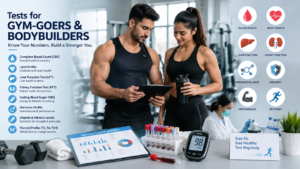
Blood tests for gym-goers should do
Depending on individual needs, commonly considered tests for regular gym-goers include kidney function tests such as creatinine and KFT, liver function tests, CPK/CK when muscle injury is suspected, blood glucose, Vitamin D, Vitamin B12, and electrolytes. Hormone tests such as testosterone should generally be performed when symptoms or clinical concerns justify them. The appropriate test panel should be decided with a healthcare professional.
Why Gym-Goers Need Specific Tests
Exercise Changes the Body
Regular resistance and endurance training can temporarily affect certain blood-test results.
For example, strenuous exercise may increase creatine kinase (CK/CPK) because muscles release this enzyme after exercise-related muscle damage.
Similarly, muscle mass, hydration and dietary protein can influence some kidney-related measurements.
Consequently, interpreting a blood report without considering recent exercise can sometimes be misleading.
Who May Benefit From Periodic Testing?
Testing may be particularly useful for people who:
- Train several days a week intensely
- Follow a high-protein diet
- Use creatine or multiple supplements
- Experience persistent fatigue
- Have muscle pain or unusual weakness
- Are losing or gaining weight unexpectedly
- Have symptoms suggesting hormonal problems
- Have an existing medical condition
- Use prescription or performance-enhancing substances
However, a healthy recreational gym-goer does not necessarily need every test on this list.
Kidney Tests for High-Protein Diets
Why Creatinine Matters
Creatinine is a waste product related to normal muscle metabolism and is commonly used to assess kidney function.
However, people with greater muscle mass can sometimes have higher creatinine levels without having kidney disease.
Therefore, creatinine should not be interpreted in isolation.
Your doctor may consider additional information such as eGFR, urea, electrolytes and clinical history.
For more information, explore our Creatinine Chart.
Kidney Function Tests for Gym-Goers
What Does a Kidney Function Test Include?
A Kidney Function Test (KFT) may include parameters such as:
- Creatinine
- Urea
- eGFR
- Electrolytes, depending on the panel
- Other kidney-related measurements depending on the laboratory
Consequently, KFT can provide a broader assessment than checking creatinine alone.
For people consuming substantial amounts of protein, maintaining adequate hydration and discussing appropriate protein intake with a healthcare professional can also be important.
Does Protein Damage the Kidneys?
High Protein Is Not Automatically Kidney Damage
This is an important distinction.
For healthy individuals, protein intake does not automatically mean that kidney damage will occur.
However, people with existing kidney disease or reduced kidney function may require individualized protein recommendations.
Therefore, if you consume a very high-protein diet, particularly for bodybuilding purposes, discuss your intake with a qualified healthcare professional if you have kidney-related risk factors.
Creatine and Kidney Testing
Can Creatine Affect Creatinine?
Yes, creatine supplementation can influence creatinine measurements in some people because creatine is metabolized to creatinine.
Consequently, a higher creatinine result does not automatically mean that creatine has damaged the kidneys.
However, an abnormal result should still be properly evaluated.
Therefore, tell your healthcare provider about creatine use, protein supplements and other supplements before interpreting your kidney test results.
Liver Tests for Gym-Goers
Why Consider an LFT?
A Liver Function Test (LFT) measures several biochemical markers that can provide information about liver and related processes.
Liver testing may be considered when there are symptoms, relevant medical conditions, medication use, supplement exposure or other clinical concerns.
Moreover, people using multiple supplements should inform their healthcare provider about everything they are taking.
Supplements and Liver Health
Not every sports supplement is harmful. Nevertheless, products can vary significantly in composition, quality and dosage.
Furthermore, bodybuilding products purchased from unreliable sources may contain undeclared substances.
Therefore, do not assume that a product labelled “natural” or “herbal” is automatically risk-free.
CPK and Muscle Health
What Is CPK?
Creatine phosphokinase (CPK), also called creatine kinase (CK), is an enzyme found mainly in muscles.
After intense resistance training, running or other strenuous exercise, CPK can temporarily increase.
Consequently, an elevated CPK result shortly after a hard workout does not necessarily indicate a disease.
When Is CPK Testing Useful?
A doctor may consider CPK testing when there is:
- Significant muscle pain
- Unusual muscle weakness
- Severe muscle swelling
- Suspected muscle injury
- Symptoms following extreme exercise
- Concern about muscle breakdown
Therefore, if CPK is being tested, tell the healthcare provider about your recent workout intensity.
Testosterone and Hormone Tests
Should Every Bodybuilder Test Testosterone?
Not necessarily.
Testosterone testing may be appropriate when symptoms suggest possible hormonal imbalance.
For example, a healthcare provider may consider testing when someone experiences:
- Reduced libido
- Erectile difficulties
- Unexplained fatigue
- Reduced muscle strength
- Changes in body composition
- Delayed puberty or other hormone-related concerns
However, muscle gain alone is not an indication that testosterone testing is required.
When Should Testosterone Be Tested?
Testosterone levels vary during the day.
Therefore, when testosterone testing is clinically indicated, your doctor may recommend a particular time of day and may sometimes request repeat testing to confirm an abnormal result.
Furthermore, interpretation depends on age, symptoms, medications and other hormone-related factors.
Vitamin D Tests for Gym-Goers
Why Vitamin D Matters
Vitamin D contributes to normal bone and muscle function.
However, being physically active does not automatically mean your vitamin D level is adequate.
People who spend most of their day indoors may have limited sun exposure.
This can be relevant in Bangalore, where many gym-goers work indoors before exercising in the evening.
Therefore, Vitamin D testing may be considered when symptoms or risk factors suggest deficiency.
Vitamin B12 and Fitness
Can Low B12 Affect Exercise?
Vitamin B12 plays an important role in red blood cell formation and nervous-system function.
Consequently, inadequate B12 can contribute to symptoms such as fatigue, weakness or neurological problems.
However, these symptoms have many possible causes.
Therefore, B12 testing should be considered based on diet, symptoms and individual risk factors.
Electrolytes and Hydration
Why Electrolytes Matter During Training
Electrolytes such as sodium and potassium are important for fluid balance, nerve function and muscle activity.
Heavy sweating, prolonged exercise, vomiting, diarrhoea or excessive fluid intake can affect electrolyte balance.
Therefore, electrolyte testing may be appropriate in selected situations, particularly when symptoms such as unusual weakness, cramps, dizziness or palpitations occur.
Blood Sugar and Gym Performance
Why Check Glucose?
Blood glucose testing can provide information about metabolic health.
Although regular exercise generally supports healthy glucose regulation, people can still develop diabetes or prediabetes.
Consequently, a fasting blood glucose test or HbA1c may be considered based on age, family history, body weight and other risk factors.
Supplement and Steroid Caution
Supplements Are Not All the Same
Protein powders, creatine, vitamins and other sports supplements are widely used.
However, dosage and product quality matter.
Therefore:
- Check the ingredient list.
- Follow appropriate dosing.
- Avoid unnecessary combinations of multiple products.
- Tell your doctor about all supplements.
- Choose reputable products.
- Do not assume more is better.
What About Anabolic Steroids?
Anabolic-androgenic steroids and other performance-enhancing drugs can carry significant health risks.
They can potentially affect hormonal function, cardiovascular health, liver health, fertility and other body systems.
Consequently, anyone using or considering performance-enhancing drugs should discuss the risks with a qualified healthcare professional.
Importantly, routine blood testing cannot make steroid use “safe.”
Blood Tests Every Gym-Goer Should Consider
A Practical Fitness Testing Approach
There is no universal blood-test package that every gym-goer needs.
Nevertheless, depending on your circumstances, a doctor may consider:
| Test | Why it may be considered |
| Creatinine / KFT | Kidney-function assessment |
| LFT | Liver-related assessment |
| CPK/CK | Muscle injury or significant muscle symptoms |
| Vitamin D | Vitamin D status when clinically indicated |
| Vitamin B12 | Nutritional or neurological concerns |
| Electrolytes | Fluid and electrolyte balance |
| Fasting glucose / HbA1c | Blood sugar assessment |
| Lipid profile | Cardiovascular risk assessment |
| Testosterone | Hormonal evaluation when clinically indicated |
Therefore, instead of ordering every test routinely, choose investigations according to your training style and health needs.
Prima Fitness Panel
A Practical Health Check for Active Individuals
For people who want a broader assessment, a fitness-focused health package can be more convenient than booking multiple tests separately.
A suitable fitness panel may include relevant measurements covering:
- Kidney function
- Liver function
- Blood sugar
- Lipid profile
- Vitamins
- Blood counts
- Other parameters based on the package
However, the exact tests included in a package can vary.
Therefore, check the current package components before booking and discuss additional tests with your healthcare provider when necessary.
When Should Gym-Goers Get Tested?
Before Starting an Intensive Training Program
If you are moving from a sedentary lifestyle to intense training, a basic health assessment may be useful when risk factors or symptoms are present.
Moreover, people with known medical conditions should discuss exercise intensity with their healthcare provider.
During Long-Term Bodybuilding
For people training intensely for months or years, periodic monitoring may be considered based on diet, supplements, symptoms and medical history.
However, testing frequency should be individualized.
How to Prepare for Fitness Blood Tests
Avoid Testing Immediately After an Extreme Workout When Possible
Because intense exercise can temporarily affect certain measurements, ask your healthcare provider whether you should avoid strenuous exercise before testing.
Furthermore:
- Stay appropriately hydrated.
- Follow fasting instructions if required.
- Tell the laboratory about supplements.
- Mention recent intense exercise.
- Follow any specific instructions given by your healthcare provider.
Consequently, proper preparation can make your results easier to interpret.
Gym Testing in Bangalore
Convenience for Indiranagar and Koramangala Fitness Communities
Bangalore’s fitness culture continues to grow, particularly around areas such as Indiranagar and Koramangala.
For busy professionals, however, finding time for multiple laboratory visits can be difficult.
Therefore, home sample collection can be convenient for eligible tests and locations.
It can be particularly useful for people who train early in the morning or work long hours before heading to the gym.
Frequently Asked Questions
What blood tests for gym-goers should undergo?
Depending on individual needs, commonly considered tests include KFT/creatinine, LFT, CPK when muscle symptoms are present, Vitamin D, Vitamin B12, electrolytes, glucose, lipid profile, and selected hormone tests.
Should I check creatinine if I take creatine?
Creatine supplementation can affect creatinine measurements. Therefore, tell your healthcare provider that you use creatine so the result can be interpreted appropriately.
Does a high-protein diet require kidney testing?
Not everyone eating a high-protein diet needs frequent kidney testing. However, people with kidney disease or risk factors may require monitoring based on medical advice.
Why can CPK be high after gym workouts?
Intense exercise can cause temporary muscle damage and increase CPK/CK levels. Therefore, an elevated result soon after strenuous training does not automatically indicate a serious disease.
Should bodybuilders test testosterone regularly?
Routine testosterone testing is not necessary for every bodybuilder. It is generally more appropriate when symptoms or clinical concerns suggest hormonal problems.
Should gym-goers test Vitamin D and B12?
Testing may be useful when dietary intake, symptoms or risk factors suggest deficiency. Being physically active does not automatically mean you have adequate vitamin levels.
Can gym-goers get blood tests through home collection in Bangalore?
Yes, home collection may be available for eligible tests and locations. Check availability when booking and follow the required preparation instructions.
How often should gym-goers get blood tests?
There is no universal schedule. Testing frequency depends on age, training intensity, diet, supplements, medical history, symptoms and previous results.
Conclusion
Regular exercise is an important part of a healthy lifestyle. Nevertheless, tests for gym-goers can sometimes help identify nutritional issues, metabolic concerns, kidney or liver abnormalities and other problems that may otherwise go unnoticed.
For Bangalore’s active fitness community, particularly people using protein supplements or creatine and those training intensely around Indiranagar, Koramangala and other fitness hubs, understanding your health markers can support more informed decisions.
However, more testing is not always better. Instead, choose investigations according to your individual health profile.
Therefore, discuss your diet, supplements, workout intensity and symptoms with a healthcare professional before deciding which tests you need. If you are looking for convenient diagnostic testing, explore Prima Diagnostics and check the available fitness-related tests, packages and home sample collection options.