
Strong bones are the foundation of an active and independent life. However, bone loss is often called a “silent condition” because it develops gradually and usually does not cause symptoms until a fracture occurs. Therefore, understanding bone health and monitoring bone density becomes increasingly important, especially for women. A DEXA scan in Bangalore is one of the most effective ways to assess bone health and detect early signs of bone loss.
Moreover, as women age, hormonal changes, nutritional deficiencies, and lifestyle factors can significantly affect bone strength. Consequently, early screening can help identify risks before serious complications develop.
Furthermore, with modern lifestyles, limited physical activity, Vitamin D deficiency, and changing dietary habits becoming increasingly common among Bangalore women, bone health deserves more attention than ever before.
This Blog Includes:
Article Title: DEXA Scan in Bangalore for Bone Density – Why Women Need It
Publisher: Prima Diagnostics
Test Covered: DEXA Scan (Dual-Energy X-ray Absorptiometry)
Purpose of Test: Bone Mineral Density Assessment and Osteoporosis Screening
Health Conditions Covered: Osteoporosis, Osteopenia, Bone Loss, Fracture Risk, Vitamin D Deficiency, Calcium Deficiency
Topics Covered: Bone Health, Bone Density Testing, Osteoporosis Prevention, Fracture Prevention, DEXA Scan Results, Bone Health Risk Factors
Local Focus: Bangalore, Bangalore Women’s Health, Karnataka
Diagnostic Service: Bone Density Testing
Healthcare Service: Bone Density Assessment and Preventive Health Screening
FAQ Section: Included.
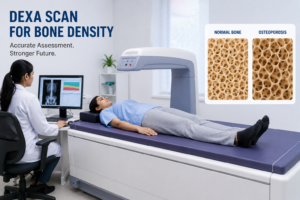
DEXA Scan Explained
A DEXA Scan (Dual-Energy X-ray Absorptiometry) is a specialized imaging test used to measure Bone Mineral Density (BMD).
The test helps:
- Detect osteoporosis
- Identify osteopenia (early bone loss)
- Assess fracture risk
- Monitor bone health over time
- Evaluate treatment effectiveness
A DEXA scan in Bangalore is painless, non-invasive, highly accurate, and uses very low radiation compared to conventional X-rays.
What is DEXA?
DEXA stands for Dual-Energy X-ray Absorptiometry.
It is considered the gold standard test for evaluating bone density and assessing the risk of osteoporosis.
Unlike a regular X-ray, which mainly shows bone structure, a DEXA scan measures the mineral content inside bones. Therefore, it can detect bone loss long before fractures occur.
How Does a DEXA Scan Work?
The scan uses two low-dose X-ray beams.
These beams pass through the bones and measure how much radiation is absorbed.
As a result, the scanner calculates bone mineral density with remarkable accuracy.
Which Areas Are Usually Scanned?
A DEXA scan commonly evaluates:
Hip Bones
Hip fractures are among the most serious complications of osteoporosis.
Spine
Spinal bone density helps identify early bone loss.
Forearm
In certain cases, forearm measurements may also be recommended.
Therefore, multiple sites may be assessed to provide a comprehensive picture of bone health.
Why Bone Health Matters for Women
Women face a significantly higher risk of osteoporosis compared to men.
Consequently, bone health monitoring becomes especially important throughout adulthood and after menopause.
Women Naturally Have Lower Bone Mass
Generally, women have smaller and thinner bones than men.
As a result, they may reach osteoporosis thresholds sooner.
Hormonal Changes Affect Bone Density
Estrogen plays a vital role in maintaining bone strength.
However, estrogen levels decline during menopause.
Consequently, bone loss often accelerates after menopause.
Longer Life Expectancy Increases Risk
Women typically live longer than men.
Therefore, they spend more years at risk for osteoporosis-related complications.
Different Life Stages of Bone Health
Bone health is important at every age.
Building the Bone
During childhood and early adulthood, bones gain strength and density.
Therefore, adequate nutrition is crucial during these years.
Middle Age
Bone loss may begin gradually.
Consequently, maintaining calcium and Vitamin D intake becomes increasingly important.
Menopause and Beyond
The first few years after menopause often involve rapid bone loss.
As a result, many women become candidates for bone density testing.
Common Causes of Bone Loss
Several factors can contribute to declining bone density.
Calcium Deficiency
Calcium is essential for strong bones.
Without sufficient calcium, the body may draw calcium from bones.
Vitamin D Deficiency
Vitamin D helps the body absorb calcium effectively.
Therefore, low Vitamin D levels can negatively affect bone strength.
Sedentary Lifestyle
Weight-bearing exercise helps maintain bone density.
However, prolonged inactivity can accelerate bone loss.
Smoking and Alcohol
Both smoking and excessive alcohol consumption may weaken bones over time.
Family History
Genetics can also influence osteoporosis risk.
Consequently, women with a family history of osteoporosis may require earlier screening.
Bangalore Women’s Health and Bone Density
Despite living in a sunny city, Vitamin D deficiency remains surprisingly common among Bangalore women.
Indoor Work Culture
Many professionals spend most of their day indoors.
As a result, sunlight exposure is often inadequate.
Sedentary Lifestyle
Long office hours reduce opportunities for physical activity.
Consequently, bone-strengthening exercise may become limited.
Nutritional Gaps
Busy schedules sometimes lead to poor dietary habits.
Therefore, essential nutrients required for bone health may be lacking.
Increasing Awareness
Fortunately, awareness regarding preventive healthcare is improving among women in Bangalore.
As a result, more individuals are choosing bone density screening before symptoms develop.
Who Should Get a DEXA Scan?
While the test can be beneficial for many individuals, certain groups may benefit even more.
Women Above 50 Years
Bone density naturally decreases with age.
Therefore, screening becomes increasingly important.
Postmenopausal Women
Rapid bone loss often occurs after menopause.
Women with Frequent Fractures
Fractures after minor injuries may indicate weakened bones.
Women with Low Body Weight
Lower body weight is associated with increased osteoporosis risk.
Women with Vitamin D Deficiency
Persistent deficiency may negatively impact bone health.
Women with a Family History of Osteoporosis
Genetic predisposition can increase risk.
Benefits of Early Bone Density Testing
Early detection offers several advantages.
Prevent Fractures
Identifying low bone density early allows preventive measures to be implemented.
Better Treatment Planning
Healthcare providers can recommend targeted interventions.
Monitor Bone Health Progress
Repeat testing helps track improvements or progression.
Improve Long-Term Quality of Life
Strong bones support mobility, independence, and overall well-being.
Understanding DEXA Scan Results
DEXA scan results are typically reported using T-scores.
Normal Bone Density
A normal score indicates healthy bone density.
Osteopenia
Osteopenia refers to lower-than-normal bone density but not severe enough to be classified as osteoporosis.
Osteoporosis
Osteoporosis indicates significant bone loss and increased fracture risk.
Therefore, treatment and lifestyle modifications may be recommended.
Cost of DEXA Scan in Bangalore
One of the most common questions patients ask relates to cost.
Factors Affecting DEXA Scan Cost
Several factors may influence pricing:
- Diagnostic center location
- Technology used
- Reporting standards
- Additional services included
Is a DEXA Scan in Bangalore Worth It?
Considering its ability to detect bone loss early and prevent future complications, many healthcare professionals consider it a valuable preventive health investment.
Furthermore, early diagnosis may help reduce future treatment costs associated with fractures and osteoporosis-related complications.
Why Choose Prima Diagnostics?
When it comes to bone health assessment, accuracy and reliability are essential.
At Prima Diagnostics, patients benefit from:
Advanced Diagnostic Technology
Modern equipment supports precise bone density measurement.
Experienced Healthcare Professionals
Qualified experts help ensure accurate interpretation.
Patient-Centric Care
The focus remains on comfort, convenience, and quality service.
Timely Reporting
Fast turnaround times help support prompt medical decisions.
Comprehensive Health Testing
Bone health evaluations can be combined with additional preventive health screenings.
Frequently Asked Questions (FAQs)
Is a DEXA scan in Bangalore painful?
No. A DEXA scan is completely painless and non-invasive.
How long does a DEXA scan take?
Most scans are completed within 10 to 20 minutes.
Is radiation exposure safe?
Yes. A DEXA scan uses extremely low levels of radiation.
Do women need a DEXA scan before menopause?
In some cases, yes. Women with risk factors such as family history, low body weight, or chronic medical conditions may benefit from earlier screening.
How often should I have a DEXA scan?
The frequency depends on your age, risk factors, and previous results. Your healthcare provider can recommend an appropriate schedule.
Can a DEXA scan detect osteoporosis?
Yes. It is considered the gold standard test for diagnosing osteoporosis and assessing fracture risk.
Conclusion
Bone health is an essential part of overall wellness, yet it is often overlooked until problems arise. Fortunately, a DEXA scan in Bangalore provides a simple, accurate, and reliable way to assess bone density and identify early signs of osteoporosis.
Moreover, women face unique bone health challenges due to hormonal changes, nutritional deficiencies, and aging. Therefore, proactive screening can play a significant role in protecting long-term health and preventing fractures.
Whether you are approaching menopause, have risk factors for osteoporosis, or simply want to understand your bone health better, a DEXA scan can provide valuable insights and help you make informed healthcare decisions.