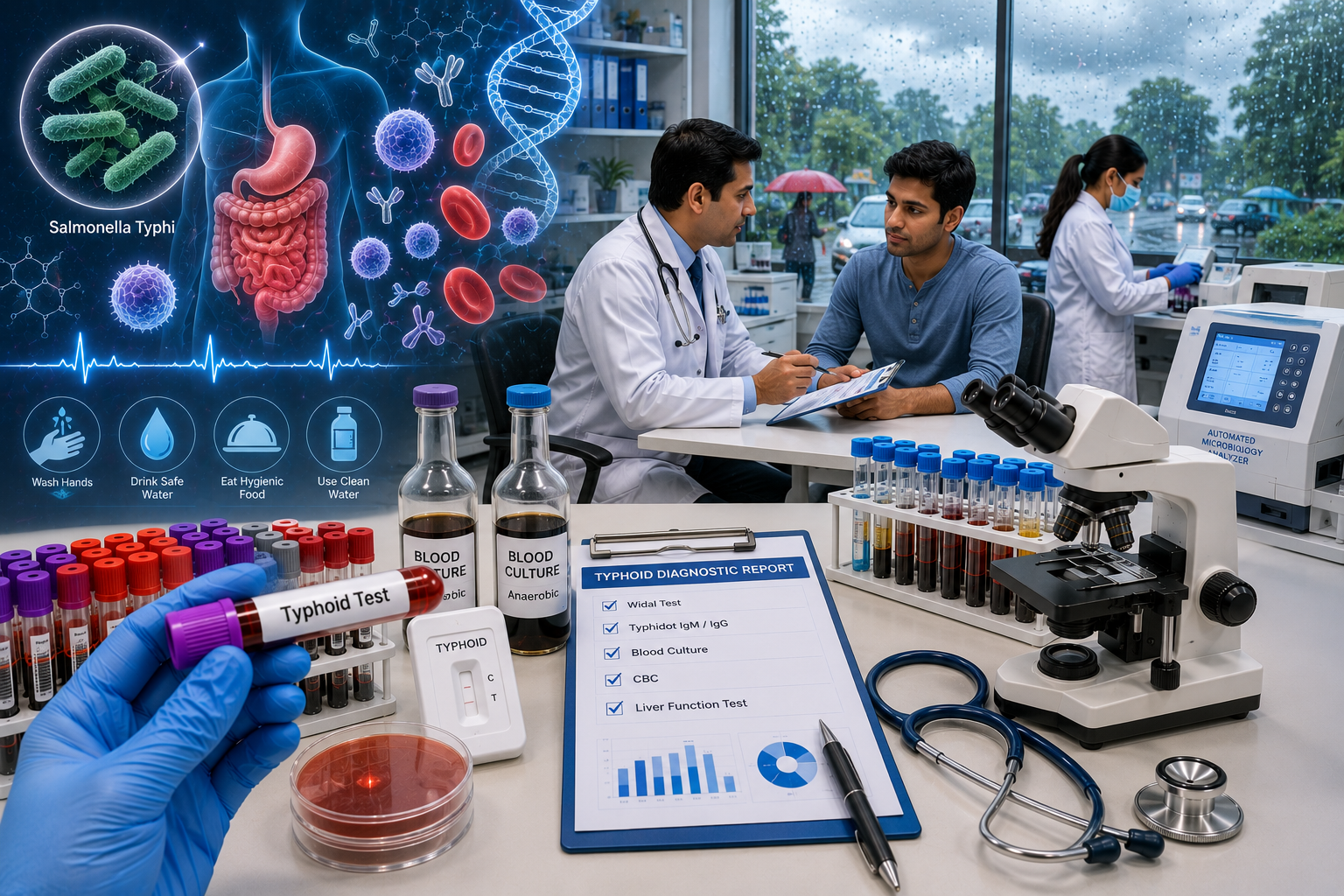
The arrival of the monsoon in Bengaluru brings welcome relief from the summer heat. However, along with cooler weather, the rainy season also increases the risk of several waterborne diseases, including
typhoid in Bengaluru. Heavy rainfall, waterlogging, contaminated drinking water, unhygienic street food, and poor sanitation create favorable conditions for the spread of
Salmonella Typhi, the bacteria responsible for typhoid.
Consequently, every year, hospitals and diagnostic laboratories across Bengaluru see an increase in patients with prolonged fever, stomach discomfort, weakness, and digestive symptoms during the monsoon months. Since these symptoms can also resemble dengue, malaria, viral fever, or food poisoning, laboratory testing becomes essential for an accurate diagnosis.
If you are searching for information about
typhoid in Bengaluru monsoon, one of the biggest questions you may have is whether to choose a
Widal test or a
Blood Culture. While both tests are used in typhoid evaluation, they serve different purposes and are recommended at different stages of illness.
In this guide, you'll learn why typhoid cases increase during the rainy season, recognize common symptoms, understand the differences between the Widal test and Blood Culture, know when each test is appropriate, learn preventive measures, and discover why early diagnosis is important.
This Blog Includes:
- Article Title: Typhoid in Bengaluru Monsoon – Widal vs Blood Culture, Which to Trust?
- Publisher: Prima Diagnostics
- Type: Seasonal Healthcare Blog
- Topics Covered: Typhoid Fever, Bengaluru Monsoon, Waterborne Diseases, Widal Test, Blood Culture, Typhoid Symptoms, Typhoid Diagnosis, Water Contamination, Street Food Safety, Borewell Water, Tanker Water, Home Sample Collection, and Patient Education.
- Services Covered: Widal Test, Blood Culture, Fever Profile Testing, Complete Blood Count (CBC), Dengue Testing, Malaria Testing, C-Reactive Protein (CRP) Test, Home Sample Collection, Digital Reports, Preventive Health Screening, and Laboratory Diagnostics.
- Tests Included: Widal Test, Blood Culture, Complete Blood Count (CBC), Blood Culture with Culture & Sensitivity (when indicated), Dengue Tests, Malaria Tests, CRP Test, Typhoid Fever Evaluation, and Additional Fever Investigations as Recommended by Healthcare Providers.
- Preparation Guidance: Follow your healthcare provider's instructions, inform the laboratory about recent antibiotic use, maintain adequate hydration, prepare appropriately for home sample collection if booked, and seek prompt medical evaluation for persistent fever.
- Service Focus: Typhoid Diagnosis, Seasonal Fever Investigation, Microbiology Testing, Home Sample Collection, Laboratory Diagnostics, Preventive Healthcare, Infectious Disease Testing, and Patient Education.
- FAQ Section: Included.
 Widal vs Blood Culture for Typhoid in Bengaluru Diagnosis
For suspected
typhoid fever,
Blood Culture is generally considered the preferred laboratory method during the
early stage of illness, especially before antibiotics are started, because it detects the
actual Salmonella Typhi bacteria. In contrast, the
Widal test detects antibodies produced by the body's immune system and may be helpful in appropriate clinical situations. Doctors choose the most suitable test based on the duration of fever, symptoms, antibiotic use, and overall clinical assessment.
What Is Typhoid Fever?
Typhoid fever is a bacterial infection caused by
Salmonella Typhi.
The infection primarily spreads through:
- Contaminated drinking water
- Contaminated food
- Poor hand hygiene
- Inadequate sanitation
Unlike many viral fevers, typhoid requires prompt medical diagnosis and appropriate treatment to reduce the risk of complications.
Therefore, persistent fever should never be ignored during the monsoon season.
Why Does Typhoid in Bengaluru Increase During the Monsoon?
The rainy season creates several conditions that increase the spread of waterborne infections.
Water Contamination
Heavy rainfall may contaminate drinking water sources.
Residents relying on borewell or tanker water should ensure that water is properly filtered or boiled before consumption.
Street Food Consumption
Monsoon weather often encourages people to enjoy roadside snacks.
However, food prepared using contaminated water or under poor hygienic conditions can increase the risk of typhoid.
Overflowing Drainage Systems
Flooded roads and overflowing drains may contaminate nearby water supplies.
Increased Bacterial Growth
Warm, humid conditions support bacterial survival when food hygiene is compromised.
Who Is at Higher Risk?
Although anyone can develop typhoid, certain groups may have a higher risk.
These include:
- School-going children
- College students
- Working professionals who frequently eat outside
- Travellers
- Individuals consuming untreated water
- Families using tanker or borewell water without proper purification
Consequently, preventive measures become especially important during the rainy season.
Symptoms of Typhoid
Typhoid symptoms usually develop gradually.
Common symptoms include:
- Persistent high fever
- Headache
- Weakness
- Fatigue
- Abdominal pain
- Poor appetite
- Constipation or diarrhoea
- Nausea
- Body aches
In some cases, symptoms worsen over several days.
Therefore, persistent fever lasting more than a few days should always be evaluated by a healthcare professional.
When Should You Suspect Typhoid in Bengaluru?
Medical evaluation should be considered if you have:
- Fever lasting several days
- Fever that does not improve
- Recent consumption of unsafe food or water
- Recent travel to high-risk areas
- Persistent stomach discomfort
- Ongoing weakness and fatigue
Because dengue, malaria, and viral infections can present similarly, laboratory testing helps determine the underlying cause.
Why Laboratory Testing Is Essential
Symptoms alone cannot reliably distinguish typhoid from other common infections.
Laboratory investigations help doctors:
- Confirm infection
- Guide treatment
- Differentiate typhoid from other fevers
- Reduce unnecessary antibiotic use
- Monitor disease progression
Early diagnosis also supports faster medical decision-making.
What Is the Widal Test?
The
Widal test is a blood test that measures antibodies produced by the body's immune response against
Salmonella Typhi.
Instead of detecting the bacteria directly, it evaluates whether your immune system has produced antibodies associated with typhoid infection.
Doctors may recommend the Widal test:
- During prolonged fever evaluation
- When clinically appropriate
- Along with other laboratory findings
However, Widal test results should always be interpreted together with your symptoms, medical history, and clinical examination.
Advantages of the Widal Test
Some benefits include:
- Simple blood sample
- Widely available
- Affordable
- Useful in appropriate clinical settings
- Quick laboratory processing
Limitations of the Widal Test
It is equally important to understand that:
- It does not directly detect bacteria.
- Results require careful clinical interpretation.
- It should not be used as the sole basis for diagnosis.
Blood Culture – The Gold Standard
A
Blood Culture attempts to detect and grow the actual
Salmonella Typhi bacteria from a blood sample.
Because it identifies the organism directly, it is generally regarded as the preferred diagnostic method during the
early phase of illness, particularly before antibiotics have been started.
Why Is Blood Culture More Reliable?
Blood Culture offers several important advantages.
Detects Live Bacteria
Unlike antibody tests, Blood Culture identifies the organism itself.
Confirms Infection
A positive Blood Culture provides strong laboratory evidence of bacterial infection.
Supports Treatment Decisions
When indicated, additional microbiology testing may help doctors select appropriate antibiotic therapy.
Limitations of Blood Culture
Although Blood Culture is highly valuable, it also has some limitations.
- It usually takes longer for results.
- Antibiotics started before sample collection may reduce the chance of detecting bacteria.
- It requires specialised microbiology laboratory processing.
Widal vs Blood Culture – Which One Should You Choose?
Choosing between the two depends on several factors.
| Widal Test |
Blood Culture |
| Detects antibodies |
Detects live bacteria |
| Faster results |
Longer processing time |
| More affordable |
Generally higher cost |
| Useful in selected clinical situations |
Preferred during early illness before antibiotics |
| Requires careful interpretation |
Direct evidence when positive |
Ultimately, your doctor will recommend the most appropriate investigation based on:
- Duration of fever
- Clinical symptoms
- Antibiotic use
- Medical history
- Physical examination
Therefore, patients should avoid selecting a test based solely on convenience or cost.
Cost of Typhoid in Bengaluru
The cost of typhoid investigations depends on:
- Type of test
- Laboratory methodology
- Home sample collection
- Health packages
Generally:
For the latest pricing and package offers, patients can contact Prima Diagnostics directly.
Home Sample Collection
Patients experiencing fever often prefer testing without travelling.
Prima Diagnostics offers
home sample collection for eligible typhoid-related laboratory tests across Bengaluru.
Benefits include:
- Comfortable testing from home
- Reduced travel while unwell
- Professional sample collection
- Flexible scheduling
- Safe sample handling
- Digital reports
This service is particularly helpful for children, senior citizens, and patients with persistent fever.
Preventing Typhoid in Bengaluru During the Monsoon
Although laboratory testing is essential for diagnosis, prevention remains the best strategy.
Drink Safe Water
Always drink filtered, boiled, or purified water.
Be Careful with Borewell and Tanker Water
Ensure that stored water is properly treated before use.
Avoid Unsafe Street Food
Choose freshly cooked food from hygienic establishments.
Wash Hands Regularly
Hand hygiene significantly reduces infection risk.
Maintain Food Hygiene
Wash fruits and vegetables thoroughly before eating.
Seek Early Medical Advice
Persistent fever should always be evaluated promptly.
Why Choose Prima Diagnostics?
Prima Diagnostics provides dependable laboratory testing with:
- Widal Test
- Blood Culture
- Fever Profile
- CBC
- Dengue Testing
- Malaria Testing
- CRP
- Home Sample Collection
- Digital Reports
- Experienced Laboratory Professionals
- Advanced Microbiology Laboratory Support
- Quality-Assured Diagnostic Services
Whether you require evaluation for typhoid or other seasonal infections, Prima Diagnostics offers reliable diagnostic services across Bengaluru.
Frequently Asked Questions
Which is better—Widal or Blood Culture?
Blood Culture is generally preferred during the early stage of illness before antibiotics because it detects the actual bacteria. The Widal test measures antibodies and is useful in appropriate clinical settings.
Can typhoid spread through contaminated water?
Yes. Drinking contaminated water is one of the most common routes of typhoid transmission.
Is street food safe during the monsoon?
Street food prepared under poor hygienic conditions may increase the risk of typhoid and other foodborne illnesses.
Can I book home sample collection?
Yes. Prima Diagnostics offers home sample collection for eligible laboratory investigations across Bengaluru.
How long do Blood Culture reports take?
Blood Culture reports generally take longer than Widal testing because bacterial growth and laboratory identification require additional processing time.
Where can I get typhoid testing in Bengaluru?
Prima Diagnostics provides Widal testing, Blood Culture, fever profile investigations, home sample collection, and digital reports across Bengaluru.
Conclusion
Typhoid in Bengaluru remains an important health concern during the
monsoon, particularly when contaminated water, unhygienic food, and poor sanitation increase the risk of infection. While symptoms such as persistent fever, weakness, and abdominal discomfort should never be ignored, laboratory testing plays a crucial role in distinguishing typhoid from other seasonal illnesses like dengue, malaria, or viral fever.
Although the
Widal test and
Blood Culture are both valuable investigations, they serve different purposes. Blood Culture is generally preferred during the early stage of illness because it detects the bacteria directly, whereas the Widal test measures the body's immune response and should always be interpreted in the appropriate clinical context. By seeking timely medical advice, following safe food and water practices, and choosing reliable laboratory testing, patients can support early diagnosis and appropriate treatment. Prima Diagnostics offers trusted typhoid testing, home sample collection, experienced laboratory professionals, and digital reports across Bengaluru to help you stay protected throughout the monsoon season.