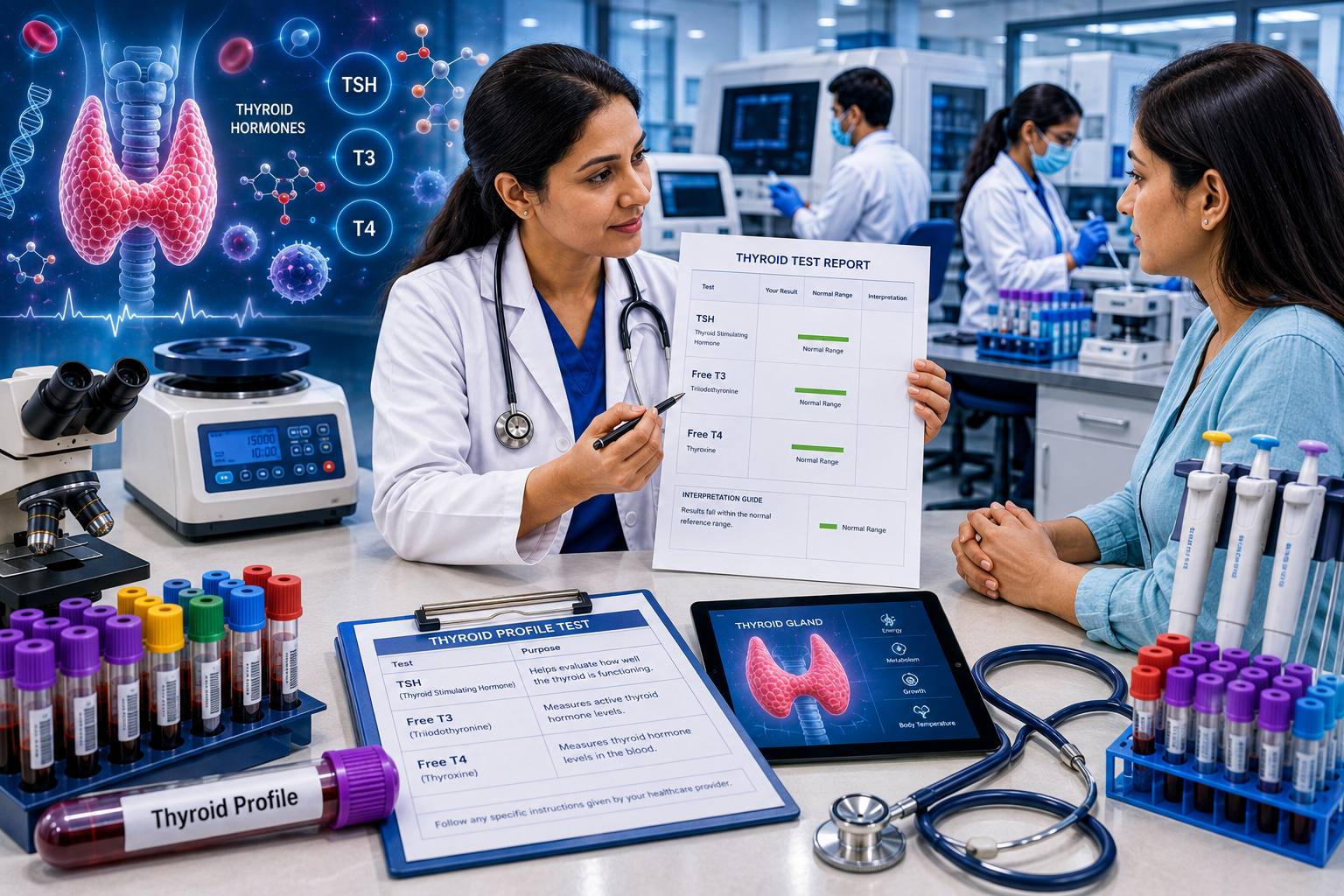
Feeling unusually tired, gaining weight despite eating normally, losing hair, or experiencing unexplained anxiety? These symptoms may sometimes be linked to a thyroid disorder. Since thyroid conditions often develop gradually, many people ignore the early warning signs until the symptoms begin affecting their daily lives. Fortunately, a simple blood test can evaluate thyroid function. However, after receiving the report, many patients are left wondering,
"Are my thyroid levels normal?" Understanding the
Thyroid Test Normal Range helps you interpret your results and know when further medical evaluation may be necessary.
Although your doctor should always interpret your report in the context of your symptoms and medical history, learning what
TSH, T3, and T4 represent—and knowing their normal reference ranges—can help you better understand your thyroid health.
In this guide, we'll explain the
Thyroid Test Normal Range, provide easy-to-read charts, discuss thyroid levels during pregnancy, compare hypothyroidism and hyperthyroidism, and answer common patient questions.
This Blog Includes:
- Article Title: Thyroid Test Normal Range Chart – TSH, T3, T4 Values Explained
- Publisher: Prima Diagnostics
- Type: Chart / Normal Range Healthcare Blog
- Topics Covered: Thyroid Function, TSH, Free T3, Free T4, Thyroid Test Normal Range, Adult Thyroid Reference Values, Pregnancy Thyroid Ranges, Hypothyroidism, Hyperthyroidism, Borderline TSH, Thyroid Symptoms, Thyroid Screening, Hair Loss, Fatigue, Family History, and Thyroid Testing.
- Services Covered: Thyroid Profile, TSH Test, Free T3 Test, Free T4 Test, Comprehensive Thyroid Screening, Preventive Health Check-ups, Home Sample Collection, Digital Reports, and Laboratory Diagnostics.
- Tests Included: Thyroid Stimulating Hormone (TSH), Free T3, Free T4, Complete Thyroid Profile, Thyroid Antibody Tests (when clinically indicated), and Routine Thyroid Function Tests.
- Normal Range Information: Adult TSH Reference Range, Free T3 Reference Range, Free T4 Reference Range, Pregnancy-Specific Thyroid Ranges, and Interpretation Guidance for Borderline Values.
- Preparation Guidance: Fasting is generally not required, medication timing guidance (as advised by healthcare providers), hydration recommendations, home sample collection preparation, and follow-up testing intervals.
- Service Focus: Thyroid Disease Screening, Preventive Health Screening, Hormonal Health Assessment, Laboratory Diagnostics, Home Sample Collection, Routine Health Monitoring, and Patient Education.
- Healthcare Services: Thyroid Testing, Blood Testing, Hormone Testing, Preventive Health Screening, Home Sample Collection, Laboratory Diagnostics, Routine Health Investigations, Wellness Testing, and Patient Education.
- FAQ Section: Included.
 TSH, T3, T4 Thyroid Test Normal Range Chart
The
Thyroid Test Normal Range for adults generally includes
TSH: 0.4–4.0 mIU/L,
Free T4: 0.8–1.8 ng/dL, and
Free T3: 2.3–4.2 pg/mL. However, reference ranges may vary slightly between laboratories. Doctors interpret these values together with symptoms, medical history, age, pregnancy status, and other clinical findings.
What Does the Thyroid Gland Do?
The thyroid is a small butterfly-shaped gland located in the front of your neck.
Although small, it plays a major role in regulating:
- Metabolism
- Body temperature
- Energy production
- Heart rate
- Brain function
- Digestion
- Weight management
Therefore, even minor thyroid hormone imbalances can affect multiple organs throughout the body.
What Do TSH, T3, and T4 Mean?
Understanding each thyroid hormone makes interpreting your report much easier.
TSH (Thyroid Stimulating Hormone)
TSH is produced by the pituitary gland in the brain.
Its primary role is to signal the thyroid gland to produce thyroid hormones.
If thyroid hormone levels fall, TSH usually rises.
Conversely, if thyroid hormone levels become too high, TSH usually decreases.
T4 (Thyroxine)
T4 is the primary hormone produced by the thyroid gland.
Although much of it remains inactive initially, it later converts into T3 inside various tissues.
Doctors commonly measure:
Free T4 is often more clinically useful.
T3 (Triiodothyronine)
T3 is the active thyroid hormone that influences metabolism throughout the body.
Although smaller amounts are produced directly by the thyroid gland, much of T3 is created by converting T4 into its active form.
Thyroid Test Normal Range Chart (Adults)
The following values represent commonly accepted adult reference ranges. However, slight variations may occur depending on the laboratory.
| Test |
Typical Normal Range |
| TSH |
0.4–4.0 mIU/L |
| Free T4 |
0.8–1.8 ng/dL |
| Free T3 |
2.3–4.2 pg/mL |
Because laboratory methods differ, always refer to the reference range provided with your own report.
Thyroid Test Normal Range During Pregnancy
Pregnancy naturally changes thyroid hormone requirements.
Therefore, doctors often use trimester-specific reference ranges.
Generally:
First Trimester
Lower TSH values may be considered normal.
Second Trimester
TSH gradually increases.
Third Trimester
Levels continue adjusting toward pre-pregnancy values.
For this reason, pregnant women should never compare their reports with standard adult ranges without consulting their healthcare provider.
Hypothyroidism vs Hyperthyroidism
Understanding how thyroid values change in different conditions helps explain laboratory reports.
| Condition |
TSH |
T3 |
T4 |
| Normal Thyroid Function |
Normal |
Normal |
Normal |
| Hypothyroidism |
High |
Low or Normal |
Low |
| Hyperthyroidism |
Low |
High |
High |
Although these patterns are common, your doctor may order additional tests if results are borderline or unusual.
Why Borderline TSH Matters
Many patients assume only extremely abnormal thyroid results require attention.
However, mildly elevated or mildly reduced TSH values may still deserve monitoring.
Borderline thyroid function can occur because of:
- Early hypothyroidism
- Early hyperthyroidism
- Pregnancy
- Certain medications
- Temporary illness
- Autoimmune thyroid disease
Therefore, doctors sometimes recommend repeat testing before confirming a diagnosis.
Symptoms That May Indicate a Thyroid Test is Needed
Although symptoms vary from person to person, common warning signs include:
Persistent Fatigue
Feeling tired despite adequate sleep may indicate thyroid dysfunction.
Unexplained Weight Changes
Both unexpected weight gain and unexplained weight loss deserve medical evaluation.
Hair Loss
Thyroid disorders commonly contribute to excessive hair fall.
Mood Changes
Depression, anxiety, irritability, or difficulty concentrating may sometimes be associated with thyroid hormone imbalance.
Feeling Cold or Excessively Hot
Changes in body temperature tolerance may reflect altered metabolism.
Constipation
Hypothyroidism often slows digestion.
Rapid Heartbeat
Hyperthyroidism may increase heart rate and palpitations.
Menstrual Irregularities
Thyroid disorders frequently affect menstrual cycles and fertility.
Family History of Thyroid Disease
Individuals with close relatives who have thyroid disorders may benefit from periodic screening.
Who Should Consider Regular Thyroid Testing?
Routine thyroid testing may be recommended for:
- Women above 35 years
- Pregnant women
- Individuals with autoimmune diseases
- Patients with diabetes
- People with a family history of thyroid disorders
- Individuals experiencing persistent symptoms
- Senior citizens
Furthermore, many healthcare providers recommend thyroid screening during preventive health check-ups.
Is Fasting Required for a Thyroid Test?
No.
Most thyroid blood tests
do not require fasting.
However:
- Drink plenty of water.
- Follow your doctor's instructions.
- If you take thyroid medication, ask your doctor about the best timing for the blood sample.
How Often Should You Repeat a Thyroid Test?
Testing frequency depends on your diagnosis.
Generally:
Healthy Individuals
Only when advised during routine screening.
Patients on Thyroid Medication
Typically every
6–12 weeks after dose adjustments, and then periodically once levels are stable.
Pregnancy
Doctors may recommend more frequent monitoring throughout pregnancy.
Borderline Thyroid Results
Repeat testing may be advised after several weeks or months.
Lifestyle Factors That Can Affect Thyroid Health
Although thyroid disorders often result from autoimmune or genetic causes, lifestyle may also influence overall thyroid health.
Important factors include:
- Stress
- Sleep quality
- Nutrition
- Iodine intake
- Medication adherence
- Regular health check-ups
For many working professionals in Bengaluru, managing stress and maintaining regular health screenings can support overall wellness.
Why Choose Prima Diagnostics?
Prima Diagnostics provides reliable thyroid testing with:
- Complete Thyroid Profile
- TSH Testing
- Free T3
- Free T4
- Experienced Laboratory Professionals
- Home Sample Collection
- Digital Reports
- Affordable Health Packages
- Modern Diagnostic Equipment
Whether you need routine screening or ongoing thyroid monitoring, Prima Diagnostics offers accurate laboratory services across Bengaluru.
Frequently Asked Questions
What is the normal TSH range?
The normal TSH range for most adults is approximately
0.4–4.0 mIU/L, although laboratories may use slightly different reference ranges.
Is TSH alone enough to diagnose thyroid disease?
Not always. Doctors often interpret TSH together with Free T3, Free T4, symptoms, and medical history.
Does thyroid testing require fasting?
No. Most thyroid blood tests do not require fasting.
Can stress affect thyroid hormones?
Stress may influence overall hormonal balance and symptoms, although thyroid disorders require proper medical evaluation.
How often should thyroid patients test?
Patients taking thyroid medication usually require periodic monitoring based on their doctor's recommendations.
Can thyroid disorders cause hair loss?
Yes. Both hypothyroidism and hyperthyroidism may contribute to excessive hair fall.
Where can I get a thyroid test in Bengaluru?
Prima Diagnostics offers comprehensive thyroid testing with home sample collection and digital reports across Bengaluru.
Conclusion
Understanding the
Thyroid Test Normal Range helps you make sense of your laboratory report, but it is only one part of the overall picture. TSH, T3, and T4 values should always be interpreted alongside your symptoms, medical history, and your healthcare provider's clinical assessment. Additionally, because thyroid hormone requirements can vary during pregnancy and certain medical conditions, professional interpretation is essential.
If you are experiencing persistent tiredness, unexplained weight changes, hair loss, mood changes, or have a family history of thyroid disorders, early testing can help identify potential issues before they progress. At Prima Diagnostics, you can access accurate thyroid testing, experienced laboratory professionals, convenient home sample collection, and timely digital reports to support better thyroid health across Bengaluru.