
If you experience muscle cramps, poor sleep, tiredness, or frequent weakness, magnesium may be one of the nutrients worth discussing with a healthcare professional. In particular, people dealing with Bangalore stress, long IT work hours and irregular sleep schedules may search for ways to understand whether their symptoms could be related to nutritional or metabolic factors. A magnesium test measures the amount of magnesium in a blood sample. However, a magnesium result should not be interpreted on its own because symptoms such as cramps, fatigue, and sleep problems can have many different causes.
Therefore, if your doctor suspects magnesium imbalance because of your symptoms, medications, dietary intake or an underlying condition, testing may provide useful information.
This Blog Includes:
- Article Title: Magnesium Test – The Forgotten Mineral for Sleep and Cramps
- Publisher: Prima Diagnostics
- Type: Test Explainer Healthcare Blog
- Topics Covered: Magnesium Test, Magnesium Levels, Magnesium Deficiency, Low Magnesium Symptoms, Muscle Cramps, Poor Sleep, Muscle Weakness, Stress, Electrolytes, Magnesium-Rich Foods, Magnesium Supplements, Magnesium Testing, Test Preparation, Test Cost and Patient Education.
- Services Covered: Magnesium Testing, Blood Testing, Electrolyte Testing, Preventive Health Testing, Nutritional Assessment, Home Sample Collection and Laboratory Diagnostics.
- Magnesium Measurement Guidance: Explains that serum magnesium is commonly measured in mg/dL and that laboratory-specific reference ranges should be used when interpreting results.
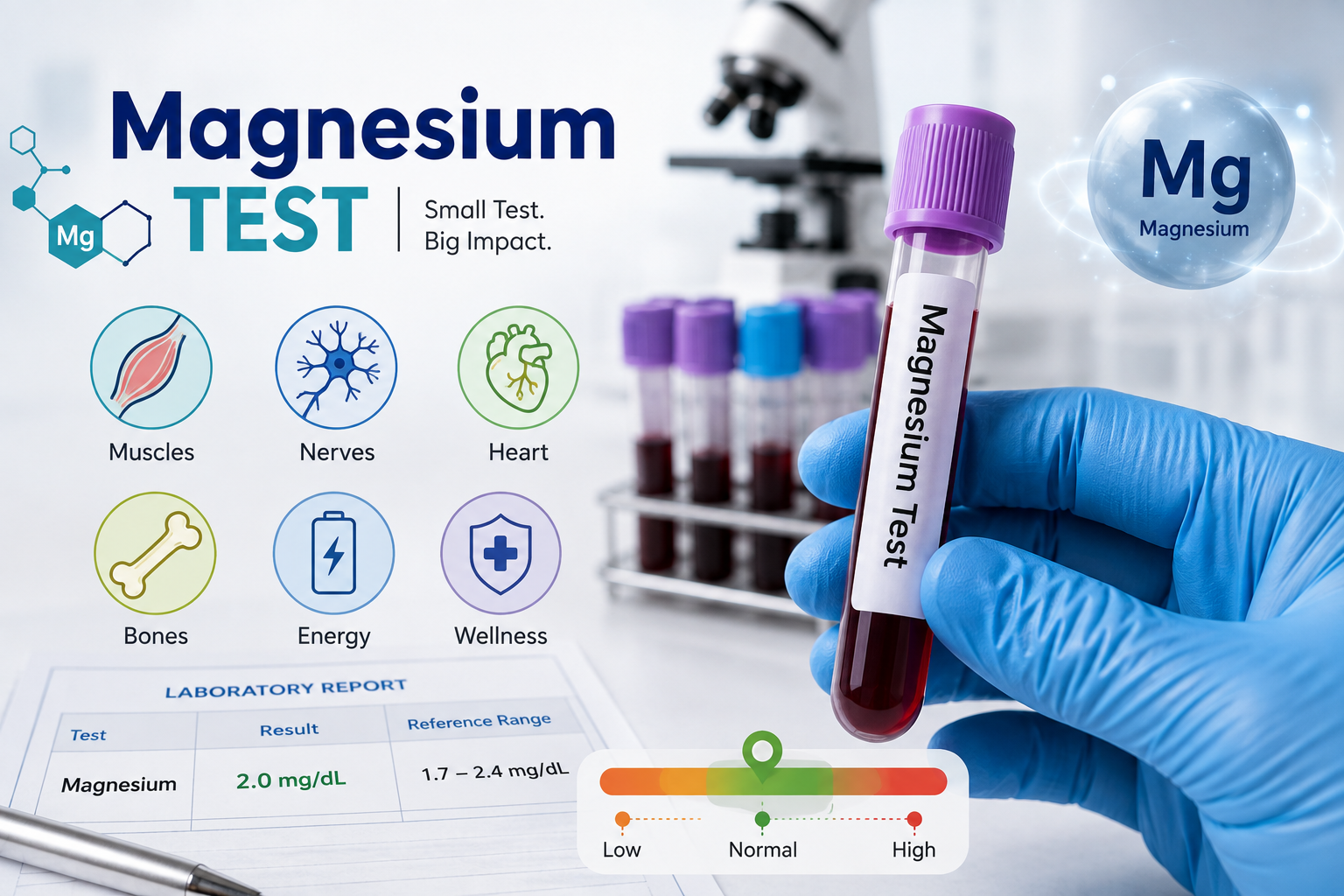
- Normal Range Guidance: Provides a general educational adult serum magnesium reference range of approximately 1.7–2.2 mg/dL, while emphasizing that reference intervals may differ between laboratories.
- Deficiency Guidance: Explains that a magnesium result below the laboratory reference range may indicate hypomagnesemia and should be interpreted alongside symptoms, medical history, medications and other laboratory findings.
- Symptom Guidance: Covers muscle cramps, spasms, weakness, fatigue, tremors, poor sleep and other symptoms that may occur with significant magnesium deficiency, while clarifying that these symptoms have multiple possible causes.
- Service Focus: Magnesium Testing, Blood Testing, Electrolyte Assessment, Nutritional Assessment, Preventive Health Screening, Home Sample Collection and Laboratory Diagnostics.
- FAQ Section: Included.

Low magnesium symptoms and normal range
Common symptoms associated with low magnesium can include muscle cramps, weakness, fatigue, tremors and, in more significant deficiency, abnormal heart rhythms or seizures. A commonly used adult serum magnesium reference range is approximately 1.7–2.2 mg/dL, although laboratory ranges can vary. Therefore, always interpret your result using the reference range provided by your laboratory.
What Does Magnesium Do?
Why Is Magnesium Important?
Magnesium is an essential mineral involved in hundreds of biochemical reactions in the body.
For example, it contributes to:
- Normal muscle function
- Nerve function
- Energy production
- Electrolyte balance
- Normal heart rhythm
- Bone health
- Protein synthesis
- Blood glucose regulation
Consequently, maintaining adequate magnesium levels is important for several body systems.
However, having symptoms does not necessarily mean that you have magnesium deficiency. Therefore, testing and clinical evaluation may be appropriate when there is a reason to suspect an imbalance.
Magnesium Test and Muscle Function
Why Can Low Magnesium Cause Cramps?
Magnesium helps regulate nerve and muscle activity. Consequently, significant magnesium deficiency can contribute to muscle cramps, spasms, tremors, or weakness.
Nevertheless, cramps can also occur because of dehydration, strenuous exercise, electrolyte disturbances, certain medications, and other medical conditions.
Therefore, recurrent cramps should not automatically be attributed to magnesium deficiency.
Magnesium and Sleep
Can Magnesium Affect Sleep?
Magnesium is involved in normal nerve and muscle function and interacts with several processes associated with relaxation and sleep.
As a result, inadequate magnesium status may be associated with sleep-related complaints in some people.
However, poor sleep does not automatically mean low magnesium.
For Bangalore IT professionals working late shifts or spending long hours in front of screens, sleep problems may instead be related to stress, irregular schedules, caffeine, screen exposure, or other factors.
Symptoms of Low Magnesium
Common Symptoms
Magnesium deficiency may not always cause obvious symptoms initially. However, as magnesium levels become significantly low, symptoms can include:
- Muscle cramps
- Muscle spasms
- Weakness
- Fatigue
- Tremors
- Loss of appetite
- Nausea
- Abnormal heart rhythms
Additionally, more severe deficiency can be associated with neurological symptoms.
Cramps and Muscle Tightness
Frequent muscle cramps, particularly when combined with other symptoms or risk factors, may prompt a healthcare professional to consider magnesium and other electrolyte measurements.
Nevertheless, cramps alone are not enough to diagnose magnesium deficiency.
Poor Sleep and Restlessness
If you regularly struggle to sleep, wake frequently or feel unrefreshed, magnesium status may sometimes be considered as part of a broader assessment.
However, sleep problems have numerous possible causes.
Therefore, lifestyle factors and other medical conditions should also be considered.
Anxiety-Like Symptoms and Stress
Stress can affect sleep, muscle tension and overall wellbeing.
Although magnesium has roles in normal nervous-system function, it would be inaccurate to assume that anxiety symptoms are caused by magnesium deficiency.
Consequently, people experiencing persistent anxiety or significant emotional symptoms should discuss them with an appropriate healthcare professional rather than relying on a mineral test alone.
Who Is at Risk of Low Magnesium?
People With Certain Medical Conditions
Magnesium deficiency can occur when the body loses excessive magnesium or does not absorb enough.
Risk may be increased in people with certain gastrointestinal disorders, kidney-related conditions or other medical problems.
Therefore, individuals with relevant medical conditions may require monitoring based on their doctor’s assessment.
People Taking Certain Medicines
Some medications can affect magnesium levels.
For example, certain diuretics and prolonged use of some acid-suppressing medicines may be associated with magnesium depletion.
However, medication should never be stopped or changed without medical advice.
People With Poor Dietary Intake
A diet consistently low in magnesium-rich foods may contribute to inadequate intake.
Additionally, excessive alcohol consumption can affect magnesium status.
Therefore, reviewing dietary habits can be useful when evaluating possible deficiency.
Magnesium Normal Range
What Is the Normal Magnesium Level?
A commonly used adult serum magnesium reference range is approximately:
1.7–2.2 mg/dL
However, the exact reference interval varies between laboratories and testing methods.
Therefore, when you receive your report, compare your result with the laboratory’s own reference range rather than relying only on a number found online.
What Does a Low Result Mean?
A result below the laboratory’s reference range may indicate hypomagnesemia, particularly when supported by clinical findings.
However, the result needs to be interpreted alongside:
- Symptoms
- Diet
- Medications
- Kidney function
- Other electrolyte levels
- Underlying medical conditions
Consequently, a low result does not automatically tell you why your magnesium is low.
Foods Rich in Magnesium
Natural Sources of Magnesium
Diet can provide magnesium through a variety of foods.
Good dietary sources include:
- Nuts and seeds
- Almonds
- Cashews
- Pumpkin seeds
- Spinach and other leafy greens
- Beans and legumes
- Whole grains
- Avocado
- Dark chocolate in moderation
Furthermore, choosing a varied diet can help provide several essential nutrients at the same time.
Should You Take Magnesium Supplements?
Not necessarily.
If your diet already provides sufficient magnesium, supplementation may not be needed.
Moreover, excessive magnesium supplementation can cause side effects, particularly gastrointestinal symptoms, and may be inappropriate for people with certain kidney problems.
Therefore, discuss supplementation with your healthcare professional if you suspect deficiency.
When Should You Take a Magnesium Test?
Testing for Persistent Muscle Cramps
If you experience recurring cramps, especially when they are unexplained or accompanied by weakness, your healthcare provider may consider magnesium testing.
Additionally, other investigations may be recommended depending on your symptoms.
Testing for Persistent Sleep Problems
A magnesium test may sometimes form part of a broader evaluation when nutritional or metabolic issues are suspected.
However, it should not be considered a standalone test for insomnia.
Testing When Electrolyte Problems Are Suspected
Magnesium is often considered alongside other electrolytes and relevant blood tests.
Depending on the clinical situation, your doctor may also consider:
- Calcium
- Potassium
- Sodium
- Kidney function tests
- Vitamin levels
- Blood glucose
Therefore, the appropriate combination depends on your symptoms and medical history.
Magnesium Test in Bangalore
Where Can You Book a Magnesium Test?
If your healthcare provider has recommended a magnesium test, you can check its availability at diagnostic laboratories in Bangalore.
For people with busy schedules, home sample collection can also be convenient where available.
Consequently, IT professionals experiencing recurring cramps or fatigue may be able to arrange testing without making an additional trip to a diagnostic centre.
Magnesium Test Cost in Bangalore
How Much Does a Magnesium Test Cost?
The price of a magnesium test can vary depending on the diagnostic laboratory, location, testing method and whether it is ordered as an individual test or as part of a larger health package.
Therefore, rather than relying on an old price found online, check the current test price before booking.
What Can Affect the Cost?
The final price may depend on:
- Individual magnesium test versus package
- Laboratory and location
- Additional electrolyte tests
- Home collection availability
- Health-checkup package pricing
Consequently, asking for the exact test name and total payable amount before booking can help avoid confusion.
Magnesium Test Preparation
Do You Need to Fast?
Fasting requirements depend on the test combination and the laboratory’s instructions.
A standalone magnesium test may not necessarily require fasting. However, if magnesium is being performed along with fasting glucose, lipid testing or other investigations, preparation requirements may differ.
Therefore, follow any specific instructions given by your healthcare provider or laboratory.
Magnesium Testing for Bangalore IT Workers
Long Hours, Stress and Muscle Cramps
Bangalore’s IT workforce often spends extended hours sitting at desks. Furthermore, late-night work, irregular meals, limited physical activity, and stress can affect overall wellbeing.
Consequently, recurring cramps or poor sleep may encourage people to look for nutritional explanations.
However, it is important to look at the bigger picture.
For example, inadequate hydration, prolonged sitting, excessive exercise, caffeine, poor sleep and other nutritional deficiencies can also contribute to symptoms.
Therefore, a magnesium test should be considered when clinically appropriate rather than as a universal explanation for every symptom.
What Tests Can Be Paired With Magnesium?
Electrolyte and Related Testing
Depending on your symptoms, a healthcare professional may recommend magnesium alongside other investigations.
For example:
- Calcium
- Potassium
- Sodium
- Kidney function tests
- Vitamin D
- CBC
- Blood glucose
Additionally, the exact combination should be based on the suspected cause rather than simply ordering every available test.
Frequently Asked Questions
What is a magnesium test?
A magnesium test is a blood test that measures the amount of magnesium in the blood. It may be ordered when a healthcare professional suspects magnesium imbalance or wants to investigate relevant symptoms or medical conditions.
What are low magnesium symptoms?
Possible symptoms include muscle cramps, weakness, fatigue, tremors and, in significant deficiency, abnormal heart rhythms or seizures. However, these symptoms can have many other causes.
What is the normal magnesium range?
A commonly used adult serum magnesium range is approximately 1.7–2.2 mg/dL, although laboratory reference ranges vary. Always use the range provided on your own report.
Can low magnesium cause muscle cramps?
Significant magnesium deficiency can contribute to muscle cramps and spasms. However, cramps can also result from dehydration, exercise, other electrolyte abnormalities, and several medical conditions.
Can magnesium deficiency cause poor sleep?
Magnesium is involved in normal nervous-system and muscle function, and inadequate status may be associated with sleep complaints. However, poor sleep has many possible causes and does not automatically indicate magnesium deficiency.
Should Bangalore IT workers test magnesium?
Not everyone needs magnesium testing. However, people with persistent unexplained cramps, relevant medical conditions, certain medication exposures or other risk factors may benefit from discussing testing with a healthcare professional.
How much does a magnesium test cost in Bangalore?
The cost varies according to the laboratory, location, testing arrangement, and whether additional tests are included. Check the current price before booking.
Can I book a magnesium test with home collection?
Home sample collection may be available in eligible Bangalore locations. Availability depends on the service area and appointment schedule.
Conclusion
Magnesium Test may be called a “forgotten mineral,” but it has an important role in muscle, nerve, energy and electrolyte function. Consequently, understanding magnesium status can be useful when persistent cramps, weakness or other symptoms raise a clinical concern.
At the same time, low magnesium is not the only explanation for cramps, poor sleep or stress-related symptoms. Therefore, testing should be interpreted alongside your symptoms, medical history, medications and other laboratory findings.
For Bangalore residents, including IT professionals dealing with long working hours, poor sleep or recurring muscle cramps, a magnesium test can be considered when recommended by a healthcare professional.
Before booking, check the current magnesium test cost, preparation requirements, availability and home collection options. For diagnostic testing and laboratory services, explore Prima Diagnostics.