📍Your CentreSelect Centre

How to Read Your Blood Test Report – A Simple Guide for Beginners

Getting a blood test report can feel confusing, especially when it contains dozens of numbers, abbreviations, reference ranges, and H or L flags. However, you do not need to be a medical expert to understand the basic structure of your report.

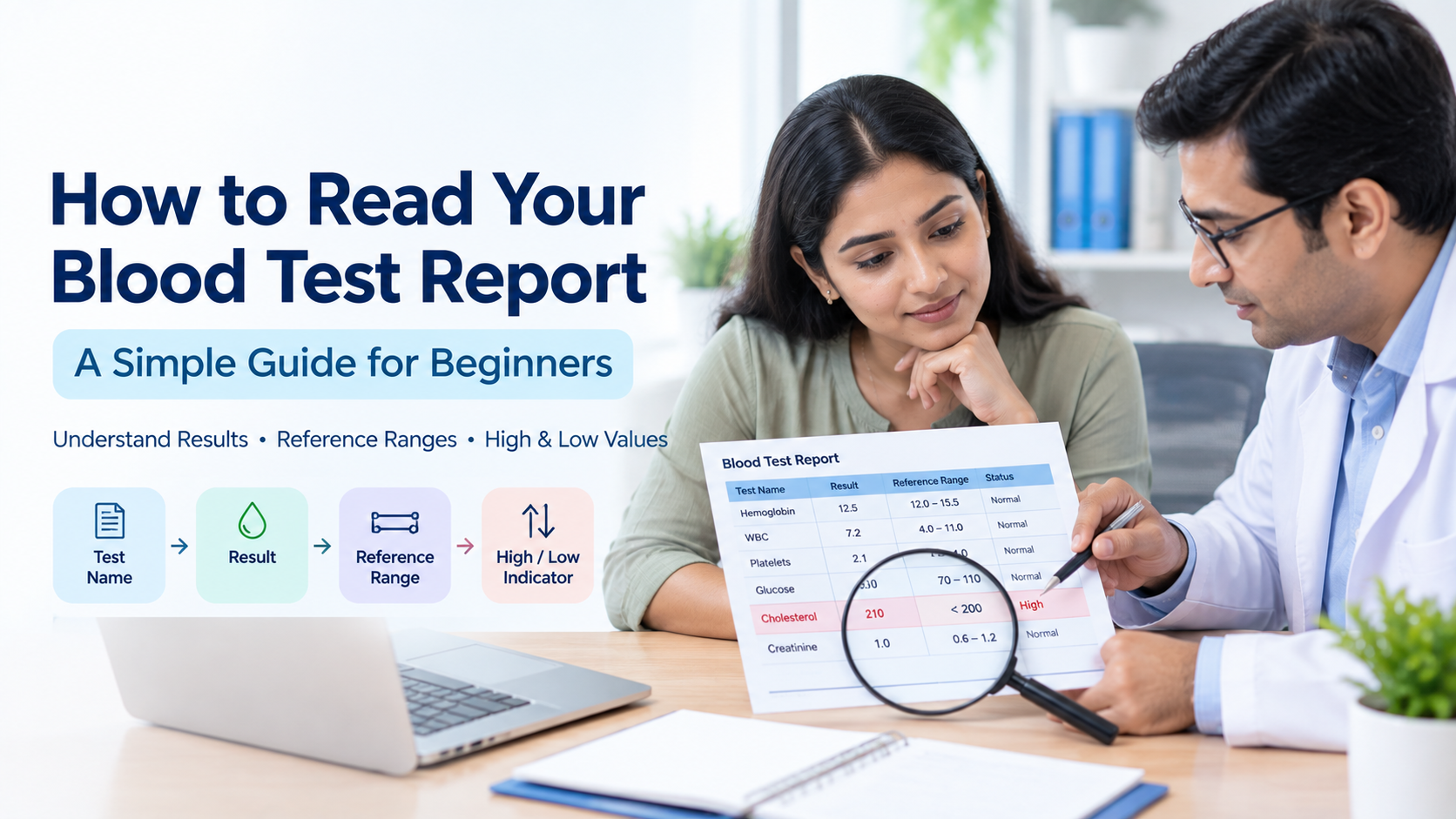
Instead, you can start by looking at a few important sections. First, identify the test name. Next, check your result and compare it with the laboratory’s reference range. Then, look at any H, L, or other flags. Finally, consider the result along with your symptoms, medical history, and your doctor’s advice.

Moreover, one number outside the reference range does not automatically mean that something is wrong. Therefore, it is important to understand the report in context rather than focusing on a single value.

This Blog Includes:

  • Article Title: How to Read Your Blood Test Report – A Simple Guide for Beginners
  • Publisher: Prima Diagnostics
  • Topics Covered: Blood Test Report, Reference Ranges, H and L Flags, Common Blood Tests, Abnormal Results and Report Interpretation
  • Services Covered: Blood Testing, Diagnostic Testing, Digital Reports, Health Checkups and Home Sample Collection
  • Tests Included: CBC, Haemoglobin, WBC Count, Platelet Count, Blood Glucose, HbA1c, Creatinine, ALT, TSH and Lipid Profile
  • Report Guidance: Test name, result, unit, reference range and abnormal-value flags
  • Preparation Guidance: Follow the specific preparation instructions provided for the individual test and healthcare provider
  • Local SEO Focus: Bangalore Blood Testing, Prima Diagnostics Reports and WhatsApp Support
  • FAQ Section: Included

Blood Test Report

How Do I Read My Blood Test Report?

To read your blood test report:

  1. Find the test name and understand what is being measured.
  2. Look at your result and note the unit.
  3. Check the reference range provided by the laboratory.
  4. Look for H or L flags that indicate a result is above or below that laboratory’s range.
  5. Compare the result with previous reports, if available.
  6. Consider symptoms, medications, age, and health history because these can affect interpretation.
  7. Ask your doctor or diagnostic laboratory for clarification if a result is unclear.

Most importantly, avoid diagnosing yourself from one abnormal number. A blood test is only one part of a complete health assessment.

Why Does a Blood Test Report Have So Many Numbers?

At first glance, a report may look complicated. However, most laboratory reports follow a fairly consistent structure.

For example, a CBC may include haemoglobin, red blood cells, white blood cells, platelets, and several related measurements. Similarly, a lipid report can include total cholesterol, HDL cholesterol, LDL cholesterol, and triglycerides.

Therefore, instead of reading every number randomly, start by understanding the four basic parts of a report.

The 4 Parts of Every Blood Test Report

  1. Test Name

First, identify the test being performed.

Examples include CBC, lipid profile, liver function test, thyroid profile, blood glucose, creatinine, and vitamin levels.

The test name tells you what area of health the measurement relates to.

  1. Your Result

Next, look at the actual number reported for you.

For example, a report may show a haemoglobin value, glucose value, cholesterol value, or TSH value.

However, the number by itself is not enough. You also need to look at the unit and reference range.

  1. Unit of Measurement

The unit explains how the result is expressed.

Different tests use different units. Consequently, two numbers from different tests cannot simply be compared because they use different measurements.

  1. Reference Range

Finally, look at the reference range printed alongside your result.

This range provides a laboratory-specific comparison point. Therefore, it is important to use the range printed on your blood test report, rather than relying on a random range found online.

What Do ‘H’ and ‘L’ Flags Mean?

You may notice letters such as H or L beside certain results.

Generally:

  • H = High compared with the laboratory’s reference range.
  • L = Low compared with the laboratory’s reference range.

However, a flag does not automatically mean that you have a disease.

For instance, a result can be slightly outside a reference range because of biological variation, recent food intake, exercise, hydration, medications, or other factors.

Therefore, an H or L flag should be treated as a point to discuss, rather than a diagnosis.

Reference Range Explained

What Is a Reference Range?

A reference range is a range of values used by a laboratory to help interpret a particular test result.

Importantly, reference ranges can differ between laboratories. They can also vary depending on the test method, population, age group, sex, and other factors.

Consequently, always start with the reference range printed on your own report.

Does Outside the Range Always Mean Abnormal?

Not necessarily.

A healthy person can occasionally have a result slightly outside a laboratory’s reference range. Likewise, someone with a result inside the range may still need medical evaluation depending on their symptoms and medical history.

Therefore, your doctor considers the complete clinical picture, rather than one number alone.

10 Common Blood Tests and What They Mean

  1. CBC

A Complete Blood Count (CBC) measures different blood cells, including red blood cells, white blood cells, and platelets.

  1. Haemoglobin

Haemoglobin is the protein in red blood cells that carries oxygen throughout the body.

  1. Blood Glucose

A blood glucose test measures the amount of glucose in your blood at the time of testing.

  1. HbA1c

HbA1c provides an estimate of average blood glucose levels over the preceding few months.

  1. Lipid Profile

A lipid profile measures blood fats such as cholesterol and triglycerides and commonly includes HDL and LDL cholesterol.

  1. Liver Function Tests

Liver function testing commonly includes measurements such as bilirubin, ALT, AST, ALP, albumin, and total protein.

  1. Kidney Function Tests

Kidney-related blood tests may include creatinine, urea, and other measurements used to assess kidney function.

  1. TSH

TSH is a hormone measurement commonly used when evaluating thyroid function.

  1. Vitamin B12

The Vitamin B12 testing measures the amount of vitamin B12 in the blood and may be requested when assessing possible deficiency.

  1. Vitamin D

Vitamin D testing commonly measures circulating 25-hydroxyvitamin D levels.

Don’t Focus on One Number

One of the most common mistakes beginners make is looking at a single result and immediately assuming that it explains everything.

Instead, look at related results together.

For example, a CBC contains several interconnected measurements. Likewise, a lipid report includes multiple cholesterol-related values. Similarly, liver and thyroid evaluations may involve more than one marker.

Therefore, the overall pattern can sometimes provide more useful information than one isolated value.

When Does a Small Change Matter?

A small difference from the reference range may not always be clinically significant. On the other hand, a result that appears only slightly different can sometimes matter when it occurs alongside symptoms, previous abnormal results, or other abnormal markers.

Compare With Previous Reports

If you have older reports, compare them with your current results.

For example, a doctor may look at whether a value has remained stable, gradually changed, or changed suddenly.

However, make sure the tests were performed using comparable methods and units before drawing conclusions.

Consider Your Preparation

Your preparation before testing can also matter.

Depending on the test, factors such as fasting, recent meals, exercise, hydration, or medications can influence certain results.

Therefore, always follow the preparation instructions given by your healthcare provider or diagnostic laboratory.

What Should You Do If Your Report Has Many Flags?

First, don’t panic.

Instead, make a list of the flagged results. Then, check the reference ranges and units. After that, look at related results and compare them with previous reports if available.

Most importantly, discuss significant or persistent abnormalities with your doctor.

If the report was performed because of specific symptoms, mention those symptoms as well. This gives your doctor useful context for interpreting the results.

How Prima Diagnostics Makes Reports Easier to Understand

For people getting diagnostic tests in Bangalore, Prima Diagnostics provides blood test reports with clearly displayed results and reference ranges.

Moreover, if you have questions about your report, WhatsApp support can help you understand the report format and clarify basic report-related questions.

If you are unsure about a medical interpretation, however, your treating doctor should make the clinical assessment.

Whether you visit a Prima centre or use home sample collection, keeping your previous reports can also make future comparisons easier.

Read Your CBC Report in More Detail

If your report includes a CBC, you may see measurements such as haemoglobin, RBC count, WBC count, platelet count, MCV, MCH, and MCHC.

Understanding these related values together can make a CBC much easier to follow.

Understand Your Lipid Report

A lipid report may include total cholesterol, LDL cholesterol, HDL cholesterol, and triglycerides.

Rather than focusing only on total cholesterol, look at the complete lipid profile and discuss the results with your healthcare provider.

Learn About Your LFT Report

Liver function testing can include several markers, including bilirubin and liver enzymes.

Because different markers provide different information, interpreting the overall pattern is important.

Understand Your Thyroid Report

A thyroid report may include TSH and, depending on the test ordered, other thyroid hormones.

Your doctor can interpret these results alongside symptoms and other clinical information.

Keep Your Blood Test Reports Organised

Finally, keep copies of your previous blood test reports.

You can store digital copies on your phone or computer and keep important reports together. This way, you can easily provide them during future consultations.

Additionally, having older reports available makes it easier for your healthcare provider to review changes over time.

Ask Prima for Help With Your Report

If you have taken a test at Prima Diagnostics and are confused by the numbers, ranges, or report layout, you can contact the team through the available support channels.

Prima Diagnostics offers diagnostic testing across Bangalore, along with home sample collection services in applicable areas. The report can also be useful to keep digitally for future reference.

Remember, however, that laboratory support can explain report-related information and test details, while your doctor should interpret results in relation to your symptoms and medical history.

FAQs About Blood Test Report

  1. How do I read my blood test report?

Start with the test name, result, unit, and laboratory reference range. Then check whether the result is marked H or L. Finally, consider the result along with your symptoms, medical history, and previous reports.

  1. What does H mean on a blood test report?

H generally means that the result is higher than the reference range used by that laboratory. However, an H flag does not automatically indicate a disease.

  1. What does L mean on a blood test report?

L generally means that the result is lower than the laboratory’s stated reference range. Its significance depends on the specific test and your overall health situation.

  1. Why are reference ranges different between laboratories?

Reference ranges can vary because laboratories may use different testing methods, equipment, populations, and analytical processes. Therefore, use the range printed on your own report.

  1. Can Prima Diagnostics explain my blood test report?

Prima Diagnostics reports include clearly displayed ranges, and support is available for basic report-related questions. For a medical diagnosis or treatment decision, consult your doctor.

  1. Can I get blood tests with home sample collection in Bangalore?

Yes, Prima Diagnostics provides home sample collection in applicable Bangalore locations. You can check the available service area and booking options with Prima Diagnostics.

  1. Should I worry if one blood test value is slightly high or low?

Not necessarily. A single slightly abnormal result may need to be interpreted alongside other results, symptoms, preparation, medications, and previous reports. Discuss unexpected or persistent abnormalities with your healthcare provider.

Conclusion

Reading a blood test report becomes much easier when you break it into simple sections. First, identify the test. Next, check your result, unit, and reference range. Then, look at H and L flags without immediately assuming they indicate a disease.

Furthermore, compare related results and previous reports whenever appropriate. Most importantly, remember that laboratory values are interpreted in context.

For patients in Bangalore, Prima Diagnostics reports come with clear reference ranges, while WhatsApp support can help with basic report-related questions. When a result is concerning or unclear, however, your healthcare provider is the right person to explain what it means for you.

Select Your Nearest Centre

This helps us show the right centre at checkout.