
Fasting During Navratri with Diabetes or BP? Tests to Do Before and After
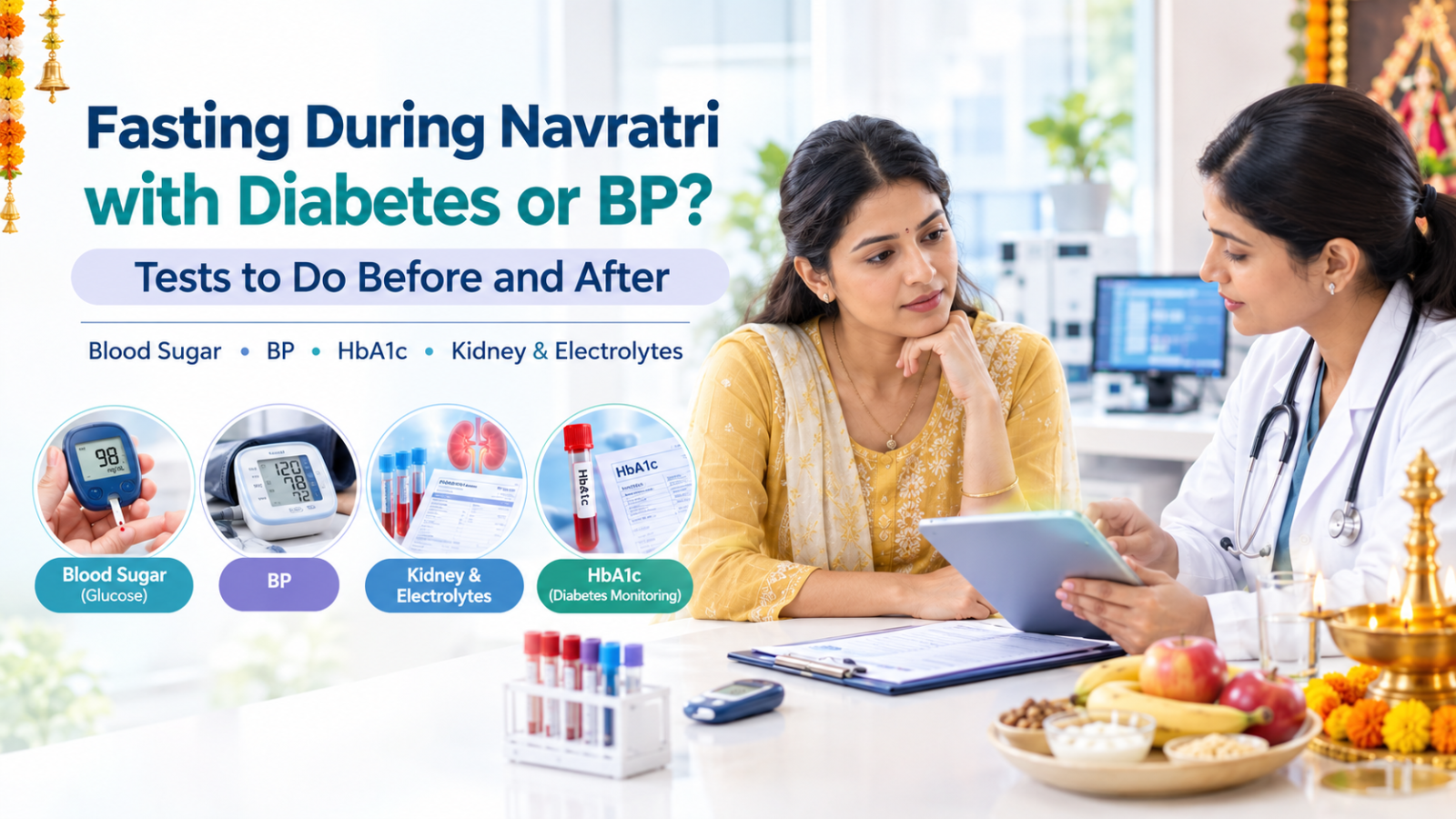
Fasting during Navratri is an important part of the festival for many people. However, if you have diabetes, high blood pressure (BP), kidney problems or take regular medicines, fasting needs some extra planning.
In 2026, Navratri begins on 11 October and continues through 19 October, followed by Dussehra on 20 October. Therefore, if you are planning to fast for several days, it is worth discussing your fasting plan with your doctor beforehand.
After all, skipping meals, changing your usual diet, drinking less fluid or changing medicine timing can affect blood sugar, blood pressure, and hydration.
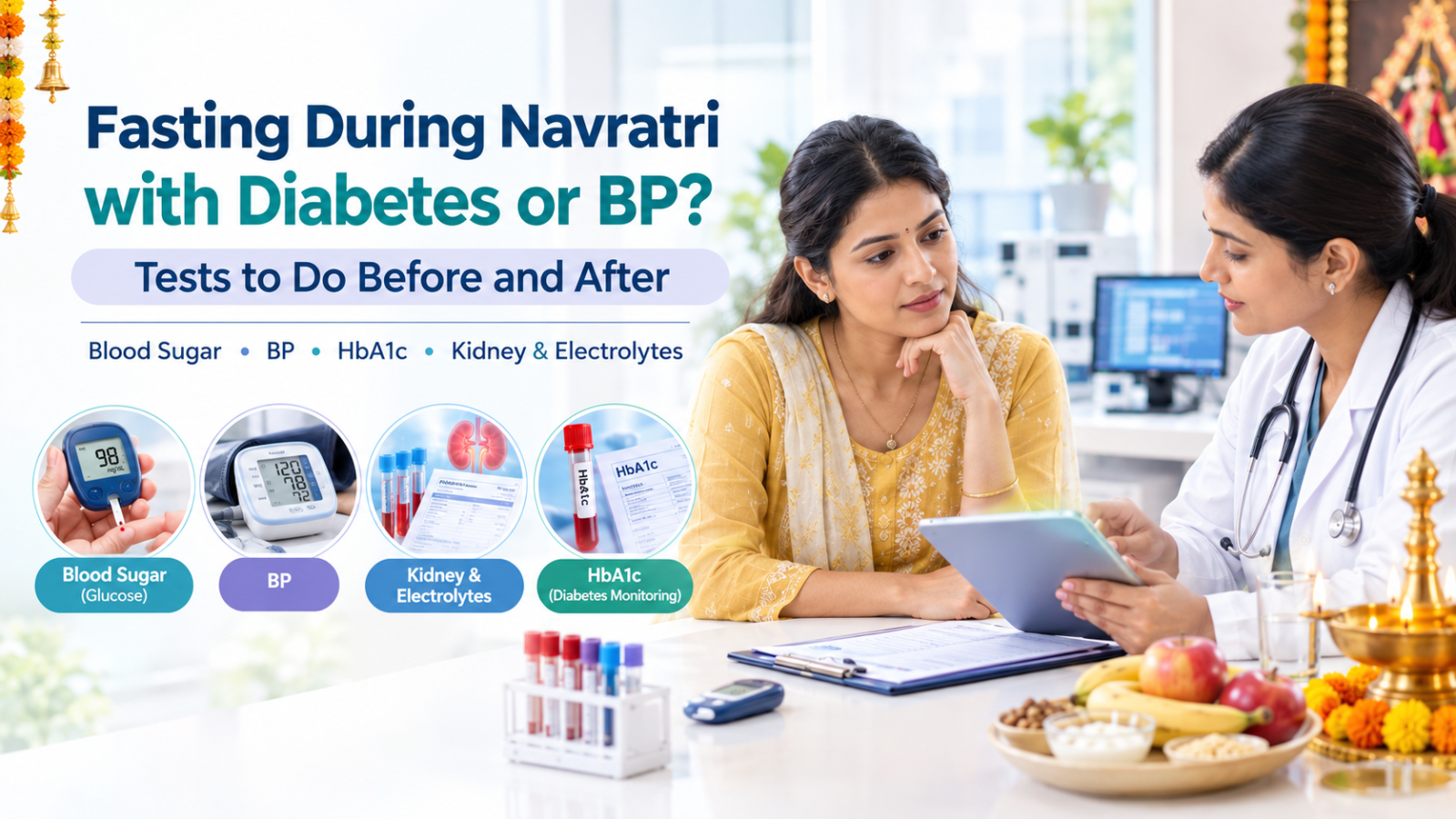
Is Fasting During Navratri Safe for You?
Fasting is not equally suitable for everyone.
For example, people taking insulin or certain diabetes medicines may have a higher risk of low blood sugar when food intake decreases. Similarly, people taking BP medicines or medicines that affect fluid balance may need individualized advice.
Therefore, before beginning a multi-day fast, speak with your healthcare provider if you have:
- Diabetes or frequent low blood sugar
- Poorly controlled BP
- Kidney disease
- Heart disease
- Frequent dizziness or fainting
- Recent changes in diabetes or BP medicines
- Pregnancy or another condition requiring regular nutrition
Most importantly, do not stop or change prescribed medicines on your own simply because you are fasting.
Why Check Your Health Before Navratri?
A pre-fasting health check can provide a useful baseline.
Moreover, it allows your doctor to identify problems that could make prolonged or restrictive fasting less suitable.
Start With Blood Sugar
If you have diabetes, your doctor may recommend checking current glucose levels and reviewing your home glucose readings.
Additionally, an HbA1c test can show your average blood glucose control over the preceding few months.
Check Kidney Function
A KFT (Kidney Function Test) may be useful, particularly if you have diabetes, hypertension, kidney disease or other risk factors.
This can include markers such as creatinine and eGFR.
Check Electrolytes When Appropriate
Electrolytes such as sodium and potassium help maintain normal fluid and nerve-muscle function.
Consequently, electrolyte testing may be considered when there is a relevant medical history, dehydration risk, kidney problems, or medicines that can affect electrolyte balance.
Don't Forget Blood Pressure
Finally, check your BP before starting a prolonged fast.
Keeping a record of your usual readings can make it easier to notice unusual changes during Navratri.
Tests to Consider Before Fasting
Depending on your health history, your healthcare provider may consider:
Blood sugar: Helps assess your current glucose level.
HbA1c: Shows longer-term blood sugar control.
KFT: Helps assess kidney function.
Electrolytes: May be useful when clinically indicated.
Blood pressure: Provides a baseline for monitoring.
Importantly, you may not need every test. Your doctor can decide which investigations are appropriate for you.
What Can Happen to Blood Sugar During a Fast?
When you eat less frequently or change your usual carbohydrate intake, your blood glucose can change.
For someone with diabetes, both low and high blood sugar can be concerning.
Therefore, follow the glucose-monitoring plan provided by your healthcare team.
Don't Ignore Low Blood Sugar
Warning symptoms can include:
- Shakiness
- Sweating
- Hunger
- Dizziness
- Confusion
- Weakness
- Fast heartbeat
If you develop symptoms of low blood sugar, do not continue the fast simply to complete the ritual. Follow your doctor's instructions for treating low glucose and seek help if symptoms are severe.
Watch for Dehydration Too
Reduced fluid intake, particularly in hot weather or during physically demanding activities, can increase dehydration risk.
Therefore, if your fasting practice permits fluids, drink adequate water during permitted periods unless your healthcare provider has advised a fluid restriction.
Watch for excessive thirst, very dark urine, dizziness, unusual weakness or reduced urination.
What About BP During Fasting?
Fasting can change your usual eating, fluid and medicine routine.
Consequently, some people may notice dizziness or changes in BP.
Keep Monitoring
If you already monitor your BP at home, continue according to your doctor's advice.
Furthermore, keep a simple record of your readings and any symptoms.
If you repeatedly experience very low or unusually high readings, contact your healthcare provider rather than adjusting medication yourself.
Warning Signs During Fasting
Your health should come before completing a fast.
Stop and seek medical advice if you experience:
- Severe dizziness or fainting
- Confusion
- Persistent vomiting
- Severe weakness
- Breathing difficulty
- Chest pain
- Symptoms of significantly low blood sugar
- Inability to keep fluids down
In particular, people with diabetes should have a clear plan for what to do if glucose becomes too low or too high.
Tests After 9 Days of Fasting
You do not automatically need a complete blood panel after Navratri.
However, if your doctor recommends follow-up, testing can help determine whether your health markers have changed.
Depending on your condition, this may include:
Blood Sugar Review
Review your glucose readings and discuss any unusual highs or lows.
Kidney Function
A KFT may be considered if you experienced dehydration, have kidney disease or have another clinical reason for follow-up.
Electrolytes
Electrolytes may be checked when dehydration, medication changes or other symptoms make testing appropriate.
HbA1c
HbA1c does not measure only the nine days of Navratri. Instead, it reflects longer-term glucose control. Therefore, it is generally more useful as part of routine diabetes monitoring rather than as an immediate “after Navratri” test.
Safe Fasting Tips for Diabetes and BP
Plan Before the First Day
First, discuss the fasting pattern with your healthcare provider.
Don't Change Medicines Yourself
Next, ask specifically whether medication timing or dosage needs adjustment.
Choose Balanced Foods
When eating is permitted, focus on balanced meals rather than relying only on sweets, fried fasting foods, or large portions.
Stay Hydrated When Permitted
Additionally, maintain adequate fluid intake during non-fasting periods unless you have been given a fluid restriction.
Monitor Your Health
Finally, keep track of glucose, BP, and symptoms according to your individual care plan.
Fasting during Navratri in Bangalore
For people in Bangalore managing diabetes or BP, festival schedules can easily disrupt normal meal and medicine routines.
Therefore, planning your health checks before Navratri can help you understand your baseline and discuss a safer fasting approach with your healthcare provider.
At Prima Diagnostics, tests such as blood sugar, HbA1c, KFT, and electrolyte testing can be arranged according to clinical requirements.
FAQs About Fasting During Navratri
Can a person with diabetes fasting during Navratri?
Some people with diabetes may be able to fast with an individualized medical plan, while others may be advised not to. Your medicines, glucose control, and overall health all matter.
Which tests should diabetics do before Navratri fasting?
Depending on your medical history, your doctor may consider blood sugar, HbA1c, KFT and electrolytes, along with BP monitoring.
Should BP patients check kidney function before fasting?
It may be appropriate, particularly when hypertension is longstanding, kidney disease is present or medicines can affect kidney function or electrolytes.
Should I stop my diabetes medicine while fasting?
No. Do not stop or change diabetes or BP medicines without medical advice. Your healthcare provider can advise you based on your fasting schedule and treatment.
What should I do if I feel dizzy while fasting?
Do not ignore significant dizziness. Stop and assess your health according to your doctor's fasting plan. If symptoms are severe, persistent or accompanied by confusion, fainting or other concerning symptoms, seek urgent medical care.
Conclusion
Fasting during Navratri can be an important spiritual practice; however, diabetes and BP require additional planning. Therefore, before starting a multi-day fast, review your blood sugar, HbA1c, kidney function and, when appropriate, electrolyte levels with your healthcare provider.
During the fast, continue monitoring your health and pay attention to warning signs. Afterwards, follow-up testing should be based on your medical condition rather than automatically repeating every test.
Above all, do not change medicines or ignore symptoms just to complete a fast. With appropriate planning, monitoring and medical guidance, you can approach the festival with greater awareness of your health.