
Coombs Test and Blood Grouping in Pregnancy (Rh Factor)

8 Sep 2026 · Prima Diagnostics
Coombs Test and Blood Grouping in Pregnancy (Rh Factor)
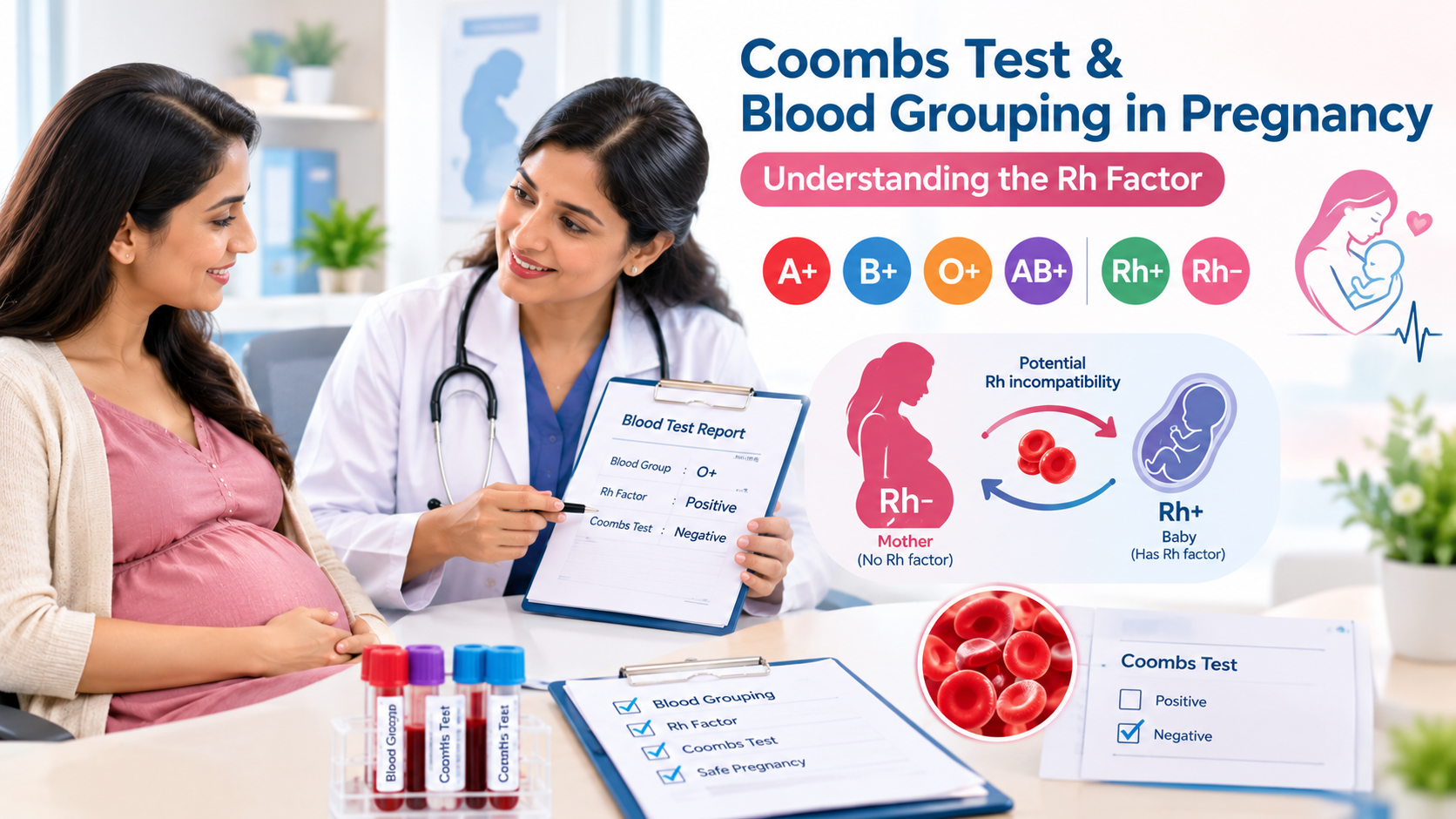
Pregnancy involves many routine health checks, and blood grouping is one of the important early investigations. In particular, knowing the mother's ABO blood group and Rh factor can help healthcare professionals identify whether additional monitoring may be required. The Coombs Test and Blood Grouping in Pregnancy are especially relevant when an expectant mother is Rh-negative. However, being Rh-negative does not mean that a pregnancy will automatically have complications. Instead, it indicates that healthcare professionals may need to assess the risk of Rh incompatibility and monitor for antibodies when appropriate. Therefore, understanding blood grouping, the Coombs test, Rh antibodies, and pregnancy screening can help expectant parents approach antenatal care with greater confidence. This Blog includes:
  • Article Title: Coombs Test and Blood Grouping in Pregnancy (Rh Factor)
  • Publisher: Prima Diagnostics
  • Type: Medical Test Explainer / Pregnancy Health Article
  • Topics Covered: Coombs test, Indirect Coombs Test, Direct Coombs Test, blood grouping, Rh factor, Rh-negative pregnancy, maternal antibodies, Rh incompatibility, antenatal screening
  • Services Covered: Blood grouping, Rh typing, Coombs testing, antenatal blood tests, pregnancy health screening
  • Tests Included: ABO Blood Grouping, Rh Factor, Indirect Coombs Test, Direct Coombs Test when clinically indicated
  • Preparation Guidance: Coombs testing generally does not require fasting when performed alone; patients should follow laboratory and healthcare-provider instructions
  • Service Focus: Pregnancy screening, maternal antibody assessment, and preventive antenatal testing
  • Healthcare Service: Pathology and antenatal diagnostic testing
  • FAQ Section: Included
Coombs Test What Is Blood Grouping in Pregnancy? Blood grouping determines a person's ABO blood group and Rh status. The ABO system classifies blood as:
  • A
  • B
  • AB
  • O
The Rh system primarily refers to whether the Rh(D) antigen is present on red blood cells. If the Rh(D) antigen is present, the person is generally described as Rh-positive. If it is absent, the person is Rh-negative. Consequently, determining the mother's blood group and Rh status early in pregnancy is an important part of routine antenatal assessment. What Does the Coombs Test Check? The Coombs test, also called an antiglobulin test, looks for antibodies that may react with red blood cells. In pregnancy, the Indirect Coombs Test (ICT) is particularly important because it can detect antibodies circulating in the mother's blood that could potentially react with fetal red blood cells. Therefore, the test can help healthcare professionals identify whether maternal red-cell antibodies are present and determine whether further monitoring is needed. Why Are Antibodies Important During Pregnancy? During pregnancy, the mother's blood and the baby's blood are normally separated by the placenta. However, small amounts of fetal blood can sometimes enter the maternal circulation, particularly during certain pregnancy or delivery-related events. If the baby has red-cell antigens that the mother does not have, the mother's immune system may produce antibodies against those antigens. This process is known as alloimmunization or sensitization. Consequently, antibody screening can be an important component of pregnancy care in appropriate circumstances. Rh-Negative Mothers Explained An Rh-negative mother may carry an Rh-positive baby if the baby's biological father carries the Rh(D) antigen. In such circumstances, fetal red blood cells entering the mother's circulation can potentially stimulate the production of anti-D antibodies. Importantly, being Rh-negative does not mean that the baby will necessarily have a problem. Instead, healthcare professionals assess the mother's antibody status and pregnancy history to determine appropriate management. Why Rh-Negative Mothers Need a Coombs Test Rh-negative mothers may need an Indirect Coombs Test to check whether they have developed antibodies against red blood cell antigens, particularly anti-D. If clinically significant antibodies are present, the pregnancy may require additional monitoring and management by the obstetric team. Therefore, identifying the mother's blood group and antibody status early can help the healthcare team plan appropriate antenatal care. Why Does Rh Incompatibility Matter for the Baby? If a mother has clinically significant antibodies that can cross the placenta, those antibodies may react with fetal red blood cells. Depending on the antibody and its concentration, this can potentially cause haemolytic disease of the fetus and newborn (HDFN). The severity can vary considerably. For this reason, antibody screening and appropriate obstetric follow-up are important when maternal red-cell antibodies are identified. However, modern antenatal care provides several ways to identify and manage Rh-related risks. First Pregnancy Planning and Rh Factor People planning their first pregnancy may understandably have questions about blood groups. Fortunately, blood grouping can be performed before or during pregnancy. Therefore, couples planning pregnancy can discuss their blood groups and relevant screening with their healthcare provider, particularly if the mother is known to be Rh-negative. Nevertheless, the father's Rh status alone does not determine whether complications will occur. The mother's antibody status and clinical history are also important. Direct vs Indirect Coombs Test Although both tests involve antibodies and red blood cells, they answer different questions. What Is the Indirect Coombs Test? The Indirect Coombs Test detects antibodies circulating freely in the blood. In pregnancy, it is commonly used for maternal antibody screening. Therefore, it can help identify whether an Rh-negative mother or another pregnant woman has developed potentially significant red-cell antibodies. What Is the Direct Coombs Test? The Direct Coombs Test, also known as the Direct Antiglobulin Test (DAT), looks for antibodies or complement components that are already attached to red blood cells. It may be used in situations such as suspected immune-mediated haemolysis. Consequently, the direct and indirect tests should not be considered interchangeable. When Is the Coombs Test Done in Pregnancy? Blood group and Rh status are generally checked early in pregnancy as part of antenatal investigations. If the mother is Rh-negative, antibody screening may be performed according to the pregnancy care plan. Furthermore, repeat testing may be recommended depending on the initial result, gestational stage, previous pregnancy history, sensitizing events, or other clinical circumstances. Events That May Require Additional Attention Healthcare professionals may consider Rh-related assessment after situations such as:
  • Vaginal bleeding during pregnancy
  • Miscarriage or pregnancy loss
  • Ectopic pregnancy
  • Abdominal trauma
  • Certain invasive prenatal procedures
  • Delivery
  • Other events where fetal-maternal blood mixing may occur
Therefore, an Rh-negative pregnant woman should inform her healthcare team about relevant events. What Happens If the Coombs Test Is Negative? A negative antibody screen generally means that clinically significant antibodies were not detected at the time of testing. However, management depends on the mother's Rh status and clinical circumstances. For Rh-negative women who are not already sensitized, healthcare professionals may recommend Rh(D) immune globulin prophylaxis at appropriate stages or after certain sensitizing events. The exact timing and eligibility should be determined by the obstetric team. What Happens If the Coombs Test Is Positive? A positive result means that an antibody has been detected. However, a positive result does not automatically mean that the baby is affected. Instead, the healthcare team may determine:
  • Which antibody is present
  • Whether it is clinically significant
  • The antibody level or titre where appropriate
  • Whether the antibody has potential fetal significance
  • Whether additional fetal monitoring is required
Consequently, a positive result should always be interpreted by the treating obstetric team. Antenatal Care in Bengaluru For families seeking Bengaluru antenatal care, early blood grouping and appropriate antibody screening can form part of a structured pregnancy-care plan. Moreover, timely testing can help healthcare professionals identify whether additional monitoring or preventive measures are appropriate. For Rh-negative mothers, keeping previous pregnancy and transfusion history available can also help doctors assess sensitization risk. Why Previous Pregnancy History Matters Sensitization can occur after exposure to foreign red-cell antigens. Therefore, previous pregnancies, miscarriages, blood transfusions, and certain pregnancy-related procedures may be relevant when assessing antibody risk. This is particularly important for women planning another pregnancy after a previous pregnancy. Coombs Test Preparation The Coombs test is a blood test and generally does not require special fasting when performed alone. However, pregnancy testing is often ordered as a group of investigations. Therefore, follow the preparation instructions provided by your diagnostic laboratory or healthcare provider, particularly if other blood tests are being performed at the same time. Also, follow any specific instructions given by your healthcare provider. Coombs Test and Blood Grouping Cost in Bengaluru The Coombs Test and Blood Grouping in Pregnancy cost in Bengaluru can vary depending on whether blood grouping, Rh typing, antibody screening, or other related tests are ordered separately or together. Therefore, patients should confirm the current test price with the diagnostic centre before booking. At Prima Diagnostics, expectant mothers can enquire about blood grouping, Coombs testing, antenatal investigations, and available sample collection options. Why Choose Convenient Pregnancy Testing? Pregnancy appointments can already involve multiple commitments. Consequently, convenient diagnostic services can make routine blood testing easier for expectant mothers. Depending on eligibility and location, home sample collection can reduce the need to travel to a diagnostic centre for certain blood tests. This can be particularly useful for women managing work, household responsibilities, and regular antenatal appointments. Frequently Asked Questions
  1. What is the Coombs Test in pregnancy?
The Coombs test detects antibodies associated with red blood cells. In pregnancy, the Indirect Coombs Test is commonly used to screen the mother's blood for antibodies that could potentially affect fetal red blood cells.
  1. Why do Rh-negative mothers need a Coombs test?
Rh-negative mothers may be screened for antibodies, particularly anti-D, because exposure to Rh-positive fetal red blood cells can sometimes lead to sensitization.
  1. Is being Rh-negative dangerous during pregnancy?
No. Being Rh-negative by itself does not mean that a pregnancy will have complications. Appropriate screening and preventive management can help healthcare professionals manage Rh-related risks.
  1. What is the difference between Direct and Indirect Coombs?
The Direct Coombs Test detects antibodies or complement attached to red blood cells, while the Indirect Coombs Test detects antibodies circulating in the blood.
  1. When is the Coombs Test done during pregnancy?
Blood group and antibody screening are generally performed early in pregnancy. Repeat testing may be recommended based on Rh status, antibody results, pregnancy history, and clinical circumstances.
  1. What does a negative Indirect Coombs Test mean?
It generally means that clinically significant antibodies were not detected at the time of testing. However, management depends on the mother's Rh status and overall pregnancy circumstances.
  1. What happens if the Coombs Test is positive?
A positive result indicates that an antibody has been detected. Further evaluation may be required to identify the antibody and determine whether additional pregnancy monitoring is appropriate.
  1. Can I get Coombs testing and blood grouping in Bengaluru?
Yes. Diagnostic centres such as Prima Diagnostics can be contacted regarding blood grouping, Rh typing, Coombs testing, antenatal investigations, and available collection options. Conclusion The Coombs Test and Blood Grouping in Pregnancy play an important role in identifying blood-group and antibody-related concerns during antenatal care. In particular, determining whether a mother is Rh-positive or Rh-negative helps healthcare professionals understand whether additional antibody screening or preventive management may be appropriate. Moreover, an Rh-negative result does not automatically indicate a pregnancy complication. Instead, timely testing, appropriate follow-up, and preventive care can significantly improve the ability to manage Rh-related risks. For families planning their first pregnancy, as well as Rh-negative mothers receiving antenatal care in Bengaluru, understanding blood grouping and the Coombs test can make pregnancy screening less confusing. Ultimately, the purpose of testing is not to create anxiety. Rather, it is to identify potential risks early and give the obstetric team the information needed to provide appropriate care.
More from the blog
MCHC, MCH and MCV Normal Range - What Your Red Cell Numbers Mean Pre-Employment Medical Test Cost in Bengaluru - What Companies Ask For Leg Cramps at Night? Tests for Calcium, Magnesium and Vitamin D Health Check-up for Elderly Parents at Home in Bengaluru - Doorstep Tests (Older Persons Day)