
Are Home Blood Test Collections Accurate? The Truth Explained
Home healthcare has become increasingly popular over the last few years. Today, many people prefer booking blood tests from the comfort of their homes instead of visiting a diagnostic centre. Whether it's busy working professionals, senior citizens, new mothers, or patients recovering from illness, home blood test collections offers unmatched convenience.
However, despite its growing popularity, one question continues to concern many patients:
"Is home blood test collection accurate?"
This concern is completely understandable. After all, blood test results often guide important medical decisions. Naturally, people want reassurance that a sample collected at home is just as reliable as one collected inside a laboratory.
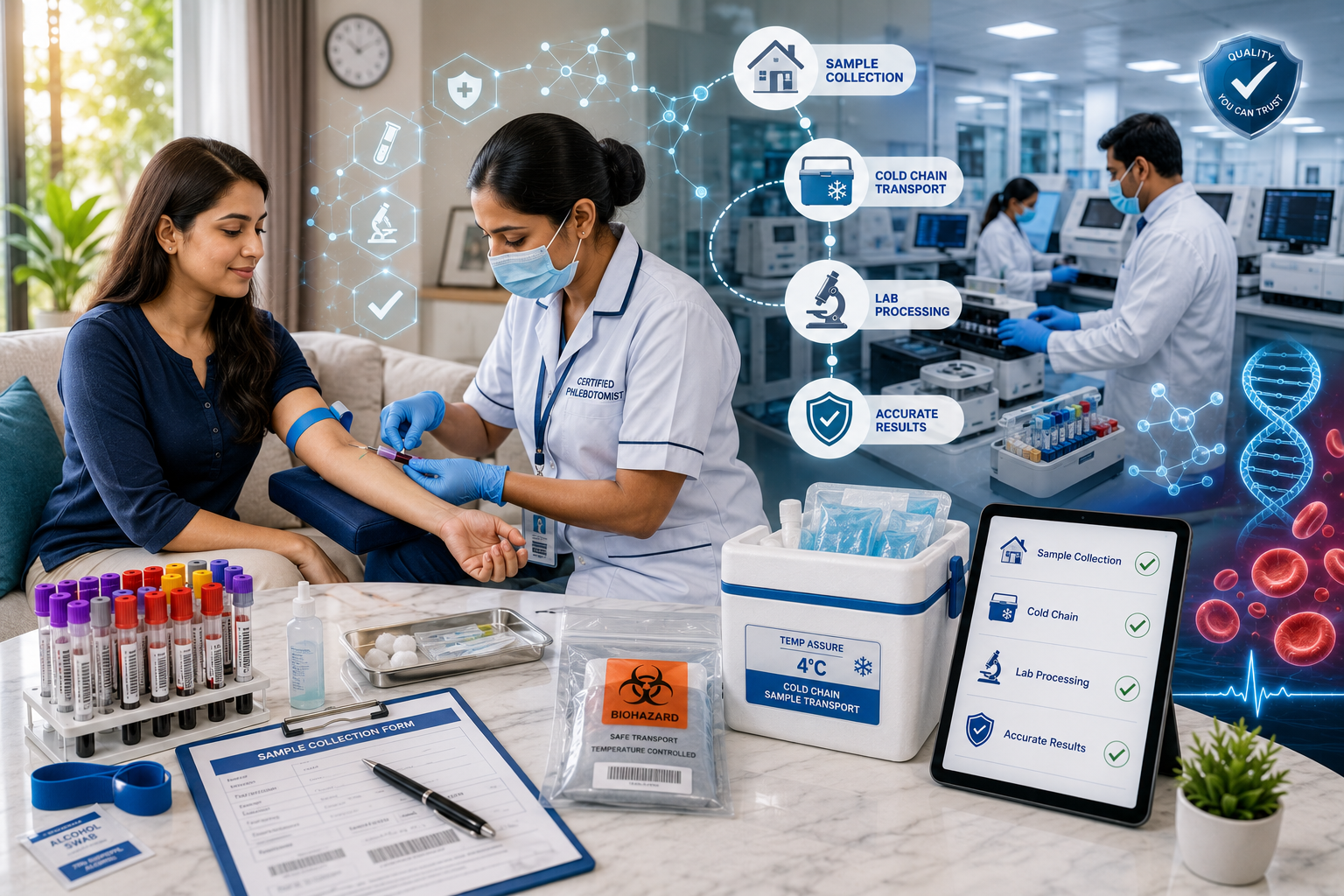
The good news is that home blood test collection is accurate when performed by trained professionals using proper collection techniques, correct sample handling, temperature-controlled transport, and NABL-quality laboratory processing. In fact, for most routine laboratory investigations, the location where the blood is collected has very little impact on accuracy—the quality depends on how the sample is collected, transported, and processed.
If you are searching for whether home blood test collection is accurate, this comprehensive guide explains how home collection works, what determines result accuracy, when home collection is ideal, when visiting a diagnostic centre may be preferable, and why Prima Diagnostics offers safe and dependable home sample collection across Bengaluru.
This Blog Includes:
 Is Home Blood Test Collections as Accurate as the Lab?
Yes. Home blood test collections can be just as accurate as blood collected at a diagnostic centre when the sample is collected by a trained phlebotomist, transported under appropriate conditions, and processed in a quality-assured laboratory. The accuracy of most blood tests depends on proper collection techniques, sample handling, transport, and laboratory quality standards—not simply on whether the sample was collected at home or inside the laboratory.
Why Do People Worry About Home Blood Test Collection Accuracy?
Although home collection has become common, many people still have concerns.
Some frequently asked questions include:
Is Home Blood Test Collections as Accurate as the Lab?
Yes. Home blood test collections can be just as accurate as blood collected at a diagnostic centre when the sample is collected by a trained phlebotomist, transported under appropriate conditions, and processed in a quality-assured laboratory. The accuracy of most blood tests depends on proper collection techniques, sample handling, transport, and laboratory quality standards—not simply on whether the sample was collected at home or inside the laboratory.
Why Do People Worry About Home Blood Test Collection Accuracy?
Although home collection has become common, many people still have concerns.
Some frequently asked questions include:
- Article Title: Are Home Blood Test Collections Accurate? The Truth Explained
- Publisher: Prima Diagnostics
- Type: Myth / Decision Guide Healthcare Blog
- Topics Covered: Home Blood Sample Collection, Blood Test Accuracy, Trained Phlebotomists, Sample Collection Techniques, Sample Handling, Cold Chain Management, NABL Laboratory Processing, Quality Assurance, Home Collection Benefits, When to Visit a Diagnostic Centre, Digital Reports, and Patient Education.
- Services Covered: Home Blood Sample Collection, Preventive Health Check-ups, Routine Blood Tests, Laboratory Diagnostics, NABL Quality Processing, Digital Reports, Home Healthcare Services, and Appointment Scheduling.
- Tests Included: Complete Blood Count (CBC), Blood Sugar Tests, Lipid Profile, Liver Function Test (LFT), Kidney Function Test (KFT), Thyroid Profile, HbA1c, Vitamin D Test, Vitamin B12 Test, ESR Test, CRP Test, Routine Blood Investigations, and Additional Eligible Laboratory Tests Available for Home Collection.
- Preparation Guidance: Follow any specific instructions given by your healthcare provider. If fasting is required for your test, follow the recommended fasting duration. Stay adequately hydrated unless advised otherwise, keep previous reports available if needed, and ensure a comfortable, well-lit area for the phlebotomist to perform the sample collection.
- Service Focus: Home Blood Sample Collection, Patient Convenience, Laboratory Diagnostics, Preventive Health Screening, Quality Assurance, Sample Integrity, Digital Reporting, and Patient Education.
- FAQ Section: Included.
Is Home Blood Test Collections as Accurate as the Lab?
Yes. Home blood test collections can be just as accurate as blood collected at a diagnostic centre when the sample is collected by a trained phlebotomist, transported under appropriate conditions, and processed in a quality-assured laboratory. The accuracy of most blood tests depends on proper collection techniques, sample handling, transport, and laboratory quality standards—not simply on whether the sample was collected at home or inside the laboratory.
Why Do People Worry About Home Blood Test Collection Accuracy?
Although home collection has become common, many people still have concerns.
Some frequently asked questions include:
- Will the blood sample spoil during transport?
- Does travelling affect the results?
- Is home collection hygienic?
- Are trained professionals collecting the sample?
- Will the laboratory process home samples differently?
- Correct patient identification
- Proper blood collection technique
- Appropriate collection tubes
- Adequate sample volume
- Timely transport
- Proper storage conditions
- Laboratory quality control
- Equipment calibration
- Experienced laboratory professionals
- CBC
- Blood Sugar
- Thyroid Profile
- Liver Function Test
- Kidney Function Test
- Lipid Profile
- Select an appropriate vein
- Minimize discomfort
- Obtain sufficient blood
- Reduce collection-related issues
- Sterile needles
- Single-use collection equipment
- Hand hygiene
- Safe disposal of sharps
- Proper protective equipment
- Heat
- Delayed processing
- Improper storage
- Samples remain properly packaged.
- Labels remain protected.
- Collection tubes remain upright when required.
- Temperature-sensitive samples are managed appropriately.
- Transport timelines are monitored.
- Patient details
- Sample condition
- Collection tube type
- Processing suitability
- Tests requiring immediate processing
- Time-sensitive specialized investigations
- Imaging studies (such as ultrasound, X-ray, CT, or MRI)
- ECG or other procedures requiring on-site equipment
- Tests requiring prolonged observation after sample collection
- Experienced Phlebotomists
- Hygienic Sample Collection
- Sterile Single-Use Equipment
- Proper Sample Labeling
- Safe Sample Transport
- Temperature-Controlled Handling Where Required
- NABL Quality Processes
- Advanced Laboratory Equipment
- Digital Reports
- Convenient Appointment Scheduling
- Working professionals
- Senior citizens
- Families
- Patients with limited mobility
- Preventive health check-up users
- NABL Quality Standards
- Home Sample Collection
- Comprehensive Blood Testing
- Preventive Health Packages
- Experienced Laboratory Professionals
- Advanced Diagnostic Equipment
- Digital Reports
- Convenient Scheduling
- Quality-Assured Laboratory Processes
- Patient-Centered Service