
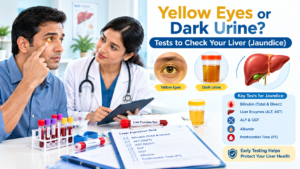
Seeing yellow eyes, dark urine, or unusually pale stools can understandably cause concern. In many cases, these changes are linked to jaundice, which happens when bilirubin builds up in the blood and tissues. However, jaundice is not a disease by itself. Instead, it can be a sign of an underlying liver, gallbladder, bile duct, blood, or other medical problem. Therefore, getting the right jaundice can help identify what may be causing the change.
Usually, doctors begin with bilirubin and liver function tests (LFTs), and then recommend additional investigations depending on the symptoms.
This Blog Includes:
- Article Title: Yellow Eyes or Dark Urine? Tests to Check Your Liver (Jaundice)
- Publisher: Prima Diagnostics
- Topics Covered: Jaundice Test, Yellow Eyes, Dark Urine, Pale Stool, Bilirubin, Liver Health, Liver Function Test, Hepatitis, Hepatitis A, Hepatitis B, Hepatitis E, Liver Disease, Bile Duct Problems, Gallstones, and Jaundice Awareness.
- Services Covered: Jaundice Testing, Liver Function Test (LFT), Bilirubin Test, Hepatitis Testing, Ultrasound Abdomen, Routine Blood Testing, Home Sample Collection, Digital Reports, and Laboratory Diagnostics.
- Tests Included: Liver Function Test (LFT), Total Bilirubin, Direct Bilirubin, Indirect Bilirubin, Hepatitis A Testing, Hepatitis B Testing, Hepatitis E Testing, Complete Blood Count (CBC), and Ultrasound Abdomen when clinically indicated.
- Preparation Guidance: Fasting is generally not required for LFT or bilirubin testing unless additional tests requiring fasting are ordered. Follow any specific instructions given by your healthcare provider.
- Service Focus: Jaundice Evaluation, Liver Health Assessment, Bilirubin Testing, Hepatitis Screening, Liver Function Testing, Preventive Health Screening, Home Sample Collection, Laboratory Diagnostics, and Patient Education.
- FAQ Section: Included.
Which Test Confirms Jaundice?
A bilirubin blood test is commonly used to confirm whether bilirubin levels are elevated and to assess jaundice. An LFT is often performed at the same time because it checks bilirubin along with liver enzymes and other markers that can help indicate the possible cause.
Importantly, no single test identifies every cause of jaundice. Depending on the findings, hepatitis testing or an ultrasound may also be required.
What Is a Jaundice Test?
Jaundice occurs when excess bilirubin, a yellow pigment produced when red blood cells break down, accumulates in the body.
Normally, the liver processes bilirubin and helps remove it through bile. However, if bilirubin production increases, the liver cannot process it properly, or bile flow becomes blocked, bilirubin can rise.
As a result, the skin or whites of the eyes may turn yellow.
Signs of Jaundice to Watch For
Yellow eyes are often one of the most noticeable signs. Nevertheless, jaundice can appear alongside several other symptoms.
Common Signs
- Yellowing of the whites of the eyes
- Yellowish skin
- Dark yellow, brown, or tea-coloured urine
- Pale, clay-coloured, or unusually light stools
- Tiredness or weakness
- Loss of appetite
- Nausea or vomiting
- Abdominal discomfort
- Fever in some infections
- Itching, particularly when bile flow is affected
Moreover, the combination of symptoms can provide useful clues. For example, dark urine with yellow eyes may prompt bilirubin and liver testing, while fever or abdominal pain may lead to additional investigations.
Why Does Urine Become Dark?
Dark urine does not always mean jaundice. Dehydration, certain foods, medicines, and urinary conditions can also change urine colour.
However, when dark or tea-coloured urine occurs together with yellow eyes or yellow skin, elevated bilirubin becomes an important possibility.
Therefore, a bilirubin test and LFT can help determine whether the change is related to the liver or bile system.
Why Can Stool Become Pale?
Normally, bile contributes to the brown colour of stool. Consequently, reduced bile reaching the intestine can make stools appear unusually pale or clay-coloured.
Persistent pale stools, particularly when accompanied by yellow eyes or dark urine, should be medically evaluated because they can sometimes occur with problems affecting bile flow.
Tests Used to Check for Jaundice
- Liver Function Test (LFT)
An LFT is one of the most commonly ordered blood tests when jaundice is suspected.
It can include measurements such as:
- Bilirubin
- ALT
- AST
- Alkaline phosphatase (ALP)
- GGT
- Albumin
- Total protein
Importantly, an LFT does not simply answer whether the liver is “working” or “not working.” Instead, the pattern of results can help doctors understand whether liver-cell injury, bile-flow problems, or another issue may be involved.
Bilirubin testing is particularly important when someone develops yellow eyes or skin.
The test may report:
- Total bilirubin
- Direct bilirubin
- Indirect bilirubin
Furthermore, the relationship between direct and indirect bilirubin can help doctors investigate different causes of jaundice.
A high bilirubin result, however, should always be interpreted alongside symptoms and other test results.
- Hepatitis A, B and E Tests
Infections caused by hepatitis viruses can affect the liver and may result in jaundice.
Depending on the clinical situation, doctors may recommend:
- The Hepatitis A testing
- Hepatitis B testing
- and Hepatitis E testing
- Other hepatitis investigations when required
This is particularly relevant during periods when contaminated food or water can increase the risk of certain infections.
- Ultrasound Abdomen
Blood tests are important, but sometimes doctors also need to look at the liver, gallbladder, and bile ducts.
An abdominal ultrasound can help evaluate issues such as:
- Gallstones
- Bile duct dilatation
- Gallbladder abnormalities
- Liver enlargement
- Fatty liver changes
- Certain structural abnormalities
Therefore, ultrasound may be recommended when symptoms or blood-test patterns suggest a possible obstruction or structural problem.
What Causes Jaundice in Adults?
Jaundice can have several causes. Therefore, the next step should depend on the patient’s age, symptoms, medical history, and test results.
Common Causes in Adults
These may include:
- Viral hepatitis
- Gallstones
- Bile duct obstruction
- Alcohol-related liver injury
- Fatty liver disease with significant liver inflammation
- Medication-related liver injury
- Other liver diseases
- Increased breakdown of red blood cells
Additionally, some conditions can affect bilirubin processing without causing severe liver damage.
What Causes Jaundice in Children?
The causes can differ considerably in children.
For example, newborn jaundice is common and can occur because a newborn’s liver is still developing its ability to process bilirubin. However, significant or rapidly increasing jaundice in a newborn requires prompt medical assessment.
In older children, possible causes can include viral infections, liver conditions, bile-flow problems, and increased red blood cell breakdown.
Because children can deteriorate differently from adults, parents should not rely only on home observation or a single laboratory result.
Jaundice in Babies: When Parents Should Act
Newborn jaundice can sometimes be part of normal early development. Nevertheless, medical evaluation is especially important if jaundice:
- Appears very early after birth
- Becomes noticeably deeper or spreads
- Is accompanied by poor feeding
- Causes unusual sleepiness or difficulty waking
- Occurs with fever
- Is associated with abnormal behaviour or reduced activity
In such situations, seek medical advice promptly rather than waiting for the colour to disappear.
When Is Jaundice Urgent?
Not every case of yellow eyes requires emergency care. However, some symptoms alongside jaundice need urgent medical attention.
Seek prompt medical evaluation if jaundice occurs with:
- Severe abdominal pain
- Persistent vomiting
- High fever
- Confusion or unusual drowsiness
- Fainting or significant weakness
- Bleeding or unusual bruising
- Rapidly worsening yellowing
- Very dark urine with pale stools
- Significant dehydration
For babies, worsening jaundice, poor feeding, fever, excessive sleepiness, or difficulty waking should be assessed urgently.
Most importantly, laboratory testing should not delay emergency medical care when serious symptoms are present.
Monsoon and Jaundice: Why Bangalore Residents Should Be Careful
During the monsoon, concerns about contaminated water and food can become more important. In Bangalore, therefore, people may hear increased discussion about Hepatitis A and Hepatitis E, which can spread through contaminated food or water.
However, yellow eyes do not automatically mean hepatitis A or E.
If jaundice develops along with fever, nausea, vomiting, loss of appetite, abdominal discomfort, or dark urine, a doctor may recommend liver tests and appropriate hepatitis investigations.
Good hand hygiene, safe drinking water, properly cooked food, and careful food handling can also help reduce infection risk.
Can You Get a Jaundice Test at Home?
Yes, blood samples for tests such as bilirubin and LFTs can often be collected at home through diagnostic laboratories offering home sample collection.
This can be especially convenient for:
- Older adults
- People feeling weak or unwell
- Parents managing a sick child
- Patients who have difficulty travelling
- People recovering at home
However, home collection availability depends on the location, appointment, and test requirements.
Prima Diagnostics offers home sample collection in Bangalore, subject to service availability. A convenient option can be to schedule the required blood tests at home and discuss the results with a healthcare provider.
What Should You Do If Your Jaundice Tests Are Abnormal?
First, do not panic based on one abnormal number.
Instead, review the complete report, including bilirubin fractions and liver enzymes. Then, consider the symptoms you are experiencing and any recent illness, medication use, alcohol intake, travel, or possible infection exposure.
Depending on the results, a doctor may recommend hepatitis testing, repeat blood tests, ultrasound, or other investigations.
Why You Should Not Self-Diagnose From Bilirubin Alone
A high bilirubin level can occur for different reasons. Similarly, abnormal liver enzymes can have multiple explanations.
Therefore, a report should be interpreted as a pattern rather than as one isolated number.
For example, bilirubin, ALT, AST, ALP, GGT, symptoms, and imaging findings may all contribute to understanding the underlying problem.
Frequently Asked Questions About Jaundice Tests
What is the first test for jaundice?
A bilirubin test and LFTs are commonly among the first investigations when jaundice is suspected. Additional tests depend on the clinical findings.
Can dark urine mean jaundice?
Yes, dark or tea-coloured urine can occur with jaundice, particularly when bilirubin is elevated. However, dehydration and other conditions can also darken urine.
Which test detects hepatitis causing jaundice?
Specific hepatitis blood tests are used depending on which virus is suspected. Hepatitis A, B, and E require different markers, so the appropriate test should be selected based on clinical evaluation.
Is jaundice common during the Bangalore monsoon?
Jaundice itself has many causes. However, food- and water-borne infections such as hepatitis A and E can be a concern when sanitation and water contamination increase. Yellow eyes should therefore be medically evaluated rather than automatically attributed to hepatitis.
Can LFT alone diagnose the cause of jaundice?
Not always. LFT can provide important clues, but doctors may also require bilirubin fractions, hepatitis tests, ultrasound, blood counts, or other investigations depending on the situation.
Can jaundice tests be done through home collection in Bangalore?
Blood tests such as LFT and bilirubin can often be collected at home through diagnostic services. Availability depends on the location, appointment, and test requirements.
Conclusion
Yellow eyes, dark urine, or pale stools should not be ignored, especially when several symptoms occur together. Fortunately, the right jaundice tests can provide useful information and help doctors identify the next step.
Usually, bilirubin and LFTs are important starting points. Subsequently, hepatitis A, B, or E testing and an ultrasound may be recommended when clinically appropriate.
Above all, do not interpret a single abnormal result as a diagnosis. Instead, combine the laboratory findings with symptoms, medical history, and your healthcare provider’s assessment.
For convenient testing in Bangalore, Prima Diagnostics can be considered for routine liver-related blood investigations and home sample collection, subject to availability.