
Chest pain can be frightening, particularly when it appears suddenly or is accompanied by sweating, breathlessness or unusual weakness. In such situations, doctors may order a troponin test to look for evidence of heart muscle injury.
Moreover, troponin testing has become an important part of evaluating suspected heart attacks. However, a troponin result should not be interpreted by itself. Instead, doctors consider the patient’s symptoms, ECG findings, medical history and changes in troponin levels over time.
For Bangalore’s increasingly busy working population, including people experiencing IT-related stress and sedentary lifestyles, understanding what this test does can help patients recognize why urgent evaluation may sometimes be necessary.
This Blog Includes:
- Article Title: Troponin Test – The Heart Attack Marker Explained
- Publisher: Prima Diagnostics
- Type: Test Explainer / Cardiovascular Healthcare Blog
- Topics Covered: Troponin Test, Cardiac Troponin, High-Sensitivity Troponin, hs-Troponin, Heart Attack Evaluation, Myocardial Injury, Chest Pain, ECG, 2D Echocardiogram, Cardiac Risk, Young Heart Attacks, IT Stress, Emergency Heart Care and Patient Education.
- Services Covered: Troponin Testing, High-Sensitivity Troponin Testing, ECG, 2D Echocardiography, Heart Health Checkups, Laboratory Diagnostics and Digital Reports.
- Troponin Guidance: Explains that troponin detects proteins released into the bloodstream following heart muscle injury and that elevated troponin can occur during a heart attack as well as other conditions.
- High-Sensitivity Troponin Guidance: Explains the purpose of hs-troponin and how high-sensitivity assays can detect very small concentrations of cardiac troponin.
- Normal Range Guidance: Explains that troponin reference ranges depend on the specific assay and laboratory and that the laboratory-provided reference interval should be used.
- Interpretation Guidance: Emphasizes that troponin should not be interpreted alone and should be assessed alongside symptoms, ECG findings, medical history and serial measurements when appropriate.
- Service Focus: Cardiac Biomarker Testing, Emergency Diagnostic Evaluation, ECG, Echocardiography, Laboratory Diagnostics and Cardiovascular Patient Education.
- FAQ Section: Included.
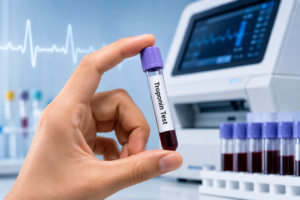
What Does a Troponin Test Detect?
A troponin test detects troponin proteins released into the bloodstream when heart muscle cells are injured. Elevated troponin can indicate myocardial injury, including injury caused by a heart attack. However, a high troponin level does not automatically mean a heart attack because other medical conditions can also cause heart muscle injury.
Troponin is normally present inside heart muscle cells. When those cells become damaged, troponin can enter the bloodstream.
Therefore, measuring blood troponin gives doctors an important biochemical clue about possible heart muscle injury.
What Is Troponin?
A Protein Inside Heart Muscle Cells
Troponin is a group of proteins involved in muscle contraction.
The heart-specific forms, particularly troponin I and troponin T, are useful in clinical testing because they can help identify damage to cardiac muscle.
Consequently, troponin has become an important laboratory marker when doctors evaluate suspected acute coronary syndrome.
Why Is Troponin So Important for Heart Attack Evaluation?
It Helps Detect Heart Muscle Injury
When a heart attack occurs because blood flow to part of the heart is interrupted, heart muscle cells can become injured.
As a result, troponin may be released into the bloodstream.
Therefore, measuring troponin can help doctors determine whether heart muscle injury has occurred.
However, there is an important distinction:
Troponin detects myocardial injury; it does not independently diagnose every heart attack.
The diagnosis requires clinical assessment and interpretation alongside other findings.
Troponin Is Not a Standalone Test
A person with elevated troponin may have several possible causes of heart muscle injury.
For example, elevated troponin can sometimes occur with:
- Heart attack
- Myocarditis
- Severe heart failure
- Certain rhythm problems
- Pulmonary embolism
- Severe systemic illness
- Kidney disease
- Other forms of cardiac stress or injury
Therefore, doctors look at the clinical context and pattern of change, rather than treating one number as the complete diagnosis.
Hs-Troponin Explained
What Does High-Sensitivity Troponin Mean?
High-sensitivity troponin, commonly called hs-troponin, refers to laboratory methods capable of detecting very small concentrations of troponin.
Because these tests are more sensitive, they can help doctors identify myocardial injury earlier and more precisely.
Consequently, hs-troponin is widely used in modern emergency cardiac evaluation.
Why Can the Test Be Repeated?
Troponin levels can change over time after heart muscle injury.
Therefore, depending on the clinical situation, doctors may order serial measurements.
For example, the healthcare team may compare:
- Initial troponin
- Repeat troponin
- Symptoms
- ECG findings
- Clinical examination
This change over time can provide valuable information.
When Is a Troponin Test Ordered?
Chest Pain Is a Common Reason
A doctor may order troponin when someone presents with symptoms that could indicate acute coronary syndrome.
These can include:
- Chest pressure or discomfort
- Pain spreading to the arm, shoulder, jaw or back
- Shortness of breath
- Cold sweating
- Nausea
- Sudden weakness
- Unusual dizziness
However, heart attack symptoms can vary considerably between individuals.
Unusual Symptoms Should Not Be Ignored
Some people, particularly older adults or people with certain health conditions, may experience less typical symptoms.
Furthermore, chest discomfort does not always feel like severe pain.
It may instead feel like:
- Pressure
- Tightness
- Heaviness
- Burning
- Indigestion-like discomfort
Therefore, unexplained or concerning symptoms deserve appropriate medical assessment.
What Is the Normal Troponin Range?
There Is No Single Universal Number
One of the most important things to understand about troponin testing is that there is no single normal troponin value that applies to every laboratory and every assay.
Instead, each test system has its own reference range and 99th-percentile upper reference limit.
Therefore, when reading your report, use the reference range provided by the laboratory.
Why the Reference Range Matters
Different assays can have different:
- Analytical methods
- Units
- Reference populations
- Detection limits
- Clinical decision thresholds
Consequently, comparing a troponin result from one laboratory directly with a result from another laboratory can be misleading.
Your doctor will interpret the value according to the specific assay used and the clinical situation.
Troponin vs ECG
Why Are Both Tests Important?
An ECG (electrocardiogram) records the electrical activity of the heart.
A troponin test, on the other hand, measures a biochemical marker of heart muscle injury.
Therefore, they answer different questions.
| Test | What It Helps Evaluate |
| Troponin | Heart muscle injury |
| ECG | Electrical activity and signs of cardiac ischemia |
| 2D Echo | Heart structure and function |
Consequently, doctors may use several tests together when evaluating chest pain.
For more information, explore our ECG Cost Guide.
Troponin and 2D Echo
What Does a 2D Echo Show?
A 2D echocardiogram uses ultrasound to examine the heart.
It can provide information about:
- Heart chambers
- Pumping function
- Heart valves
- Certain structural abnormalities
- Heart muscle movement
However, a 2D echo does not replace troponin testing when acute heart muscle injury is suspected.
Instead, the tests provide different types of information.
Read our 2D Echo Cost guide to understand this investigation better.
When Is Troponin an Emergency?
Chest Pain With Warning Signs
If chest discomfort is severe, sudden or persistent, especially when accompanied by other concerning symptoms, seek emergency medical care immediately.
Warning symptoms can include:
- Severe or persistent chest pressure
- Difficulty breathing
- Cold sweating
- Fainting or near-fainting
- Sudden extreme weakness
- Pain spreading to the arm, jaw, shoulder or back
- New severe palpitations with other symptoms
Do not wait for a routine laboratory appointment to get a troponin test if you may be having a heart attack.
Bangalore Chest Pain Awareness
Don’t Assume It Is “Just Gas”
In Bangalore, busy work schedules, long commuting hours and sedentary office routines can make people dismiss unusual symptoms as acidity, tiredness or stress.
However, chest discomfort should not automatically be attributed to stress or indigestion.
Similarly, younger adults can experience cardiac emergencies.
Therefore, young age alone should not be used as a reason to ignore concerning chest symptoms.
IT Stress and Heart Health
Can Stress Cause Chest Symptoms?
Stress can produce physical symptoms, including chest discomfort, palpitations and breathlessness.
Nevertheless, these symptoms can overlap with symptoms of cardiac conditions.
Consequently, someone experiencing new or unexplained chest symptoms should not attempt to diagnose the cause based on stress alone.
A healthcare professional can determine whether ECG, troponin or other investigations are appropriate.
What Tests May Be Paired With Troponin?
Depending on the situation, doctors may consider:
Provides information about the heart’s electrical activity.
2D Echocardiogram
Evaluates heart structure and function.
Helps assess cholesterol-related cardiovascular risk.
Blood Pressure Assessment
Provides another important cardiovascular risk measurement.
Kidney Function Tests
Kidney function can influence troponin interpretation and overall cardiovascular risk.
Therefore, the combination of tests depends on the patient’s symptoms and clinical assessment.
Can a High Troponin Mean Something Other Than a Heart Attack?
Yes
An elevated troponin result indicates myocardial injury, but the cause may not always be an acute coronary blockage.
For example, elevated troponin can occur in other conditions affecting the heart or the body.
Therefore, doctors may consider:
- Symptoms
- ECG
- Serial troponin measurements
- Imaging
- Medical history
- Other laboratory results
This is why a high troponin result should be evaluated by a healthcare professional rather than interpreted independently.
Who May Need Troponin Testing?
Troponin testing is generally ordered when a healthcare professional suspects acute heart muscle injury.
It may be considered in people presenting with:
- Suspected heart attack
- Acute chest discomfort
- Unexplained breathlessness
- Other symptoms concerning for acute coronary syndrome
It is not generally a routine screening test for healthy people without symptoms.
Frequently Asked Questions
What does a troponin test detect?
It detects troponin released into the bloodstream following heart muscle injury. Elevated levels can occur during a heart attack but can also occur with other causes of myocardial injury.
Is troponin the gold-standard test for a heart attack?
Troponin is a highly important biomarker for detecting myocardial injury and is central to modern heart-attack evaluation. However, diagnosis is based on troponin results together with symptoms, ECG findings and other clinical evidence.
What is a normal troponin level?
There is no universal number. The normal or reference value depends on the specific assay and laboratory. Your report’s reference interval should be used.
What is high-sensitivity troponin?
High-sensitivity troponin testing can detect very small concentrations of cardiac troponin, helping clinicians identify myocardial injury with greater sensitivity.
Can troponin be high without a heart attack?
Yes. Several cardiac and non-cardiac conditions can cause myocardial injury and elevated troponin.
Can I book a troponin test myself for chest pain?
If you have active or concerning chest pain, do not delay emergency medical evaluation while arranging a routine laboratory test. A hospital or emergency department can perform the appropriate assessment.
Is troponin better than an ECG?
They are different tests. Troponin evaluates biochemical evidence of heart muscle injury, whereas ECG evaluates electrical activity. They are often interpreted together.
Do young Bangaloreans need to worry about heart attacks?
Although heart attack risk generally increases with age, younger adults can also experience cardiac problems. New or concerning chest symptoms should therefore be evaluated rather than dismissed as stress or acidity.
Conclusion
The troponin test is one of the most important blood tests used when doctors investigate suspected heart muscle injury. In particular, high-sensitivity troponin allows clinicians to detect very small amounts of cardiac troponin and evaluate changes over time.
However, an elevated troponin result does not automatically mean that a blocked coronary artery is present. Instead, doctors interpret the result alongside ECG findings, symptoms, medical history and, when appropriate, echocardiography or other investigations.
For Bangalore residents, including younger professionals dealing with demanding IT schedules, the most important message is simple: don’t dismiss new or unexplained chest discomfort as merely stress or acidity.
If symptoms suggest a possible heart attack, seek emergency medical care rather than waiting for a routine test appointment.