
Fatty Liver Follow-up Tests: What Should You Monitor?
Fatty liver follow-up tests typically include liver function tests (LFT), blood sugar and HbA1c, lipid profile, and, when clinically appropriate, repeat ultrasound or other liver assessments. These tests help track metabolic risk factors, liver enzyme changes, and structural findings over time. However, improving liver enzymes does not always mean that liver fat or fibrosis has completely resolved. Therefore, follow-up should combine laboratory results, imaging, lifestyle changes, and your healthcare provider’s assessment.
For many young IT professionals in Bangalore, long working hours, sedentary routines, frequent restaurant meals, irregular sleep, and weekend alcohol consumption can contribute to metabolic health problems associated with fatty liver. Fortunately, lifestyle recovery can make a meaningful difference for many people. Consequently, regular monitoring can help show whether your health plan is moving in the right direction.
This Blog Includes:
- Article Title: Fatty Liver Follow-up Tests – Tracking Your Recovery in Bangalore
- Publisher: Prima Diagnostics
- Type: Condition Management Healthcare Blog
- Topics Covered: Fatty Liver, Fatty Liver Follow-up Tests, Liver Function Test, SGPT / ALT, SGOT / AST, GGT, Bilirubin, Lipid Profile, Blood Sugar, HbA1c, Abdominal Ultrasound, Liver Health, Metabolic Health, Lifestyle Recovery, Fatty Liver Monitoring, Home Sample Collection, and Patient Education.
- Services Covered: Liver Function Test (LFT), SGPT / ALT, SGOT / AST, GGT, Bilirubin Testing, Lipid Profile, Blood Sugar Testing, HbA1c, Abdominal Ultrasound, Additional Liver Investigations, Home Sample Collection, Digital Reports, and Laboratory Diagnostics.
- Tests Included: Liver Function Test (LFT), SGPT / ALT, SGOT / AST, GGT, Bilirubin, Alkaline Phosphatase, Albumin, Total Protein, Lipid Profile, Fasting Blood Sugar, Postprandial Blood Sugar when indicated, HbA1c, and Additional Liver or Metabolic Investigations as Recommended by Healthcare Providers.
- Imaging Covered: Abdominal Ultrasound for appropriate fatty liver follow-up and additional non-invasive liver assessments when clinically indicated.
- Preparation Guidance: Preparation depends on the tests included in the follow-up panel. Fasting may be required for certain blood tests depending on the test combination. Follow any specific instructions given by your healthcare provider. Stay hydrated unless advised otherwise, inform the laboratory about medications and supplements, and prepare a comfortable area if booking home sample collection.
- Lifestyle Guidance: Covers healthy weight management when appropriate, regular physical activity, improved dietary habits, blood sugar control, lipid management, reduced alcohol intake when advised, adequate sleep, and sustainable lifestyle recovery.
- Service Focus: Fatty Liver Monitoring, Liver Health Assessment, Metabolic Health Monitoring, Lifestyle Management Support, Follow-up Testing, Abdominal Imaging Awareness, Home Sample Collection, Laboratory Diagnostics, Digital Reporting, and Patient Education.
- FAQ Section: Included.
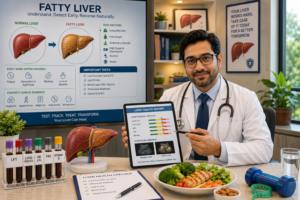
Can Fatty Liver Be Reversed?
In many people, fatty liver associated with metabolic dysfunction can improve substantially with appropriate lifestyle changes and management of related conditions.
The most important areas usually include:
- Achieving a healthy weight when overweight
- Increasing physical activity
- Improving food quality
- Managing diabetes or prediabetes
- Controlling cholesterol and triglycerides
- Limiting or avoiding alcohol when advised
- Improving sleep and daily routines
However, the degree of improvement varies from person to person.
Therefore, the goal should not simply be to lower one laboratory value. Instead, the focus should be on improving overall metabolic and liver health.
Why Fatty Liver Follow-up Tests Matter
Fatty liver can sometimes exist without noticeable symptoms.
Moreover, a person may feel better even while metabolic risk factors remain uncontrolled.
Follow-up testing can therefore help answer important questions:
- Are liver enzymes improving?
- Is blood sugar under control?
- Are triglycerides decreasing?
- Is cholesterol improving?
- Has liver fat changed on imaging?
- Are there signs suggesting more advanced liver disease?
Consequently, periodic monitoring provides objective information instead of relying only on how you feel.
LFT to Track Liver Enzymes
A Liver Function Test (LFT) is commonly used during fatty liver follow-up.
Depending on the laboratory, an LFT may include:
- SGPT / ALT
- SGOT / AST
- Bilirubin
- Alkaline Phosphatase
- GGT
- Albumin
- Total Protein
Why SGPT and SGOT Matter
ALT and AST can increase when liver cells are injured or inflamed.
Therefore, decreasing enzyme levels can be encouraging.
However, normal liver enzymes do not automatically prove that fatty liver has disappeared.
This is an important distinction because some people with significant liver disease can have normal enzyme levels.
What About GGT?
GGT may also be included in liver assessment.
An elevated GGT can occur in several situations, including certain liver and bile-duct conditions and alcohol-related liver injury.
Therefore, GGT should be interpreted together with the rest of the LFT rather than viewed independently.
Lipid and Sugar Control
Fatty liver is closely connected with metabolic health.
Therefore, follow-up should often include tests that assess blood sugar and lipid levels.
HbA1c and Blood Sugar
Depending on your situation, your healthcare provider may recommend:
- Fasting Blood Sugar
- Postprandial Blood Sugar
- HbA1c
HbA1c provides an estimate of average blood glucose over the preceding few months.
Consequently, improving glucose control can be an important part of managing fatty liver risk.
Lipid Profile for Fatty Liver Monitoring
A Lipid Profile commonly evaluates:
- Total Cholesterol
- LDL Cholesterol
- HDL Cholesterol
- Triglycerides
High triglycerides and other lipid abnormalities can accompany metabolic dysfunction.
Therefore, improving your lipid profile is often part of a broader fatty liver management strategy.
For Bangalore IT workers, this can be particularly relevant when desk-based work is combined with frequent takeout meals, low physical activity, and irregular schedules.
Weight and Waist Measurement Matter Too
Laboratory tests are useful, but they are not the whole picture.
Your healthcare provider may also track:
- Body weight
- Waist circumference
- Blood pressure
- Physical activity
- Diet
- Alcohol intake
For someone recovering from fatty liver, gradual and sustainable lifestyle improvement is generally more useful than extreme short-term dieting.
Ultrasound Follow-up
An abdominal ultrasound may be recommended to assess fatty changes in the liver.
It can help identify findings such as:
- Fatty appearance of the liver
- Liver size
- Certain structural abnormalities
- Other abdominal findings
However, ultrasound has limitations.
It does not provide a complete assessment of liver fibrosis in every patient.
Therefore, depending on the clinical situation, your healthcare provider may consider additional non-invasive fibrosis assessment or specialist evaluation.
When Should You Repeat an Ultrasound?
There is no single ultrasound schedule that applies to everyone.
The timing depends on:
- Initial ultrasound findings
- Liver enzyme results
- Metabolic risk factors
- Weight changes
- Diabetes status
- Previous fibrosis assessment
- Healthcare provider’s recommendation
Consequently, repeating imaging too frequently may not always be necessary.
Instead, follow the monitoring schedule recommended for your individual situation.
Signs of Improvement
So, how do you know whether your fatty liver management plan is working?
Several changes can be encouraging.
Improving Blood Tests
Improved ALT, AST, triglycerides, glucose, and HbA1c may indicate better metabolic control.
Healthy Weight Changes
If weight loss is appropriate for you, gradual reduction can be a positive sign.
Better Physical Fitness
Increasing daily activity and improving exercise tolerance can indicate progress.
Improved Lifestyle Habits
For example:
- More home-cooked meals
- Less sugary food and drinks
- Reduced processed food
- Regular physical activity
- Better sleep
- Reduced alcohol intake
These changes can support long-term liver health.
Does Feeling Better Mean the Liver Is Normal?
Not necessarily.
Fatty liver can be relatively silent.
Therefore, absence of symptoms should not be used as the only measure of recovery.
Similarly, normal liver enzymes do not always mean that all liver fat or fibrosis has disappeared.
Consequently, follow-up should combine symptoms, laboratory tests, imaging when appropriate, and clinical assessment.
How Often Should Fatty Liver Tests Be Done?
There is no universal testing schedule for every patient.
Instead, the frequency depends on the severity of fatty liver and your associated health conditions.
For example, someone with diabetes, obesity, abnormal liver enzymes, or suspected fibrosis may need closer monitoring than someone with mild fatty liver and otherwise low-risk findings.
Your healthcare provider may therefore recommend follow-up at intervals based on your individual risk profile.
A Practical Follow-up Checklist
Depending on your situation, your follow-up plan may include:
Liver Monitoring
- LFT
- ALT / SGPT
- AST / SGOT
- GGT
- Bilirubin
Metabolic Monitoring
- Fasting Blood Sugar
- HbA1c
- Lipid Profile
Imaging
- Abdominal Ultrasound when indicated
- Additional liver assessment when clinically appropriate
Overall Health
- Weight
- Waist circumference
- Blood pressure
- Lifestyle assessment
When Should You See a Specialist?
A healthcare provider may recommend specialist evaluation if there are:
- Persistently abnormal liver enzymes
- Evidence suggesting advanced fibrosis
- Significant metabolic risk factors
- Unexplained liver abnormalities
- Worsening clinical findings
- Uncertainty about the cause of liver disease
Therefore, follow-up testing should not be treated as a substitute for medical evaluation.
Lifestyle Recovery for Young Bangalore IT Professionals
For many young Bangalore IT fatty liver patients, recovery requires practical changes rather than unrealistic routines.
Start With Movement
If your work involves sitting for long periods, add regular movement throughout the day.
For example:
- Take short walking breaks
- Use stairs when practical
- Walk after meals
- Schedule regular exercise
Improve Food Choices
Instead of relying heavily on restaurant food, gradually increase:
- Vegetables
- Whole grains
- Protein-rich foods
- Fruits in appropriate portions
- High-fibre foods
At the same time, reduce excessive sugary drinks, highly processed foods, and frequent high-calorie meals.
Watch Weekend Habits
A healthy weekday routine can be undermined by excessive weekend alcohol or overeating.
Therefore, consistency throughout the week matters.
Home Collection for Fatty Liver Follow-up Tests
Regular blood testing can be easier when sample collection is available at home.
This can be particularly convenient for:
- IT professionals
- People with busy schedules
- Seniors
- Patients requiring repeated monitoring
- Families coordinating multiple tests
At Prima Diagnostics, eligible laboratory tests may be scheduled through home sample collection services in covered Bangalore locations.
Before booking, confirm the tests required, preparation instructions, collection slot, and service availability.
How Prima Diagnostics Can Help
Prima Diagnostics provides laboratory testing and diagnostic services for people monitoring their health in Bangalore.
For fatty liver follow-up, patients may be able to arrange relevant blood investigations such as:
- LFT
- Lipid Profile
- Blood Sugar
- HbA1c
- Other tests recommended by their healthcare provider
Where applicable, home collection can make repeated testing more convenient.
Most importantly, test results should be interpreted alongside your medical history and previous reports.
Frequently Asked Questions
What are the main fatty liver follow-up tests?
Common follow-up investigations may include LFT, lipid profile, blood sugar, and HbA1c. An abdominal ultrasound or additional liver assessment may be recommended depending on the individual’s condition.
Can fatty liver be reversed?
Fatty liver associated with metabolic dysfunction can improve in many people with appropriate lifestyle changes and management of related conditions. However, the outcome varies depending on the cause and severity.
Do normal SGPT and SGOT mean fatty liver is gone?
No. Normal liver enzymes do not necessarily prove that liver fat or fibrosis has completely resolved.
How often should I repeat an ultrasound for fatty liver?
There is no universal schedule. The timing depends on your initial findings, risk factors, laboratory results, and healthcare provider’s recommendation.
Should I check HbA1c if I have fatty liver?
HbA1c may be useful because fatty liver and metabolic conditions such as insulin resistance, prediabetes, and diabetes can be closely associated. Your healthcare provider can determine whether testing is appropriate.
Can I get fatty liver follow-up blood tests at home in Bangalore?
Yes, home sample collection may be available for eligible blood tests in covered Bangalore locations. Confirm availability and preparation requirements before scheduling.
Is fatty liver common among young IT professionals?
Sedentary work, irregular meals, excess calorie intake, poor sleep, and other lifestyle factors can contribute to metabolic risk. However, fatty liver can occur at different ages and should be assessed individually.
Conclusion
Fatty liver follow-up tests provide an objective way to monitor changes during recovery and identify ongoing metabolic or liver-related concerns. In particular, LFT, blood sugar, HbA1c, and lipid testing can help track important risk factors, while ultrasound or additional liver assessments may be used when clinically appropriate.
For young Bangalore IT professionals, lifestyle recovery is especially important because prolonged sitting, irregular meals, frequent eating out, and inconsistent exercise can contribute to metabolic health problems. Therefore, combining healthier daily habits with appropriate follow-up testing can provide a more complete approach to liver health.
Ultimately, recovery should be measured by more than a single number. Instead, look at the overall trend in your liver tests, metabolic health, weight where appropriate, lifestyle habits, and imaging when recommended. With convenient testing and home sample collection through Prima Diagnostics, regular monitoring can become easier to fit into a busy Bangalore lifestyle.