
World Stroke Day - 5 Tests That Show Your Stroke Risk (BP, Sugar, Cholesterol, Homocysteine)
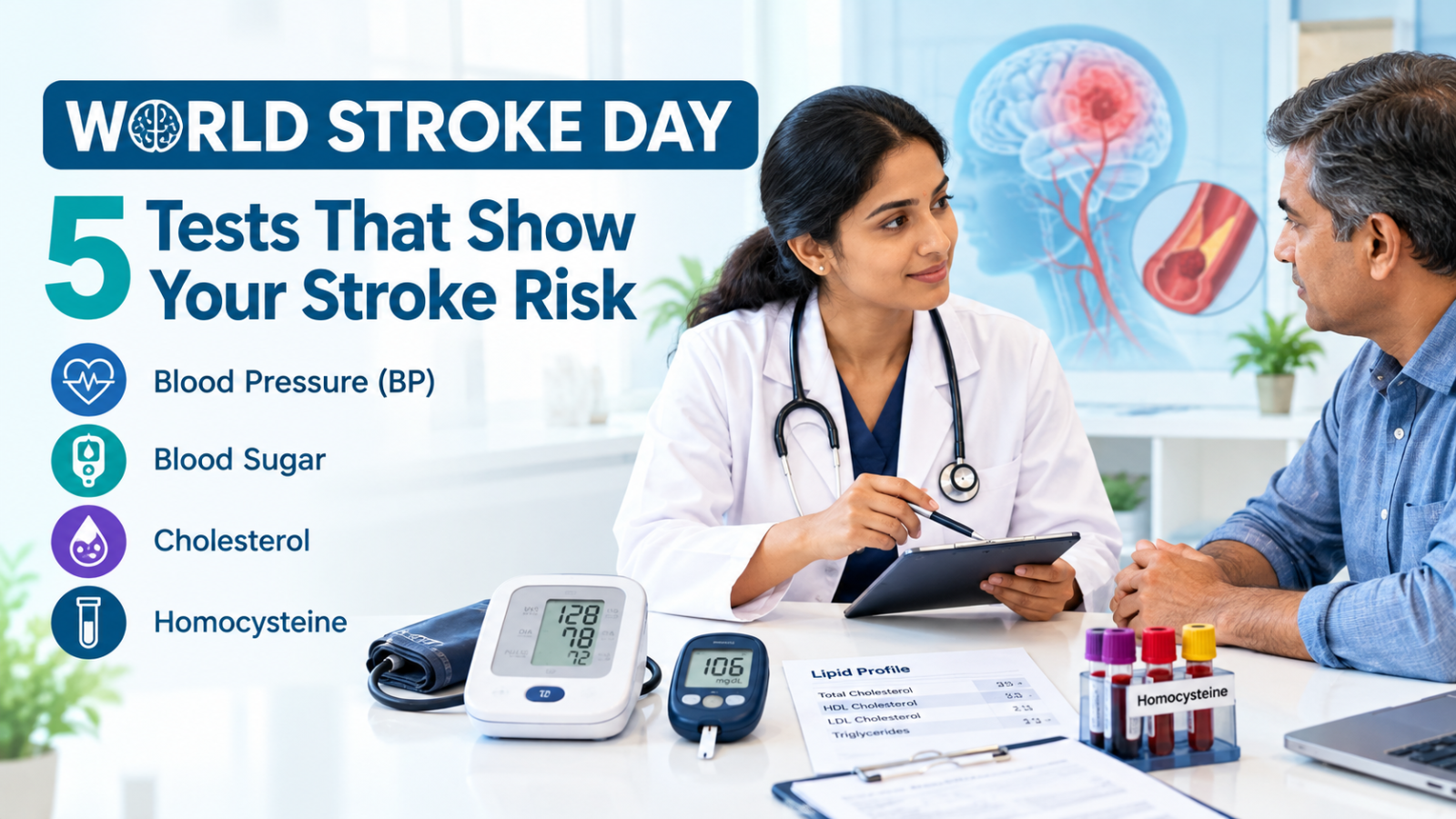
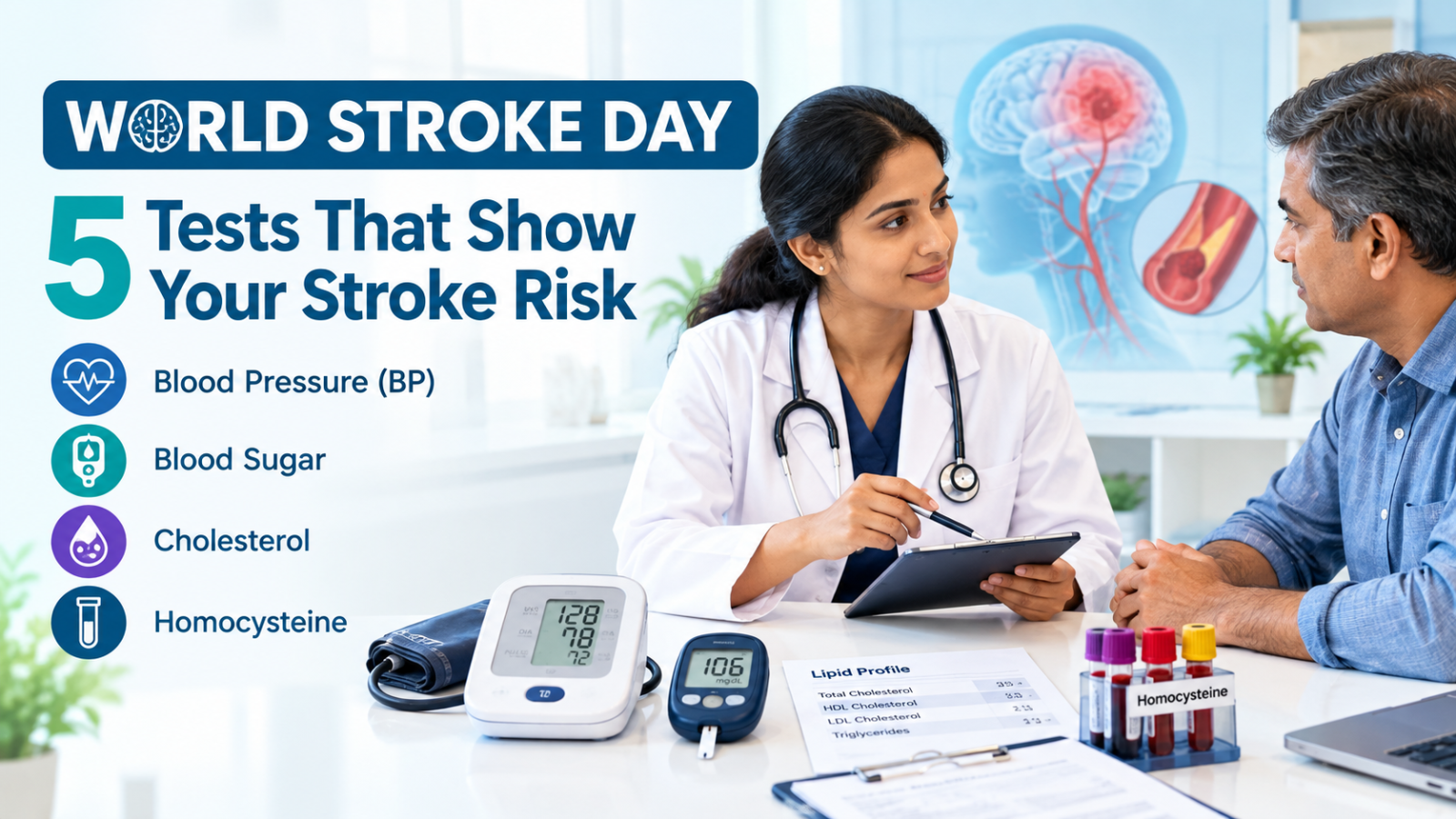
World Stroke Day is observed on 29 October every year to raise awareness about stroke prevention, early recognition, and timely treatment. For families with a history of stroke risk, this day is also an important reminder to pay attention to blood pressure, blood sugar, cholesterol, and other cardiovascular risk factors.
A stroke can happen when blood flow to part of the brain is interrupted or when a blood vessel in the brain ruptures. Although some risk factors cannot be changed, many others can be identified and managed with appropriate medical care.
Fortunately, several routine health assessments can help doctors evaluate your stroke risk. These include blood pressure measurement, HbA1c, a lipid profile, selected homocysteine testing and an ECG when clinically appropriate. However, no single test can predict with certainty whether someone will have a stroke.
Therefore, as World Stroke Day approaches on 29 October, this guide explains the tests that may help assess stroke risk, the warning signs everyone should recognise, and how to discuss preventive screening with Prima Diagnostics in Bangalore.
Stroke Warning Signs: Remember FAST
Before focusing on prevention, it is essential to recognise a stroke when it happens. Since every minute matters, knowing the warning signs can help you seek emergency care without delay.
The FAST method is a simple way to remember the main symptoms.
F — Face Drooping
First, ask the person to smile. If one side of the face droops or appears uneven, a stroke may be occurring.
A — Arm Weakness
Next, ask the person to raise both arms. If one arm drifts downward or cannot be lifted normally, seek emergency assistance.
S — Speech Difficulty
Listen for slurred speech, unusual words or difficulty understanding simple sentences. Even a sudden change in speech can be a warning sign.
T — Time to Act
Finally, call emergency services immediately if you notice any of these symptoms. Do not wait for symptoms to disappear, and do not delay emergency care to arrange a blood test.
Additionally, sudden vision problems, loss of balance, confusion or a severe unexplained headache can also require urgent assessment.
Which Tests Show Stroke Risk?
Tests that help assess stroke risk include blood pressure measurement, HbA1c or blood glucose testing, a lipid profile, homocysteine testing in selected cases, and an ECG when indicated. These investigations evaluate different aspects of cardiovascular health; however, they cannot individually predict or rule out a future stroke.
1. Blood Pressure Test: Checking for Hypertension
High blood pressure is one of the most important modifiable risk factors for stroke. Over time, uncontrolled hypertension can damage blood vessels and increase the risk of both blocked and bleeding-related strokes.
A blood pressure measurement helps identify whether your readings are elevated. Furthermore, repeated measurements or home monitoring may be recommended when a single reading does not provide a complete picture.
For families with a history of stroke, regular blood pressure checks are particularly worthwhile.
2. HbA1c Test: Checking Long-Term Blood Sugar
Diabetes can damage blood vessels and increase the risk of stroke. Consequently, doctors may recommend an HbA1c test to assess average blood glucose over approximately the previous two to three months.
An elevated HbA1c result can indicate diabetes or prediabetes, depending on the value and applicable diagnostic criteria. Therefore, identifying abnormal blood sugar can help guide lifestyle changes, further testing and treatment.
3. Lipid Profile: Measuring Cholesterol
A lipid profile measures cholesterol and triglycerides, including LDL and HDL cholesterol. Since abnormal lipid levels can contribute to atherosclerosis, or the buildup of plaque in arteries, they are relevant when assessing cardiovascular health.
However, cholesterol is only one part of the picture. Your doctor will also consider age, blood pressure, diabetes, smoking, family history and other factors when estimating your overall risk.
4. Homocysteine Test: Assessing a Selected Risk Marker
Homocysteine is an amino acid measured through a blood test. Elevated levels have been associated with vascular disease, although the relationship is complex and a high result does not automatically mean a person will experience a stroke.
In some circumstances, a doctor may recommend homocysteine testing, particularly when evaluating specific nutritional or metabolic concerns.
Nevertheless, it is not a routine screening test for everyone. Its usefulness depends on your medical history and the reason for testing.
5. ECG: Checking Heart Rhythm
An electrocardiogram (ECG) records the electrical activity of the heart. Although it does not directly measure stroke risk, it can help identify certain heart rhythm abnormalities.
For example, atrial fibrillation can increase the risk of blood clots that may travel to the brain and cause an ischaemic stroke. Therefore, an ECG may be useful when symptoms, examination findings or medical history suggest a possible rhythm problem.
However, a single normal ECG does not exclude intermittent atrial fibrillation.
When Is a Carotid Doppler Test Needed?
A carotid Doppler ultrasound assesses blood flow through the carotid arteries in the neck, which supply blood to the brain. It can help identify narrowing or other abnormalities in these arteries.
Nevertheless, carotid Doppler is not recommended as routine screening for every healthy adult without symptoms. Instead, a doctor may consider it when specific symptoms, examination findings or clinical circumstances warrant further investigation.
For instance, someone who has experienced a transient ischaemic attack (TIA) or certain stroke symptoms may need urgent assessment of the carotid arteries.
Importantly, sudden stroke-like symptoms require emergency evaluation rather than a routine ultrasound appointment.
Who Is at Higher Risk of Stroke?
Although a stroke can affect anyone, certain factors increase the likelihood of developing one.
Family History of Stroke
If a close relative has experienced a stroke, tell your doctor. Family history may reflect inherited susceptibility as well as shared lifestyle factors.
High Blood Pressure or Diabetes
Similarly, uncontrolled hypertension and diabetes can increase damage to blood vessels over time. Regular monitoring and appropriate treatment can help reduce these risks.
High Cholesterol and Smoking
Elevated cholesterol, smoking and some other cardiovascular risk factors contribute to blood vessel disease. Therefore, addressing these factors can be an important part of prevention.
Age and Heart Rhythm Problems
Stroke risk generally increases with age. In addition, conditions such as atrial fibrillation can raise the risk of clot-related stroke.
However, having one or more risk factors does not mean a stroke is inevitable. Instead, it highlights the importance of an individualised prevention plan.
Prima Stroke Risk Panel: What Should You Check?
As World Stroke Day approaches on 29 October, families in Bangalore may wish to review their cardiovascular health with a qualified healthcare professional.
Prima Diagnostics can be contacted to enquire about relevant diagnostic tests, including blood pressure assessment where available, HbA1c, lipid profile, and homocysteine testing. The appropriate combination depends on your medical history and your doctor's recommendations.
How to Approach Preventive Testing
- Review your family history: Tell your doctor if a parent or sibling has experienced a stroke, particularly at a younger age.
- Check your blood pressure: Arrange appropriate measurements and follow-up if your readings are elevated.
- Discuss blood tests: Ask whether HbA1c, a lipid profile or other investigations are appropriate.
- Consider additional assessment: An ECG or carotid Doppler may be recommended when clinically indicated.
- Plan follow-up: Review the results with your doctor and discuss lifestyle changes, treatment and monitoring.
A note on package availability: Confirm the current Prima Diagnostics test list and pricing before booking. Do not assume that a single package includes all five assessments or a carotid Doppler scan.
Frequently Asked Questions About Stroke Risk Tests
1. Which blood test can predict a stroke?
No blood test can reliably predict exactly who will have a stroke. HbA1c, a lipid profile and, in selected cases, homocysteine testing can provide information about risk factors, but the results must be interpreted alongside other clinical information.
2. Should people with a family history of stroke get tested?
They should discuss their family history with a doctor. Depending on their age and health, the doctor may recommend blood pressure checks, diabetes screening, cholesterol testing or other assessments.
3. Is homocysteine testing necessary for everyone?
No. Homocysteine testing is not routinely necessary for every healthy adult. A doctor may recommend it when there is a specific clinical reason.
4. When is World Stroke Day observed?
World Stroke Day is observed on 29 October each year. It highlights stroke awareness, prevention and the importance of recognising symptoms quickly.
5. Can I book stroke-related blood tests at Prima Diagnostics in Bangalore?
You can contact Prima Diagnostics to enquire about available tests, current prices and sample collection options. Confirm which investigations are offered and consult your doctor about which ones are appropriate for you.
Conclusion
World Stroke Day on 29 October is an opportunity to take practical steps towards better cardiovascular health, especially if stroke runs in your family. Blood pressure measurement, HbA1c, a lipid profile and selected additional investigations can help identify important risk factors.
However, no single test guarantees that a stroke will or will not occur. Therefore, combine appropriate screening with medical advice, healthy lifestyle choices and consistent management of conditions such as hypertension and diabetes.
Most importantly, remember FAST. If you notice sudden facial drooping, arm weakness or speech difficulties, seek emergency medical assistance immediately rather than waiting for a screening appointment.