
World Osteoporosis Day - Bone Density (DEXA), Calcium and Vitamin D Tests for Women Over 40
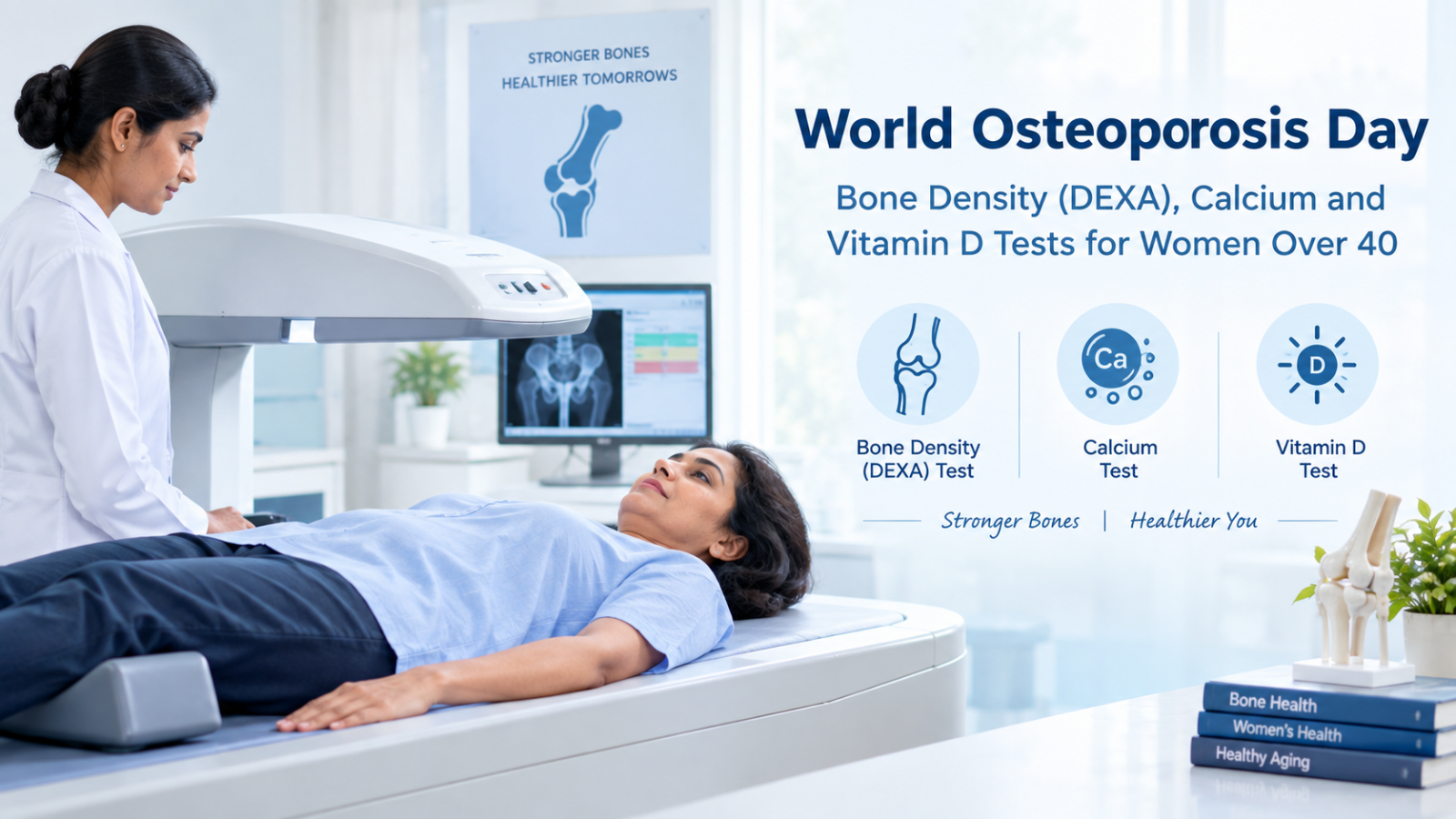
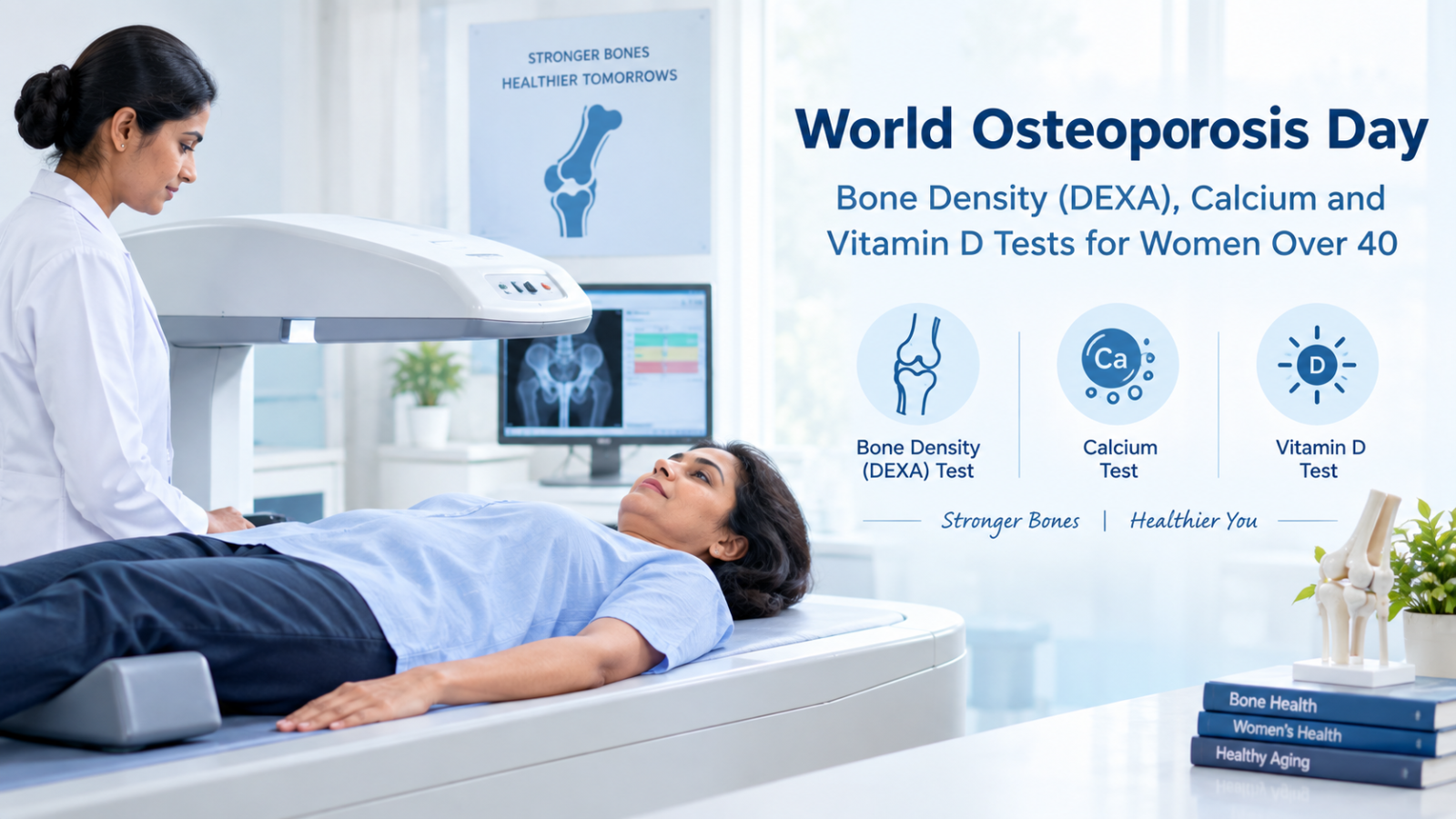
Every year, World Osteoporosis Day is observed on 20 October to raise awareness about weak and fragile bones. This year, the day also falls around the Dussehra period, making it a useful reminder for women and seniors to put bone health on their health-checkup list.
After the age of 40, bone health deserves more attention. In particular, women experience important hormonal changes around perimenopause and menopause, which can accelerate bone loss. However, osteoporosis can develop silently, without obvious symptoms, until a fracture occurs.
Fortunately, bone health can be assessed with the right tests. A DEXA scan, along with Calcium, Vitamin D, and PTH tests, can help doctors understand bone density and factors that may contribute to weak bones.
Why Does Osteoporosis Become More Important After 40?
Bones may look solid and permanent, but they are living tissue. In other words, the body continuously breaks down old bone and builds new bone.
With increasing age, however, bone formation may not keep pace with bone loss. Moreover, women can experience faster bone loss around menopause because of declining estrogen levels.
As a result, the risk of:
- Low bone density
- Osteopenia
- Osteoporosis
- Vertebral fractures
- Hip fractures
- Wrist fractures
can gradually increase.
Why Women Are More Vulnerable
Women are particularly important to consider because bone loss can accelerate after menopause.
Furthermore, low physical activity, inadequate calcium intake, low Vitamin D levels, smoking, excessive alcohol consumption and certain medications can add to the risk.
Therefore, women over 40 should not wait for a fracture before thinking about bone health.
What Is Osteoporosis?
Osteoporosis is a condition in which bones become less dense and more fragile, increasing the risk of fractures.
Importantly, osteoporosis may not cause pain in its early stages. A person may feel completely healthy while bone density is gradually decreasing.
That is why screening becomes particularly useful when a woman has risk factors or has reached an age at which her doctor recommends assessment.
Which Test Is Done for Osteoporosis?
The primary test used to assess bone density is a DEXA scan, also called a DXA scan or bone mineral density test.
A DEXA scan measures bone mineral density, commonly at areas such as the hip and spine. In addition, doctors may recommend blood tests such as Calcium, Vitamin D, and PTH to look for nutritional or hormonal factors affecting bone health.
So, a simple answer is:
A DEXA scan is the main test used to measure bone mineral density and assess osteoporosis. Calcium, Vitamin D and PTH blood tests may be used alongside it to evaluate factors affecting bone health.
Tests for Osteoporosis and Bone Health
Different tests answer different questions. Therefore, they should be viewed as complementary rather than interchangeable.
1. DEXA Scan – Measures Bone Density
A DEXA scan provides an estimate of bone mineral density. It is commonly performed at the hip and lumbar spine.
Most importantly, it can help identify whether bone density is normal, lower than expected, or in the osteoporosis range.
2. Calcium Test – Checks Blood Calcium
Calcium is essential for maintaining bones, teeth, muscles, and normal nerve function.
However, blood calcium alone cannot diagnose osteoporosis. Instead, it provides useful information when interpreted along with other findings.
3. Vitamin D Test – Checks Vitamin D Status
Vitamin D helps the body absorb calcium and supports normal bone metabolism.
Consequently, low Vitamin D may contribute to poor bone health and muscle weakness.
4. PTH Test – Looks at Parathyroid Hormone
Parathyroid hormone, or PTH, plays an important role in maintaining calcium balance.
If PTH is abnormal, it can affect calcium metabolism and, in some situations, contribute to changes in bone health.
Therefore, your doctor may recommend PTH testing when calcium or bone-related results require further evaluation.
DEXA Score Explained: What Do the Numbers Mean?
One of the most confusing parts of a DEXA report is the T-score.
The T-score compares bone mineral density with the average bone density of a healthy young adult.
Generally:
- T-score of -1 or above: Usually considered normal bone density
- T-score between -1 and -2.5: Osteopenia, or lower-than-normal bone density
- T-score of -2.5 or below: Consistent with osteoporosis in the appropriate clinical context
However, the number should not be interpreted in isolation.
Age, fracture history, medications, medical conditions and other risk factors can also influence fracture risk. Therefore, discuss the complete DEXA report with your doctor.
What About the Z-Score?
A DEXA report may also include a Z-score.
Unlike the T-score, the Z-score compares bone density with people of a similar age and demographic characteristics.
Your doctor can determine which score is most appropriate for your situation.
Who Should Consider Bone Health Testing?
Not every woman over 40 automatically needs the same tests. Nevertheless, assessment becomes especially important when risk factors are present.
For example, discuss bone health with your doctor if you have:
- Reached menopause
- A previous fracture from a minor fall
- A family history of osteoporosis or hip fracture
- Low body weight
- Low Vitamin D or calcium intake
- Limited physical activity
- Long-term use of certain steroid medicines
- Smoking or heavy alcohol use
- Conditions that affect calcium or bone metabolism
Additionally, seniors should pay particular attention to fall prevention because even a relatively small fall can cause a serious fracture when bones are fragile.
7 Ways to Protect Your Bones After 40
Testing is important, but prevention matters just as much.
1. Get Enough Calcium
Include calcium-rich foods such as milk, curd, paneer and other suitable dietary sources.
If you have dietary restrictions, discuss appropriate alternatives with a healthcare professional.
2. Maintain Healthy Vitamin D Levels
Vitamin D supports calcium absorption and bone health. Therefore, your doctor may recommend testing and supplementation when appropriate.
3. Stay Physically Active
Weight-bearing and resistance exercises can support bone and muscle strength.
For example, walking, strength training and other suitable activities can become part of a regular routine.
4. Build Muscle Strength
Strong muscles can support balance and mobility. Consequently, strengthening exercises may also help reduce fall risk.
5. Avoid Smoking
Smoking can negatively affect bone health. Therefore, quitting is beneficial for both bones and overall health.
6. Limit Excessive Alcohol
Excessive alcohol consumption can increase health risks, including those related to falls and bone health.
7. Prevent Falls at Home
For older adults especially, simple changes can make a difference. Keep floors clear, improve lighting and use suitable support when necessary.
World Osteoporosis Day: A Good Time for a Bone Health Check
20 October is World Osteoporosis Day, and because the date also falls during the Dussehra season, families may already be thinking about the health of parents and grandparents.
Therefore, instead of focusing only on festivals and celebrations, consider making bone health part of the family health conversation.
For women over 40, particularly those approaching or going through menopause, discussing DEXA, Calcium, Vitamin D and PTH testing with a healthcare professional can be a useful step.
Prima Bone Health Package in Bangalore
If you are planning a bone-health assessment in Bangalore, Prima Diagnostics can help with relevant laboratory investigations.
Depending on your doctor's recommendations, testing may include Calcium, Vitamin D and PTH, while a DEXA scan may be advised separately when bone-density measurement is required.
Prima Diagnostics focuses on accurate and reliable diagnostic testing, with convenient options for people across Bangalore.
You can also ask about available testing options at Prima centres and whether home sample collection is suitable for the blood tests you need.
When Should You Repeat Bone Health Tests?
There is no single testing schedule that applies to everyone.
Instead, the timing depends on your age, DEXA findings, fracture risk, treatment and medical history.
For example, someone with normal bone density may have a different follow-up plan from someone with osteoporosis or a previous fragility fracture.
Therefore, follow the interval recommended by your doctor rather than repeating tests unnecessarily.
FAQs About Osteoporosis and Bone Tests
Is osteoporosis painful?
Not necessarily. Osteoporosis can remain silent until a fracture occurs. However, fractures, particularly spinal fractures, can cause significant pain.
Is Vitamin D enough to prevent osteoporosis?
No. Vitamin D is important, but bone health also depends on adequate calcium, physical activity, muscle strength, hormonal and medical factors, and overall fracture risk.
Can a blood test diagnose osteoporosis?
No. Blood tests such as Calcium, Vitamin D and PTH can help identify factors affecting bone health, but DEXA is the main test used to measure bone mineral density.
Is DEXA safe?
DEXA uses a very low level of X-ray radiation and is widely used for measuring bone mineral density. Your healthcare provider can advise whether it is appropriate for you.
Should women over 40 get a DEXA scan?
Not necessarily all women at exactly age 40. However, women with risk factors or those in age groups where screening is recommended should discuss DEXA with their doctor.
Can osteoporosis be prevented?
Bone loss cannot always be completely prevented. Nevertheless, adequate nutrition, regular weight-bearing exercise, muscle strengthening, avoiding smoking, limiting excessive alcohol and addressing Vitamin D or calcium problems can support healthier bones.
Conclusion
Osteoporosis can develop quietly, which is why bone health should not be ignored after 40. Moreover, women may face increased bone loss around menopause, making awareness and appropriate screening especially important.
A DEXA scan measures bone density, while Calcium, Vitamin D, and PTH tests can provide additional information about factors involved in bone health.
This World Osteoporosis Day on 20 October, while families come together for the Dussehra season, consider making bone health part of the conversation. If you are a woman over 40, a senior, or someone with osteoporosis risk factors, speak with your healthcare provider about the tests that are appropriate for you.