
World Mental Health Day - 4 Blood Tests That Affect Your Mood (Thyroid, Vitamin D, B12, Sugar)
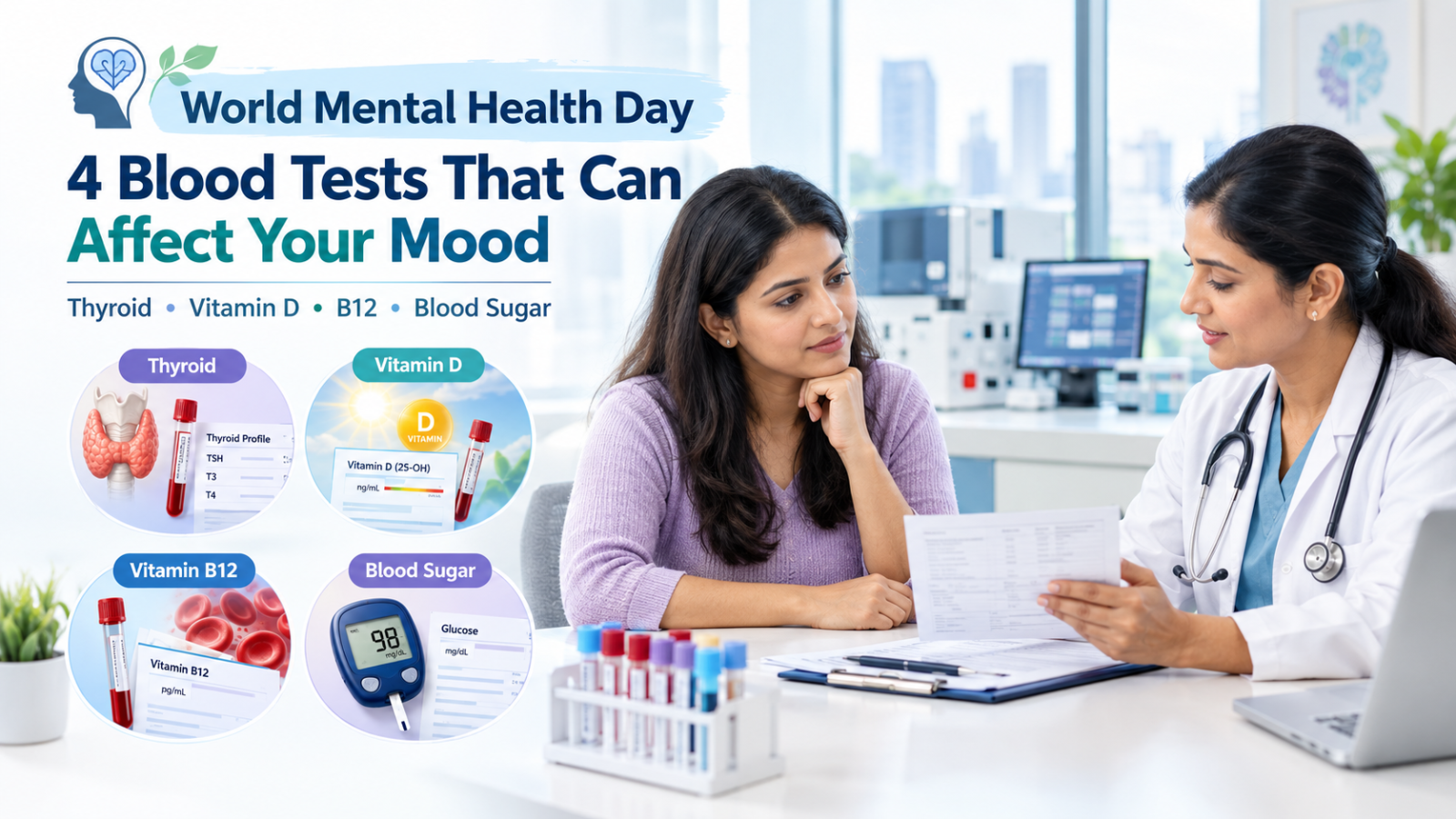
World Mental Health Day is observed on 10 October. Check the blood tests that affect your mood, making it a useful reminder that mental wellbeing is connected with overall physical health. After all, feeling low, tired, restless or unable to concentrate does not always have a single cause.
Sometimes, everyday stress, poor sleep or emotional difficulties may play a major role. However, certain physical health conditions and nutrient deficiencies can also contribute to tiredness, mood changes, poor concentration and other symptoms.
Therefore, when mood-related symptoms persist, it can be useful to look at both mental and physical health.
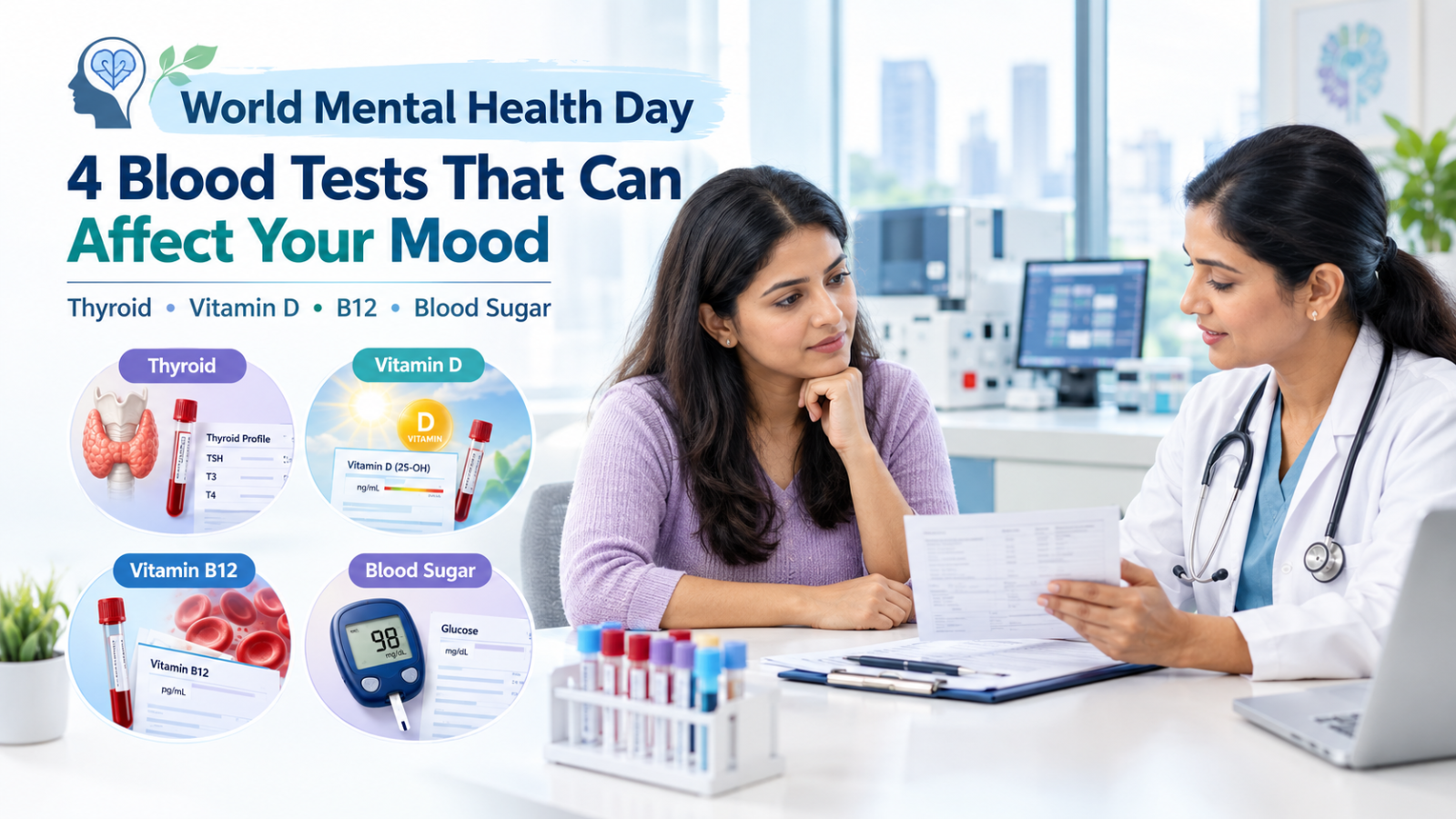
Mind and Body Are Connected
Your brain depends on adequate nutrition, hormones, glucose and many other biological processes to function normally. Consequently, changes in these areas can sometimes affect how you feel.
For example, thyroid problems may cause tiredness or changes in mood. Similarly, vitamin B12 or vitamin D deficiency may be associated with fatigue and other symptoms. Blood sugar problems can also cause changes in energy levels and concentration.
However, a blood test cannot diagnose every mental-health condition. Instead, it can help identify certain physical factors that may be contributing to symptoms.
What Are the Blood Tests That Affect Your Mood Problems?
There is no single “mood blood test.” Nevertheless, four commonly considered tests are thyroid testing, Vitamin D, Vitamin B12 and blood sugar testing.
Importantly, these tests should be chosen according to your symptoms and medical history rather than ordered simply because you are feeling stressed.
1. Thyroid Test - When Hormones Affect Energy and Mood
The thyroid gland produces hormones that influence metabolism and many body functions.
When thyroid hormone levels are abnormal, people may experience symptoms such as tiredness, changes in energy, difficulty concentrating, or changes in mood.
Why Check Thyroid Function?
A TSH test is commonly used as part of thyroid evaluation. Depending on the situation, a healthcare provider may also recommend additional thyroid hormone tests.
For instance, an underactive thyroid can be associated with fatigue, low energy and depressive symptoms. On the other hand, an overactive thyroid can be associated with anxiety, restlessness, sleep difficulties and a racing heartbeat.
Therefore, if mood changes occur alongside noticeable changes in energy, weight, sleep or heart rate, discussing thyroid testing with a healthcare professional may be useful.
2. Vitamin D - More Than Just Bone Health
Vitamin D is best known for its role in bone and muscle health. However, vitamin D also has biological roles in the nervous system.
Low vitamin D levels are common in many populations, including people who spend much of their day indoors.
Could Low Vitamin D Be Linked With Low Mood?
Research has investigated associations between vitamin D status and depression, although low vitamin D should not automatically be considered the cause of a person's mood symptoms.
Therefore, a 25-OH Vitamin D test can help determine whether your vitamin D level is low when testing is clinically appropriate.
Rather than starting high-dose supplements on your own, it is better to discuss the result with a healthcare professional.
3. Vitamin B12 - Important for Nerves and Energy
Vitamin B12 plays an important role in red blood cell formation and normal nervous-system function.
When B12 deficiency occurs, symptoms can include tiredness, weakness and neurological changes. Some people may also experience concentration difficulties or mood-related symptoms.
Who May Need to Check B12?
B12 testing may be particularly relevant when symptoms occur alongside dietary risk factors, certain gastrointestinal conditions or problems affecting B12 absorption.
Furthermore, people following vegetarian or vegan diets may need to pay attention to adequate B12 intake because natural dietary sources are mainly animal-derived.
A Vitamin B12 blood test can help identify whether deficiency may be contributing to symptoms.
4. Blood Sugar - Energy and Concentration Matter
Your brain requires glucose for energy. However, both chronically high blood glucose and episodes of low blood sugar can affect how a person feels.
Which Sugar Tests Are Useful?
Depending on the situation, a healthcare professional may recommend fasting blood sugar, random blood sugar or HbA1c.
HbA1c is particularly useful for assessing average blood glucose levels over the previous few months.
Consequently, if tiredness, difficulty concentrating or changes in energy occur alongside increased thirst, frequent urination or other diabetes-related symptoms, discussing blood sugar testing may be appropriate.
Mood Symptoms Can Have More Than One Cause
It is important to remember that mood changes rarely have a single explanation.
For example, a person may have poor sleep because of work stress, while also having low vitamin B12. Similarly, someone may have thyroid problems as well as anxiety related to personal circumstances.
Therefore, looking at the whole picture is more helpful than assuming one blood-test result explains everything.
When Should You Also Talk to a Counsellor?
Blood tests can identify some physical contributors, but they cannot replace mental-health support.
If you have persistent sadness, anxiety, loss of interest, overwhelming worry, difficulty coping, relationship problems or significant work-related stress, consider speaking with a qualified counsellor, psychologist or mental-health professional.
Likewise, if symptoms are affecting your sleep, relationships, work or daily activities, seeking support early can be helpful.
Physical Tests and Mental-Health Support Can Work Together
You do not have to choose between physical-health testing and emotional support.
Instead, both can be part of a broader approach. A healthcare professional can assess physical symptoms, while a counsellor or psychologist can help address emotional and psychological factors.
Simple Daily Habits That Support Mental Wellbeing
Although healthy habits cannot replace professional care when it is needed, they can support overall wellbeing.
Get Consistent Sleep
First, try to maintain a reasonably consistent sleep and wake schedule.
Move Your Body
Next, add regular walking, stretching or another activity that you enjoy. Even short movement breaks can be useful during long desk-based workdays.
Eat Regular, Balanced Meals
Furthermore, include nutritious meals with adequate protein, vegetables, fruits and whole-food carbohydrate sources.
Take Breaks From Screens
If you spend long hours working on a computer, step away periodically. Consequently, short breaks can help reduce continuous mental strain.
Stay Connected
Finally, make time for supportive conversations with friends, family or people you trust.
Prima Wellness Panel for a Broader Health Check
If you are experiencing persistent tiredness, low energy or other symptoms, a broader health assessment may sometimes be useful.
At Prima Diagnostics, appropriate blood tests can be discussed based on your symptoms and your healthcare provider's recommendation. Depending on the clinical need, testing may include thyroid assessment, Vitamin D, Vitamin B12 and blood sugar-related tests.
Rather than testing everything without a reason, however, it is better to choose investigations based on your symptoms, risk factors and medical history.
World Mental Health Day: A Reminder to Check In
World Mental Health Day on 10 October is not only about talking about mental health. It is also an opportunity to think about the connection between physical and emotional wellbeing.
Therefore, if you have been feeling unusually tired, low, anxious or unable to concentrate, do not automatically assume that it is “just stress.”
At the same time, do not assume that a blood test will explain every mood problem.
Instead, consider both sides: check relevant physical health factors when appropriate, and seek mental-health support when you need it.
FAQs About Blood Tests that Affect Your Mood
What are the blood tests that affect your mood problems?
There is no single blood test that diagnoses mood problems. Depending on symptoms, healthcare professionals may consider thyroid testing, Vitamin D, Vitamin B12 and blood sugar tests to look for certain physical factors that can contribute to fatigue or mood-related symptoms.
Can thyroid problems affect mood?
Yes. Thyroid hormone abnormalities can be associated with symptoms such as fatigue, low energy, anxiety, restlessness or changes in concentration. Thyroid testing can help evaluate thyroid function.
Can Vitamin B12 deficiency cause low mood?
Vitamin B12 deficiency can cause neurological and other symptoms and may be associated with mood changes. Testing can help determine whether a deficiency is present.
Should I take Vitamin D or B12 supplements without testing?
It is better to discuss supplementation with a healthcare professional. Testing may be appropriate depending on your symptoms and risk factors.
Do blood tests diagnose depression or anxiety?
No. Blood tests do not diagnose depression or anxiety. They may, however, help identify certain physical conditions that can contribute to symptoms or mimic some features of mental-health conditions.
Conclusion
This World Mental Health Day on 10 October, remember that mental and physical health are closely connected. Consequently, persistent fatigue, low mood, anxiety or concentration problems deserve attention rather than being automatically dismissed as everyday stress.
Thyroid testing, Vitamin D, Vitamin B12 and blood sugar testing can sometimes help identify physical factors contributing to symptoms. However, emotional and psychological causes also matter.
So, if symptoms continue, consider a balanced approach: discuss appropriate blood tests with a healthcare professional, maintain supportive daily habits and, when needed, speak with a qualified mental-health professional.