
Insulin Resistance Symptoms - 8 Signs and the Tests That Confirm It
Insulin resistance symptoms
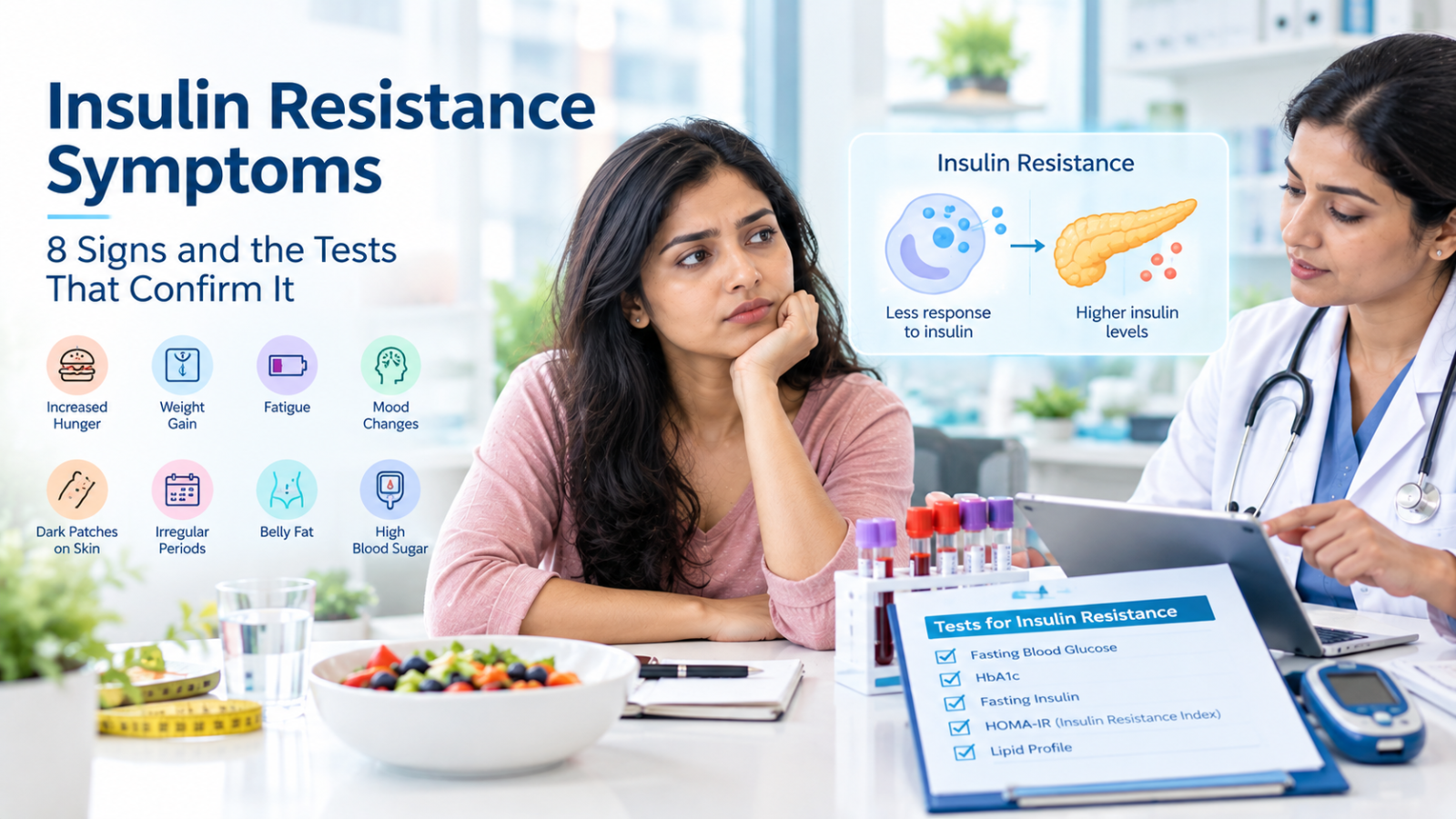
Insulin resistance can develop gradually, and therefore, many people do not notice it at first. However, certain changes—such as increasing belly fat, frequent cravings, dark patches on the neck, or difficulty losing weight—can be useful warning signs.
In particular, insulin resistance is often discussed in people with PCOS, excess abdominal fat, prediabetes, or a sedentary lifestyle. Moreover, long working hours and prolonged sitting can make metabolic health harder to maintain. This is especially relevant for many Bangalore IT workers, who may spend most of the day at a desk.
So, what exactly should you look for? More importantly, which tests can actually help confirm insulin resistance?
What are the insulin resistance symptoms?
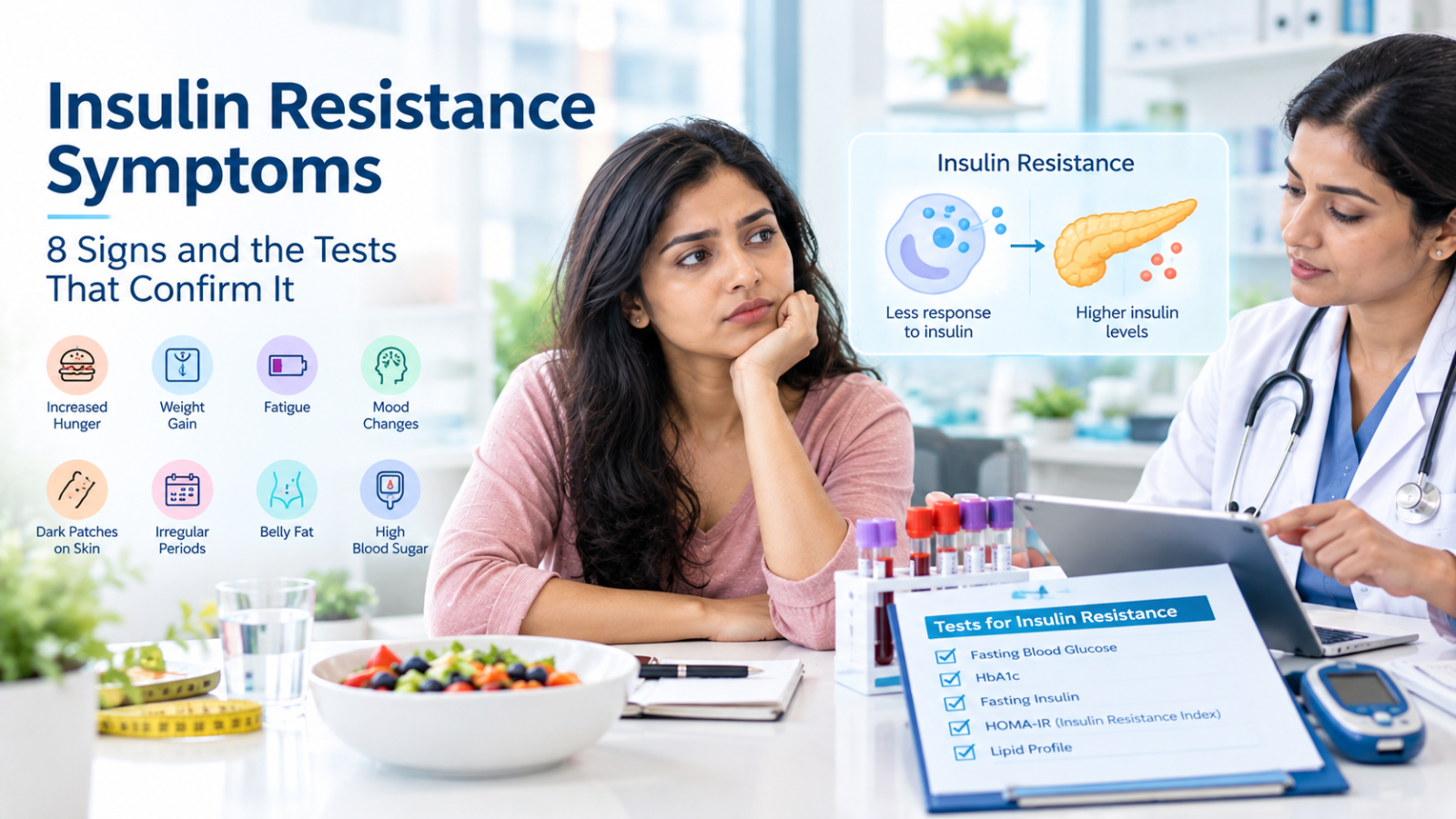
Insulin resistance symptoms can include increasing belly fat, frequent hunger or cravings, difficulty losing weight, tiredness after meals, dark skin patches around the neck or armpits, and metabolic changes such as high triglycerides or low HDL cholesterol.
However, symptoms alone cannot confirm insulin resistance. Therefore, blood tests such as fasting insulin, HOMA-IR, HbA1c, fasting glucose, and a lipid profile may be recommended depending on the individual situation.
What is insulin resistance?
First, it helps to understand what insulin does.
Insulin is a hormone that helps glucose move from the bloodstream into cells, where it can be used for energy. When the body's cells become less responsive to insulin, the pancreas may produce more insulin to compensate.
Consequently, blood insulin levels can remain high for some time even when blood glucose is still within the normal range.
Over time, however, insulin resistance may contribute to prediabetes, type 2 diabetes, abnormal cholesterol levels, and other metabolic problems.
8 Insulin Resistance Symptoms You Should Know
Not everyone experiences the same symptoms. Nevertheless, these eight signs are worth discussing with a healthcare professional, particularly when several occur together.
1. Increasing belly fat
One of the most commonly noticed changes is increasing fat around the abdomen.
For example, you may notice that your waistline is gradually increasing even though your overall weight has not changed dramatically. Abdominal fat can also occur alongside other metabolic risk factors.
However, belly fat alone does not prove insulin resistance.
2. Dark patches on the neck
Dark, thicker, or velvety-looking skin around the neck may be a condition called acanthosis nigricans.
Similarly, darker patches can sometimes appear around the armpits or groin. Importantly, this skin change can have several causes, so it should not automatically be assumed to mean insulin resistance.
Still, when it occurs along with weight gain or other metabolic symptoms, it is worth getting evaluated.
3. Frequent sugar or carbohydrate cravings
Do you frequently crave sweets, biscuits, sugary drinks, or other carbohydrate-rich foods?
If so, it may be useful to look at your overall eating pattern, sleep, stress, and blood sugar regulation. Persistent cravings are not specific to insulin resistance, but they can occur alongside metabolic issues.
4. Feeling hungry soon after eating
Similarly, some people feel hungry again relatively soon after a meal.
This can happen for many reasons, including meals that are low in protein or fibre, inadequate sleep, stress, or changes in glucose regulation. Therefore, constant hunger should be considered in context rather than used as a standalone diagnosis.
5. Difficulty losing weight
Despite exercising or reducing food intake, some people find weight management difficult.
Nevertheless, weight loss is influenced by numerous factors, including calorie intake, physical activity, sleep, medications, hormones, stress, and genetics.
Therefore, difficulty losing weight does not automatically mean insulin resistance. However, when combined with abdominal fat and other signs, it may justify metabolic testing.
6. Tiredness or sleepiness after meals
Feeling unusually sleepy or sluggish after eating can sometimes make people wonder whether their blood sugar is fluctuating.
However, large meals, high-carbohydrate meals, poor sleep, and an irregular schedule can also contribute. Consequently, persistent symptoms should be assessed alongside other risk factors.
7. PCOS-related metabolic symptoms
Insulin resistance can occur alongside PCOS, although not every person with PCOS has insulin resistance.
In addition, PCOS may involve irregular periods, acne, excess facial or body hair, weight changes, or difficulty with ovulation.
Therefore, women with PCOS and additional metabolic risk factors may benefit from discussing glucose and metabolic testing with their healthcare provider.
8. Abnormal cholesterol or triglycerides
Finally, insulin resistance can occur alongside an unhealthy lipid pattern.
For instance, triglycerides may be elevated, while HDL cholesterol may be low. Consequently, a lipid profile can provide useful information about overall metabolic health.
Why insulin resistance can be easy to miss
Insulin resistance does not always cause obvious symptoms.
In fact, some people can have insulin resistance while their fasting glucose and HbA1c remain in the normal range. Therefore, relying only on symptoms—or only on one glucose test—may not provide the complete picture.
That is why healthcare professionals may consider multiple factors together.
Tests for Insulin Resistance
1. Fasting insulin test
A fasting insulin test measures the amount of insulin circulating in the blood after a period of fasting.
Higher insulin levels can sometimes suggest that the body is producing more insulin to maintain glucose control. However, interpretation depends on the laboratory method, reference range, glucose level, and clinical context.
2. HOMA-IR
HOMA-IR is calculated using fasting glucose and fasting insulin.
It is commonly used as an estimate of insulin resistance rather than as a standalone diagnostic test.
Because there is no single universal cutoff that applies perfectly to everyone, the result should be interpreted according to the laboratory method and clinical situation.
3. HbA1c
HbA1c provides an estimate of average blood glucose over roughly the previous two to three months.
Importantly, HbA1c helps identify prediabetes or diabetes, but it does not directly measure insulin resistance.
Therefore, it works best as part of a broader metabolic assessment when insulin resistance is suspected.
4. Lipid profile
A lipid profile typically checks cholesterol and triglycerides.
In particular, triglycerides and HDL cholesterol can provide additional information about metabolic health. However, an abnormal lipid profile does not by itself confirm insulin resistance.
Which Test Is Best for Insulin Resistance?
There is no single blood test that confirms insulin resistance in every person.
Instead, a healthcare professional may consider fasting insulin, fasting glucose, HOMA-IR, HbA1c, and lipid profile together.
Furthermore, factors such as age, weight, family history, PCOS, medications, blood pressure, and lifestyle can influence the overall assessment.
How to Reverse Insulin Resistance
The encouraging news is that insulin sensitivity can often improve with sustainable lifestyle changes.
Start with regular physical activity
First, aim for consistent movement rather than occasional intense workouts.
Walking, resistance training, cycling, swimming, and other forms of exercise can all contribute to better metabolic health.
Moreover, breaking up long periods of sitting can be particularly useful for people with desk-based jobs.
Build balanced meals
Next, focus on meals containing adequate protein, vegetables, fibre-rich carbohydrates, and healthy fats.
At the same time, reduce frequent intake of sugary beverages, highly refined carbohydrates, and heavily processed foods.
Work on waist management
If you have excess abdominal weight, even gradual and sustainable weight loss can support metabolic health.
However, avoid crash diets. Instead, choose changes that you can maintain over months and years.
Prioritize sleep
Sleep is often overlooked.
Nevertheless, inadequate or irregular sleep can make appetite, cravings, energy levels, and metabolic health harder to manage.
Manage prolonged sitting
For Bangalore's IT workforce, this is especially relevant.
If your work involves sitting for several hours, take regular movement breaks, walk during calls when possible, and add structured physical activity outside working hours.
Insulin Resistance and PCOS
Insulin resistance and PCOS frequently come up together.
However, they are not the same condition. PCOS is a hormonal and reproductive disorder, while insulin resistance describes reduced responsiveness to insulin.
Nevertheless, metabolic assessment can be important for some women with PCOS, particularly when there are additional risk factors such as weight gain, family history of diabetes, or abnormal glucose results.
Insulin Resistance in Bangalore IT Workers
Bangalore's large IT and corporate workforce often involves long hours at a desk, irregular meals, late-night work, and reduced physical activity.
Consequently, metabolic health can become an important part of preventive healthcare.
Similarly, people working in Whitefield, Electronic City, Manyata Tech Park, Koramangala, Outer Ring Road, and other office-heavy areas may find routine health testing useful when risk factors are present.
However, location alone does not determine insulin resistance. Lifestyle, genetics, body composition, medical history, and other factors all matter.
Prima Metabolic Panel
For people who want a broader look at metabolic health, a Prima metabolic panel can be considered based on the available package and individual requirements.
Depending on the selected package, metabolic testing may include tests such as:
- Fasting blood glucose
- HbA1c
- Fasting insulin
- Lipid profile
- Other relevant metabolic markers
The exact tests and current package price can vary. Therefore, check the latest package details when booking.
For people who prefer convenience, home sample collection may also be available in selected Bangalore areas, subject to service coverage and appointment availability.
When Should You Get Tested?
Consider discussing testing with a healthcare professional if you have several risk factors or symptoms, such as:
- Increasing abdominal fat
- Dark patches around the neck or armpits
- PCOS
- Prediabetes
- Strong family history of diabetes
- Abnormal cholesterol or triglycerides
- Difficulty managing weight
- Persistent metabolic concerns
Most importantly, do not wait for symptoms if you have already been told that you have prediabetes or another metabolic risk factor.
FAQs About Insulin Resistance Symptoms
What are the most common insulin resistance symptoms?
Commonly noticed signs include increasing belly fat, dark skin patches around the neck, frequent cravings, difficulty losing weight, increased hunger, and some metabolic abnormalities. However, insulin resistance can also occur without obvious symptoms.
Can a dark neck mean insulin resistance?
A dark, velvety patch on the neck can be acanthosis nigricans, which may be associated with insulin resistance. However, there are other possible causes, so medical evaluation is important.
Is HOMA-IR enough to diagnose insulin resistance?
Not necessarily. HOMA-IR is an estimate based on fasting glucose and fasting insulin. Its interpretation depends on the laboratory method and clinical context, so it should not be treated as a standalone diagnosis.
Can PCOS cause insulin resistance?
PCOS and insulin resistance can occur together, although not every person with PCOS has insulin resistance. Therefore, metabolic screening may be considered based on individual risk factors.
Can insulin resistance be reversed?
Insulin sensitivity can often improve with regular physical activity, balanced nutrition, adequate sleep, weight management when appropriate, and treatment of related metabolic conditions. Individual recommendations should come from a healthcare professional.
Conclusion
Insulin resistance can develop quietly. Nevertheless, signs such as increasing belly fat, dark neck patches, persistent cravings, difficulty managing weight, PCOS-related metabolic concerns, and abnormal lipid results can provide reasons to investigate further.
More importantly, symptoms alone cannot confirm insulin resistance. Tests such as fasting insulin, HOMA-IR, HbA1c, fasting glucose, and lipid profile can provide a more complete picture when interpreted appropriately.
Therefore, if you are concerned about insulin resistance—particularly if you have PCOS, prediabetes, abdominal weight gain, or a sedentary work routine—consider discussing metabolic testing with your healthcare provider.
For convenient diagnostic testing in Bangalore, Prima Diagnostics offers a range of blood tests and metabolic health assessments, with home collection available in selected areas.