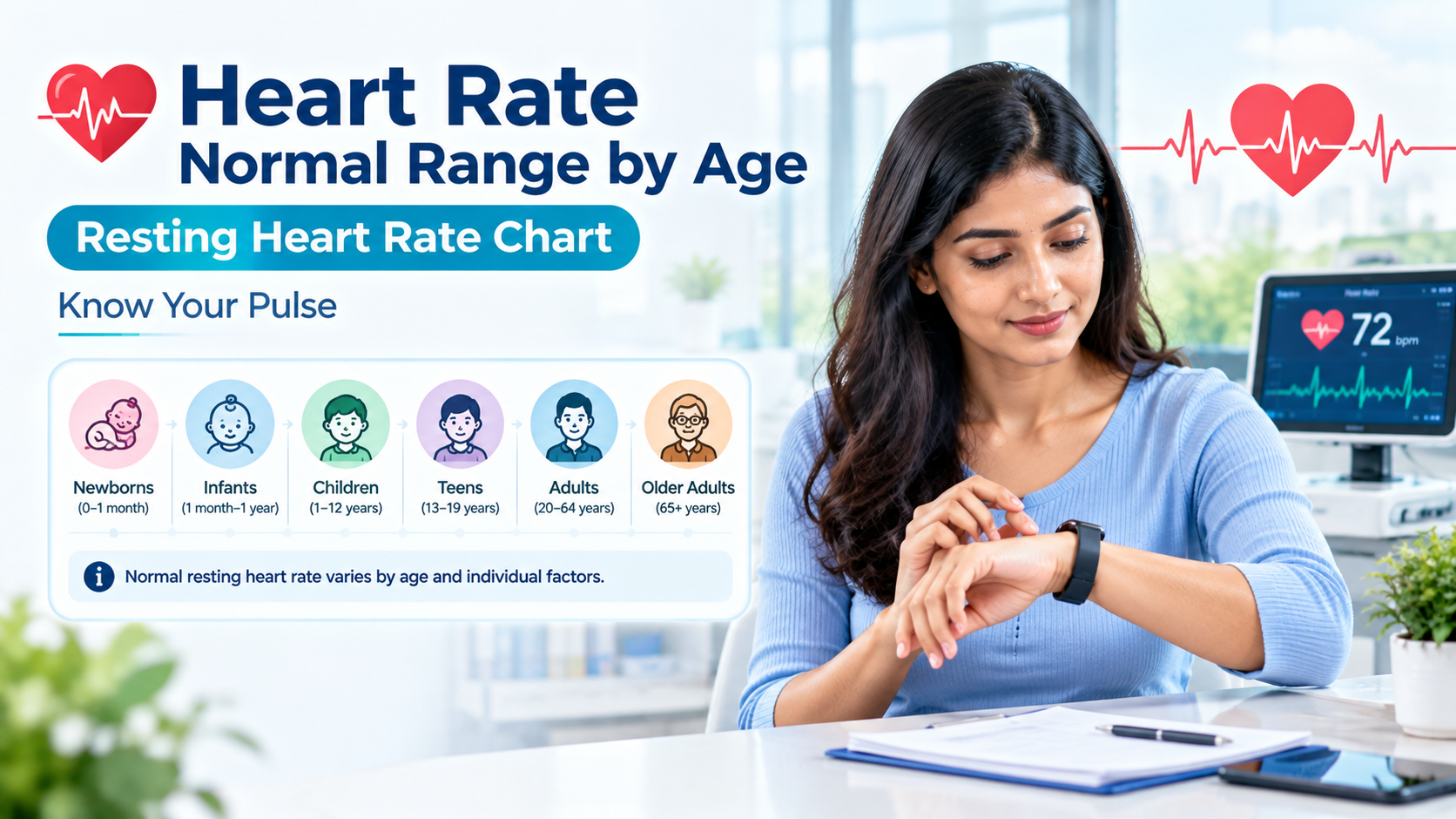
Have you checked your heart rate on a smartwatch and wondered,
“Do I have normal pulse rate by age?” Or perhaps you have noticed that your child's pulse seems much faster than yours.
In reality, heart rate changes with age, activity, fitness, emotions and several other factors. Therefore, a number that looks high for an adult may be completely expected in a young child.
Moreover, a resting pulse is different from a heart rate measured immediately after exercise, walking, climbing stairs or feeling anxious. Consequently, knowing
normal pulse rate by age can help you understand a reading before becoming unnecessarily concerned.
This Blog Includes:
- Article Title: Heart Rate (Pulse) Normal Pulse Rate by Age - Resting Heart Rate Chart
- Publisher: Prima Diagnostics
- Target Keyword: normal pulse rate by age
- Search Intent: Smartwatch users and parents checking whether pulse readings are appropriate for their age
- Topics Covered: Resting heart rate, pulse rate by age, low pulse, high pulse, athletes and smartwatch readings
- Age Groups Covered: Babies, infants, toddlers, children, teenagers, adults and seniors
- Tests Included: ECG and TSH, with additional testing discussed according to symptoms
- Chart Included: Resting pulse rate by age
- Warning Signs Covered: Chest pain, fainting, dizziness, breathlessness, and persistent irregular pulse
- Local SEO Focus: Bengaluru smartwatch users, heart-rate tracking and Prima Diagnostics
- Preparation Guidance: Measure resting pulse after sitting quietly and follow healthcare provider instructions for any diagnostic tests
- FAQ Section: Included
 What Is a Normal Pulse Rate by Age?
A resting pulse rate is the number of heartbeats per minute when the body is relaxed. For many adults, a resting heart rate between
60 and 100 beats per minute (bpm) is generally considered normal. However, children usually have faster resting heart rates, while well-trained athletes may have lower rates.
Therefore, age and individual circumstances matter when interpreting a pulse reading.
Resting Heart Rate Chart by Age
The following chart provides
general resting heart rate ranges. However, ranges can vary depending on the reference source, health status and measurement conditions.
| Age group |
Typical resting pulse range |
| Newborns (0–3 months) |
100–160 bpm |
| Infants (3–12 months) |
90–150 bpm |
| Toddlers (1–3 years) |
80–130 bpm |
| Preschool children (3–5 years) |
80–120 bpm |
| School-age children (6–12 years) |
70–110 bpm |
| Teenagers (13–17 years) |
60–100 bpm |
| Adults (18+ years) |
60–100 bpm |
| Older adults |
Usually within the adult range, depending on health and medications |
For children, heart rate can vary considerably depending on whether they are asleep, awake, crying, active or unwell. Therefore, parents should consider the situation in which the pulse was measured rather than focusing on one number alone.
Why Does Normal Pulse Rate by Age Change?
The heart does not beat at exactly the same rate throughout life.
For example, babies and young children generally have faster heart rates than adults. As children grow, their resting heart rate generally becomes slower.
Meanwhile, adults can have different resting rates depending on fitness, medications, stress, sleep and health conditions.
Consequently,
normal pulse rate by age should always be interpreted in context.
Resting Pulse vs Active Heart Rate
This distinction is particularly important for smartwatch users.
Your pulse may increase naturally when you:
- Walk quickly
- Exercise
- Climb stairs
- Feel stressed
- Drink caffeinated beverages
- Have a fever
- Experience pain
Therefore, a heart rate of 110 bpm during a brisk walk does not mean the same thing as 110 bpm while sitting quietly.
If you want to compare your reading with a resting chart, measure it when you have been sitting or lying calmly for several minutes.
What Does a Low Pulse Mean?
A resting heart rate below 60 bpm is often described as
bradycardia. However, a low resting pulse is not automatically dangerous.
For example, physically fit people and endurance athletes can naturally have resting heart rates below 60 bpm because their hearts may pump blood efficiently with fewer beats.
However, a low pulse deserves attention when it is new, persistent or accompanied by symptoms.
Possible warning symptoms include:
- Dizziness
- Fainting
- Unusual weakness
- Shortness of breath
- Chest discomfort
- Confusion
Therefore, the number should be considered together with how you feel.
What Does a High Pulse Mean?
A resting heart rate above 100 bpm in an adult is generally described as
tachycardia.
Nevertheless, a temporary increase can occur for many reasons. For example, exercise, anxiety, fever, dehydration and caffeine can increase heart rate.
On the other hand, a persistently elevated resting pulse may require medical evaluation.
Consequently, repeatedly seeing a high resting number on your smartwatch is worth discussing with a healthcare professional, particularly if symptoms are present.
Athletes vs Normal People
One common source of confusion is comparing your pulse with that of a highly trained athlete.
Athletes can have resting heart rates below the usual adult range. This can happen because regular endurance training can improve cardiovascular efficiency.
Therefore, a pulse of 50–60 bpm may be normal for a well-trained athlete but may deserve evaluation in someone who is not athletic, especially if it is a new change or causes symptoms.
In contrast, there is no single “ideal” resting heart rate that applies to every person.
Why Your Smartwatch May Show Different Numbers
Smartwatches are useful for tracking trends. However, their readings are not a substitute for a medical evaluation.
Your watch may show different readings depending on:
- Movement
- Sensor contact
- Skin temperature
- Exercise
- Sleep
- Stress
- Device fit
Therefore, do not become alarmed by one unusual reading.
Instead, look for a consistent pattern while you are genuinely resting.
Smartwatch Culture in Bengaluru
Smartwatch use has become increasingly common among people who track steps, workouts, sleep and heart rate.
Consequently, many Bengaluru residents may search online after seeing an unexpected pulse number on their watch.
For example, someone working long hours in an office may notice a higher heart rate after caffeine or stress. Similarly, a fitness enthusiast may notice a lower resting pulse after regular exercise.
However, a smartwatch number is only one piece of information.
Therefore, repeated unusual readings, especially when accompanied by symptoms, should be evaluated rather than diagnosed from the watch alone.
When Should You See a Doctor?
A single unusual pulse reading does not necessarily indicate a medical problem.
However, seek medical attention if you repeatedly notice an unusually high or low resting pulse, particularly when it occurs with:
- Chest pain
- Fainting
- Severe dizziness
- Breathlessness
- Persistent weakness
- Palpitations
- New irregular heartbeat
Additionally, sudden severe symptoms such as chest pain, severe breathing difficulty or fainting require urgent medical evaluation.
Tests for an Irregular Pulse
If your pulse seems unusually fast, slow or irregular, a doctor may recommend tests depending on your symptoms and medical history.
ECG
An
electrocardiogram (ECG) records the heart's electrical activity and can help identify certain rhythm abnormalities.
Therefore, an ECG may be one of the first tests considered when someone reports palpitations or an irregular heartbeat.
TSH
Thyroid problems can sometimes affect heart rate. Consequently, a doctor may recommend a
TSH test when symptoms suggest that thyroid dysfunction could be contributing to an abnormal pulse.
Other tests may also be considered depending on the situation, such as blood counts, electrolyte testing or longer-term heart-rhythm monitoring.
Can Blood Pressure Affect Pulse?
Blood pressure and pulse are two different measurements.
Blood pressure measures the force of blood against artery walls, whereas pulse reflects the number of heartbeats per minute.
Therefore, a normal pulse does not automatically mean blood pressure is normal.
How to Measure Your Resting Pulse Correctly
For a more meaningful resting measurement:
- Sit quietly for several minutes.
- Avoid measuring immediately after exercise.
- Keep your body relaxed.
- Take the reading when you are not talking or moving.
- If using a smartwatch, ensure it fits properly.
- Repeat the measurement if an unexpected number appears.
Most importantly, look at trends rather than reacting to a single reading.
Pulse Rate and Heart Health
Your resting pulse can provide useful information about cardiovascular fitness and overall health. Nevertheless, it is only one measurement.
Other factors, including blood pressure, cholesterol, blood sugar, physical activity, sleep and medical history, also matter.
Therefore, maintaining heart health involves looking at the bigger picture rather than focusing on one smartwatch number.
Frequently Asked Questions
What is a normal pulse rate by age?
For many adults, a resting pulse of
60–100 bpm is generally considered normal. Babies and young children normally have faster resting heart rates, while trained athletes may have lower rates.
Is a pulse of 50 normal?
It can be normal in some healthy, physically fit people. However, if a pulse around 50 bpm is new or accompanied by dizziness, fainting, weakness or breathlessness, medical evaluation is appropriate.
Is a resting heart rate of 100 dangerous?
A resting pulse of 100 bpm is at the upper end of the usual adult range. If your resting heart rate repeatedly stays around or above this level, discuss it with a healthcare professional.
Why is my heart rate high when I am resting?
Stress, anxiety, caffeine, fever, dehydration, medications and physical illness can all affect heart rate. Persistent elevation should be evaluated.
Are smartwatch heart-rate readings accurate?
Smartwatches can be useful for tracking heart-rate patterns, but readings can be affected by movement, sensor contact and other factors. They should not replace clinical assessment when symptoms or persistent abnormalities occur.
What test is done for an irregular pulse?
An
ECG is commonly used to assess heart rhythm. Depending on the situation, doctors may also consider TSH and other blood tests or longer-term rhythm monitoring.
Can children have a faster pulse than adults?
Yes. Babies and young children normally have faster resting heart rates than adults. Their pulse can also change substantially depending on whether they are sleeping, crying, active or unwell.
Conclusion
Understanding
normal pulse rate by age can make smartwatch readings easier to interpret. However, the number on your watch should always be considered alongside your age, activity level, fitness, symptoms and overall health.
Moreover, babies and children naturally have faster pulse rates, while trained athletes may have lower resting rates. Therefore, comparing every reading with the standard adult range can be misleading.
If your resting pulse repeatedly appears unusually high, unusually low or irregular, especially with symptoms, speak with a healthcare professional. Depending on the situation, an
ECG, TSH or other investigations may help identify the reason.
Ultimately, use your smartwatch as a useful tracking tool, but use proper medical evaluation when a persistent or concerning pattern appears.