
Frequent Nosebleeds? Tests for Platelets, Clotting and Blood Pressure
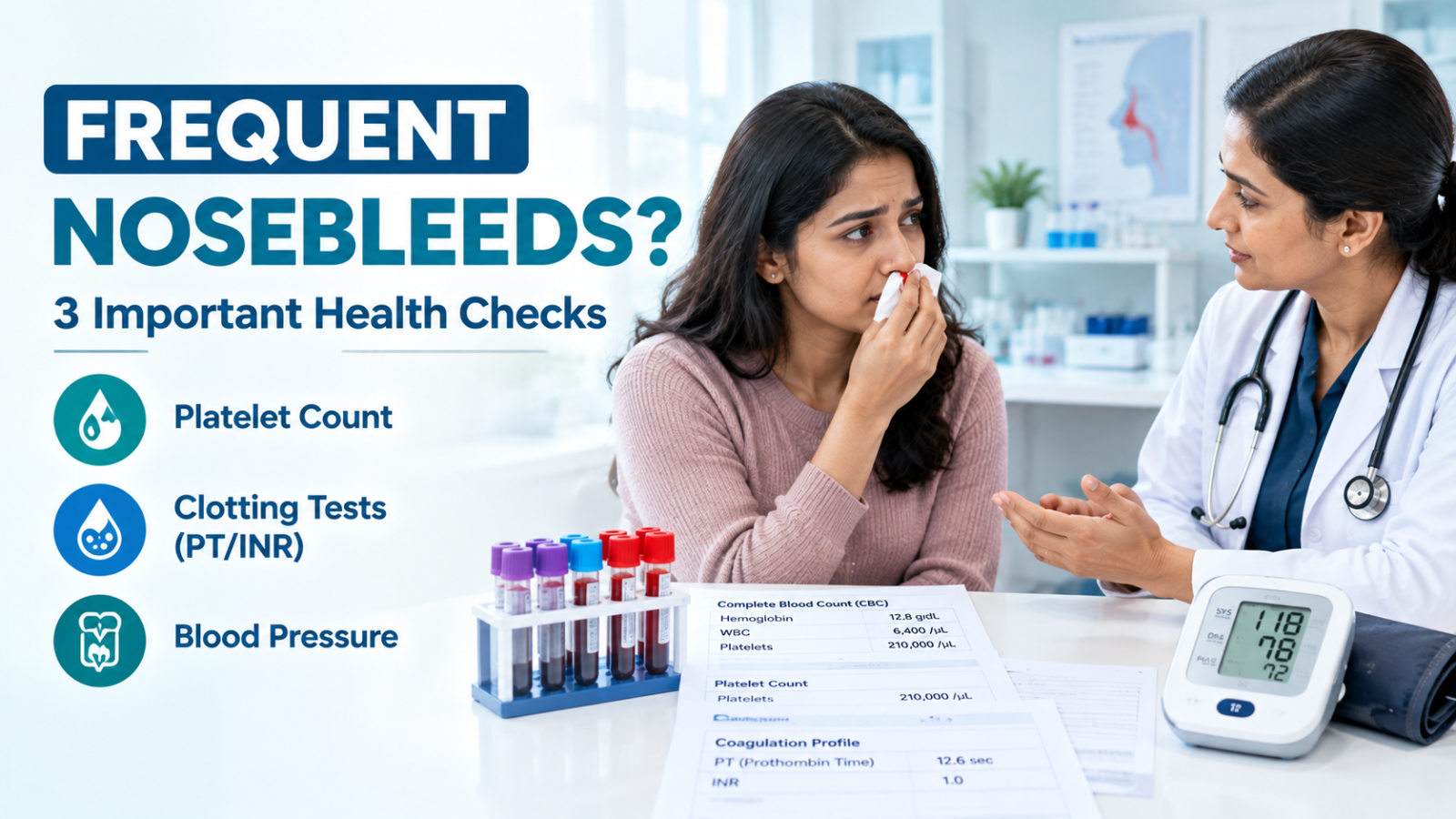
Experiencing frequent nosebleeds can be worrying, especially when they affect children or keep returning in adults. Although most nosebleeds occur because of dryness, irritation, or minor injury, repeated episodes may sometimes be associated with low platelets, clotting problems, liver conditions, or high blood pressure.
Therefore, if nosebleeds happen regularly, it is important to understand the possible causes and seek medical advice when needed. Depending on your symptoms and medical history, a doctor may recommend a complete blood count (CBC), platelet count, clotting tests, or a blood pressure check.
In Bangalore, dry winter air between November and February can also irritate the inside of the nose. Nevertheless, repeated or unusually heavy bleeding should not automatically be attributed to the weather.
Which Test Is Done for Frequent Nosebleeds?
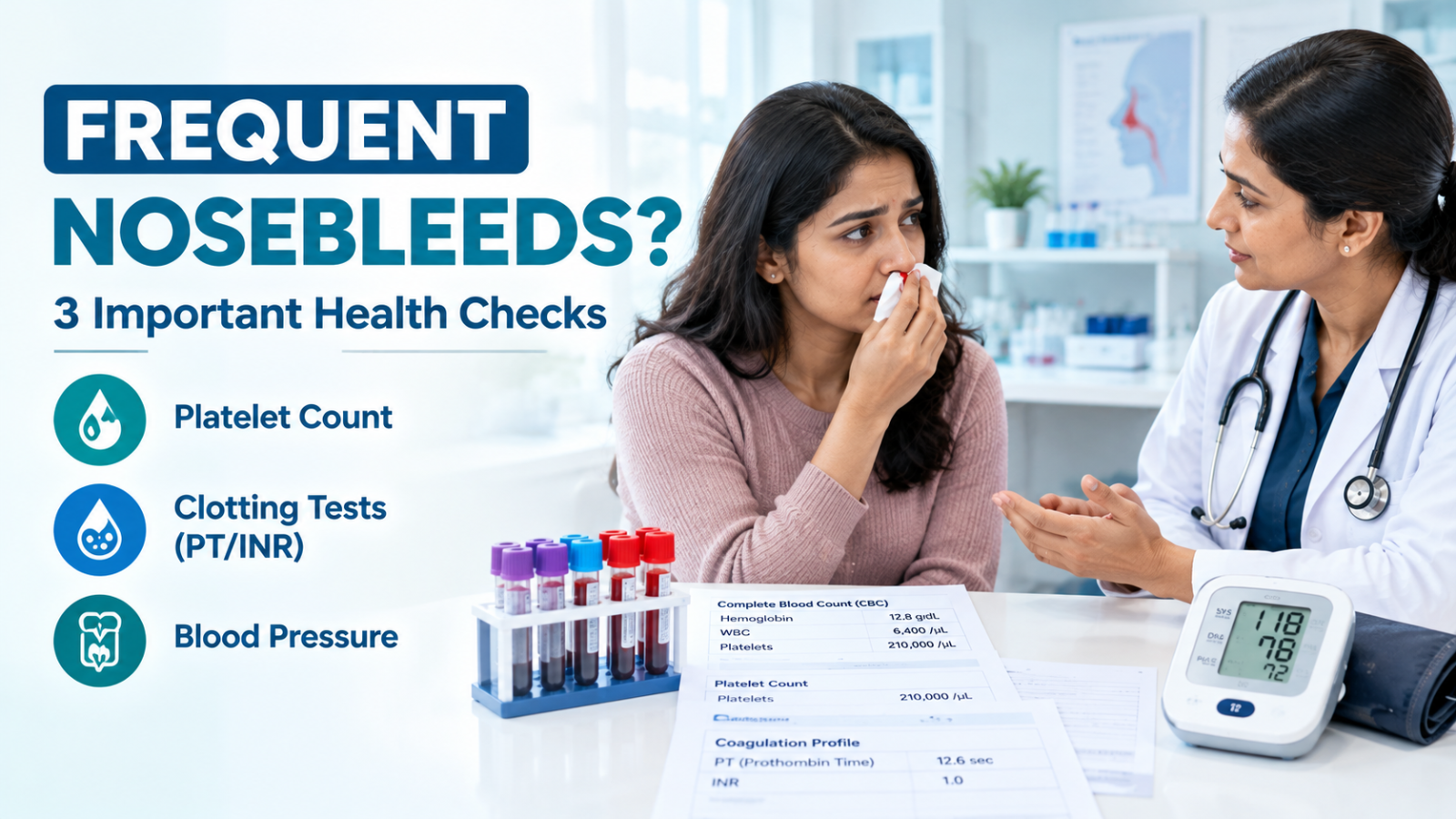
The tests recommended for frequent nosebleeds depend on how often the bleeding occurs, how long it lasts, your medical history, and whether you have other symptoms. A doctor may recommend a CBC with platelet count, PT/INR, APTT, blood pressure measurement, or liver function tests (LFT) when clinically appropriate.
However, not everyone needs every test. For an isolated nosebleed caused by dryness, laboratory testing may not be necessary. Conversely, recurrent bleeding accompanied by easy bruising, gum bleeding, or prolonged bleeding may require further evaluation.
Common vs Serious Causes of Frequent Nosebleeds
Nosebleeds, also known as epistaxis, can occur for several reasons. Fortunately, many causes are minor, although certain patterns deserve medical attention.
Dry Air and Nasal Irritation
Dry air can irritate and crack the delicate lining inside the nose. Consequently, small blood vessels may break and bleed, particularly during Bangalore's drier winter months.
Other common triggers include:
- Picking or rubbing the nose.
- Blowing the nose forcefully.
- Colds, allergies, and repeated sneezing.
- Minor injuries to the nose.
- Excessive use of certain nasal sprays.
When Could a Nosebleed Indicate a Medical Problem?
Repeated nosebleeds may sometimes be associated with conditions affecting blood clotting or the blood vessels. For example, low platelet counts or certain clotting disorders can make bleeding more likely or harder to stop.
Furthermore, liver disease may affect the body's production of clotting proteins. Medicines such as anticoagulants can also increase bleeding risk.
High blood pressure should be checked when appropriate, particularly in adults. However, a nosebleed alone does not prove that blood pressure is high, and hypertension is not necessarily the direct cause of every episode.
Tests for Frequent Nosebleeds: What Each Test Checks
Your doctor will choose tests according to your symptoms and examination findings. The following investigations may be considered when recurrent bleeding needs further evaluation.
1. CBC and Platelet Count
A complete blood count measures red blood cells, white blood cells, and platelets. Platelets help blood form clots, so a low platelet count may contribute to abnormal bleeding.
Additionally, a CBC can identify anaemia, which may occur if bleeding has been substantial or prolonged.
When might it be recommended? A doctor may consider a CBC if nosebleeds are frequent, heavy, or accompanied by unexplained bruising, gum bleeding, or other symptoms.
2. PT/INR Test
Prothrombin time (PT) measures how long blood takes to clot through one part of the clotting process. The INR standardises PT results and is particularly useful for monitoring certain anticoagulant medicines.
Consequently, PT/INR may be recommended when a clotting problem, liver condition, or medication-related bleeding risk is suspected.
3. APTT Test
Activated partial thromboplastin time (APTT) evaluates another part of the blood-clotting process. It may help investigate certain clotting factor deficiencies or other coagulation abnormalities.
However, PT/INR and APTT do not detect every possible bleeding disorder. If the history suggests an inherited condition, further specialised testing may be necessary.
4. Blood Pressure Check
Measuring blood pressure is a simple way to identify high blood pressure that may need attention. Although hypertension does not explain every nosebleed, it is worth checking when appropriate, particularly in adults with known hypertension or other cardiovascular risk factors.
5. Liver Function Tests (LFT)
The liver produces many proteins involved in blood clotting. Therefore, if a clinician suspects liver disease or another related problem, liver function tests may form part of the evaluation.
Nevertheless, LFT results alone cannot diagnose a bleeding disorder. Your doctor may interpret them alongside your symptoms, examination, and clotting test results.
Dry Air and Nose Picking: How to Reduce Repeat Episodes
In Bangalore, dry winter air from November to February can contribute to nasal irritation. Similarly, allergies, colds, and nose picking can repeatedly damage delicate blood vessels.
How to Keep the Nose Moist
To reduce dryness and irritation:
- Consider a saline nasal spray or gel suitable for your age.
- Avoid picking or rubbing the nose.
- Blow your nose gently.
- Maintain comfortable indoor humidity if the air is dry.
- Keep children's fingernails trimmed to reduce injury from nose picking.
Additionally, if nosebleeds keep returning despite these measures, arrange a medical assessment rather than assuming dryness is the only cause.
What to Do When a Nosebleed Starts
- Sit upright and lean slightly forward.
- Pinch the soft part of the nose firmly.
- Maintain continuous pressure for 10–15 minutes without repeatedly releasing it to check.
- Breathe through your mouth and spit out blood that enters your mouth.
Avoid tilting your head backwards, as blood may run down your throat.
When Should You Go to the Emergency Room?
Most nosebleeds stop with correct pressure. However, some situations require urgent medical attention.
Seek Emergency Care If:
- Bleeding is heavy or makes breathing difficult.
- The bleeding does not stop after around 15–20 minutes of continuous firm pressure.
- The nosebleed follows a significant head or facial injury.
- You feel faint, weak, confused, or short of breath.
- There is substantial blood loss or you are vomiting large amounts of swallowed blood.
If a child has repeated nosebleeds, arrange a medical review, especially if the episodes are prolonged or accompanied by bruising or other bleeding. Do not delay emergency care while waiting for a blood test.
FAQs About Frequent Nosebleeds
1. Which blood test is best for frequent nosebleeds?
A CBC with platelet count is often considered when a blood-related cause is suspected. Depending on the symptoms, a doctor may also recommend PT/INR, APTT, or LFT.
2. Do frequent nosebleeds mean low platelets?
Not necessarily. Dryness, irritation, allergies, and minor injuries are common causes. A platelet count can help assess whether low platelets may be contributing.
3. Can high blood pressure cause nosebleeds?
A blood pressure check is useful when appropriate. However, a nosebleed does not automatically mean you have hypertension, and the cause should be assessed in context.
4. Why do children get repeated nosebleeds?
Children commonly experience nosebleeds because of dry air, nose picking, allergies, or minor irritation. Nevertheless, frequent, heavy, or prolonged episodes should be discussed with a healthcare professional.
5. Are nosebleeds more common in Bangalore during winter?
Dry air during Bangalore's November-to-February period may irritate the nasal lining and contribute to nosebleeds. However, repeated bleeding can have other causes, so consider medical advice if episodes continue.
6. Can I book a CBC or platelet test at Prima Diagnostics?
You can contact Prima Diagnostics to enquire about CBC, platelet testing, and other investigations. Confirm current test availability, pricing, and whether sample collection at home is available for your address.
Conclusion
Frequent nosebleeds are often related to dryness, allergies, or minor nasal irritation. However, when bleeding repeatedly occurs, lasts longer than usual, or appears alongside easy bruising or gum bleeding, further assessment may be necessary.
Depending on the clinical findings, your doctor may recommend a CBC with platelet count, PT/INR, APTT, blood pressure measurement, or LFT. Ultimately, identifying the underlying cause is more useful than ordering every test without guidance. If bleeding is heavy, persistent, or associated with weakness or breathing difficulty, seek urgent medical care.