
Acne in Adult Women? Hormone Tests to Take Before Treatment
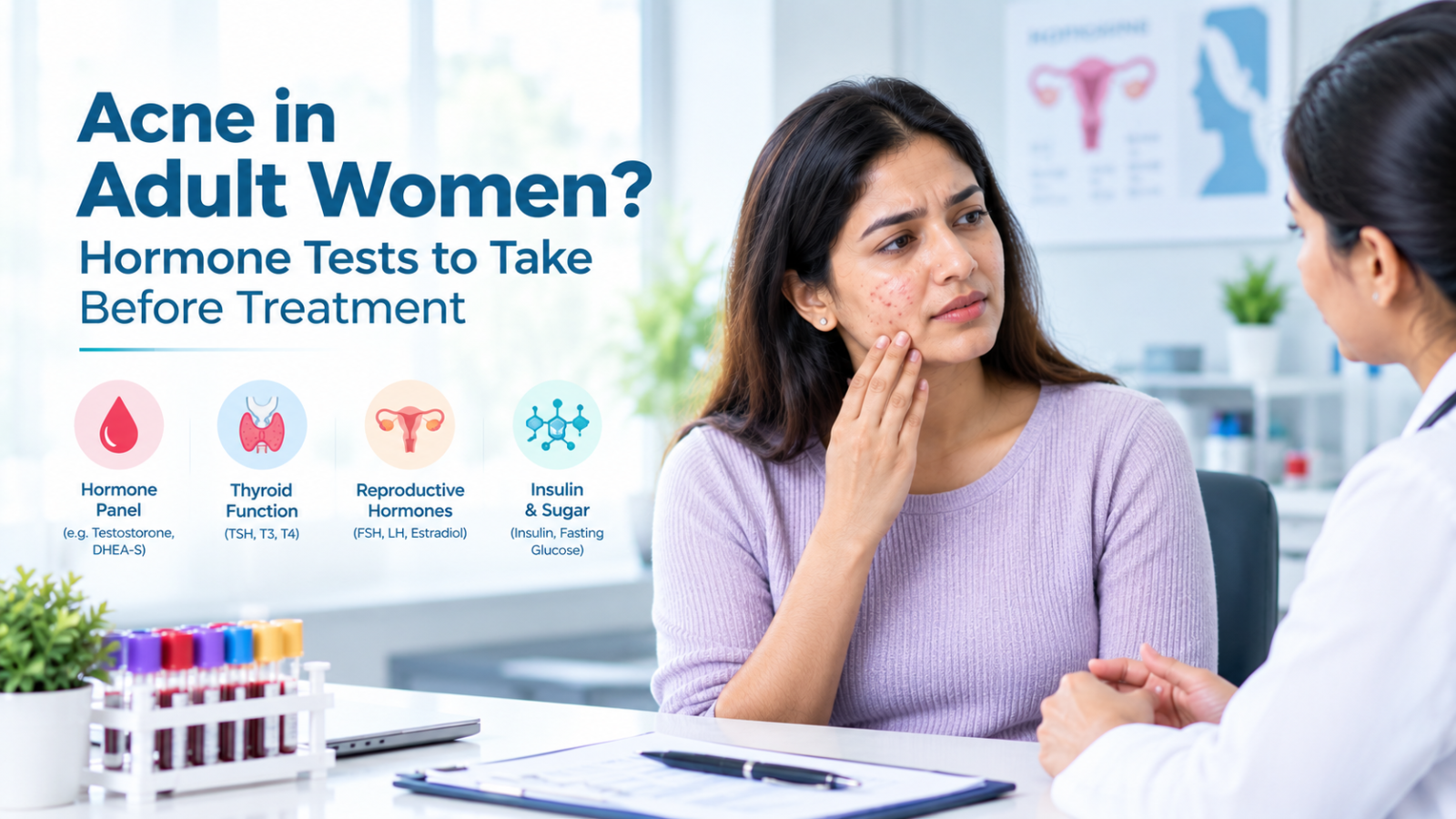
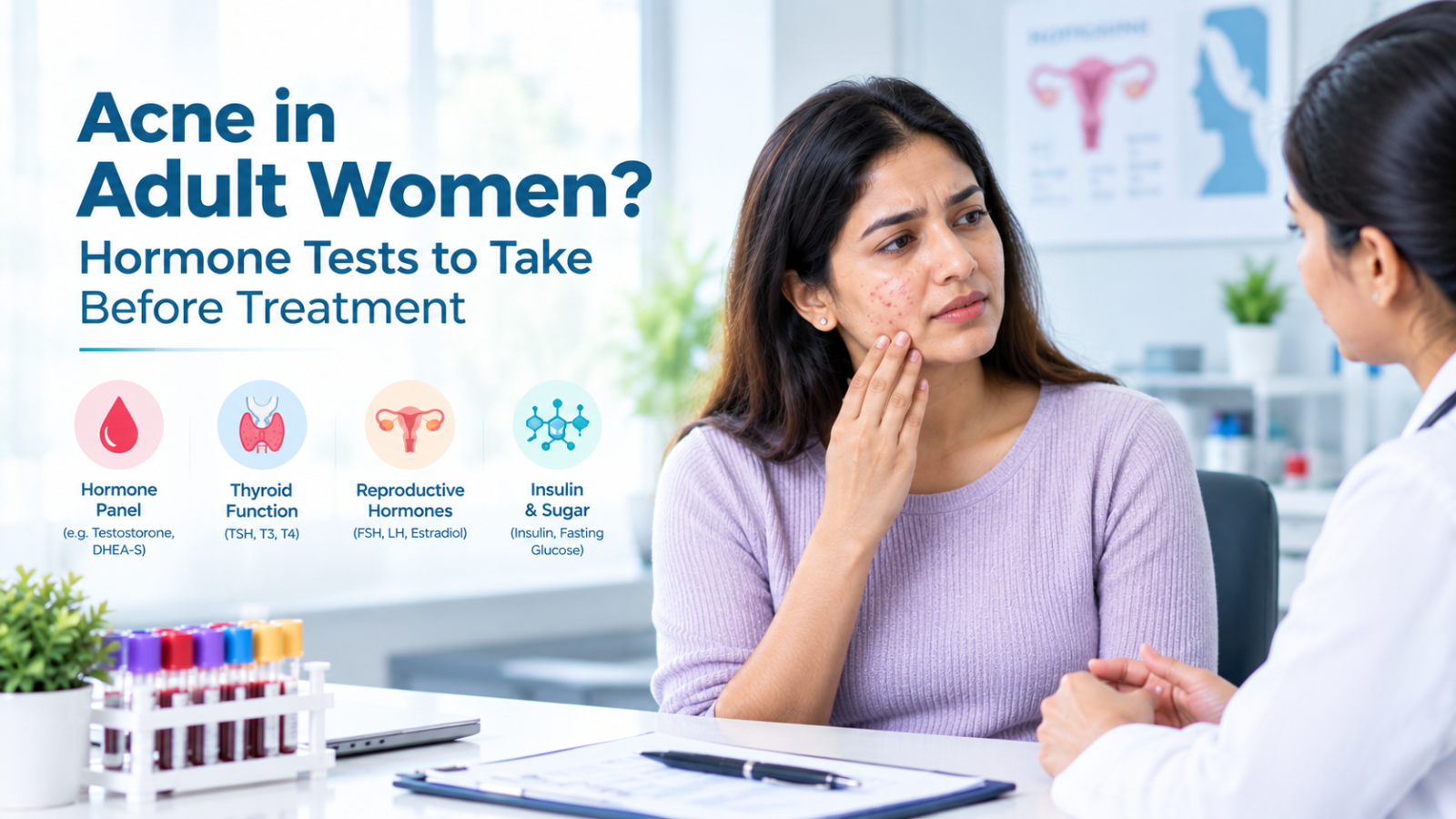
Adult acne can be frustrating, especially when pimples keep returning along the jawline, chin, and lower cheeks despite regular skincare. For women aged 25 and above, stubborn acne may sometimes be linked to hormonal changes, polycystic ovary syndrome (PCOS), insulin resistance, or thyroid problems. Therefore, alongside a dermatologist’s assessment, a Hormone Test may help identify an underlying issue when other symptoms are present.
For Bangalore working women managing busy schedules, recurring acne can be particularly stressful. However, instead of repeatedly changing skincare products, it may be helpful to understand whether hormonal factors are contributing to the breakouts. Although not every woman with acne needs blood tests, dermatologists may recommend selected hormone tests when acne is persistent, severe, or accompanied by irregular periods or excess facial hair.
What Is Hormonal Acne?
Hormonal acne occurs when hormonal changes influence the skin’s oil production and contribute to blocked pores and inflammation. Androgens, including testosterone, can stimulate the sebaceous glands to produce more oil. Consequently, pores may become blocked, leading to pimples and inflamed acne lesions.
However, hormonal acne cannot be confirmed by appearance alone. A dermatologist considers your symptoms, menstrual history, skin examination, and medical background before recommending further investigations.
Why Does Acne Continue After Age 25?
Adult acne may develop or persist because of several factors, including:
- Hormonal fluctuations around menstruation
- Increased androgen activity
- PCOS or insulin resistance
- Stress and inadequate sleep
- Certain medicines or unsuitable skincare products
Furthermore, these factors can overlap. Therefore, persistent acne may require a broader assessment rather than a single test.
Signs That Your Acne May Be Hormonal
Although acne patterns vary, some symptoms may suggest a hormonal contribution.
1. Repeated Jawline and Chin Breakouts
If painful pimples repeatedly appear around your jawline, chin, and lower cheeks, hormonal factors may be involved. In addition, acne that flares before menstruation may be associated with cyclical hormonal changes.
2. Acne Alongside Irregular Periods
Irregular or missed periods, especially when combined with persistent acne, may indicate an underlying hormonal condition such as PCOS. However, other conditions can also affect menstrual cycles.
3. Excess Facial Hair or Hair Thinning
Increased facial hair, scalp hair thinning, or unexplained changes in hair growth alongside acne may indicate elevated androgen activity. Therefore, discuss these symptoms with your doctor rather than relying on skincare changes alone.
4. Sudden or Severe Adult Acne
Sudden-onset acne, rapidly worsening symptoms, or acne accompanied by a deeper voice or other marked hormonal changes requires prompt medical evaluation.
Which Hormone Test Is Done for Acne?
There is no single hormone test that is necessary for every woman with acne. Instead, the doctor selects tests according to symptoms, menstrual patterns, examination findings, and suspected causes.
1. Total or Free Testosterone
Testosterone is an androgen that can influence oil production in the skin. Therefore, a dermatologist may recommend total testosterone and, in selected cases, an assessment of free testosterone when persistent acne occurs alongside irregular periods, excess facial hair, or scalp hair thinning.
2. DHEA-S Test
Dehydroepiandrosterone sulfate (DHEA-S) is an androgen produced mainly by the adrenal glands. Consequently, this test may help assess whether the adrenal glands are contributing to androgen excess.
3. LH and FSH Tests
Luteinising hormone (LH) and follicle-stimulating hormone (FSH) help regulate reproductive function. A clinician may request these tests when acne occurs alongside irregular menstruation or suspected ovulatory problems.
However, the LH-to-FSH ratio alone cannot confirm PCOS. The results must be interpreted alongside symptoms and other investigations.
4. Insulin and Blood Sugar Tests
Insulin resistance can occur in some women with PCOS and may be associated with metabolic changes. Depending on your risk factors, a doctor may recommend fasting glucose, HbA1c, or other metabolic assessments. Fasting insulin or HOMA-IR may be considered in selected cases, but they are not routine tests for every woman with acne.
5. TSH Test for Thyroid Function
Thyroid-stimulating hormone (TSH) helps assess thyroid function. Although thyroid disorders are not the most common cause of acne, testing may be appropriate when acne occurs alongside menstrual changes, unexplained weight changes, fatigue, or other thyroid-related symptoms.
What Is the Link Between PCOS and Acne?
PCOS is a hormonal condition that can affect ovulation, androgen levels, and metabolism. As a result, some women experience persistent acne, irregular periods, excess facial hair, or scalp hair thinning.
Nevertheless, acne alone does not mean you have PCOS. Diagnosis generally involves assessing clinical symptoms and, where appropriate, biochemical evidence of androgen excess and other features. Ultrasound findings may be useful in selected cases, but an ultrasound is not always necessary to diagnose PCOS in adults.
If you also experience irregular periods or unwanted facial hair, ask your doctor whether a PCOS test assessment is appropriate. Additionally, women with relevant metabolic risk factors may benefit from discussing Insulin resistance testing.
When Should You Take Hormone Tests? Understanding Cycle Day
The best time to take a hormone test depends on the hormone being measured and the reason for testing.
Testosterone and DHEA-S
These tests may be arranged according to the laboratory’s instructions and your clinician’s preference. If possible, tell your doctor about hormonal contraceptives or other medicines, as these can affect interpretation.
LH and FSH
When these tests are used to assess reproductive hormones, they are often measured early in the menstrual cycle, commonly around days 2–5. However, the appropriate timing depends on the clinical question and whether your periods are regular.
Insulin and Thyroid Testing
Fasting glucose or insulin-related tests may require fasting, depending on the tests ordered. TSH generally does not require fasting. Therefore, confirm the preparation instructions before your appointment rather than fasting unnecessarily.
If your periods are irregular or absent, do not delay seeking medical advice simply because you cannot identify a cycle day.
What May a Prima Hormone Panel Include?
At Prima Diagnostics, women can enquire about the availability of individual hormone tests and suitable test combinations. The exact panel should depend on the doctor’s recommendation rather than acne alone.
Depending on the clinical concern, your clinician may consider:
- Total testosterone, with additional androgen testing when indicated
- DHEA-S
- LH and FSH
- TSH
- Blood sugar or other metabolic tests when appropriate
Importantly, not every patient needs all these tests. Before booking, confirm current test availability, preparation requirements, sample collection options, and pricing directly with Prima Diagnostics.
For Bangalore working women, planning the collection around work hours may also make the process easier. However, confirm appointment availability and any fasting requirements in advance.
How to Prepare Before Your Hormone Test
To help ensure that results are interpreted correctly:
- Share your symptoms: Mention acne patterns, menstrual changes, facial hair growth, and hair thinning.
- List your medicines: Include contraceptive pills, hormone treatments, supplements, and acne medication.
- Confirm fasting requirements: Not every hormone test requires fasting.
- Check cycle-day instructions: Ask whether any tests should be taken during a particular menstrual phase.
- Avoid changing medicines independently: Follow your clinician’s instructions before testing.
Moreover, remember that abnormal results do not automatically establish a diagnosis. Your doctor may interpret the findings alongside your symptoms and examination.
Frequently Asked Questions
1. Can a hormone test identify the cause of adult acne?
A hormone test may identify hormonal abnormalities that contribute to acne. However, many women with acne have normal hormone levels, so testing is most useful when supported by symptoms or clinical findings.
2. Should every woman with jawline acne get tested for PCOS?
No. Jawline acne alone does not confirm PCOS. Testing may be considered when acne occurs with irregular periods, excess facial hair, scalp hair thinning, or other suggestive symptoms.
3. Can I take hormone tests while on birth control pills?
Some hormonal contraceptives can affect hormone levels and test interpretation. Therefore, tell your doctor before testing and do not stop prescribed contraception without medical advice.
4. Which doctor should I consult for hormonal acne?
A dermatologist can assess acne and recommend treatment. If symptoms suggest a hormonal condition, they may coordinate with a gynaecologist or endocrinologist and recommend appropriate investigations.
Conclusion
Persistent acne after age 25 can have several causes, and hormonal changes are only one possibility. Nevertheless, when stubborn jawline breakouts occur alongside irregular periods, excess facial hair, or scalp hair thinning, a targeted Hormone Test may help guide further evaluation. Rather than ordering every test at once, consult a dermatologist or qualified clinician to identify which investigations are appropriate for your symptoms.