
7 Mistakes People Make Before a Blood Test
If you are preparing for a blood test, you may think that simply reaching the laboratory is enough. However, what you eat, drink, do, and even when you take certain medicines can sometimes affect particular blood test results.
In fact, many Bangalore first-timers are surprised to learn that blood-test preparation depends on the specific investigation. Therefore, following the correct instructions can make your testing experience smoother and help your healthcare provider interpret the results appropriately.
Moreover, if you are using home blood collection, preparation becomes even more important because the phlebotomist arrives at your selected time and the sample is collected according to the appointment.
This Blog Includes:
- Article Title: 7 Mistakes People Make Before a Blood Test (That Ruin Results)
- Publisher: Prima Diagnostics
- Type: Myth / Decision Guide Healthcare Blog
- Topics Covered: Blood Test Preparation, Fasting Blood Tests, Alcohol Before Blood Tests, Exercise Before Blood Tests, Medication Timing, Hydration, Blood Test Timing, Stress, Sleep, Blood Test Accuracy, Home Sample Collection and Patient Education.
- Preparation Guidance: Explains that preparation requirements depend on the specific blood test and that patients should follow the instructions provided by their healthcare provider or laboratory.
- Fasting Guidance: Explains why food can affect certain blood test measurements and emphasizes following the prescribed fasting duration.
- Home Collection Guidance: Explains that home sample collection can provide convenience but does not eliminate the need to follow test-specific preparation instructions.
- Accuracy Focus: Encourages patients to disclose preparation mistakes or unusual circumstances to the healthcare professional before sample collection.
- Service Focus: Blood Testing, Home Sample Collection, Preventive Health Testing, Laboratory Diagnostics and Patient Education.
- FAQ Section: Included.
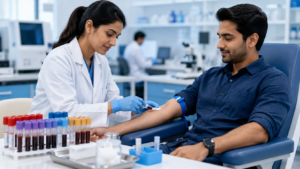
7 mistakes to avoid before a blood test
The 7 common mistakes to avoid before a blood test are eating during a fasting test, drinking alcohol before testing, doing strenuous exercise, changing medicine timing without advice, becoming dehydrated, choosing an inappropriate test time, and having significant stress or inadequate sleep. However, the effect of each factor depends on the specific blood test.
Why Blood Test Preparation Matters
Your Preparation Can Affect Certain Results
Blood tests measure different substances, cells, hormones, enzymes, antibodies, and other markers.
Consequently, some results can be influenced by recent food intake, physical activity, hydration, medications, sleep, or the timing of collection.
However, not every blood test requires fasting or special preparation.
For example, preparation for a lipid profile may differ from preparation for a CBC, while hormone testing can sometimes depend on timing.
Therefore, the first rule is simple:
Follow the preparation instructions for the exact test you are taking.
7 Mistakes People Make Before a Blood Test
Mistake 1 – Eating During a Fasting Test
Why Food Can Affect Blood Results
One of the most common preparation mistakes is eating shortly before a test that requires fasting.
After eating, your body begins processing nutrients. As a result, certain measurements, particularly glucose and triglycerides, can change.
Therefore, if your healthcare provider has specifically instructed you to undergo a fasting test, eating breakfast beforehand may affect the usefulness of the result.
What Counts as Eating?
This can include:
- Breakfast
- Snacks
- Biscuits
- Sweets
- Sugary drinks
- Milk or milk-based beverages
Moreover, people sometimes forget that a small snack still breaks a fasting period.
What About Water?
In many fasting blood tests, plain water is generally allowed and can help prevent dehydration. Nevertheless, follow the instructions provided for your specific test.
Mistake 2 – Drinking Alcohol the Night Before
Why Alcohol May Matter
Another common mistake is consuming alcohol shortly before certain blood tests.
Alcohol can influence several biochemical measurements and may also contribute to dehydration.
Furthermore, drinking the night before can affect sleep, which may indirectly influence how you feel during the test.
Therefore, if your healthcare provider or laboratory has advised avoiding alcohol before your investigation, follow that instruction carefully.
Don’t Assume “Just One Drink” Is Always Fine
The effect depends on the test, the amount consumed, and individual circumstances.
Consequently, if you have been given specific pre-test instructions, do not replace them with assumptions based on what someone else did before their blood test.
Mistake 3 – Doing Heavy Exercise
Can Exercise Change Blood Test Results?
Yes, strenuous exercise can temporarily influence certain blood measurements.
For example, intense physical activity can affect some enzymes, muscle-related markers, glucose metabolism, and other laboratory parameters.
Therefore, completing a heavy gym session immediately before certain tests may make interpretation more complicated.
What Should You Do Instead?
If your test has specific exercise restrictions, follow them.
In general, avoid unusual or strenuous exercise immediately before testing unless your healthcare provider has instructed otherwise.
However, do not stop your regular physical activity for several days unless you have been specifically advised to do so.
Mistake 4 – Taking Medicines at the Wrong Time
Should You Skip Your Medication?
This is where people often make a serious mistake.
Some patients assume that fasting means they should stop all medicines.
However, you should not independently stop, delay, or change prescribed medication simply because you are having a blood test.
Some medicines are intended to be taken at particular times, while certain tests may specifically require medication timing to be documented or controlled.
Therefore, ask your healthcare provider or laboratory what you should do with your regular medicines before the test.
Tell the Phlebotomist About Relevant Medicines
If appropriate, provide information about medicines and supplements you are taking.
This can help your healthcare team interpret certain results in context.
Mistake 5 – Arriving Dehydrated
Why Hydration Matters
Being dehydrated can make blood collection more difficult and may affect certain laboratory measurements.
For example, significant dehydration can alter the concentration of substances in the blood.
Therefore, unless you have been given fluid restrictions or other specific instructions, maintaining normal hydration can be helpful.
Don’t Overdrink Either
More water is not necessarily better.
Instead, maintain normal hydration and follow the preparation instructions for your specific test.
For many fasting tests, plain water is usually the preferred beverage.
Mistake 6 – Choosing the Wrong Test Time
Timing Can Matter
Not all blood tests can be performed at any time of day.
Some investigations may depend on:
- Time of day
- Fasting duration
- Medication timing
- Menstrual-cycle timing
- Recent meals
- Doctor’s instructions
For example, certain hormone investigations can have specific timing requirements.
Similarly, some tests may be requested at a particular time because the substance being measured changes throughout the day.
Therefore, the best time for a blood test depends on the test itself.
Morning Testing Is Not Always Mandatory
Although morning appointments are convenient for many fasting tests, you should not assume that every blood test must be done in the morning.
Instead, check the exact instructions for your investigation.
Mistake 7 – Ignoring Stress and Sleep
Can Stress Affect Blood Tests?
Stress can trigger physiological changes in the body.
Consequently, significant anxiety, lack of sleep, or unusual stress before testing may influence certain measurements.
Additionally, rushing through Bangalore traffic, arriving late, or worrying excessively about the needle can make the experience more uncomfortable.
What Can You Do?
Try to:
- Sleep adequately the night before
- Avoid unnecessary rushing
- Arrive with enough time
- Sit comfortably before collection
- Follow the laboratory’s instructions
- Inform the healthcare professional if you feel unwell or particularly anxious
Therefore, a calm and well-prepared appointment can make the collection experience easier.
What About Smoking Before a Blood Test?
Although not one of the seven main mistakes, smoking is another factor worth discussing.
Smoking can influence certain physiological and laboratory measurements.
Therefore, if your healthcare provider has instructed you to avoid smoking before a particular test, follow that instruction.
When in doubt, ask the laboratory or healthcare provider rather than assuming that smoking has no effect.
What If You Made a Mistake Before the Test?
Don’t Panic
If you accidentally ate, exercised heavily, consumed alcohol, or took something you were unsure about, tell the healthcare professional before the sample is collected.
Do not simply hide the information.
Instead, the laboratory or healthcare provider can determine whether the test should proceed or whether it would be better to reschedule.
Why Honesty Matters
For example, if a fasting glucose test was ordered and you ate breakfast, the healthcare provider needs to know.
Similarly, if a medication was taken differently from the prescribed schedule, that information may be relevant when interpreting certain tests.
Blood Test Preparation for Bangalore First-Timers
For people taking their first blood test in Bangalore, preparation can initially seem complicated.
However, it becomes much easier when you follow a simple checklist.
Before Your Appointment
First, confirm the exact test.
Next, check whether fasting is required.
Then, confirm the appropriate appointment time.
After that, follow medication instructions provided by your healthcare professional.
Finally, arrive adequately hydrated and avoid unusual strenuous activity if instructed.
Consequently, you can reduce many avoidable preparation errors.
Blood Test Preparation for Home Collection Users
Home collection can make testing considerably more convenient.
Instead of travelling to a diagnostic center, you can arrange for a trained phlebotomist to collect the sample at your selected location, subject to service availability.
However, home collection does not remove the need for test preparation.
Therefore, complete your fasting period, follow medication instructions, and prepare according to the exact test requirements before the phlebotomist arrives.
A Simple Blood Test Preparation Checklist
Before leaving your preparation to chance, use this quick checklist:
- Confirm the exact blood test.
- Check whether fasting is required.
- Follow the recommended fasting duration.
- Drink water according to the instructions.
- Avoid alcohol if instructed.
- Avoid unusually strenuous exercise if advised.
- Do not change prescribed medicines without medical advice.
- Check whether the test has a specific collection time.
- Get adequate sleep when possible.
- Tell the healthcare professional about anything that may have affected preparation.
As a result, you can approach your blood test with greater confidence.
Frequently Asked Questions
What are the 7 mistakes people make before a blood test?
The seven common mistakes are eating during a fasting test, consuming alcohol before testing, doing strenuous exercise, changing medication timing without medical advice, becoming dehydrated, choosing the wrong test time, and neglecting stress and sleep.
Can I drink water before a fasting blood test?
For many fasting blood tests, plain water is generally allowed. However, preparation requirements vary, so follow the specific instructions provided by your healthcare provider or laboratory.
Can I exercise before a blood test?
Strenuous exercise can affect certain laboratory measurements. Therefore, if your test has exercise restrictions, avoid intense workouts before collection as instructed.
Should I stop my medicines before a blood test?
No. Do not stop or change prescribed medicines on your own. Instead, ask your healthcare provider whether any medication timing adjustments are required for your specific test.
Can alcohol affect blood test results?
Yes, alcohol can affect certain laboratory measurements and may also contribute to dehydration. Therefore, follow any alcohol-avoidance instructions provided before testing.
What happens if I accidentally eat before a fasting test?
Tell the healthcare professional before the sample is collected. Depending on the test, they may advise proceeding or rescheduling the test.
Is morning the best time for every blood test?
Not necessarily. Some tests have specific timing requirements, while others can be performed at different times. Therefore, follow the instructions for the particular investigation.
Can I make a blood test appointment with home collection?
Yes, home sample collection may be available for eligible tests and locations. However, you should still follow all preparation instructions before the phlebotomist arrives.
Conclusion
Preparing correctly can make a significant difference when you are getting a blood test. However, the most important point is that preparation depends on the specific investigation.
Therefore, avoid the seven common mistakes: eating during a fasting test, alcohol before testing, heavy exercise, incorrect medication timing, dehydration, inappropriate testing time, and inadequate attention to stress and sleep.
Furthermore, if you are a Bangalore first-timer, home collection user, or accuracy seeker, do not hesitate to ask questions before your appointment.
Most importantly, never change prescribed medicines or medical treatment without professional advice.
For blood testing and convenient home sample collection, explore Prima Diagnostics and confirm the preparation requirements for your specific test before booking.