
Tests for New Moms After Delivery (Postpartum) in Bengaluru
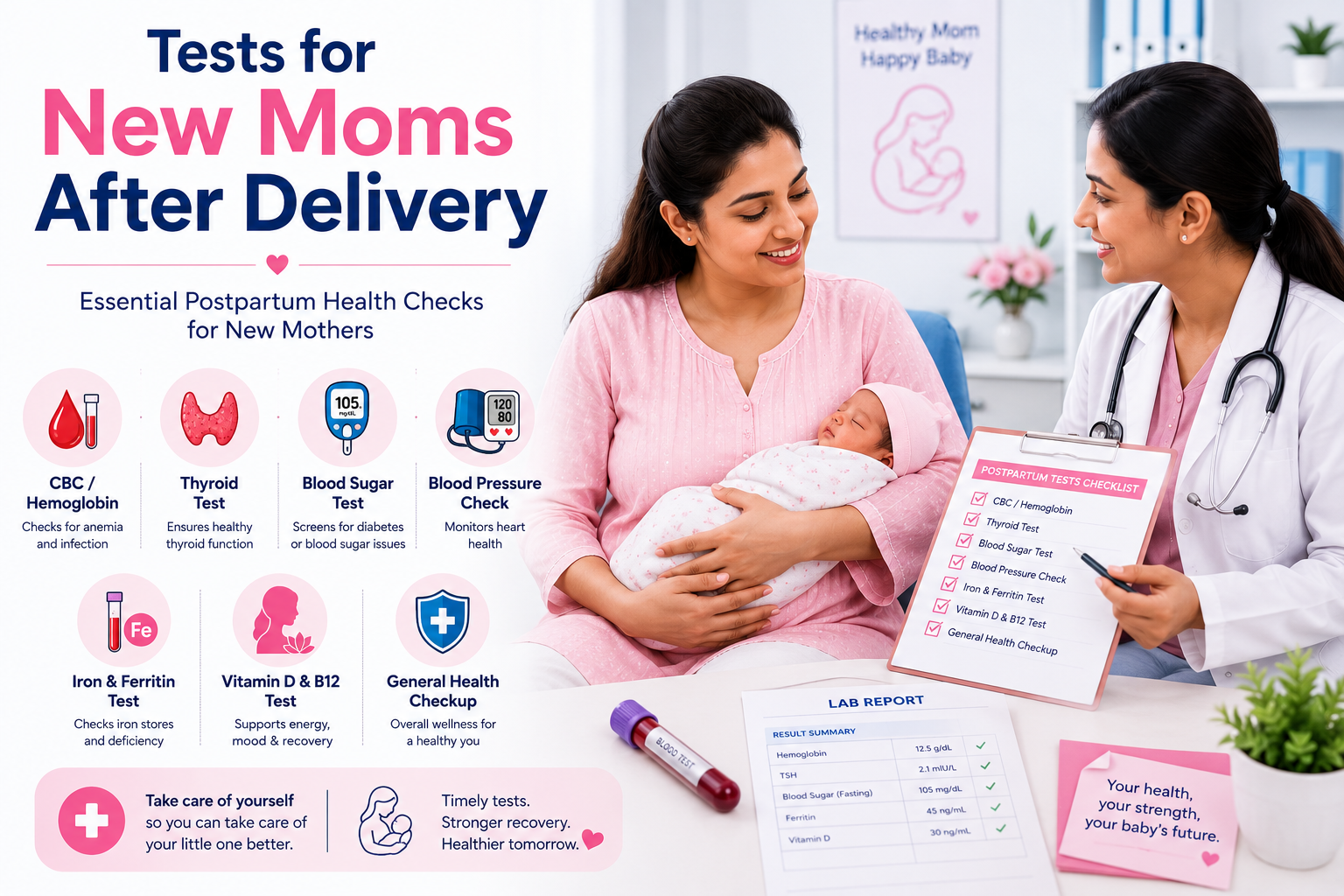
Having a baby is a major physical and emotional transition. However, once the baby arrives, a new mother's own health often takes a back seat. Between breastfeeding, sleepless nights, feeding schedules, household responsibilities, and frequent pediatric appointments, it can be difficult to find time for personal healthcare. Nevertheless, postpartum recovery deserves attention too. Tests for New Moms can help evaluate common concerns such as anemia, thyroid changes, vitamin D deficiency, calcium status, and blood sugar abnormalities, particularly when there were complications during pregnancy.
For new mothers in Bengaluru, convenient home sample collection can also make health monitoring easier when finding time to visit a diagnostic centre is difficult.
This Blog includes:
 Health tests for new moms - should do after delivery: Depending on pregnancy history, symptoms, and medical advice, postpartum women may be advised to check haemoglobin/CBC, iron status, thyroid function, Vitamin D, calcium, and blood sugar, particularly after gestational diabetes.
Why Postpartum Health Is Often Ignored
The Baby Becomes the Priority
After delivery, most attention naturally shifts towards the newborn. Consequently, mothers may ignore their own tiredness, weakness, body aches, hair fall, or mood changes.
However, some symptoms may reflect nutritional deficiencies or hormonal changes rather than simply the demands of new motherhood.
Recovery Takes Time
Pregnancy and childbirth place considerable demands on the body. Moreover, breastfeeding increases nutritional requirements.
Therefore, postpartum healthcare should not end with the delivery itself. Instead, mothers should continue monitoring their recovery according to their healthcare provider's recommendations.
Bengaluru New Mothers Have Busy Routines
For many Bengaluru families, returning to work, managing household responsibilities, arranging childcare, and handling long commutes can make postpartum appointments challenging.
As a result, convenient diagnostic options, including home sample collection where appropriate, can make health monitoring more practical.
Anemia After Delivery
Why Low Haemoglobin Can Occur
Blood loss during childbirth can contribute to anemia. Furthermore, iron requirements increase during pregnancy, and some women enter the postpartum period with depleted iron stores.
Consequently, a mother may experience:
Health tests for new moms - should do after delivery: Depending on pregnancy history, symptoms, and medical advice, postpartum women may be advised to check haemoglobin/CBC, iron status, thyroid function, Vitamin D, calcium, and blood sugar, particularly after gestational diabetes.
Why Postpartum Health Is Often Ignored
The Baby Becomes the Priority
After delivery, most attention naturally shifts towards the newborn. Consequently, mothers may ignore their own tiredness, weakness, body aches, hair fall, or mood changes.
However, some symptoms may reflect nutritional deficiencies or hormonal changes rather than simply the demands of new motherhood.
Recovery Takes Time
Pregnancy and childbirth place considerable demands on the body. Moreover, breastfeeding increases nutritional requirements.
Therefore, postpartum healthcare should not end with the delivery itself. Instead, mothers should continue monitoring their recovery according to their healthcare provider's recommendations.
Bengaluru New Mothers Have Busy Routines
For many Bengaluru families, returning to work, managing household responsibilities, arranging childcare, and handling long commutes can make postpartum appointments challenging.
As a result, convenient diagnostic options, including home sample collection where appropriate, can make health monitoring more practical.
Anemia After Delivery
Why Low Haemoglobin Can Occur
Blood loss during childbirth can contribute to anemia. Furthermore, iron requirements increase during pregnancy, and some women enter the postpartum period with depleted iron stores.
Consequently, a mother may experience:
- Article Title: Tests for New Moms After Delivery (Postpartum) in Bengaluru
- Publisher: Prima Diagnostics
- Type: Postpartum Healthcare Awareness & Test Guide Blog
- Topics Covered: Tests for New Moms, Postpartum Health, Postpartum Recovery, Anemia After Delivery, Low Haemoglobin, Iron Deficiency, Ferritin, Postpartum Thyroiditis, Thyroid After Pregnancy, Vitamin D, Calcium, Breastfeeding Nutrition, Gestational Diabetes, Postpartum Blood Sugar Testing, Bengaluru New Mothers, Home Sample Collection, and Preventive Postpartum Health.
- Services Covered: CBC Testing, Haemoglobin Testing, Ferritin Testing, Iron Studies, Thyroid Testing, TSH Testing, Free T4 Testing, Vitamin D Testing, Calcium Testing, Blood Sugar Testing, HbA1c, OGTT when clinically indicated, Home Sample Collection, Digital Reports, and Preventive Laboratory Diagnostics.
- Tests Included: Complete Blood Count (CBC), Haemoglobin, Ferritin, Iron Studies, TSH, Free T4, Vitamin D, Calcium, Fasting Blood Sugar, HbA1c, and Oral Glucose Tolerance Test (OGTT) when recommended by a healthcare professional.
- Preparation Guidance: Test preparation varies according to the investigation. Fasting or specific timing may be required for selected blood sugar tests, while other tests may not require fasting. Breastfeeding mothers should follow any specific preparation instructions provided by their healthcare provider and should not stop prescribed medicines without medical advice.
- Service Focus: Postpartum Health Monitoring, Anemia Detection, Thyroid Health After Pregnancy, Vitamin D and Calcium Awareness, Post-Gestational Diabetes Monitoring, Breastfeeding Health, New Mother Wellness, Home Sample Collection, Convenient Laboratory Testing, and Patient Education.
- Healthcare Service: Postpartum Blood Testing, Anemia Testing, Thyroid Testing, Vitamin D Testing, Calcium Testing, Blood Sugar Testing, Gestational Diabetes Follow-Up, Preventive Health Screening, Home Sample Collection, Laboratory Diagnostics, and Wellness Testing.
- FAQ Section: Included.
Health tests for new moms - should do after delivery: Depending on pregnancy history, symptoms, and medical advice, postpartum women may be advised to check haemoglobin/CBC, iron status, thyroid function, Vitamin D, calcium, and blood sugar, particularly after gestational diabetes.
Why Postpartum Health Is Often Ignored
The Baby Becomes the Priority
After delivery, most attention naturally shifts towards the newborn. Consequently, mothers may ignore their own tiredness, weakness, body aches, hair fall, or mood changes.
However, some symptoms may reflect nutritional deficiencies or hormonal changes rather than simply the demands of new motherhood.
Recovery Takes Time
Pregnancy and childbirth place considerable demands on the body. Moreover, breastfeeding increases nutritional requirements.
Therefore, postpartum healthcare should not end with the delivery itself. Instead, mothers should continue monitoring their recovery according to their healthcare provider's recommendations.
Bengaluru New Mothers Have Busy Routines
For many Bengaluru families, returning to work, managing household responsibilities, arranging childcare, and handling long commutes can make postpartum appointments challenging.
As a result, convenient diagnostic options, including home sample collection where appropriate, can make health monitoring more practical.
Anemia After Delivery
Why Low Haemoglobin Can Occur
Blood loss during childbirth can contribute to anemia. Furthermore, iron requirements increase during pregnancy, and some women enter the postpartum period with depleted iron stores.
Consequently, a mother may experience:
- Persistent tiredness
- Weakness
- Dizziness
- Pale skin
- Breathlessness during activity
- Reduced exercise tolerance
- Difficulty concentrating
- Complete Blood Count (CBC)
- Haemoglobin
- Ferritin
- Iron studies when indicated
- Palpitations
- Anxiety or irritability
- Unusual tiredness
- Feeling excessively cold
- Constipation
- Weight changes
- Dry skin
- Difficulty concentrating
- TSH
- Free T4
- Free T3 in selected situations
- Thyroid antibodies when autoimmune thyroid disease is suspected
- 25-OH Vitamin D
- Calcium
- Albumin
- Phosphorus
- PTH in selected cases
- Oral Glucose Tolerance Test (OGTT)
- Fasting Blood Sugar
- HbA1c in appropriate circumstances
- Dizziness
- Weakness
- Hair fall
- Palpitations
- Unexplained weight changes
- Excessive thirst
- Muscle or bone discomfort
- Breathlessness
- Difficulty concentrating
- Balanced meals
- Adequate protein
- Iron-rich foods
- Calcium-rich foods
- Appropriate supplementation when advised
- Adequate fluids
- Rest whenever possible
- Gradual return to physical activity as medically appropriate
- What health tests for new moms should be done after delivery?
- Should every new mother test for anemia?
- Is thyroid testing important after pregnancy?
- Do breastfeeding mothers need Vitamin D and calcium tests?
- Should women who had gestational diabetes check their sugar after delivery?
- Can new moms get blood tests at home in Bengaluru?
- Where can I get Tests for New Moms in Bengaluru?