
Tests After a Heart Attack – The Follow-up Panel in Bengaluru
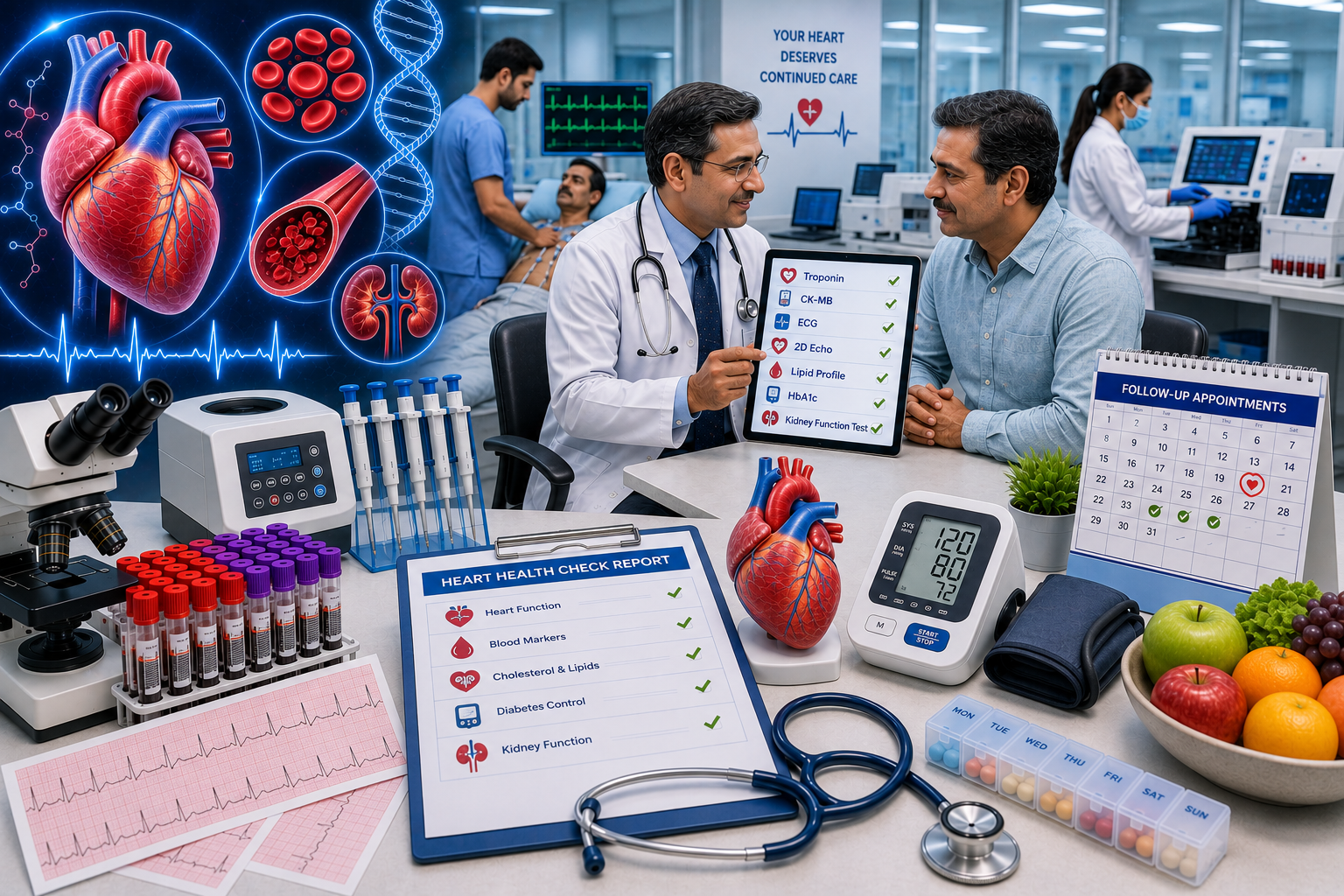
Recovering from a heart attack is a major milestone, but it is only the beginning of your journey toward better heart health. While emergency treatment restores blood flow and helps stabilize the heart, long-term recovery depends on regular monitoring, healthy lifestyle changes, medication adherence, and timely follow-up testing. In fact, the weeks and months after a cardiac event are crucial because they help doctors assess how well your body is healing and whether additional interventions are needed. Moreover, Tests after a heart attack often reveal underlying conditions such as high cholesterol, diabetes, inflammation, kidney disease, or high blood pressure that require ongoing management.
Therefore, simply feeling better does not necessarily mean your heart has fully recovered. Regular laboratory investigations and cardiac evaluations provide valuable information that symptoms alone cannot reveal.
If you are searching for tests after a heart attack in Bengaluru, this comprehensive guide explains why follow-up testing is essential, which blood tests and heart investigations are commonly recommended, how frequently they may be performed, and how Prima Diagnostics supports cardiac patients in Bengaluru with reliable laboratory services and convenient home sample collection.
This Blog Includes:
 Follow-up Tests After a Heart Attack
After a heart attack, doctors commonly recommend a follow-up panel that may include a Lipid Profile, hs-CRP, Blood Sugar (HbA1c and Glucose), Kidney Function Test (KFT), Liver Function Test (LFT), Complete Blood Count (CBC), and additional cardiac investigations such as ECG or 2D Echo, depending on the patient's condition. The exact schedule and tests vary according to medical history, medications, and recovery progress.
Why Follow-Up Matters After a Cardiac Event
A heart attack damages heart muscle because blood flow becomes blocked. Although emergency treatment restores circulation, recovery continues for weeks or even months.
Therefore, regular follow-up helps doctors:
Follow-up Tests After a Heart Attack
After a heart attack, doctors commonly recommend a follow-up panel that may include a Lipid Profile, hs-CRP, Blood Sugar (HbA1c and Glucose), Kidney Function Test (KFT), Liver Function Test (LFT), Complete Blood Count (CBC), and additional cardiac investigations such as ECG or 2D Echo, depending on the patient's condition. The exact schedule and tests vary according to medical history, medications, and recovery progress.
Why Follow-Up Matters After a Cardiac Event
A heart attack damages heart muscle because blood flow becomes blocked. Although emergency treatment restores circulation, recovery continues for weeks or even months.
Therefore, regular follow-up helps doctors:
- Article Title: Tests After a Heart Attack – The Follow-up Panel in Bengaluru
- Publisher: Prima Diagnostics
- Type: Condition Management Healthcare Blog
- Topics Covered: Heart Attack Recovery, Cardiac Follow-up, Lipid Profile, LDL Cholesterol Targets, hs-CRP, Inflammation, Blood Sugar Monitoring, HbA1c, Kidney Function Test (KFT), Liver Function Test (LFT), Complete Blood Count (CBC), ECG, 2D Echocardiography, Medication Monitoring, Home Sample Collection, and Patient Education.
- Services Covered: Lipid Profile, hs-CRP Test, HbA1c Test, Blood Sugar Tests, Kidney Function Test (KFT), Liver Function Test (LFT), Complete Blood Count (CBC), ECG, Preventive Cardiac Health Packages, Home Sample Collection, Digital Reports, and Laboratory Diagnostics.
- Tests Included: Lipid Profile, Total Cholesterol, LDL Cholesterol, HDL Cholesterol, Triglycerides, High-Sensitivity C-Reactive Protein (hs-CRP), HbA1c, Fasting Blood Sugar, Kidney Function Test (KFT), Liver Function Test (LFT), Complete Blood Count (CBC), Electrolytes, Thyroid Function Tests (when indicated), Electrocardiogram (ECG), 2D Echocardiography (when clinically indicated), and Additional Cardiac Investigations as Recommended by Healthcare Providers.
- Preparation Guidance: Follow any specific instructions given by your healthcare provider. Some tests, such as the Lipid Profile or Fasting Blood Sugar, may require fasting. Continue medications unless your healthcare provider advises otherwise, stay adequately hydrated, carry previous reports for comparison, and prepare appropriately if using home sample collection.
- Service Focus: Cardiac Follow-up, Secondary Prevention, Cholesterol Monitoring, Diabetes Monitoring, Medication Safety Monitoring, Home Sample Collection, Laboratory Diagnostics, Preventive Cardiology, and Patient Education.
- FAQ Section: Included.
Follow-up Tests After a Heart Attack
After a heart attack, doctors commonly recommend a follow-up panel that may include a Lipid Profile, hs-CRP, Blood Sugar (HbA1c and Glucose), Kidney Function Test (KFT), Liver Function Test (LFT), Complete Blood Count (CBC), and additional cardiac investigations such as ECG or 2D Echo, depending on the patient's condition. The exact schedule and tests vary according to medical history, medications, and recovery progress.
Why Follow-Up Matters After a Cardiac Event
A heart attack damages heart muscle because blood flow becomes blocked. Although emergency treatment restores circulation, recovery continues for weeks or even months.
Therefore, regular follow-up helps doctors:
- Monitor heart health
- Assess recovery progress
- Evaluate medication effectiveness
- Detect potential complications early
- Manage cholesterol levels
- Monitor diabetes and blood pressure
- Reduce the risk of another cardiac event
- Cholesterol levels
- Inflammation
- Blood sugar control
- Kidney function
- Liver function
- Blood pressure
- Medication safety
- Overall cardiovascular risk
- Total Cholesterol
- LDL Cholesterol
- HDL Cholesterol
- Triglycerides
- VLDL (where reported)
- Assess ongoing inflammation
- Support cardiovascular risk evaluation
- Monitor overall heart health in appropriate clinical situations
- Heart health
- Blood vessel function
- Kidney health
- Overall recovery
- Creatinine
- Blood Urea
- Estimated Kidney Function (eGFR)
- Electrolytes (when indicated)
- Assess medication safety
- Detect kidney impairment
- Guide dosage adjustments when necessary
- ALT
- AST
- Bilirubin
- Alkaline Phosphatase
- Albumin
- Haemoglobin
- Infection indicators
- Platelets
- Heart pumping function
- Heart valves
- Wall motion
- Recovery after heart attack
- Recovery progress
- Medication changes
- Cholesterol levels
- Diabetes status
- Kidney function
- Overall cardiovascular risk
- Medication review
- Lipid Profile (if indicated)
- Blood Sugar
- Kidney Function
- Liver Function
- Lipid Profile
- HbA1c
- hs-CRP (selected patients)
- CBC
- KFT
- LFT
- Fruits
- Vegetables
- Whole grains
- Lean proteins
- Healthy fats
- Comfortable testing at home
- Reduced travel
- Flexible appointment scheduling
- Professional sample collection
- Safe specimen handling
- Digital reports
- Lipid Profile
- hs-CRP
- HbA1c
- Blood Sugar Tests
- Kidney Function Test (KFT)
- Liver Function Test (LFT)
- Complete Blood Count (CBC)
- Home Sample Collection
- Digital Reports
- Experienced Laboratory Professionals
- Advanced Diagnostic Equipment
- Quality-Assured Laboratory Services