
How to Read Your Liver Function Test Report
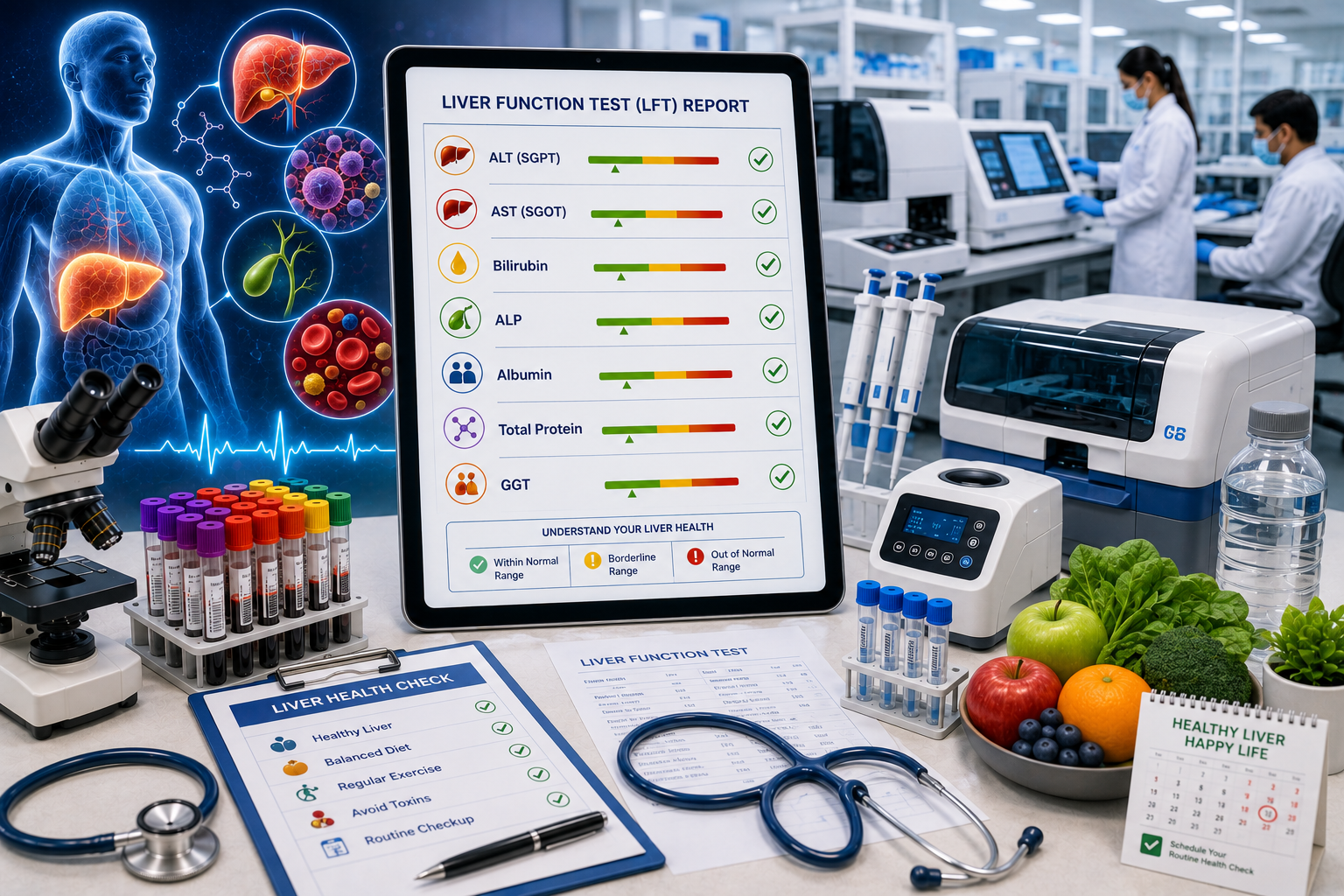
Receiving your Liver Function Test report can be confusing, especially when you see terms like SGPT, SGOT, Bilirubin, Albumin, Alkaline Phosphatase (ALP), and GGT listed with numbers that may not immediately make sense. Naturally, many people wonder whether a slightly high value indicates liver disease or whether a normal result means everything is perfectly healthy.
Fortunately, understanding your Liver Function Test report is easier than it appears. Rather than focusing on a single number, doctors evaluate the entire pattern of results, your symptoms, medical history, medications, alcohol intake, and other laboratory investigations before making a diagnosis.
Moreover, liver function tests are commonly ordered for people with fatty liver disease, jaundice, hepatitis, diabetes, obesity, long-term medication use, digestive complaints, or abnormal ultrasound findings. They are also frequently included in preventive health check-ups.
If you are searching for how to read a liver function test report, this guide explains what each component means, how to interpret common findings, which results may need medical attention, and when to consult your healthcare provider.
This Blog Includes:
 How to Read a Liver Function Test Report
To understand how to read an LFT report, first review all the major parameters together, including SGPT (ALT), SGOT (AST), Bilirubin, Albumin, Total Protein, Alkaline Phosphatase (ALP), and GGT. Mild abnormalities do not always indicate serious liver disease. Doctors interpret these values alongside symptoms, medical history, medications, alcohol use, imaging studies, and other laboratory tests before reaching a diagnosis.
What Is a Liver Function Test (LFT)?
A Liver Function Test (LFT) is a group of blood tests that evaluates different aspects of liver health.
Rather than measuring just one function, the LFT panel helps assess:
How to Read a Liver Function Test Report
To understand how to read an LFT report, first review all the major parameters together, including SGPT (ALT), SGOT (AST), Bilirubin, Albumin, Total Protein, Alkaline Phosphatase (ALP), and GGT. Mild abnormalities do not always indicate serious liver disease. Doctors interpret these values alongside symptoms, medical history, medications, alcohol use, imaging studies, and other laboratory tests before reaching a diagnosis.
What Is a Liver Function Test (LFT)?
A Liver Function Test (LFT) is a group of blood tests that evaluates different aspects of liver health.
Rather than measuring just one function, the LFT panel helps assess:
- Article Title: How to Read Your Liver Function Test Report
- Publisher: Prima Diagnostics
- Type: Report Guide Healthcare Blog
- Topics Covered: Liver Function Test (LFT), SGPT (ALT), SGOT (AST), Bilirubin, Albumin, Total Protein, Globulin, Albumin/Globulin Ratio, Alkaline Phosphatase (ALP), Gamma-Glutamyl Transferase (GGT), Fatty Liver Disease, Jaundice, Liver Enzymes, Liver Health, Home Sample Collection, and Patient Education.
- Services Covered: Liver Function Test (LFT), SGPT (ALT), SGOT (AST), Bilirubin Profile, Albumin Test, Total Protein Test, Alkaline Phosphatase (ALP), GGT Test, Hepatitis Screening, Preventive Health Check-ups, Home Sample Collection, Digital Reports, and Laboratory Diagnostics.
- Tests Included: Liver Function Test (LFT), SGPT (ALT), SGOT (AST), Total Bilirubin, Direct Bilirubin, Indirect Bilirubin, Albumin, Total Protein, Globulin, Albumin/Globulin Ratio, Alkaline Phosphatase (ALP), Gamma-Glutamyl Transferase (GGT), Complete Blood Count (CBC), Hepatitis Tests (when indicated), and Additional Liver Investigations as Recommended by Healthcare Providers.
- Preparation Guidance: Follow any specific instructions given by your healthcare provider. Inform the laboratory about medications, herbal supplements, and alcohol use when relevant. Stay adequately hydrated, carry previous reports for comparison, and prepare appropriately if booking home sample collection.
- Service Focus: Liver Health Assessment, Fatty Liver Monitoring, Liver Disease Evaluation, Preventive Health Screening, Home Sample Collection, Laboratory Diagnostics, Report Interpretation, and Patient Education.
- FAQ Section: Included.
How to Read a Liver Function Test Report
To understand how to read an LFT report, first review all the major parameters together, including SGPT (ALT), SGOT (AST), Bilirubin, Albumin, Total Protein, Alkaline Phosphatase (ALP), and GGT. Mild abnormalities do not always indicate serious liver disease. Doctors interpret these values alongside symptoms, medical history, medications, alcohol use, imaging studies, and other laboratory tests before reaching a diagnosis.
What Is a Liver Function Test (LFT)?
A Liver Function Test (LFT) is a group of blood tests that evaluates different aspects of liver health.
Rather than measuring just one function, the LFT panel helps assess:
- Liver cell health
- Bile flow
- Protein production
- Liver inflammation
- Possible liver injury
- Yellow eyes or skin (jaundice)
- Fatty liver on ultrasound
- Persistent tiredness
- Abdominal pain
- Dark urine
- Long-term alcohol consumption
- Diabetes
- Obesity
- High cholesterol
- Viral hepatitis
- Long-term medication use
- Routine preventive health check-ups
- SGPT (ALT)
- SGOT (AST)
- Bilirubin (Total, Direct, Indirect)
- Albumin
- Total Protein
- Globulin
- Albumin/Globulin (A/G) Ratio
- Alkaline Phosphatase (ALP)
- Gamma-Glutamyl Transferase (GGT) (when included)
- Fatty liver disease
- Viral hepatitis
- Certain medications
- Alcohol-related liver injury
- Obesity
- Metabolic dysfunction
- Fatty liver
- Medication effects
- Recovery after hepatitis
- Lifestyle modifications
- Liver
- Heart
- Skeletal muscles
- Kidneys
- Liver inflammation
- Muscle injury
- Alcohol-related liver disease
- Viral hepatitis
- Certain medications
- Higher ALT may be seen in many liver conditions.
- Certain AST-to-ALT patterns may suggest specific causes, but interpretation always depends on the clinical context.
- Total Bilirubin
- Direct Bilirubin
- Indirect Bilirubin
- Yellow skin
- Yellow eyes
- Dark urine
- Pale stools (in some cases)
- Maintain fluid balance
- Transport hormones
- Carry medications
- Support overall body function
- Chronic liver disease
- Kidney disease
- Poor nutrition
- Certain inflammatory conditions
- Liver function
- Nutrition
- Immune system activity
- Liver
- Bile ducts
- Bones
- Bile duct disorders
- Certain liver conditions
- Bone diseases
- Normal growth in children
- Alcohol-related liver disease
- Fatty liver
- Certain medications
- Bile duct disorders
- Most values within the laboratory reference range
- Stable results on repeat testing
- No concerning symptoms
- Improvement compared with previous reports
- Markedly abnormal liver enzymes
- Elevated bilirubin with jaundice
- Persistent abnormal results
- Severe abdominal pain
- Unexplained weight loss
- Confusion or altered mental status
- Swelling of the abdomen
- Persistent vomiting
- SGOT
- SGPT
- GGT
- Prescription medicines
- Over-the-counter drugs
- Herbal supplements
- Fitness supplements
- Previous results were abnormal
- Medication monitoring is required
- Fatty liver is being followed
- Viral hepatitis is being treated
- Lifestyle modifications are underway
- Yellow eyes or skin
- Persistent fatigue
- Severe abdominal pain
- Repeated vomiting
- Dark urine
- Persistent itching
- Unexplained weight loss
- Abnormal LFT results
- Convenient scheduling
- Professional sample collection
- Safe specimen handling
- Digital reports
- Reduced travel
- Comfortable testing from home
- Liver Function Test (LFT)
- SGPT (ALT)
- SGOT (AST)
- Bilirubin Profile
- Albumin
- Total Protein
- Alkaline Phosphatase (ALP)
- GGT
- Hepatitis Screening
- Complete Blood Count (CBC)
- Home Sample Collection
- Digital Reports
- Experienced Laboratory Professionals
- Advanced Diagnostic Equipment
- Quality-Assured Laboratory Services