
Hemoglobin Levels in Pregnancy Chart - Trimester-Wise Normal Range
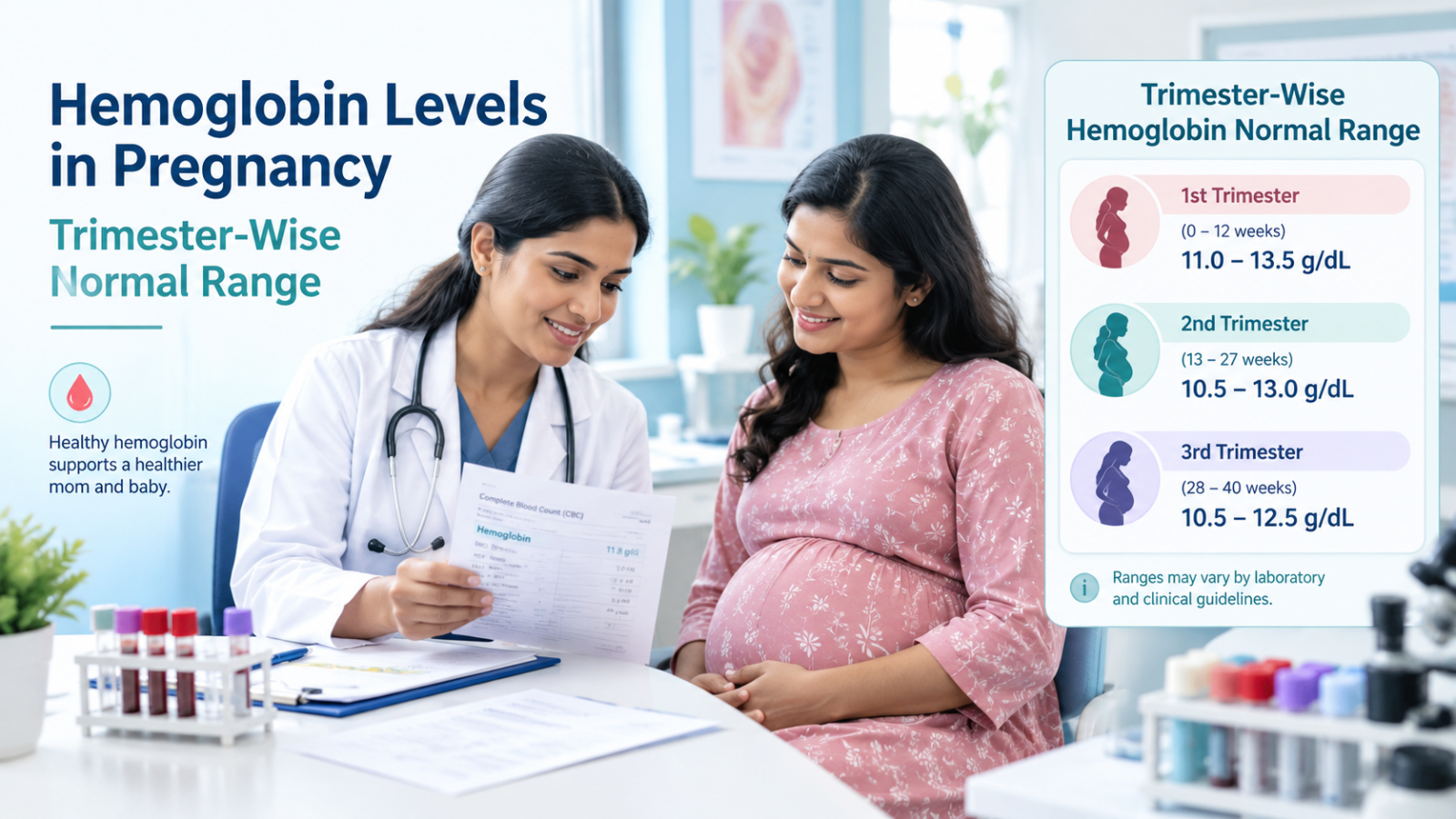
Checking Hemoglobin Levels in Pregnancy is an important part of routine antenatal care. After all, hemoglobin helps red blood cells carry oxygen throughout the body. During pregnancy, however, the blood volume increases considerably. As a result, hemoglobin can naturally become lower than before pregnancy.
Therefore, seeing a lower Hb value on an ANC blood report does not automatically mean something is seriously wrong. At the same time, significant or persistent anemia should not be ignored because iron deficiency and other causes may need treatment.
So, what is the normal hemoglobin level in pregnancy? Let’s understand the trimester-wise ranges, anemia levels, testing and practical diet tips in simple terms.
Why Do Hemoglobin Levels in Pregnancy Drop?
During pregnancy, the body produces more blood to support the growing baby and placenta. However, the increase in plasma volume can be greater than the increase in red blood cells.
Consequently, the blood becomes more diluted, which can cause hemoglobin concentration to fall. This is sometimes called physiological anemia of pregnancy.
However, not every low Hb result is simply due to normal pregnancy changes. Iron deficiency, folate deficiency, vitamin B12 deficiency, blood loss and certain inherited blood disorders can also contribute.
Therefore, your Hb value should always be interpreted in the context of your pregnancy stage and other test results.
What Is the Normal Hemoglobin Levels in Pregnancy?
There is no single Hb number that applies equally to every pregnant woman and every laboratory.
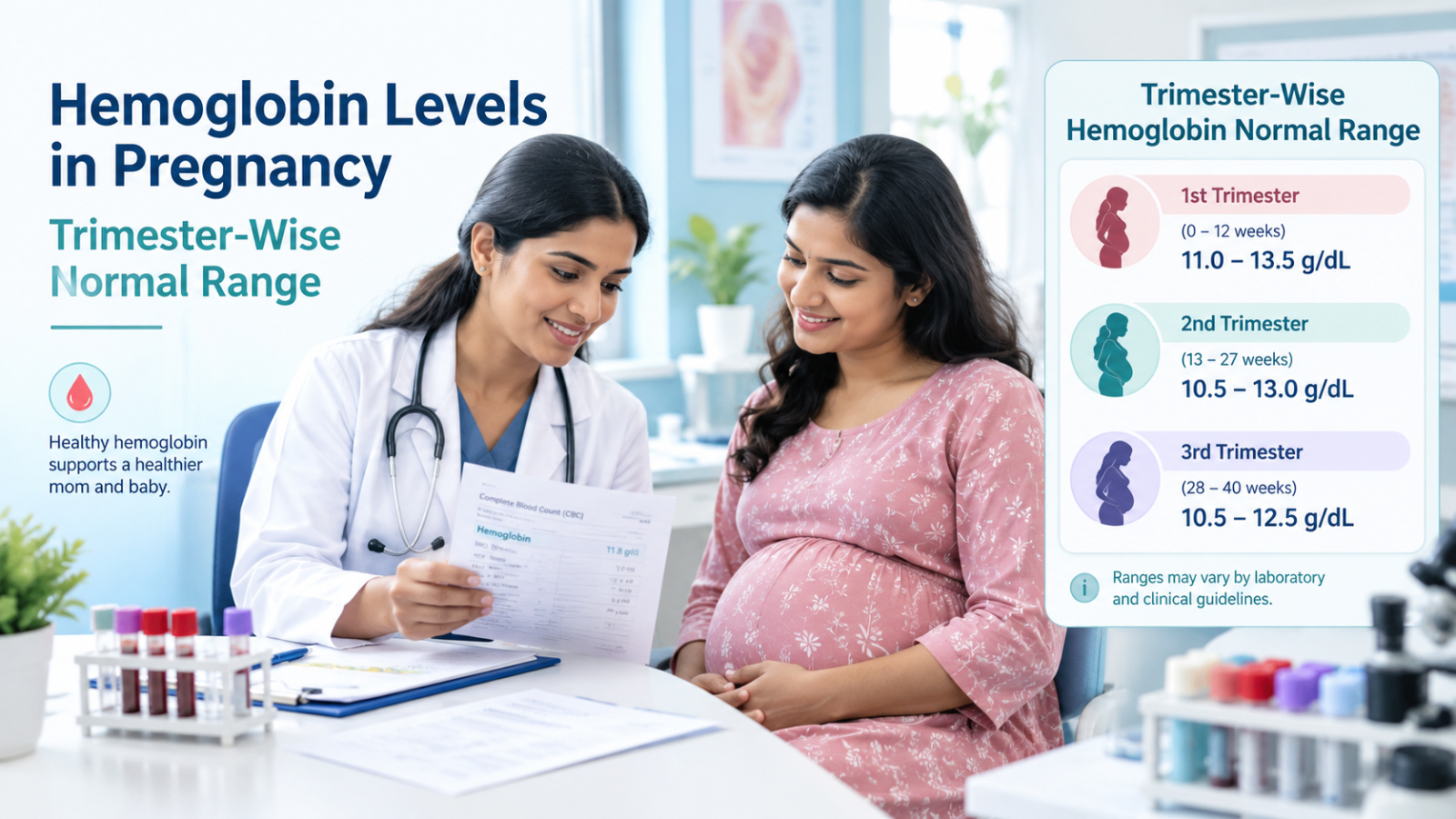
For example, commonly used clinical criteria consider hemoglobin below 11 g/dL as anemia in the first and third trimesters, while a lower threshold of 10.5 g/dL is often used in the second trimester because blood dilution is more pronounced.
However, laboratory reference ranges can vary. Therefore, always compare your result with the reference interval printed on your report and your obstetrician's interpretation.
Hemoglobin Levels in Pregnancy - Trimester-Wise Chart
Pregnancy stage |
Hb level commonly considered concerning for anemia* |
|
1st trimester |
Below 11 g/dL |
|
2nd trimester |
Below 10.5 g/dL |
|
3rd trimester |
Below 11 g/dL |
*These are commonly used clinical thresholds, not a substitute for your laboratory's reference range or your doctor's assessment.
First Trimester
During the first trimester, an Hb below 11 g/dL is generally considered anemia under commonly used pregnancy criteria.
Therefore, if your early ANC report shows Hb below this level, your doctor may look for causes such as iron deficiency.
Second Trimester
In the second trimester, the commonly used anemia threshold is 10.5 g/dL.
This slightly lower threshold reflects the greater expansion of plasma volume during this stage.
Third Trimester
By the third trimester, the commonly used threshold returns to approximately 11 g/dL.
At this stage, maintaining adequate iron and other nutrients becomes particularly important because the baby's growth and maternal blood requirements continue.
Understanding Anemia Levels: Mild, Moderate and Severe
Once anemia is identified, the Hb level can help describe its severity.
For pregnant women, commonly used WHO classifications are:
Anemia category |
Hemoglobin |
|
Mild |
10.0–10.9 g/dL |
|
Moderate |
7.0–9.9 g/dL |
|
Severe |
Below 7.0 g/dL |
However, interpretation should take pregnancy trimester and clinical circumstances into account.
Mild Anemia
Mild anemia may not cause obvious symptoms. Nevertheless, your doctor may recommend dietary changes, iron supplementation or additional testing depending on the cause.
Moderate Anemia
Moderate anemia deserves closer evaluation because symptoms such as tiredness, weakness, dizziness or breathlessness may become more noticeable.
Severe Anemia
Severe anemia requires prompt medical assessment and appropriate treatment.
Therefore, do not try to correct significantly low hemoglobin with diet alone without discussing the result with your healthcare provider.
What Causes Low Hemoglobin During Pregnancy?
Iron deficiency is one of the most common causes of anemia during pregnancy.
However, there are several possible contributors, including:
- Increased iron requirements
- Inadequate dietary iron
- Poor iron absorption
- Folate deficiency
- Vitamin B12 deficiency
- Blood loss
- Certain inherited blood disorders
Consequently, a low Hb result may require more than simply taking an iron tablet.
Which Tests May Be Needed for Low Hb?
If hemoglobin is low, your doctor may consider additional tests based on your history and CBC findings.
CBC
A Complete Blood Count (CBC) provides hemoglobin along with red-cell measurements such as MCV, MCH, and MCHC.
These values can provide clues about the type of anemia.
Iron Tests
An iron profile and/or ferritin may be recommended when iron deficiency is suspected.
Therefore, an iron test can be especially useful when Hb remains low or the cause is unclear.
Vitamin B12 and Folate
If the pattern of blood results or dietary history suggests another nutritional deficiency, Vitamin B12 or folate testing may also be considered.
Iron and Diet Tips During Pregnancy
First, include iron-rich foods regularly. Depending on your dietary preferences, these may include pulses, legumes, leafy vegetables, nuts, seeds, eggs, meat or other suitable sources.
Additionally, vitamin C-rich foods can help improve absorption of non-heme iron from plant foods.
For example, adding fruits or vegetables rich in vitamin C alongside an iron-containing meal can be useful.
At the same time, avoid changing your prenatal supplements without discussing them with your obstetrician.
Why Should You Not Self-Medicate?
More iron is not always better.
Therefore, take iron supplements at the dose and frequency recommended by your healthcare provider. If anemia has another cause, simply increasing iron may not address the underlying problem.
When Should Hemoglobin Be Retested?
The timing of repeat testing depends on your Hb level, treatment and stage of pregnancy.
For example, your doctor may recommend a repeat CBC after starting treatment to determine whether hemoglobin is responding.
Furthermore, hemoglobin is routinely monitored during antenatal care, so additional testing may be recommended if symptoms or previous results indicate a need.
Instead of following a fixed retesting interval yourself, follow the schedule provided by your obstetrician.
Bangalore Antenatal Home Collection
Pregnancy appointments can already involve multiple visits. Therefore, convenient blood-test options can make routine monitoring easier for families in Bangalore.
With antenatal home collection, eligible blood samples can be collected from home, which can be particularly convenient when mobility, work schedules or repeated ANC testing make travelling difficult.
At Prima Diagnostics, antenatal-related blood testing can be arranged according to the tests recommended by your healthcare provider.
Prima Antenatal Package
An antenatal package may bring several pregnancy-related investigations together, depending on the package and stage of pregnancy.
However, the tests required during pregnancy can vary from woman to woman.
Therefore, before booking a package, check which tests are included and whether they match the investigations recommended by your obstetrician.
When Should You Speak to Your Doctor?
Contact your healthcare provider if your report shows a significantly low Hb level or if you experience symptoms such as severe weakness, persistent dizziness, breathlessness at rest, fainting or unusual paleness.
Moreover, if hemoglobin continues to remain low despite treatment, further investigation may be necessary.
FAQs About Hemoglobin Levels in Pregnancy
What is the normal hemoglobin level in pregnancy?
Commonly used clinical thresholds consider Hb below 11 g/dL as anemia in the first and third trimesters and below 10.5 g/dL in the second trimester. Your laboratory's reference range and obstetrician's interpretation should also be considered.
Is 10 g/dL hemoglobin low during pregnancy?
Yes. An Hb of 10 g/dL is generally considered anemic during pregnancy and falls within the commonly used mild-anemia range. Your doctor can determine the cause and appropriate treatment.
Which test checks iron deficiency during pregnancy?
Ferritin and other iron studies may be used to assess iron status. A CBC also provides important information about hemoglobin and red-cell characteristics.
Can diet increase hemoglobin during pregnancy?
A balanced, iron-rich diet can support healthy red blood cell production. However, if you have diagnosed anemia, dietary changes alone may not be sufficient, so follow your healthcare provider's treatment plan.
How often should hemoglobin be checked during pregnancy?
Hemoglobin is commonly checked as part of antenatal care. Additional testing may be advised depending on your trimester, previous results, symptoms and treatment.
Conclusion
Understanding Hemoglobin Levels in Pregnancy can make an ANC report much easier to read. Because blood volume changes during pregnancy, hemoglobin may naturally fall; nevertheless, significant anemia needs appropriate attention.
Therefore, look at your Hb result alongside your trimester, CBC findings, iron status and overall health rather than focusing on one number alone. Furthermore, follow your obstetrician's advice about iron supplements, diet and repeat testing.
For pregnant women in Bangalore, convenient antenatal testing and home sample collection can also make regular monitoring easier. Most importantly, if your hemoglobin is low, discuss the result with your healthcare provider so that the underlying cause can be identified and managed appropriately.