
📍Your CentreSelect Centre

Glucometer vs Lab Sugar Test – Which One Should You Trust?
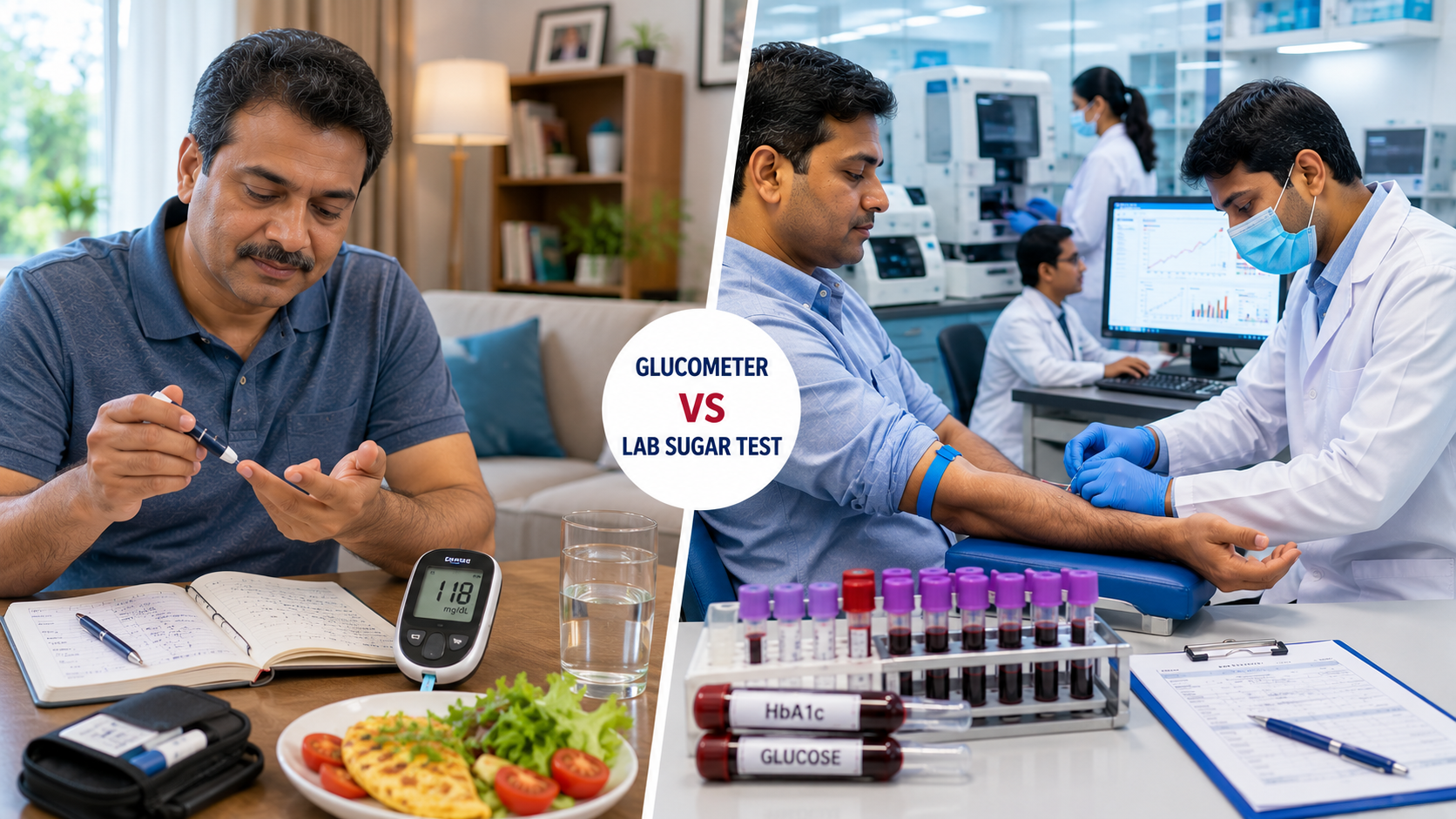
If you’re wondering about glucometer vs lab sugar test, you’re not alone. Checking your blood sugar is one of the most important parts of managing diabetes and preventing long-term complications. However, many people are unsure whether a home glucometer reading is as reliable as a laboratory blood sugar test. If the numbers differ, which result should you trust? Understanding the difference between a glucometer and a lab sugar test can help you monitor your blood sugar more confidently and make informed decisions about your diabetes care.

The answer is that both tests are valuable, but they serve different purposes. A glucometer is designed for quick day-to-day monitoring, while a laboratory blood sugar test provides highly accurate measurements used for diagnosis and medical decision-making. Therefore, understanding the strengths and limitations of each method can help you manage your diabetes more effectively.

Whether you are a diabetic patient, have prediabetes, or simply monitor your blood sugar at home, this guide explains the differences between a glucometer and laboratory testing, when each should be used, and why they work best together.

This Blog Includes:
  • Article Title: Glucometer vs Lab Sugar Test – Which One Should You Trust?
  • Publisher: Prima Diagnostics
  • Type: Myth / Decision Guide Healthcare Blog
  • Primary Keyword: glucometer vs lab sugar test
  • Topics Covered: Glucometer, Laboratory Blood Sugar Test, HbA1c, Fasting Blood Sugar, Postprandial Blood Sugar, Diabetes Monitoring, Home Blood Sugar Monitoring, Accuracy Comparison, and Patient Education.
  • Services Covered: Blood Sugar Tests, HbA1c Test, Diabetes Monitoring Package, Home Sample Collection, and Digital Reports.
  • Tests Included: Fasting Blood Sugar (FBS), Postprandial Blood Sugar (PPBS), Random Blood Sugar (RBS), HbA1c, and Oral Glucose Tolerance Test (OGTT).
  • Preparation Guidance: Follow fasting instructions for FBS if advised. HbA1c does not require fasting. Follow your healthcare provider’s recommendations before testing.
  • Service Focus: Diabetes Diagnosis, Diabetes Monitoring, Blood Sugar Testing, Laboratory Diagnostics, Preventive Healthcare, and Patient Education.
  • FAQ Section: Included.

Glucometer vs Lab Sugar Test


Glucometer vs Lab Sugar Test Accuracy

A glucometer measures blood sugar using a small drop of capillary blood from your fingertip and is ideal for daily diabetes monitoring. In contrast, a laboratory blood sugar test measures glucose in a controlled laboratory using venous blood and standardized equipment, making it more accurate for diagnosis and treatment decisions. While glucometers are excellent for routine home monitoring, laboratory tests and HbA1c remain the gold standard for diagnosing and monitoring diabetes over time.

Why Blood Sugar Testing Matters

Blood sugar levels change throughout the day depending on food, physical activity, stress, illness, medications, and sleep.

Therefore, regular monitoring helps:

  • Detect high or low blood sugar early
  • Monitor diabetes treatment
  • Guide dietary changes
  • Reduce the risk of complications
  • Support better long-term diabetes control

Consequently, choosing the right testing method becomes an important part of diabetes management.

What a Glucometer Measures

A glucometer is a portable electronic device that measures glucose from a small drop of blood obtained through a finger prick.

Within seconds, the device displays your blood sugar level.

Because of its convenience, millions of people use glucometers every day.

How Does a Glucometer Work?

The blood sample is placed on a disposable test strip containing special enzymes.

The glucometer analyses the reaction and estimates your blood glucose level.

As a result, you receive immediate feedback about your current sugar level.

Advantages of Using a Glucometer

A glucometer offers several practical benefits.

Quick Results

Most devices provide readings within seconds.

Convenient Home Monitoring

You can check your blood sugar anytime without visiting a laboratory.

Helps Identify Daily Trends

Regular monitoring helps you understand how meals, exercise, stress, or medications affect your glucose levels.

Useful During Emergencies

If you experience symptoms of low or high blood sugar, a glucometer allows immediate testing.

Limitations of a Glucometer

Despite its usefulness, a glucometer has certain limitations.

Results may vary due to:

  • Incorrect testing technique
  • Expired test strips
  • Dirty hands
  • Temperature and humidity
  • Poor strip storage
  • Device calibration differences

Therefore, small differences between glucometers and laboratory reports are considered normal.

What a Lab Sugar Test Measures

Unlike a glucometer, a laboratory blood sugar test analyses blood collected from a vein under controlled laboratory conditions.

Highly advanced analysers provide standardized and precise glucose measurements.

Consequently, laboratory tests are considered the reference standard for diagnosing diabetes.

Types of Laboratory Blood Sugar Tests

Depending on your doctor’s recommendation, laboratory investigations may include:

Fasting Blood Sugar (FBS)

Measures glucose after an overnight fast.

Postprandial Blood Sugar (PPBS)

Measures blood sugar two hours after the start of a meal.

Random Blood Sugar (RBS)

Measures glucose at any time of the day.

Oral Glucose Tolerance Test (OGTT)

Evaluates how efficiently your body processes glucose.

HbA1c

Shows your average blood sugar over the previous 2–3 months.

Why Laboratory Tests Are More Accurate

Laboratories use:

  • Standardized sample collection
  • Automated analyzers
  • Quality-controlled reagents
  • Regular equipment calibration
  • Professional laboratory staff

Therefore, laboratory reports are generally more accurate and consistent than home glucometer readings.

Accuracy Difference Explained

Many people become concerned when their glucometer reading differs from their laboratory report.

However, this difference is usually expected.

Why Readings May Differ

Several factors contribute to differences:

  • Finger-prick blood versus venous blood
  • Testing time differences
  • Food consumed before testing
  • Hand contamination
  • Meter accuracy limits
  • Environmental conditions
  • Individual biological variation

Consequently, a slight variation does not necessarily indicate that either test is incorrect.

Which Result Should You Trust?

If your glucometer and laboratory report differ, doctors generally rely on the laboratory result for diagnosis and treatment decisions.

However, your glucometer remains extremely valuable for monitoring trends between laboratory visits.

When a Glucometer Is Enough

Home monitoring is appropriate in many situations.

Daily Diabetes Monitoring

People taking insulin or diabetes medications often require frequent glucose checks.

Monitoring Lifestyle Changes

A glucometer helps assess how diet and exercise affect blood sugar.

Detecting Low Blood Sugar

Immediate testing is important when symptoms such as sweating, dizziness, or shakiness occur.

Monitoring During Illness

Blood sugar often fluctuates during infections or stress.

Therefore, home monitoring becomes especially useful.

Tips for Accurate Glucometer Readings

To improve accuracy:

  • Wash and dry your hands before testing.
  • Use fresh test strips.
  • Store strips correctly.
  • Check strip expiry dates.
  • Follow the manufacturer’s instructions.
  • Replace batteries when needed.
  • Compare your glucometer with a laboratory result periodically.

These simple steps can significantly improve the reliability of home readings.

When You Need a Lab Test or HbA1c

Although glucometers are useful, certain situations require laboratory testing.

Diagnosing Diabetes

Only laboratory testing should be used to diagnose diabetes or prediabetes.

Routine Medical Check-ups

Doctors often recommend annual or periodic laboratory blood sugar testing.

HbA1c Monitoring

HbA1c provides a long-term picture that no glucometer can measure.

Before Changing Medication

Treatment decisions should always be based on reliable laboratory results.

When Glucometer Readings Are Unusual

Unexpected or inconsistent readings should be confirmed with laboratory testing.

For Diabetics – Both Have a Role

Rather than choosing one over the other, the best diabetes care combines both methods.

Glucometer Helps You

  • Monitor daily glucose
  • Detect sudden changes
  • Guide meals and exercise
  • Prevent hypoglycemia

Laboratory Testing Helps Your Doctor

  • Diagnose diabetes
  • Evaluate treatment effectiveness
  • Monitor long-term control
  • Detect complications
  • Review HbA1c

Therefore, both tools complement each other rather than compete.

Which Test Should Prediabetics Choose?

If you have prediabetes, routine laboratory testing is usually more useful than frequent home monitoring.

Periodic HbA1c and fasting blood sugar tests provide a better assessment of disease progression.

However, some individuals may benefit from occasional glucometer monitoring based on their doctor’s advice.

Diabetes Monitoring for Bangalore Families

With diabetes becoming increasingly common, many Bangalore diabetics, prediabetics, and home monitoring users rely on both glucometers and laboratory testing.

Regular laboratory tests combined with home glucose monitoring allow early detection of worsening blood sugar control and help reduce the risk of complications affecting the eyes, kidneys, nerves, and heart.

Why Choose Prima Diagnostics?

Prima Diagnostics offers comprehensive diabetes testing services, including:

  • HbA1c Testing
  • Fasting Blood Sugar (FBS)
  • Postprandial Blood Sugar (PPBS)
  • Random Blood Sugar (RBS)
  • Oral Glucose Tolerance Test (OGTT)
  • Diabetes Monitoring Packages
  • NABL-quality laboratory testing
  • Home Sample Collection
  • Fast Digital Reports
  • Experienced Laboratory Professionals

Whether you need routine diabetes monitoring or confirmatory laboratory testing, Prima Diagnostics provides accurate and reliable diagnostic services across Bangalore.

Frequently Asked Questions

Is a glucometer as accurate as a laboratory blood sugar test?

A glucometer is sufficiently accurate for daily monitoring but not for diagnosing diabetes. Laboratory tests provide higher accuracy and are preferred for clinical decisions.

Why does my glucometer reading differ from my lab report?

Differences may occur due to the type of blood sample, testing conditions, timing, device variation, or biological factors. Small differences are common.

Can I diagnose diabetes using a glucometer?

No. Diabetes should always be diagnosed using laboratory blood tests interpreted by a healthcare provider.

Is HbA1c better than checking blood sugar daily?

They serve different purposes. HbA1c reflects average blood sugar over the past 2–3 months, while a glucometer measures your current blood sugar.

Should diabetics use both a glucometer and laboratory testing?

Yes. Home monitoring helps manage daily blood sugar, while laboratory tests and HbA1c evaluate long-term diabetes control.

Conclusion

When comparing glucometer vs lab sugar test, it is important to understand that both methods have distinct roles in diabetes care. A glucometer provides quick, convenient readings that help monitor daily blood sugar fluctuations, while laboratory blood sugar tests offer the accuracy needed for diagnosis, treatment decisions, and long-term monitoring.

Rather than replacing one another, these methods work best together. Regular home monitoring, combined with periodic laboratory testing and HbA1c assessment, provides the most complete picture of your diabetes control. This approach allows timely treatment adjustments, supports healthier lifestyle choices, and reduces the risk of long-term complications.

If you are looking for reliable diabetes testing in Bangalore, Prima Diagnostics offers accurate laboratory blood sugar tests, HbA1c testing, comprehensive diabetes monitoring packages, home sample collection, and fast digital reports to help you manage your diabetes with confidence.

Select Your Nearest Centre

This helps us show the right centre at checkout.