
Fatty Liver Grade 1, 2, 3 - What It Means and Tests to Track It
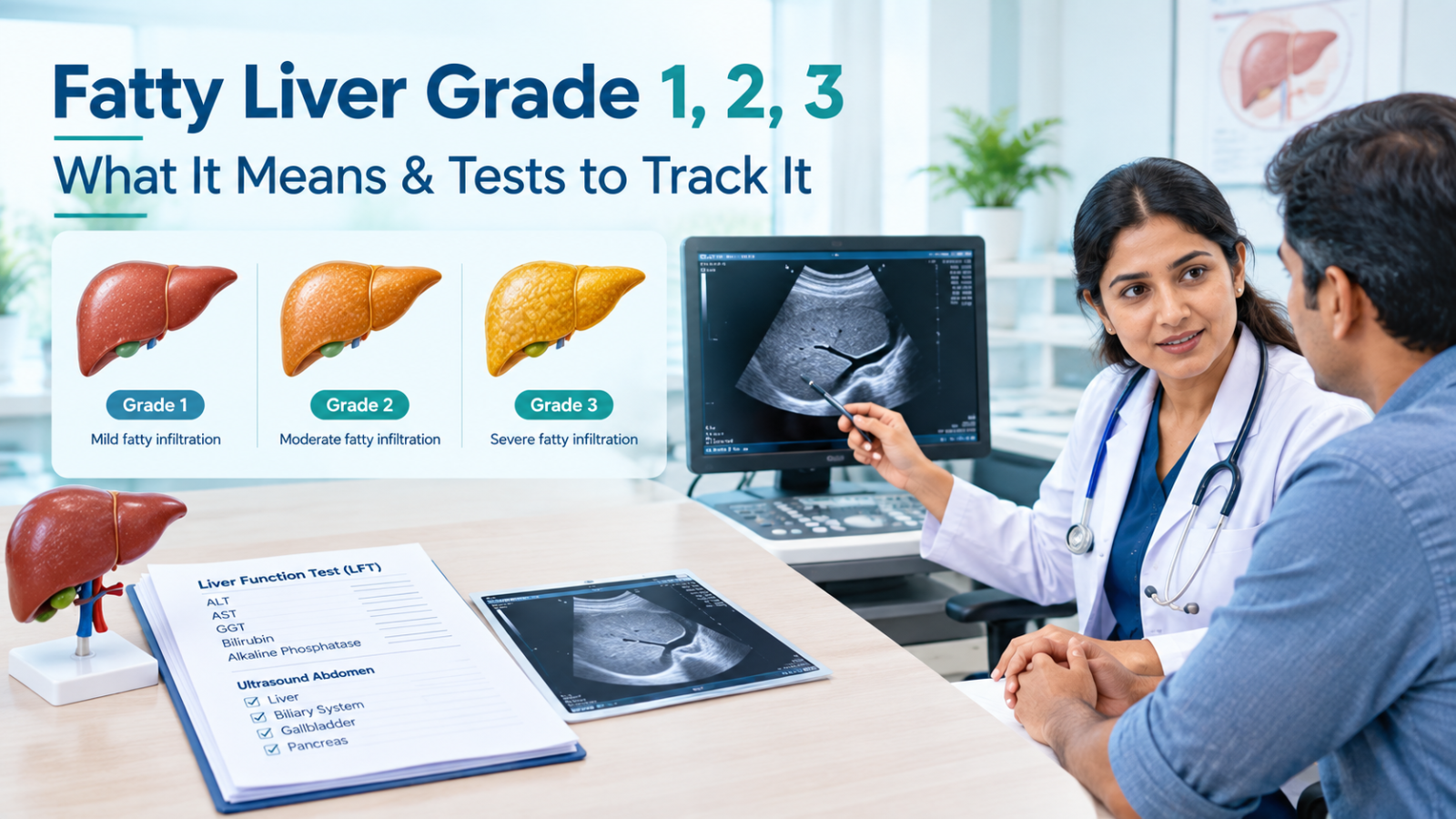
Being told that you have fatty liver grade 1 or grade 2 on an ultrasound can understandably raise questions. Is it serious? Can it be reversed? Which blood tests should you take? And, most importantly, what should you do next?
Fortunately, the ultrasound grade is only one part of the picture. In simple terms, it describes how much fat appears to be present in the liver. However, it does not by itself tell you whether there is liver inflammation or scarring.
Therefore, instead of worrying about the grade alone, it is better to look at your liver health along with blood sugar, cholesterol, weight, lifestyle and, when appropriate, tests such as FibroScan.
What Does Fatty Liver Mean?
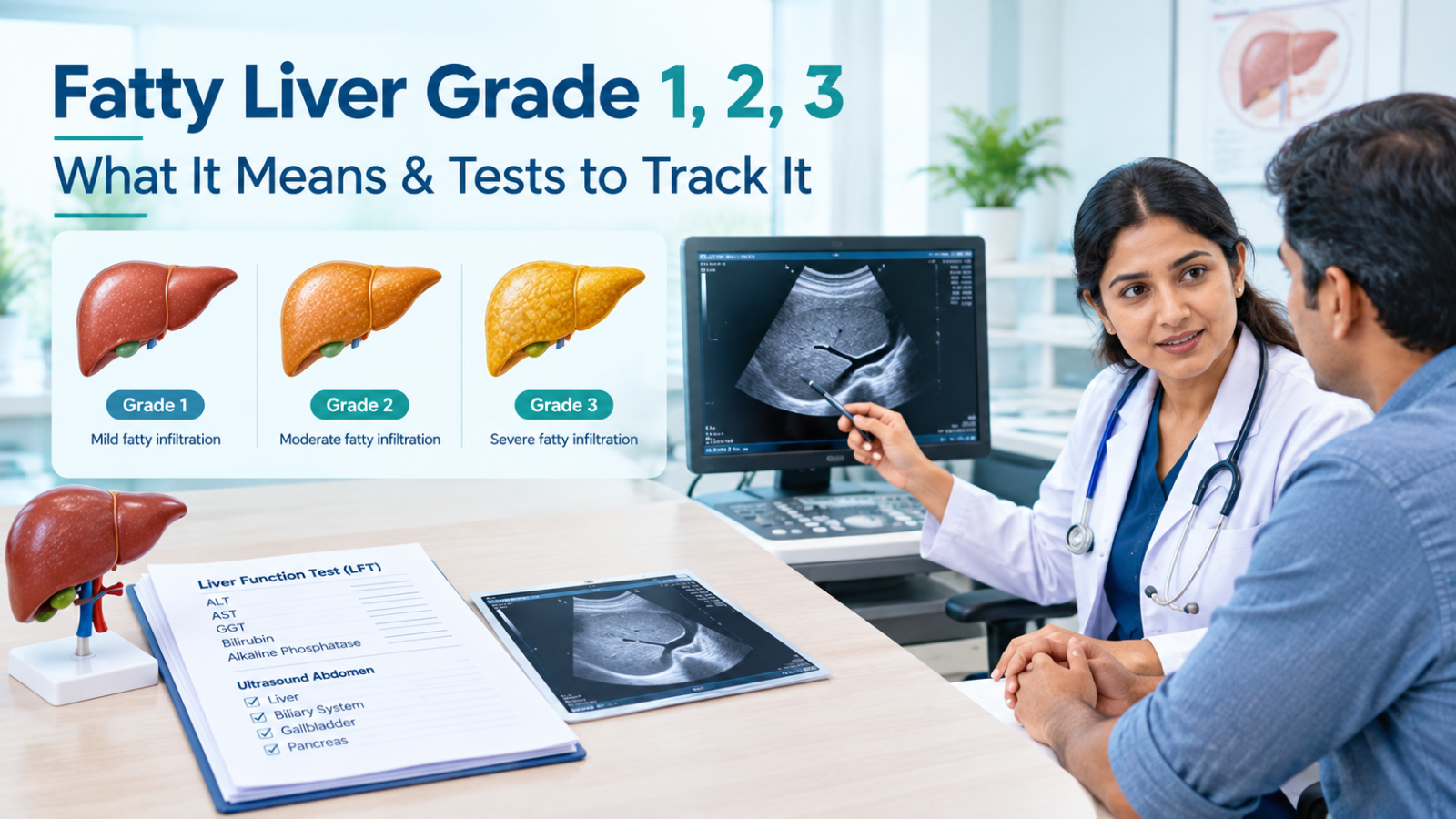
Fatty liver means that excess fat has accumulated inside the liver. It is commonly associated with factors such as excess weight, insulin resistance, diabetes, high triglycerides, and metabolic health problems.
Moreover, fatty liver can occur even in people who do not drink alcohol. This is particularly relevant for people with sedentary routines, irregular meals, and long working hours.
For example, among young Bangalore IT workers, prolonged sitting, frequent restaurant meals, sugary drinks, late-night eating, and limited physical activity can contribute to metabolic risk.
However, having a desk job does not automatically mean you will develop fatty liver. Your overall health profile matters.
Grade 1 vs Grade 2 vs Grade 3 Fatty Liver - Simple Explanation
Ultrasound reports commonly describe fatty liver as grade 1, grade 2, or grade 3.
Fatty Liver Grade 1
Grade 1 generally means mild fatty change in the liver.
At this stage, the liver may appear slightly brighter than usual on ultrasound. In many people, lifestyle changes can help reduce liver fat.
Importantly, grade 1 does not automatically mean that the liver is damaged or scarred.
Grade 2 Fatty Liver
Grade 2 indicates a moderate degree of fatty change on ultrasound.
Because the fatty change is more pronounced, it is worth taking the finding seriously and checking associated metabolic factors such as blood sugar, triglycerides and liver enzymes.
Nevertheless, the ultrasound grade alone cannot determine the amount of fibrosis or permanent liver damage.
Grade 3 Fatty Liver
Grade 3 indicates more severe fatty change on ultrasound.
Therefore, it generally deserves more detailed medical evaluation. Depending on your symptoms, blood test results, and risk factors, your doctor may consider additional assessment for liver inflammation or fibrosis.
Is Fatty Liver Grade 1 Serious?
Is grade 1 fatty liver serious? Usually, grade 1 represents mild fatty change and does not by itself mean advanced liver disease.
However, it should not simply be ignored.
The important point is that fatty liver can exist alongside obesity, diabetes, high triglycerides, high blood pressure, and other metabolic problems. Furthermore, some people can develop liver inflammation or fibrosis over time.
So, rather than asking only, “What grade is my fatty liver?”, it is more useful to ask:
- Are my liver enzymes normal?
- Is my blood sugar under control?
- Are my triglycerides or cholesterol high?
- Do I have excess abdominal weight?
- Do I have other risk factors for liver disease?
- Does my doctor recommend fibrosis assessment?
In other words, grade 1 is a reason to act, not necessarily a reason to panic.
Which Tests Should You Track?
An ultrasound can identify fatty changes, but follow-up usually involves looking at several aspects of your health.
1. LFT - Liver Function Test
An LFT checks several markers related to liver health, including enzymes such as ALT and AST.
However, normal liver enzymes do not completely rule out liver disease. Therefore, LFT results should be interpreted along with your history, examination, and imaging.
2. Lipid Profile
Next, a lipid profile checks cholesterol and triglycerides.
This is useful because fatty liver commonly occurs alongside metabolic risk factors. Consequently, tracking triglycerides, LDL cholesterol, HDL cholesterol, and total cholesterol can help provide a broader picture.
3. HbA1c
An HbA1c test provides an estimate of your average blood glucose levels over approximately the previous three months.
Therefore, it can be particularly useful when fatty liver is accompanied by overweight, insulin resistance, prediabetes, or diabetes.
4. FibroScan
A FibroScan is different from a routine ultrasound.
While ultrasound can show fatty changes, FibroScan can help assess liver stiffness and, depending on the technology used, liver fat. Liver stiffness can provide information relevant to fibrosis.
As a result, your doctor may recommend FibroScan when your risk factors, blood-test results or clinical assessment suggest that additional evaluation is appropriate.
Can Fatty Liver Grade 1 Be Reversed?
In many people, liver fat can improve with sustained lifestyle changes.
However, there is no single food, drink or supplement that can simply “clean” the liver.
Start With Gradual Weight Management
If you are overweight, gradual and sustained weight loss can help reduce liver fat.
Even so, avoid crash diets. Instead, focus on realistic changes that you can maintain for months and years.
Reduce Sugary Drinks
Cutting back on sugary beverages, sweetened coffee, packaged juices and frequent desserts can be a practical first step.
Likewise, watch portions of highly processed and calorie-dense foods.
Move More During the Workday
For Bangalore IT workers, long hours at a desk can make regular movement difficult.
Therefore, try adding short walking breaks, taking stairs when appropriate and combining daily activity with planned exercise.
Build a Balanced Plate
Include vegetables, adequate protein, whole grains or other high-fibre carbohydrate sources, and appropriate portions.
Additionally, reduce frequent fried foods and heavily processed snacks.
Limit Alcohol If Advised
If alcohol contributes to your liver risk, discuss alcohol intake with your doctor. In some people with liver disease, avoiding alcohol may be recommended.
Fatty Liver in Young IT Workers: Why Follow-Up Matters
Fatty liver is not limited to older adults.
In fact, younger adults can also develop fatty liver when sedentary routines, excess calorie intake, metabolic problems, and poor sleep patterns come together.
Therefore, a 30-year-old IT professional with grade 1 fatty liver should not assume that age makes the finding irrelevant.
Instead, this can be an opportunity to check metabolic health early and make sustainable changes.
How Often Should You Retest?
A commonly used follow-up approach is to reassess health markers over time rather than repeating every test immediately.
For some people, a 6-month follow-up may be reasonable, depending on the initial findings and the doctor's advice. However, the right interval varies according to your liver enzymes, metabolic risk factors, medications, weight changes and whether fibrosis is suspected.
So, do not treat “every six months” as a universal rule. Follow the schedule recommended for your individual situation.
When Should You Speak to a Doctor Sooner?
Fatty liver often causes no obvious symptoms. Nevertheless, seek medical advice promptly if you develop concerning symptoms such as yellowing of the eyes or skin, significant abdominal swelling, persistent vomiting, severe abdominal pain or unexplained worsening health.
Also, if your ultrasound shows grade 2 or grade 3 changes, or your liver tests are abnormal, discuss the findings with your healthcare provider rather than relying on the ultrasound grade alone.
Fatty Liver Follow-Up in Bangalore
If you have recently received an ultrasound report showing fatty liver, you can discuss the next steps with your doctor and arrange appropriate follow-up testing.
At Prima Diagnostics, commonly used tests such as LFT, lipid profile and HbA1c can help monitor important metabolic and liver-related markers. Depending on the clinical requirement, imaging or additional liver assessment may also be recommended.
For Bangalore residents, convenient diagnostic testing can make it easier to stay consistent with follow-up rather than postponing tests because of a busy work schedule.
FAQs About Fatty Liver Grade 1
Is fatty liver grade 1 reversible?
In many people, liver fat can decrease with sustained improvements in diet, physical activity, weight management, and control of metabolic conditions. Your individual situation should still be assessed by a healthcare professional.
Is grade 2 fatty liver dangerous?
Grade 2 indicates more pronounced fatty change than grade 1. However, the ultrasound grade alone does not determine whether fibrosis or advanced liver disease is present. Further evaluation may be needed based on your risk factors and test results.
Which blood tests are useful for fatty liver?
LFT, lipid profile, and HbA1c are commonly useful for assessing liver enzymes and associated metabolic risk factors. Your doctor may recommend additional tests depending on your history.
Does fatty liver cause symptoms?
Many people with fatty liver have no symptoms. Therefore, an ultrasound finding may come as a surprise during an examination for another reason.
Should I get a FibroScan for grade 1 fatty liver?
Not everyone with grade 1 fatty liver automatically needs a FibroScan. However, it may be considered when there are risk factors or other findings that warrant assessment for liver fibrosis.
Conclusion
A fatty liver grade 1 result on ultrasound usually describes mild fatty change, but it should still be viewed as an opportunity to assess your overall metabolic health. Similarly, grade 2 and grade 3 findings deserve appropriate medical follow-up rather than being judged by the ultrasound grade alone.
Therefore, start by reviewing your LFT, lipid profile, HbA1c and other relevant results with your healthcare provider. At the same time, focus on sustainable eating habits, regular physical activity, healthy weight management, and other lifestyle changes.
Most importantly, do not wait for symptoms before paying attention to your liver health. With appropriate follow-up and consistent lifestyle changes, you can take practical steps toward better long-term liver and metabolic health.